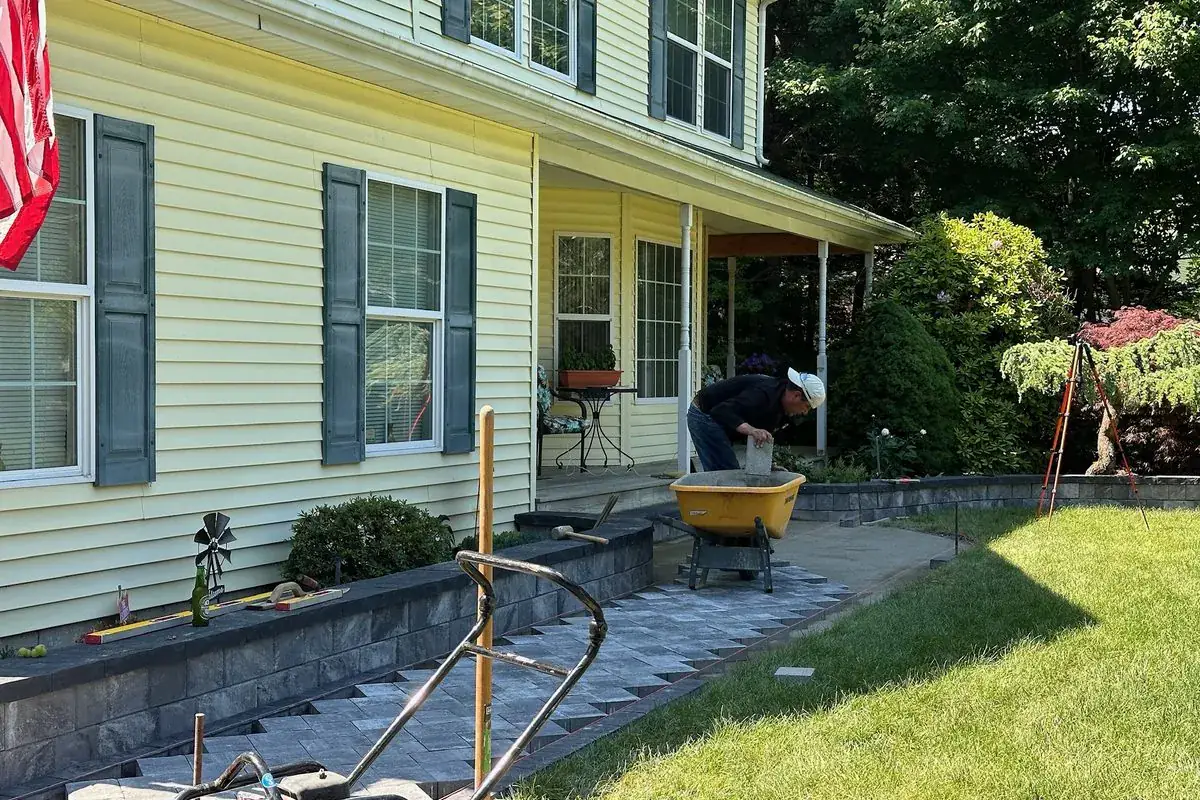
Most front walkways and stoops do not fail all at once. A slab drops half an inch by the porch. A step starts tilting toward the house. A gap opens where the stoop meets the foundation. It looks like a cosmetic problem through the summer.
Winter changes that. A low spot in a walkway collects water, and water in a low spot becomes a patch of ice that refreezes every night. A step that tilts the wrong way sheds meltwater toward the house or holds it on the tread. A raised edge that is easy to step over in daylight is a trip at 6 p.m. in December with a bag of groceries.
If you have been meaning to deal with a settled walk or stoop, late fall is the time to look at it.
Why Walkways and Stoops Settle on Long Island
There are a few usual causes, and knowing which one you have tells you which repair will last.
- Backfill near the house. When a house is built, the soil dug out for the foundation is pushed back against it. That backfill is often loosely compacted and keeps settling for years. Walkways and stoops built on top of it sink along the house side first.
- Water washing out the base. Long Island's sandy soil drains well, but it also washes away. A downspout that discharges next to a walk, or a gutter that overflows onto it, can slowly carry sand out from under a slab until it drops or cracks.
- Frost and freeze-thaw. Where water gets under a slab and freezes, it can lift it unevenly. When it thaws, the slab does not always settle back in the same place.
- Tree roots. Roots can lift one side of a walk, and decaying roots and stumps can leave voids that drop it.
- No real footing under the stoop. Many older stoops were built as a heavy block of concrete or masonry sitting on soil, without a footing below the frost line. Those are the ones that tilt or pull away from the house over time.
The Hazard Side
Uneven step heights are one of the classic causes of trips and falls. Your body expects every step to be the same height, so even a small change catches your foot. Add ice, and a settled stoop becomes the most dangerous spot on the property. If anyone in the house is older, or you have a lot of foot traffic for a home business, this belongs at the top of the fall list.
A gap between a stoop and the foundation is also a water problem. Meltwater runs into that gap and down along the foundation wall, which is a common source of basement dampness near the front door.
Repair Options, Honestly
Lifting the Slab. For a concrete walkway slab that has dropped but is otherwise in one piece, it can sometimes be raised back to level by pumping material under it through small holes, often called mudjacking or foam lifting. It is a reasonable option when the slab is sound and the cause of the settling has been dealt with. It does not fix a slab that is broken in several places, and if water is still washing the base out, the slab will drop again.
Resetting Pavers. If your walk is pavers, the fix is usually to lift the settled section, rebuild and compact the base, and relay the same pavers. That is one of the real advantages of pavers. Our guide to paver settling and repair goes deeper on that.
Replacing a Section or the Whole Walk. When a concrete walk is cracked into pieces, has heaved in several places, or was poured too thin, replacement is usually the better spend. A new walk should go on a properly compacted base with a pitch that sheds water away from the house.
Rebuilding the Stoop. A stoop that is tilting or pulling away from the house is usually a sign of a footing problem, and surface patching will not stop it. The real fix is often to remove it and rebuild on proper footings. That is also the moment to correct uneven riser heights and add or replace a railing. If your stoop is crumbling rather than moving, see crumbling masonry steps and safety. Rebuilding steps can require a permit depending on your town, so check with your local building department or ask us to.
Fix the Cause, Not Just the Slab
Whatever the repair, it only lasts if the reason it moved is handled. That usually means:
- Moving downspouts so they discharge away from the walk and stoop.
- Regrading so water runs away from the house, not toward the front door.
- Dealing with a tree root or stump that is lifting or undermining the walk.
- Sealing the joint between the stoop and the foundation so water stops running down the wall.
Can It Wait Until Spring?
Some of it can. If the walk is only slightly low and you can keep it clear of ice, a repair in spring is fine. But if a step is tilting, an edge is raised enough to trip on, or water is pooling and freezing in the same spot, do something before the cold settles in. Even a temporary fix, like extending a downspout and keeping sand by the door, makes the winter safer.
What We Do
Alec's Construction repairs and rebuilds concrete and paver walkways, front steps and stoops across Long Island. We will tell you whether your walk can be lifted or reset, or whether it really needs to be replaced, and we always start with where the water is going.
Call (631) 312-7441 or book a free walkthrough.
Frequently Asked Questions
Why is my front walkway sinking near the house?
The most common reason is loosely compacted backfill against the foundation that keeps settling for years. Water from downspouts or gutters washing sand out from under the slab is the other big cause on Long Island.
Can a sunken concrete walkway be raised instead of replaced?
Sometimes. If the slab is in one piece and sound, it can often be lifted back to level by pumping material underneath it. If it is cracked into pieces, heaved in several spots, or the base is still washing out, replacement usually makes more sense.
My stoop is pulling away from the house. Is that serious?
It usually means the stoop is moving because it does not have a proper footing, and it lets meltwater run down along the foundation. Patching the gap does not stop the movement. Rebuilding on proper footings is typically the lasting fix.
Do I need a permit to rebuild front steps on Long Island?
It depends on the town and the scope of work. Some step and stoop rebuilds require a permit and some do not, so check with your town's building department before work starts or ask your contractor to confirm.
Can sunken walkway repair be done in winter?
Paver resets and slab lifting can often be done in late fall while the ground is not frozen. New concrete in cold weather needs extra protection. In the meantime, fixing downspouts and keeping the low spot clear of ice makes it safer.
Should I repair my walkway or just add a railing?
A railing helps on steps and is often worth adding, but it does not fix a tilting step or a raised edge on a walk. Uneven surfaces and step heights are what cause trips, so they need to be corrected.
Related Guides
- Crumbling Masonry Steps and Safety
- Stoop and Front Steps on Long Island
- Paver Repair and Releveling
- Front Walkway Construction
- Masonry and Pavers Services
Get a Free Estimate from Alec's Construction
Serving homeowners across Long Island. We come out, look at the actual job, and put a written number in your hand — no pressure, no obligation.
Or call (631) 312-7441