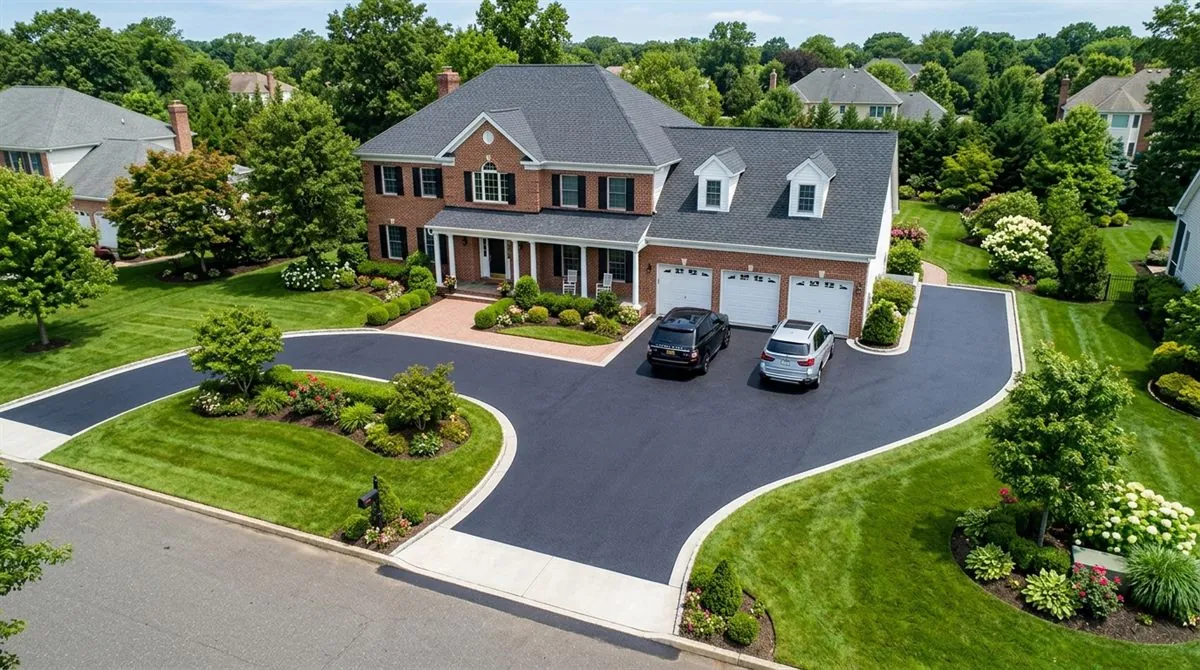
Your front steps take more traffic than any other masonry on the property and they are the first thing every visitor, buyer and appraiser sees. They are also, on a huge number of Long Island homes, built on a footing that does not reach below the frost line — which is why so many of them are cracked, separated from the house, or pitched at an angle that sheds water back toward the front door.
Why Stoops Fail Here
Shallow footings. Anything with a footing needs to bear below frost depth, generally taken as about 36 inches on Long Island. A stoop poured on a 12-inch pad sits inside the zone where soil freezes, expands and lifts. Every winter it moves. Over a decade that movement cracks the structure, tilts the treads and pulls the stoop away from the foundation.
Water sitting on the treads. Treads should pitch slightly away from the house so water runs off. Level or back-pitched treads hold water, which soaks into the masonry and freezes. This is what causes the crumbling front edges you see on so many older concrete steps.
Salt. Rock salt used for de-icing is genuinely destructive to concrete and to mortar joints. It accelerates surface scaling dramatically. Calcium magnesium acetate and similar alternatives cost more and do far less damage.
The gap at the house. A stoop that has separated from the foundation creates a channel for water to run straight down against the foundation wall. That is a basement moisture problem waiting to happen, not just a cosmetic crack.
Repair or Rebuild?
Repair is realistic when the structure is stable and level, the problem is surface spalling or a few loose treads or bricks, mortar joints need repointing, or the railing needs resetting. Resurfacing a structurally sound concrete stoop with a masonry overlay or facing it with brick or stone veneer is a legitimate and popular option.
Rebuild when the stoop has pitched or settled visibly, it has separated from the house, cracks run all the way through the structure, or the risers are uneven enough to be a trip hazard. Facing a moving stoop with new veneer just means the new veneer cracks in a few years.
Costs on Long Island
- Repointing and minor repair: roughly $800–2,500
- Resurfacing or refacing an existing sound stoop: roughly $3,000–8,000
- Full rebuild, poured concrete with brick facing: roughly $6,000–15,000
- Full rebuild in natural stone: roughly $9,000–22,000
- Wrought iron or aluminum railing: roughly $800–3,000
- Bluestone treads on an existing structure: roughly $150–350 per linear foot
What a Correct Rebuild Includes
- Excavation to below frost depth, generally about 36 inches, for the footing
- A poured, properly sized footing — not a bed of gravel
- Block or poured structure built off that footing, tied to but able to move independently of the house foundation
- Compacted fill inside the structure, not loose backfill that will settle
- Treads pitched away from the house, typically about a quarter inch per foot
- Consistent riser heights — unequal risers are the leading cause of falls on steps
- Proper railing anchoring into solid masonry, cored and epoxied rather than surface-fastened
- Flashing and a clean separation detail where the stoop meets the house
Code and Safety Details Worth Knowing
Riser heights within a single flight should be consistent — small variations are what catch a foot. Treads need enough depth to place a full foot. Handrails are required above a certain number of risers in most jurisdictions and should be graspable, meaning a shape a hand can actually close around rather than a flat decorative bar. If you are rebuilding, confirm current requirements with your town, since a rebuild is generally held to today's code rather than whatever was allowed when the house was built.
Frequently Asked Questions
Why are my front steps pulling away from the house?
Almost always a footing that does not reach below frost depth. The stoop lifts and settles each winter while the house foundation stays put, and the two separate. Refacing will not fix it; the structure needs a proper footing.
Can I just resurface my crumbling concrete steps?
Yes, if the structure underneath is stable and level. Resurfacing or refacing a moving stoop only postpones the problem, and the new surface cracks along the same lines.
How long should front steps last?
A stoop built on a proper below-frost footing should last 40 years or more with periodic repointing. Ones built on shallow pads commonly need work within 10 to 15 years.
Does rock salt damage masonry steps?
Yes, significantly. Sodium chloride accelerates surface scaling on concrete and attacks mortar joints. Calcium magnesium acetate or sand is much gentler on masonry.
Related Reading
- Masonry Repair and Repointing — matching mortar and cutting joints correctly
- Paver Walkways — connecting the steps to the driveway
- Hiring a Masonry Contractor — what to put in the proposal
- Driveway Curb Appeal — the rest of the first impression
- Brick vs. Stone Veneer — choosing the facing material
Work With Alec's Construction
This guide is written by the crew that does the work. See Alec's Masonry & Pavers service — patios, walkways, steps, stoops and retaining walls. Licensed and insured on Long Island, one crew start to finish, free walkthrough and a written estimate inside 48 hours.
Booking the cold months now: we also handle Chimney Repair and Driveways & Blacktop.
Not sure whether the town or village files your permit? That question trips up more Long Island projects than any other — the directory sorts it out.
Ready to Get Started?
Steps cracked, pitched or pulling away? Call Alec's Construction at (631) 312-7441 for a free look. We will tell you whether it is a reface or a rebuild — Nassau and Suffolk County.