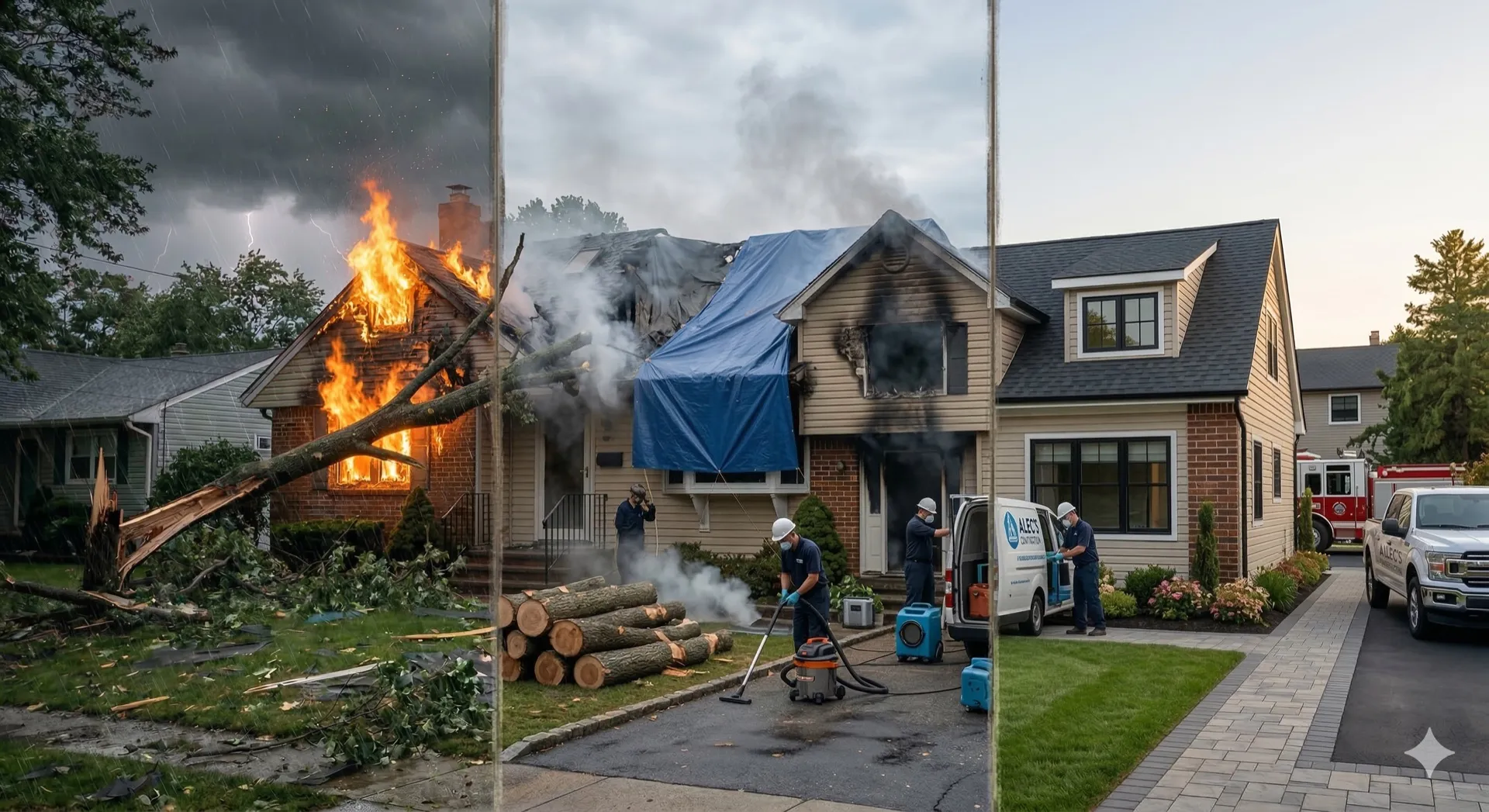
A hundred-year-old white oak doesn't ask permission before it comes down. On Long Island it usually happens the same way: a nor'easter loads the canopy with wet snow or ice, the wind swings around to the northeast, and a root plate that's been sitting in saturated sandy soil all winter finally lets go. One second you have a tree in the yard, the next you have a hole in the roof, a cracked rafter, and a homeowner standing in the driveway at 2 a.m. wondering who to call first.
I've walked into that scene more times than I can count, from Babylon to Southampton, and the first mistake is almost always the same. People call a tree service before they call anyone who can tell them if the house is safe to stand in. Getting the tree off the roof and getting the house structurally sound again are two different jobs, billed two different ways, and confusing them costs homeowners weeks they don't have before the next storm rolls through.
This is what actually needs to happen in the first six hours, how the insurance math splits between tree removal and structural repair, and what a real structural triage looks like before anyone talks about putting the roof back together.
The First Six Hours
- Keep everyone, kids and pets included, out of the room under the impact and off the roof plane above it, even if it looks stable. A cracked rafter can hold for hours and then let go all at once.
- Don't climb up to tarp it yourself in the dark or in wind. That's how a bad night turns into a bad month.
- Call your insurance carrier and open a claim the same night if you can. Most Long Island carriers run 24-hour storm lines, and an early, documented call helps later if the claim gets questioned.
- Photograph the damage from every angle before anyone moves a branch. Adjusters weight pre-cleanup photos heavily, and so does anyone doing the structural work behind you.
- Call a licensed general contractor for a temporary tarp and stabilization, not just a landscaper with a chainsaw. Getting a tree off the house safely is a structural question, not a yard-cleanup question.
Who Pays: Tree Removal vs. Structural Repair
Homeowners insurance on Long Island almost always splits this into two buckets, and the split trips people up every time. Structural repair, meaning the roof deck, rafters, siding, windows, and drywall, is covered under your dwelling coverage with your normal deductible. Tree and debris removal is usually its own line item with its own capped allowance, separate from the structural limit. If the tree is small and the damage is mostly cosmetic, removal can eat a real chunk of that separate allowance before a single shingle gets replaced.
Whose tree it was matters less than people think. In New York, if a neighbor's tree comes down on your house in a storm, your own policy is still what pays for your structure in almost every case, not your neighbor's. The exception is if you can show the neighbor knew the tree was dead or hazardous and did nothing, and that's a legal fight most homeowners don't want to have while there's a tarp on the roof. Work with an adjuster who's dealt with wind and tree claims specifically, and loop in a contractor who does insurance restoration work regularly, because the estimate a GC writes for the carrier is usually the difference between a check that covers the repair and one that doesn't.
Structural Triage Before You Think About Rebuilding
Every homeowner wants to talk about the new roof before anyone has confirmed the house can safely support one. Triage comes first. That means getting into the attic and checking whether the rafters are dented and split at the surface or actually fractured through, because a fractured rafter needs to be sistered or replaced, not just covered over with new roofing. It means checking the ridge line from inside for sag that wasn't there before, and checking interior ceilings on the floor below for fresh cracking that tracks back to a shifted top plate.
- Rafters and roof deck: dented sheathing is a repair, a snapped rafter is an engineering call.
- Chimney: any lean, cracked crown, or pulled flashing near the strike needs a proper chimney inspection before winter, not in the spring.
- Ceilings and interior walls below the impact: new cracking means the framing moved, not just the roof surface.
- Insulation and attic floor: soaked insulation has to come out before it freezes into a block that traps moisture all winter.
- Foundation and sill: on a hard direct hit, check the sill plate and foundation for hairline movement, especially in older Cape and colonial framing common across Suffolk.
Why Long Island Trees Fail in Winter
Oaks and pines are the two species I see come down most, and they fail for opposite reasons. Oaks hold their leaves late into fall and go into winter storms still carrying canopy weight, so a wet, heavy snow in December turns a healthy-looking oak into a lever arm the roots can't hold. Pines tend to fail lower, at the trunk or a major limb union, especially older white pines weakened by salt air rolling in off the Sound or the Atlantic over twenty or thirty years.
The soil isn't doing the trees any favors either. A lot of Suffolk and Nassau lots sit on sandy soil with a high water table, especially on the South Shore in towns like Babylon, Islip, and Brookhaven, and sandy soil holds a shallower, wider root plate than clay does. Add 40 to 50 freeze-thaw cycles over a normal Long Island winter, and that root plate is loosening and refreezing all season, so it takes less wind than people expect to pull the whole thing over. Poor site drainage makes it worse. If gutters and grading have been dumping water at the base of a tree for years, check your downspout drainage once the immediate repair is done, because saturated soil near the foundation is the same problem that brought the tree down in the first place.
Permits and Town Inspections
Every town on Long Island, Brookhaven, Islip, Smithtown, Huntington, Babylon, Southampton, and the Nassau townships, requires a building permit for structural repair work, and most have an emergency or storm-damage permit path that moves faster than a standard application when there's an active weather-related opening in the house. A licensed contractor should be pulling that permit, not you, and if the damage touched load-bearing framing, expect the town to want an engineer's letter before they sign off, not after.
Don't let anyone talk you into skipping the permit because it's winter and the town office is slow. An unpermitted structural repair is the kind of thing that surfaces at closing five years from now and kills a sale, and it's also the kind of thing a carrier can use to deny a future claim if they find out the original repair was never inspected.
What We Do
We handle the whole sequence: emergency tarp and stabilization, structural triage and engineer coordination when it's needed, permit filing with your town, and the insurance restoration paperwork, so you're not the one translating between an adjuster, a tree service, and a framer while there's a hole in your roof in January.
Call (631) 312-7441 or book a free walkthrough.
Frequently Asked Questions
How do I know if it's safe to go inside after a tree hits my house?
If the tree impacted the roof or an exterior wall, stay out of any room directly under or next to the strike until a contractor or engineer has checked the framing. A cracked rafter or a shifted top plate can hold for hours and then fail without warning. Get everyone out, tarp only from the ground if you can, and wait for a professional before going back in.
Does my homeowners insurance pay for both tree removal and roof repair?
Usually yes, but they're treated as two different coverages. Structural repair falls under your dwelling coverage with your regular deductible, while tree and debris removal is typically a separate, capped allowance. If the tree caused only minor damage, removal can use up a meaningful share of that separate allowance before repairs even start.
What if the tree that fell was on my neighbor's property?
In New York, your own homeowners policy is still what typically pays for damage to your house in a storm, regardless of whose tree it was. The main exception is if you can prove your neighbor knew the tree was dead or hazardous and ignored it, which is a harder case to make than most people expect.
Do I need a permit to repair storm damage from a fallen tree?
Yes, every Long Island town requires a permit for structural repair work, though most have a faster emergency or storm-damage track for active openings in the building envelope. Skipping the permit can cause problems later at resale or with a future insurance claim.
How long can I leave a tarp on before real repairs need to start?
A properly installed tarp can hold through a few storm cycles, but it isn't a winter-long solution on Long Island. Freeze-thaw cycling, wind-driven rain, and the next nor'easter work a tarp loose faster than people expect, so structural repair should start as soon as insurance and permit steps allow.
What's the biggest mistake homeowners make after a tree hits the house?
Calling a tree removal company first and treating the structure as an afterthought. Getting the tree off the house and confirming the framing underneath is sound are two separate jobs, and doing them out of order can mean rebuilding over damage nobody checked.
Related Guides
- Insurance Restoration Services
- Roofing Services
- Chimney Repair on Long Island
- Downspout Drainage on Long Island
Get a Free Estimate from Alec's Construction
Licensed and insured, working across Nassau and Suffolk County since 2018. We come out, look at the actual job, and put a written number in your hand — no pressure, no obligation.
Book a Free WalkthroughOr call (631) 312-7441