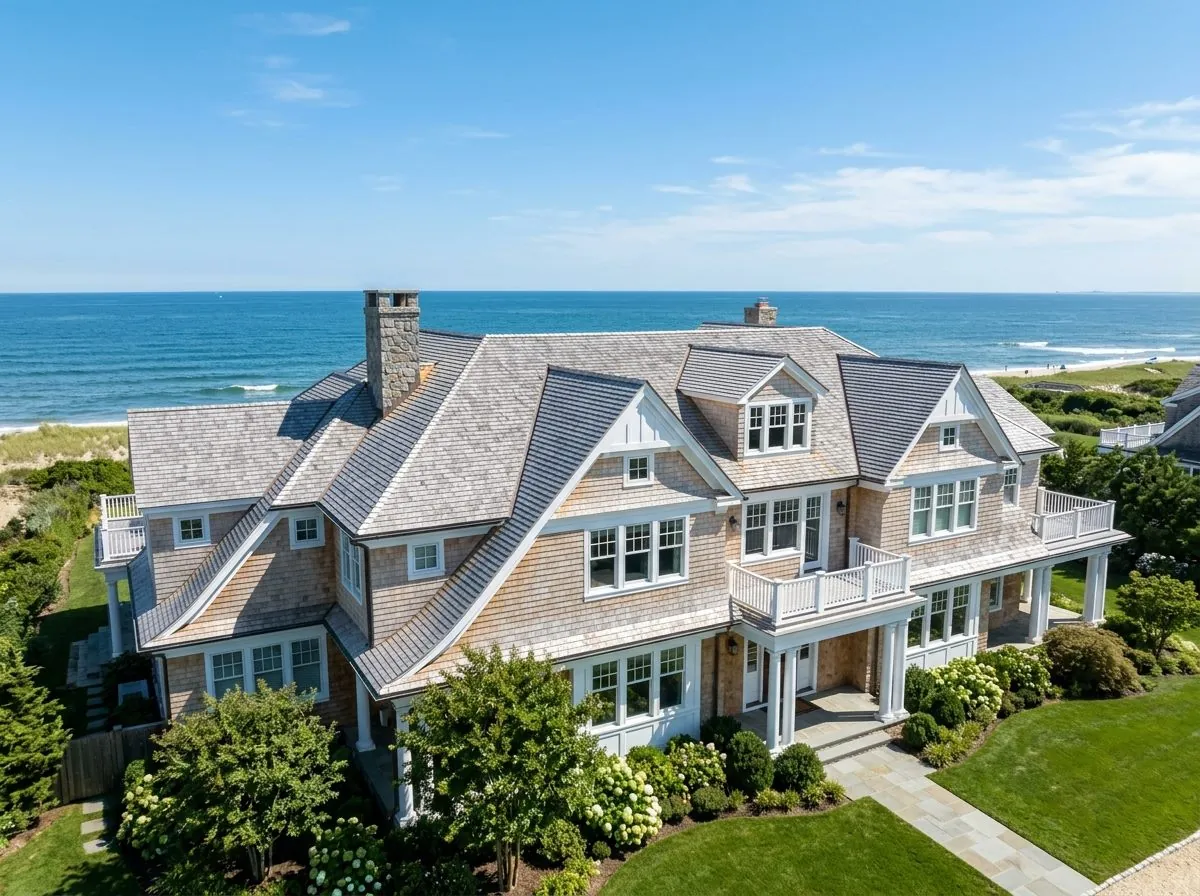
The chimney is the hardest-working masonry on your house and the least looked at. It is the tallest thing on the roof, exposed on all four sides, with no shelter from wind-driven rain and no protection from freeze-thaw. On most Long Island homes it deteriorates a decade or more before anything else on the exterior does.
It is also the source of a large share of the ceiling stains homeowners pay roofers to chase. Water that enters through a cracked chimney crown travels down inside the masonry and emerges at the ceiling several feet from the chimney, which looks exactly like a roof leak.
The Four Things That Fail
1. The crown. The crown is the sloped concrete cap on top of the chimney that sheds water away from the flue. It should be a proper poured concrete slab with an overhang and a drip edge. On a great many Long Island homes it is instead a thin skim of mortar, which cracks within a few years. Once the crown cracks, water pours directly into the top of the chimney structure. This is the most common chimney failure and the most commonly misdiagnosed.
2. The flashing. Where the chimney meets the roof there should be two layers: step flashing woven into the shingle courses, and counter-flashing set into a cut reglet in the mortar joints and folded down over the step flashing. When a roofer seals this junction with a bead of roofing cement instead of proper metal work, it buys three or four years and then leaks.
3. The mortar joints. Same failure as any masonry, but accelerated by exposure. Open joints admit water into the structure.
4. The cap. The metal or masonry cap over the flue opening keeps rain, birds and animals out. Missing caps let water straight down the flue, where it mixes with creosote and produces a corrosive acid that attacks the liner and the masonry from inside.
Crown Problem or Flashing Problem?
A useful field distinction. Flashing leaks generally show up during or immediately after rain and stain close to where the chimney passes through the ceiling. Crown and joint leaks are often delayed — the masonry absorbs water and releases it over hours or days — and the stain can appear farther from the chimney because water travels inside the structure before it exits.
Another tell: white chalky deposits on the chimney face, called efflorescence, mean water is moving through the masonry and carrying dissolved salts to the surface. That points at the crown or the joints, not the flashing.
What Chimney Work Costs Here
- New poured crown: roughly $800–2,500
- Crown repair with a sealant membrane: roughly $400–900 — a legitimate stopgap on a crown that is cracked but sound
- Chimney repointing: roughly $1,500–5,000 depending on height and access
- Proper step and counter-flashing: roughly $800–2,500
- Stainless steel cap: roughly $250–900 installed
- Rebuilding the chimney above the roofline: roughly $3,500–9,000
- Full rebuild from the foundation: $10,000 and up
Staging is a large part of chimney pricing. A one-story ranch with easy roof access costs far less than a three-story colonial where the chimney requires scaffolding. This is also why bundling chimney work with a roof replacement saves real money — the access is already paid for.
Do This Before You Replace a Roof
If your chimney needs work and your roof is within a few years of replacement, do them together. The flashing has to be redone as part of a roof replacement anyway, and a mason and roofer coordinating on one visit produces a better detail than either doing their half separately. Rebuilding a chimney above a brand new roof means disturbing new shingles and often voiding part of the workmanship warranty.
If the Chimney Is Not Used
Plenty of Long Island homes have chimneys serving nothing since the heating system was converted. An unused chimney still has to be maintained, because it is still a masonry structure on your roof admitting water into your house. The options are to maintain it, to take it down to the roofline and cap the opening properly, or to remove it entirely and reframe and reroof the area. Taking it down is often the economical answer when a rebuild is otherwise required — but confirm nothing is venting into it first.
Frequently Asked Questions
How do I know if my chimney is leaking or my roof is?
Flashing leaks usually appear during rain and stain near the chimney penetration. Crown and mortar leaks are often delayed and can stain farther away. White chalky efflorescence on the chimney face indicates water moving through the masonry itself.
How often should a chimney be inspected?
Annually if you burn wood, and every few years otherwise. On Long Island the crown and flashing are worth a look after any severe nor'easter.
Can I just seal my chimney to stop leaks?
A breathable masonry water repellent can help a sound chimney, but sealing a chimney with a cracked crown or open joints traps water inside and makes spalling worse. Fix the crown and joints first.
Is it cheaper to remove a chimney than repair it?
Sometimes. If a full rebuild is required and the chimney serves no active appliance, removal to the roofline with proper reframing and reroofing is often less expensive than rebuilding. Verify nothing vents into it before removing anything.
Related Reading
- Chimney Sweep or Inspection? — which one you actually need, and who does which
- Masonry Repair and Repointing — why the wrong mortar destroys old brick
- Roof Inspections — what a real inspection covers
- Emergency Roof Repair — what to do when water is coming in now
- Hiring a Masonry Contractor — questions that reveal real expertise
- Storm Damage — documenting damage after a nor'easter
Work With Alec's Construction
This guide is written by the crew that does the work. See Alec's Chimney Repair service — repointing, crowns, caps and roofline flashing. Licensed and insured on Long Island, one crew start to finish, free walkthrough and a written estimate inside 48 hours.
Booking the cold months now: we also handle Roofing and Seamless Gutters.
Every town here has villages inside it running their own building department. Our directory sorts out which counter your address actually files at.
Ready to Get Started?
Chimney taking on water? Call Alec's Construction at (631) 312-7441. We will diagnose the actual source before quoting anything — Nassau and Suffolk County.