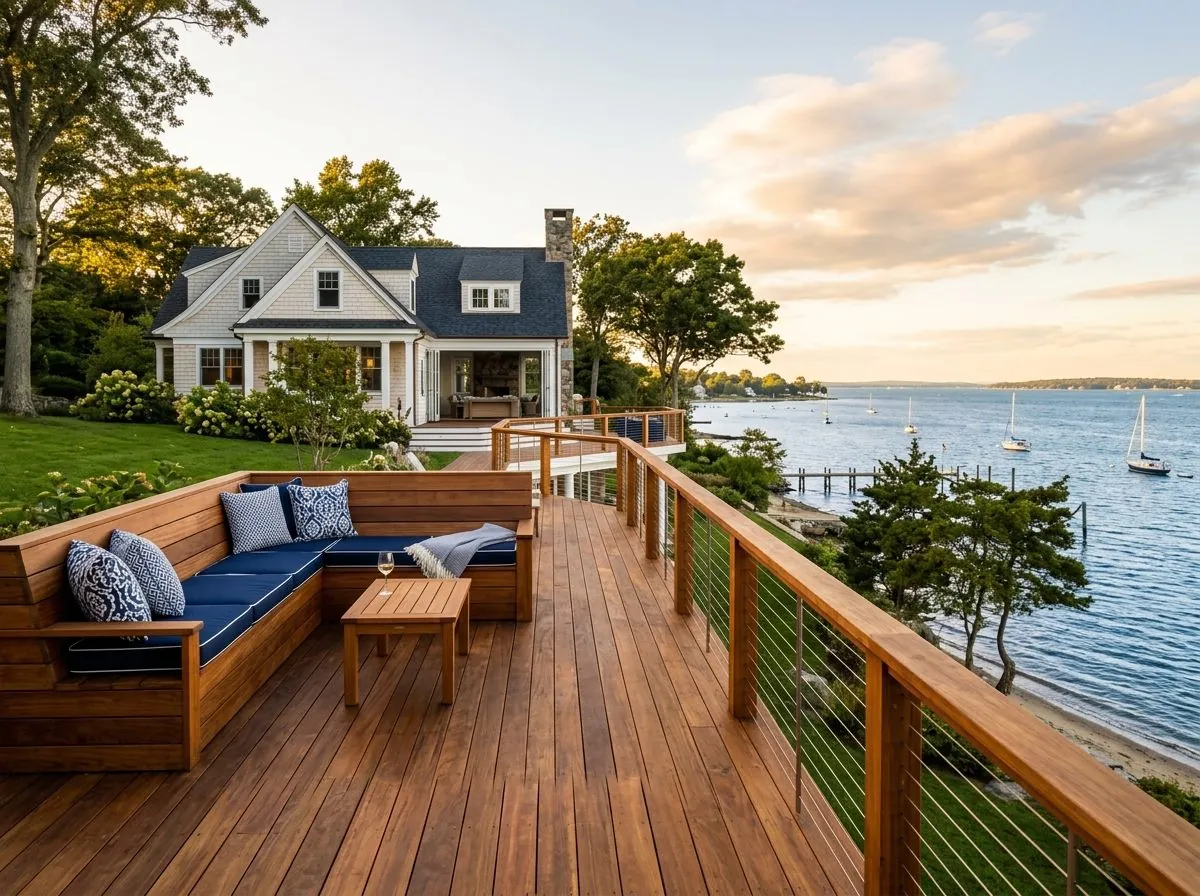
Structural Warning Signs That Mean Replace, Not Repair
Long Island homeowners often have a hard time knowing when a deck has crossed the line from 'needs maintenance and repairs' to 'needs replacement.' The answer matters financially — repair costs that approach 40–50% of replacement cost generally don't make economic sense, and beyond a certain point of structural deterioration, a deck becomes a genuine safety hazard regardless of how it looks on the surface.
The most important warning signs involve the structural members, not the surface. Ledger board rot or separation is the most serious structural issue on an attached deck. The ledger board is the horizontal member that connects the deck frame to the house. If it has significant rot, if the through-bolts are pulling out, or if there's visible separation between the ledger and the house, the entire deck is a fall risk regardless of how good the decking boards look. Ledger failure is the most common cause of deck collapses on Long Island.
Post rot at grade is another critical structural issue. Deck posts that contact or penetrate the ground are highly vulnerable to rot even with pressure-treated lumber if they were installed directly in soil contact without proper post base hardware. Posts that show softness at the base, that lean, or that wobble when you apply lateral force need immediate attention. A single failing post can compromise an entire elevated deck section.
Joist and beam deterioration below the decking surface often goes undetected until it becomes serious. Any deck that is 15+ years old with a wood substructure should have a professional inspection of the joist and beam condition before you assume it's structurally sound. Look for sagging, rot, insect damage, and corroded connectors. If more than 20–30% of the structural members show meaningful deterioration, replacement is more economical than trying to sister new members throughout.
Surface and Code Issues on Older Long Island Decks
Beyond structural concerns, surface deterioration and code compliance issues factor into the repair-vs-replace decision for Long Island homeowners.
Surface board condition: Wood decking boards that are deeply checked (cracked along the grain), splintering, warped beyond correction, or showing soft spots from rot indicate end-of-life. If more than 30% of the decking boards need replacement, you're usually better off replacing all the boards at once rather than patching — the appearance of old and new boards side-by-side is jarring, and the cost difference between replacing a third of the boards and all of them is often small.
Railing code compliance: Long Island building codes have evolved significantly over the past two decades. Older decks often have railings that no longer meet current code requirements for height (now typically 42 inches for decks over 30 inches high), baluster spacing (no more than 4 inches between balusters), or connection strength. If you're already replacing decking boards, the cost to bring railings up to current code at the same time is far less than a separate project — and is typically required if you pull a permit for the work.
The 'two-thirds rule' is a useful guide: if the estimated repair cost exceeds two-thirds of the cost to replace the deck, replacement usually makes more financial and practical sense. A new deck with modern composite materials will require less maintenance, look better, and likely add more value at resale than an extensively repaired older wood deck. For Long Island homeowners approaching the 15–20 year mark on a pressure-treated deck, this inflection point arrives more commonly than most expect.
Work With Alec's Construction
This guide is written by the crew that does the work. See Alec's Decks service — framing, composite and pressure-treated builds and repairs. Licensed and insured on Long Island, one crew start to finish, free walkthrough and a written estimate inside 48 hours.
Booking the cold months now: we also handle Roofing and Painting.
Every town here has villages inside it running their own building department. Our directory sorts out which counter your address actually files at.
Ready to Get Started?
Ready to build your dream deck? Call Alec's Construction at (631) 312-7441 for a free on-site estimate. We serve all of Nassau and Suffolk County.
Get a Free Consultation