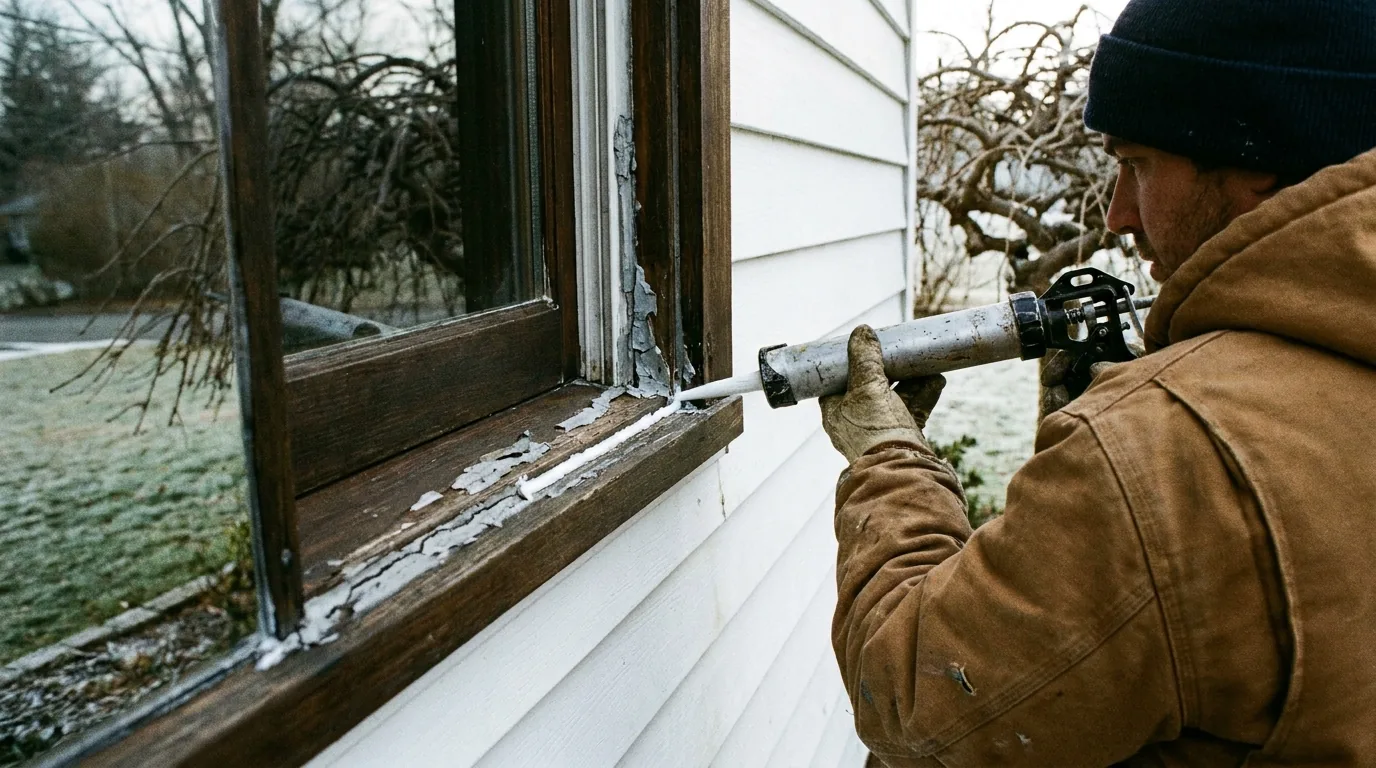
You've got the heat cranked and you're still finding cold spots by the windows every morning. That's not your imagination and it's not your furnace failing you. On Long Island, that draft usually means the seal around an old window has already given up, and winter is about to make it worse, not better.
The question I get every November is some version of: is it too late? Can I still get windows in before it really freezes, or should I just wait for spring and deal with it until then? The honest answer is almost always yes, there's time, but the window for getting it done right is shorter than most people think, and spring isn't the free pass it sounds like.
I've been doing this work out of East Patchogue since 2018, and I've installed replacement windows in December more than once. Here's what actually matters before you decide which way to go.
How Cold Is Too Cold for an Install
Most installers, myself included, will push a job down into the 20s and still get a good seal, as long as we switch materials for the season. Standard low-expansion foam and silicone caulk have a working temperature range, and once you're below it, they skin over before they cure, which gives you a seal that looks fine on install day and fails by next winter. Cold-weather foam and low-temp sealants exist for exactly this reason, and a contractor who does winter work on Long Island regularly should already have them on the truck instead of improvising. What actually stops a job isn't the thermometer, it's wind and precipitation during the hours the opening is exposed, and that's a scheduling problem, not a seasonal one.
What 40 to 50 Freeze-Thaw Cycles Do to an Old Frame
Long Island runs through somewhere around 40 to 50 freeze-thaw cycles in a normal winter, more on a mild one with a lot of back and forth near 32 degrees. Every one of those cycles works on whatever gap already exists in your window. Water gets into a crack in the glazing putty or a seam in the caulk, freezes, expands, and opens that gap a little wider. By February, the hairline gap you could barely feel in October is a working joint that whistles in a northwest wind. Waiting doesn't pause that process, it runs it another forty times.
The Draft Is Already Doing Damage You Can't See
The cold air you feel is the visible part. The part you don't see is what happens at the sill and the jamb, where warm, humid indoor air meets that cold infiltration and condenses. On a lot of the older Capes and ranches I work on around Bay Shore and East Islip, I'll pull trim off a drafty window and find soft wood underneath, black streaking, sometimes a sill that's started rotting from the inside out. Suffolk County homes commonly catch salt air off the Sound or the bay on more than one side, and that air speeds up corrosion on aluminum frames and steel hardware too. A draft isn't just a comfort problem, it's an early warning.
Nor'easters Don't Check Your Calendar
A seal that's merely annoying in still air turns into a real problem when wind-driven rain is coming at the house sideways, which is exactly what a nor'easter does. I've gone out after a storm to find water tracking down an interior wall from a window that was only drafting air a month earlier, because wind pressure pushed rain through a gap that gravity alone would never have used. If that water gets behind siding or into a wall cavity, you're not looking at a window job anymore, you're looking at insurance restoration work. Getting the window done before the next storm front is a lot simpler than dealing with what the storm does to a window that was already failing.
Spring Isn't a Free Pass
Everybody has the same idea in March. The second it's comfortable to think about house projects again, every homeowner who put this off calls every contractor on Long Island in the same two-week window, and lead times stretch out fast. You'll likely be scheduling into May or June for something you could have had done in December. Meanwhile you're paying to heat the outdoors through the coldest stretch of the year, through a gap that's getting wider with every freeze-thaw cycle I mentioned above. If you're also losing heat through the attic, which is common in the same older homes, it's worth looking at attic air sealing at the same time instead of fixing one leak and ignoring the other.
Older South Shore Homes Move on Their Own Schedule
If you're in a house built decades ago anywhere near the South Shore, Babylon, Islip, Bay Shore, where the water table sits high and the soil runs sandy, I almost always find some settling that's taken the window openings slightly out of square. That doesn't stop a replacement, but it does mean a standard insert won't always drop in clean, and the carpentry around the opening matters more than the brand of window you pick. It's one more reason to get a contractor to look at the actual opening in person instead of ordering off a tape measure and a photo.
Permits Vary by Town, So Confirm Before You Order
Whether a straight window replacement needs a permit, and what triggers one, generally comes down to whether you're changing the size of the opening, hitting egress requirements for a bedroom window, or doing structural work around it. Brookhaven, Islip, Smithtown, Huntington, Babylon, and Southampton can each handle this differently, and the rule can change between code cycles. Don't take my word or anyone else's for what your specific town requires. Call that town's building department before you sign a contract, and ask your contractor to confirm the requirement in writing.
What a Realistic Late-Season Install Looks Like
- Measure and order first, since lead time on the actual units is usually the longest part of the job, not the install day itself
- Confirm with your contractor that they're using cold-rated sealants and foam before the crew shows up, not improvising on site
- Schedule the install for a stretch of calm, dry weather, even if that means working around a storm track
- Do it room by room or a few openings at a time so the house is never wide open to the weather longer than it has to be
- Plan trim and paint touch-up for later if needed, the weathertight seal matters more right now than the cosmetic finish
What We Do
We replace windows on Long Island year-round, including the cold months, and we carry the materials that actually cure at winter temperatures instead of pretending summer-grade caulk will hold. If you're feeling drafts and wondering whether there's still time, there usually is, but the sooner we look at the opening, the more options you have.
Call (631) 312-7441 or book a free walkthrough.
Frequently Asked Questions
Is it too late in the year to replace windows on Long Island?
Usually not. Installers who do winter work regularly carry cold-rated foam and sealant and can get a good seal well into the colder months. What actually stops a job is a stretch of heavy wind or rain during the install window, not the thermometer on its own, so the real limit is your contractor's schedule and the weather forecast that week.
Will cold weather affect the new window's seal?
It can if the installer uses the same caulk and foam they'd use in July. Below a certain temperature, standard sealants skin over before they cure and fail early. A contractor doing winter installs on Long Island should be using cold-weather rated products, which is a question worth asking before you sign anything.
Can I replace just the drafty windows now and do the rest later?
Yes, and it's a common approach. Prioritize the windows with the worst drafts or visible rot first, then phase the rest in over the next year or two. Just know that each window you leave in place keeps running through the same 40 to 50 freeze-thaw cycles a season, so the gap on those won't hold steady while you wait.
What permit do I need for window replacement in Suffolk County?
It depends on the town and on whether the project changes the opening size, affects egress requirements, or involves structural work. Brookhaven, Islip, Smithtown, Huntington, Babylon, and Southampton each handle this a bit differently, so confirm directly with that town's building department before signing a contract.
How long does a window replacement job actually take?
A straightforward swap of a handful of windows is usually a one to a few day job once the units arrive, with install day itself often the shortest part. The longer stretch is almost always lead time on ordering the windows, which is why measuring and ordering early matters more than the install date.
What actually happens if I wait until spring?
The draft and the gap behind it keep getting worse through every freeze-thaw cycle between now and then. On top of that, spring is when every homeowner on Long Island calls a contractor at once, so lead times stretch and you can end up waiting into early summer for work you could have had done in December.
Related Guides
- Insurance Restoration Services
- Attic Air Sealing Long Island Guide
- Siding Services
- Attic Ice Dam Signs Before First Snow
Get a Free Estimate from Alec's Construction
Licensed and insured, working across Nassau and Suffolk County since 2018. We come out, look at the actual job, and put a written number in your hand — no pressure, no obligation.
Or call (631) 312-7441