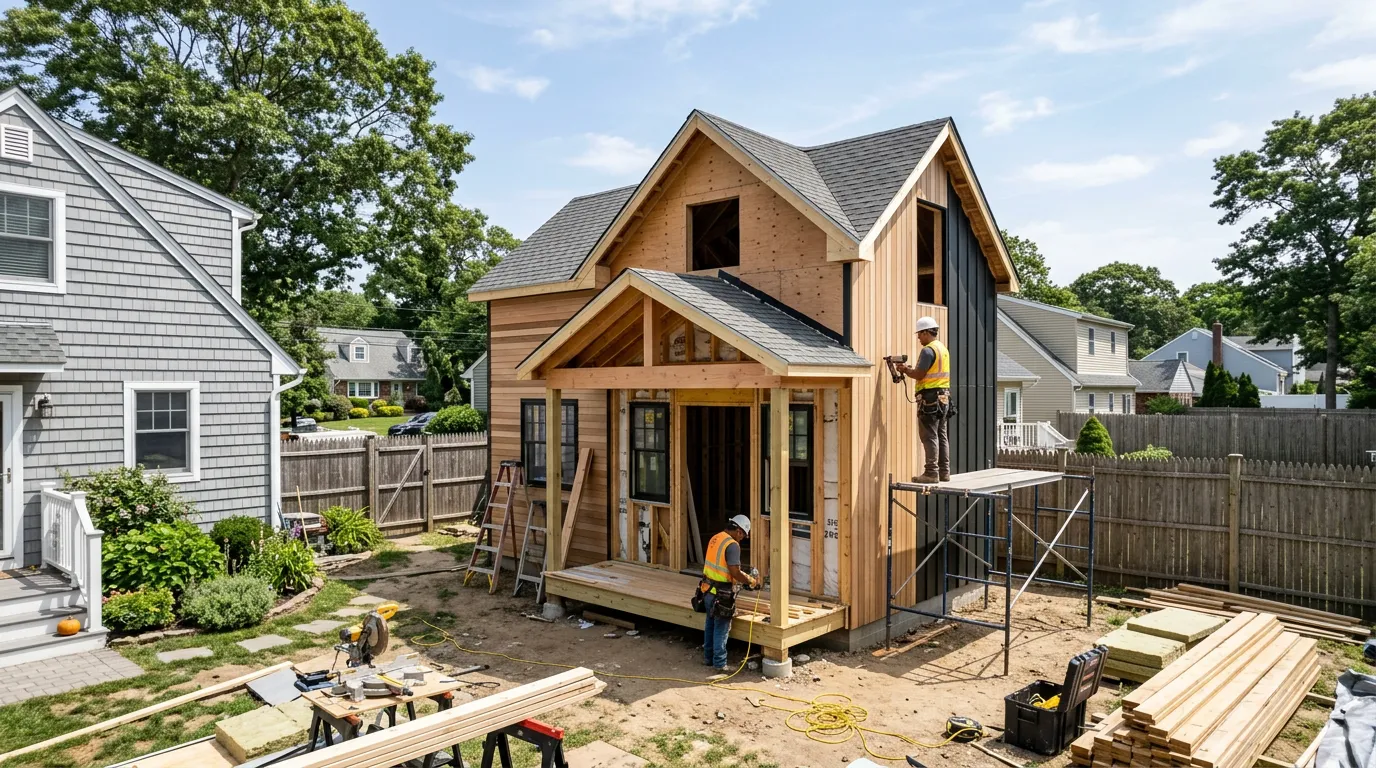
Alec's Construction builds and legalizes accessory dwelling units in Farmingville, Suffolk County — basement and lower-level apartments, garage conversions, dormered second floors and additions — working out of the yard in East Patchogue. Most of what people call an ADU here is an apartment inside the house they already own, and a lot of those already exist and need to be made legal. That is winter work.
Accessory Apartments in Farmingville
Farmingville is Town of Brookhaven — the Town's building department is here at One Independence Hill — and the hi-ranch and split-level stock is well suited to an accessory apartment because the lower level is at grade with its own entrance. Most Farmingville ADU questions are about legalizing a lower level that already functions as an apartment, and the answer turns on egress, ceiling height and the separation between the two units.
The Split-Level Lower Level Is Already Half an Apartment
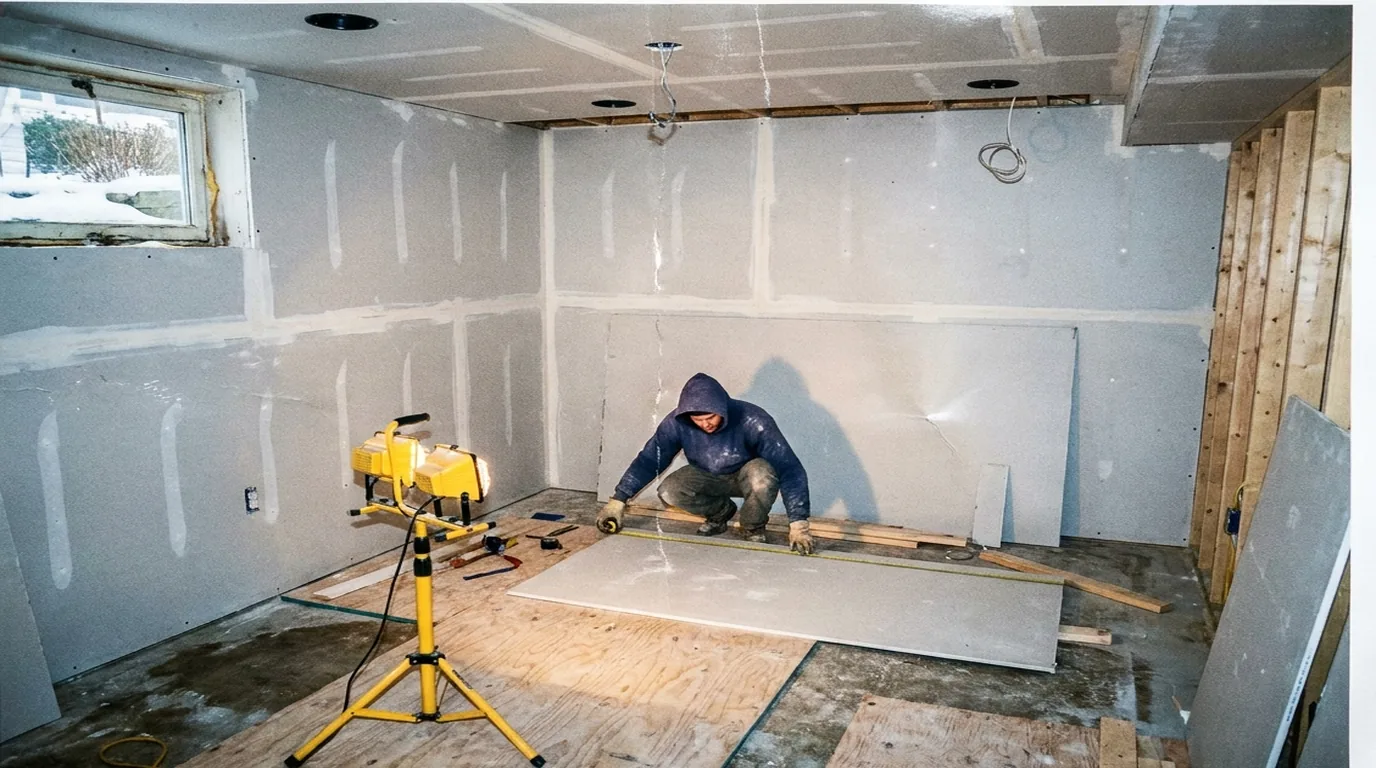
A split or a hi-ranch was built with a lower level at grade, its own exterior door, full-height ceilings and daylight — which is why so many of them already function as informal apartments. Legalizing one is mostly a matter of what the code asks a dwelling unit to have and the builder never bothered with: a compliant egress opening in the sleeping room, interconnected smoke and carbon-monoxide detection between the units, a fire separation at the shared floor and stair, and the kitchen and bath plumbing and electrical inspected.
The corrections are usually smaller than owners fear. The part that takes the time is the paperwork — the accessory apartment permit, the owner-occupancy affidavit, the inspections — and that is precisely why the winter is the right season for it.
What the Town Asks a Dwelling Unit to Have
- A compliant egress opening in every sleeping room — net clear opening, sill height and well where it is below grade
- Ceiling height that meets the habitable-space minimum, measured under the beams and ducts, not between them
- A fire separation between the apartment and the main house at the shared floor, wall and stair
- Smoke and carbon-monoxide detection in both units, interconnected
- A kitchen and a full bath, with the plumbing and electrical inspected
- Its own exit to the outside
- The owner living in the house, and the accessory apartment permit with its renewal cycle
Permits in Farmingville
The Brookhaven Building Division is in Farmingville itself, at One Independence Hill, (631) 451-6333 — which makes it the easiest place in the town to settle a permit question in person. The accessory apartment permit sits on top of the building permit — two processes, one address — and the rules differ by town and by village. We confirm which authority governs from the tax map, then read the current rules for that authority, then walk the house against them. It saves months.
The Winter Plan
The interior legalizations run straight through the winter, because none of the work depends on the weather. For a new build — a dormer, an addition, a detached unit — the winter is when the survey, the drawings and the permit application get done so the framing can start as soon as the ground allows.
Free walkthrough in Farmingville. Alex walks the space against the code, lists what passes and what does not, and you get the list and the photographs whether or not you hire us.
Frequently Asked Questions
What does Brookhaven require to legalize a Farmingville lower-level apartment?
Owner occupancy of the house, the accessory apartment permit, and a lower level that meets the code for a dwelling unit — a compliant egress in the sleeping room, ceiling height, smoke and CO detection interconnected between units, a fire separation between the apartment and the main house, and the electrical and plumbing inspected. On a hi-ranch most of that is already close. We list what passes and what does not on the first walkthrough.
What does an ADU need that a finished basement does not?
A compliant egress opening in every sleeping room, a fire separation between the unit and the main house, interconnected smoke and CO detection in both units, a kitchen and a bath that pass inspection, ceiling height that meets the code for habitable space, and its own means of exit. A finished basement family room is held to a lower standard on most of those. The gap is what a legalization closes.
What is the difference between legalizing an apartment and building one?
Legalizing means the space already exists and functions as an apartment — a finished basement, a lower level, a converted garage — and the work is bringing it up to what the town requires for a dwelling unit and getting the accessory apartment permit. Building one means creating the space. Legalization is almost always interior work and it is what we schedule through the winter.
Why do the design and permit in winter?
Because the permit is the slow part. Between the survey, the drawings, the town's accessory apartment application and the plan review, several months can go by before anything is built. Starting that in November means a build can start when the ground thaws instead of in July. The interior legalizations run straight through the winter regardless.
Related Guides
- ADUs in Shirley, NY
- ADUs in Coram, NY
- ADU Construction on Long Island
- Garage Conversion to ADU
- ADU Construction on Long Island — Guide
Also Serving Farmingville
- Attic Insulation in Farmingville — air sealing, baffles and R-49 depth
- Basement Finishing in Farmingville — egress, ceiling height and moisture
- Bathroom Remodeling in Farmingville — full gut renovations
- Chimney Repair in Farmingville — repointing, crowns, caps and flashing
- Driveway Paving in Farmingville — blacktop, resurfacing and repairs
- Emergency Roof Repair in Farmingville — tarping, leaks and storm response
- Fallen Tree Removal & Roof Repair in Farmingville — tree off the house, roof supported and repaired
- Flood & Water Damage Cleanup in Farmingville — wet material out, drying metered
- Garage Conversion in Farmingville — turning the garage into living space
- Gutter Installation in Farmingville — seamless gutters, fascia and drainage
- House Painters in Farmingville — exteriors while the fall window holds
- Hurricane & Storm Damage Repair in Farmingville — trees, flooding, cleanup and repairs
- Storm Damage & Insurance Restoration in Farmingville — emergency tarping and the claim
- Interior Painting in Farmingville — the right work for the cold months
- Kitchen Remodeling in Farmingville — cabinets, counters and layout
- Masonry & Pavers in Farmingville — patios, walkways and retaining walls
- Roofing in Farmingville — tear-offs, repairs and storm damage
- Siding in Farmingville — James Hardie, vinyl and cedar
- Storm Debris Removal & Cleanup in Farmingville — trees, building debris and hauling
- Storm Roof & Siding Repair in Farmingville — wind damage, tarped and rebuilt
- Windows & Doors in Farmingville — insert and full-frame replacement
Work With Alec's Construction
This guide is written by the crew that does the work. See Alec's ADUs service — accessory apartments, garage conversions and grant paperwork. Licensed and insured on Long Island, one crew start to finish, free walkthrough and a written estimate inside 48 hours.
Booking the cold months now: we also handle Additions & New Construction and Bathroom Remodeling.
Get a Free Estimate from Alec's Construction
Working across Suffolk County since 2018, one crew from start to finish. We come out, look at the actual job, and put a written number in your hand — no pressure, no obligation.
Or call (631) 312-7441