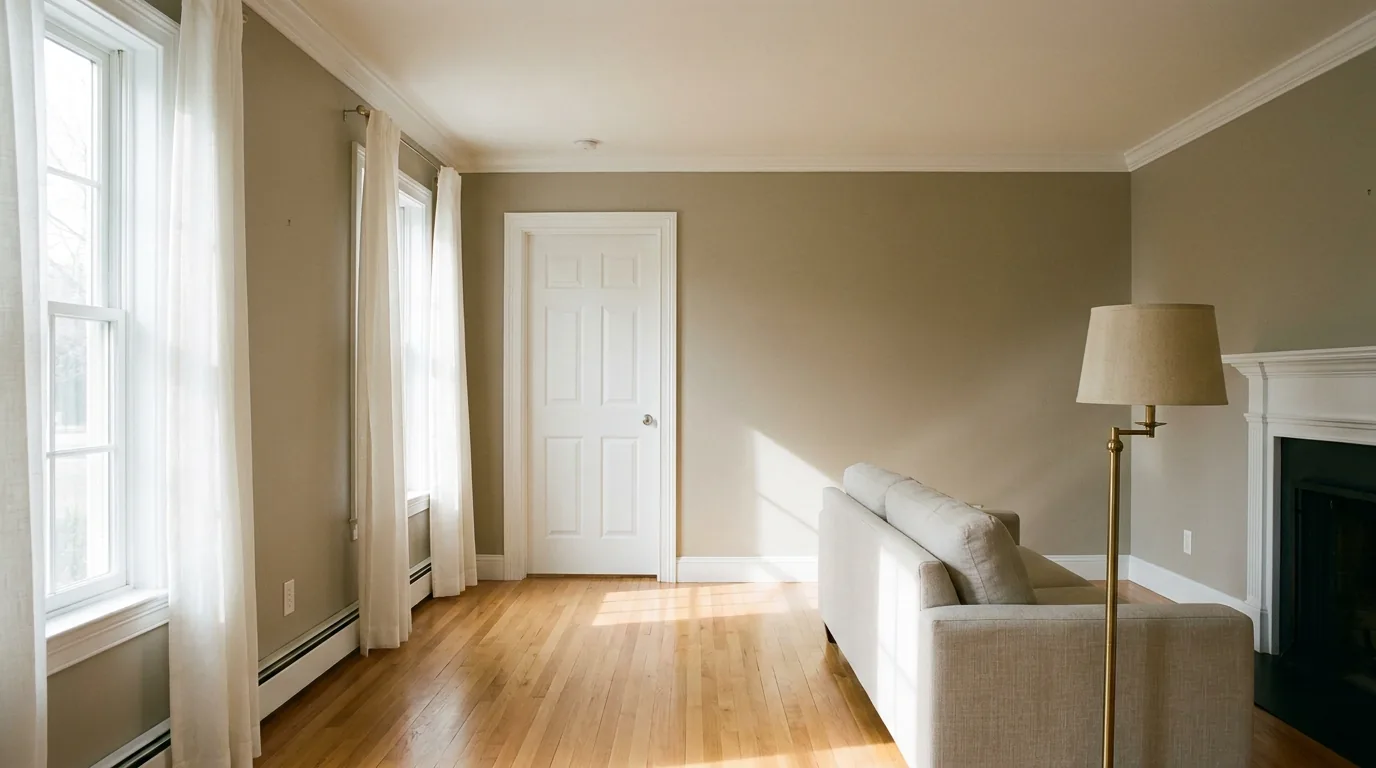
Alec's Construction paints house interiors in Farmingville (11738), working out of the yard in East Patchogue. An interior job here is mostly preparation — cracks, nail pops, water stains, old glossy trim and, in older houses, old paint layers — because the finish coat only looks as good as the surface under it.
Interior Painting in Farmingville
Farmingville sits on high, exposed ground around Bald Hill, and the 1960s-to-80s splits and hi-ranches built across those slopes take the wind on their gable ends. Inside, that sometimes shows as a faint brown stain high in a corner of a gable-end bedroom, left by rain driven in during an old storm. Before a repaint we find those, confirm they are dry, and seal them with a stain-blocking primer so they do not bleed back. The other Farmingville feature is the long, flat ceiling over the open living and dining room of a hi-ranch, with big windows on one side. Low sun from those windows rakes across the ceiling and shows every seam, patch and old roller mark. Ceilings like that get dead-flat ceiling paint, which hides more than any other sheen, and where the old texture is uneven, a skim coat first. Dated color schemes from the original build round out most of the list.
What We Look at First in Farmingville
We look up before we look around. In each upper-level room we check the corners on the gable walls for old stains and the ceilings for seams and nail pops, holding a flashlight flat to the surface. Original textured ceilings get tested before any scraping. Then we stand in the living room in daylight and look across the ceiling from the windows, which shows its real condition.
Painting Inside Ranches and Capes
Inland, the common houses are 1950s-to-70s ranches, capes and hi-ranches, and their interiors share a few familiar problems: nail pops in the drywall, cracks over door frames, old oil-based paint on the trim, and wood paneling in the den or the basement.
Nail pops are reset with screws and patched rather than just filled. Old oil-based trim gets cleaned, sanded and primed with a bonding primer before latex goes over it; without that step the new paint peels off in sheets.
Paneling can be painted, and it changes a dark room completely, but it needs to be cleaned, scuffed and primed first. Many families here paint before selling or after buying, and winter is the slow season when the job fits in easily and the rooms can be done one at a time with the furniture moved and protected.
Preparation Comes First
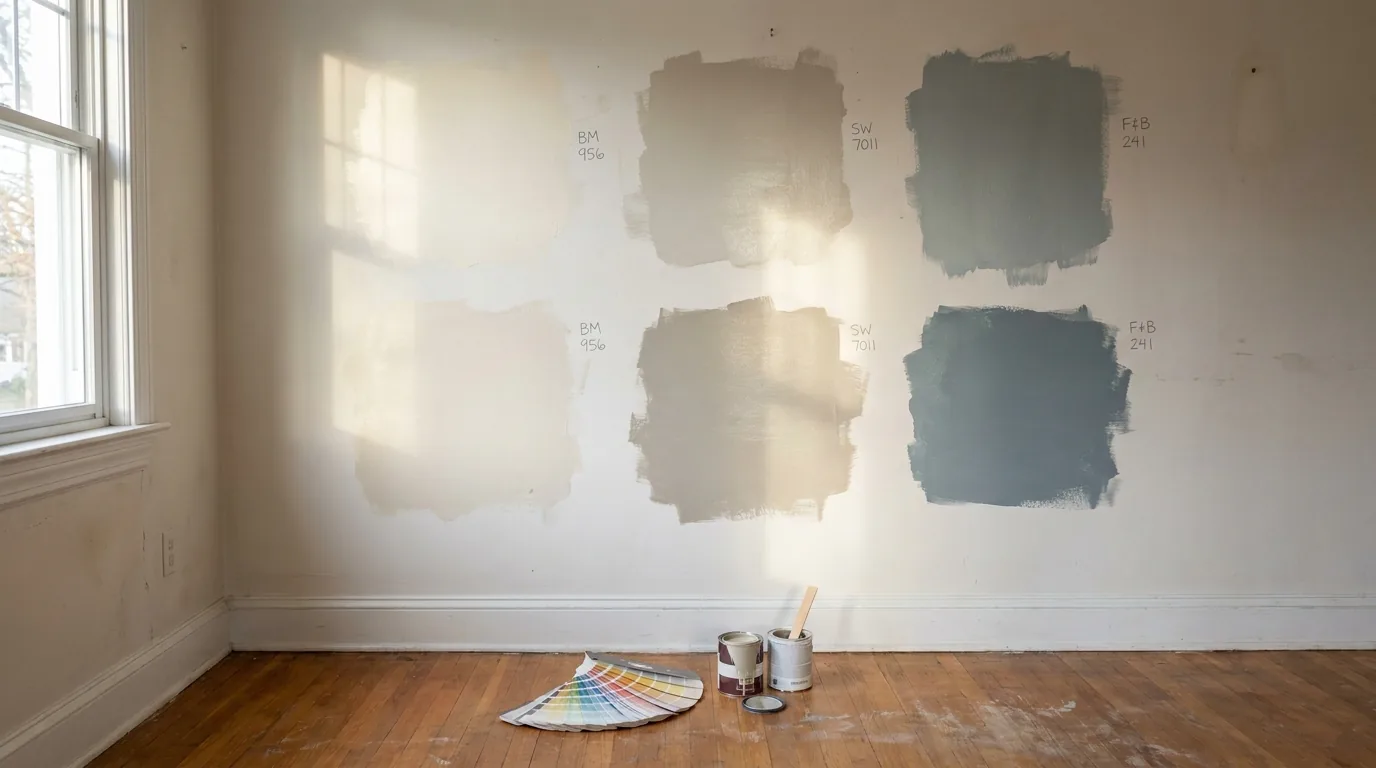
Most of the time on a good interior job is spent before the paint can is opened. Rooms are cleared and covered, then every wall and ceiling is checked in raking light for cracks, dents, nail pops and old patches. Those get repaired and primed so they do not flash through the finish.
Water stains are sealed with a stain-blocking primer, or they come back through any amount of paint. Old oil-based trim is sanded and bonded before latex goes on. Then the finish: ceilings, walls, trim and doors, in that order, with clean lines at every edge and a walkthrough with you at the end.
Permits in Farmingville
The Brookhaven Building Division is in Farmingville itself, at One Independence Hill, (631) 451-6333 — which makes it the easiest place in the town to settle a permit question in person. Interior painting itself is not permitted work; where repairs open walls or touch plumbing or electrical, that part follows the department's rules, and we tell you if it applies.
Alex walks the house in Farmingville, photographs what he finds and gives you a written scope in the order the work has to happen — whether or not you hire us. Call (631) 312-7441 to set up a time.
Frequently Asked Questions
Why does every seam show on the living room ceiling of our Farmingville hi-ranch?
Because of the light. Big windows at one end send low daylight across the ceiling at a shallow angle, and that grazing light throws a shadow off every ridge, tape joint and roller mark. Glossier paint makes it worse. We knock down high seams, sand texture flat, skim where needed, and finish in a dead-flat ceiling paint, which scatters light instead of reflecting it, so small flaws mostly disappear.
Do you fix cracks and holes before painting in Farmingville?
Yes, that is most of the job. Cracks are opened and re-taped where needed, nail pops are reset with screws, holes are patched and sanded, and water stains are sealed with a stain-blocking primer. Paint over unrepaired damage shows every flaw in the first good light.
Do I need to move my furniture before you paint in Farmingville?
No. We move the furniture to the center of each room, cover it and the floors, and put everything back when the room is done. Small breakables, pictures and personal items are best put away by you before we arrive.
Who issues the permit for interior painting work in Farmingville?
The Brookhaven Building Division is in Farmingville itself, at One Independence Hill, (631) 451-6333 — which makes it the easiest place in the town to settle a permit question in person. Interior painting itself is not permitted work; where repairs open walls or touch plumbing or electrical, that part follows the department's rules, and we tell you if it applies.
Related Guides
- Interior Painting in Shirley, NY
- Interior Painting in Coram, NY
- Painting on Long Island
- Why Winter Is the Season for Interior Painting
- Drywall Repair on Long Island
Work With Alec's Construction
This page is written by the crew that does the work. See Alec's Painting service — walls, ceilings, trim and cabinets prepped properly before a drop of paint. One crew from the first walkthrough to the last inspection.
Also in Farmingville through the cold months: Kitchen Remodeling and Bathroom Remodeling.
Also Serving Farmingville
- ADUs in Farmingville — accessory apartments and grants
- Attic Insulation in Farmingville — air sealing, baffles and R-49 depth
- Basement Finishing in Farmingville — egress, ceiling height and moisture
- Bathroom Remodeling in Farmingville — full gut renovations
- Chimney Repair in Farmingville — repointing, crowns, caps and flashing
- Driveway Paving in Farmingville — blacktop, resurfacing and repairs
- Emergency Roof Repair in Farmingville — tarping, leaks and storm response
- Fallen Tree Removal & Roof Repair in Farmingville — tree off the house, roof supported and repaired
- Flood & Water Damage Cleanup in Farmingville — wet material out, drying metered
- Garage Conversion in Farmingville — turning the garage into living space
- Gutter Installation in Farmingville — seamless gutters, fascia and drainage
- House Painters in Farmingville — exteriors while the fall window holds
- Hurricane & Storm Damage Repair in Farmingville — trees, flooding, cleanup and repairs
- Storm Damage & Insurance Restoration in Farmingville — emergency tarping and the claim
- Kitchen Remodeling in Farmingville — cabinets, counters and layout
- Masonry & Pavers in Farmingville — patios, walkways and retaining walls
- Roofing in Farmingville — tear-offs, repairs and storm damage
- Siding in Farmingville — James Hardie, vinyl and cedar
- Storm Debris Removal & Cleanup in Farmingville — trees, building debris and hauling
- Storm Roof & Siding Repair in Farmingville — wind damage, tarped and rebuilt
- Windows & Doors in Farmingville — insert and full-frame replacement
Talk to Alec's Construction About Interior Painting in Farmingville
We come out, look at the house, photograph what we find and put a written scope in your hand. No pressure, no obligation. Working across Suffolk County since 2018.
Or call (631) 312-7441