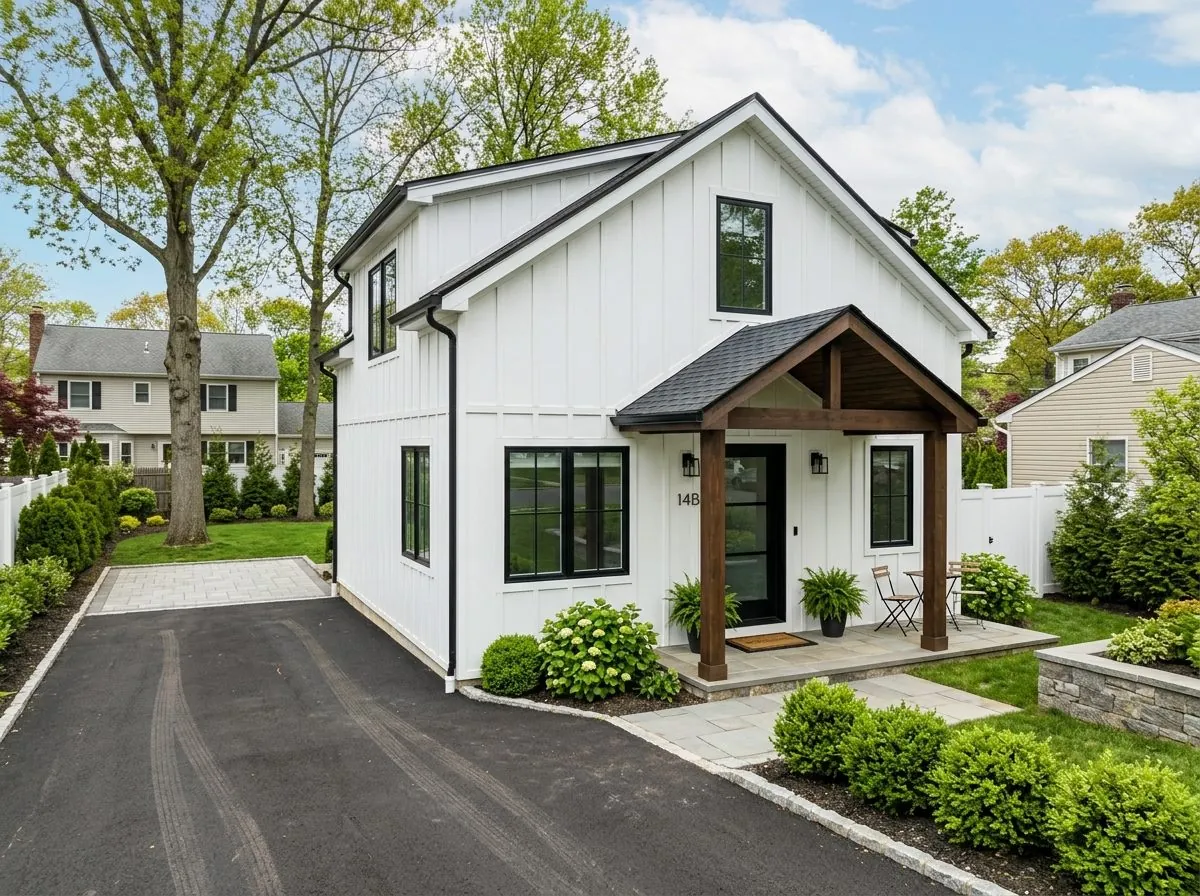
When Long Island homeowners think about adding an accessory dwelling unit to their property, the garage is usually the first place they look. And for good reason. Garage conversions are the most popular ADU option in Suffolk County because they start with a structure that already exists. You have walls, a roof, a slab, and often enough square footage to create a comfortable studio or one-bedroom apartment. Compared to building from scratch in the backyard, converting a garage saves tens of thousands of dollars and months of construction time.
Whether you want to generate rental income, house an aging parent, or create a private space for an adult child, a garage-to-ADU conversion is one of the smartest investments a Long Island homeowner can make. This guide covers everything you need to know, from costs and permits to design ideas and timelines.
Why Garage Conversions Are the #1 ADU Choice
There are several reasons garage conversions dominate the ADU market on Long Island. Understanding these advantages will help you decide if this is the right path for your property.
- The structure already exists. Your garage has a foundation, framing, exterior walls, and a roof. That means you skip the most expensive and time-consuming phases of new construction. You are working within an existing footprint, which simplifies permitting and dramatically reduces costs.
- Lower cost. A typical garage conversion runs $50,000 to $100,000, compared to $150,000 to $300,000 for a detached new-build ADU. You are essentially paying for insulation, interior buildout, and utility connections rather than building an entire structure from the ground up.
- Faster timeline. Most garage conversions take 6 to 10 weeks of construction, compared to 12 to 20 weeks for new construction. Less disruption to your daily life, and you start earning rental income or housing family sooner.
- Preserves your yard space. Unlike a detached backyard cottage, a garage conversion does not eat into your outdoor living area. Your lawn, garden, patio, and pool stay exactly where they are.
- Simpler permitting. Because you are modifying an existing structure rather than adding a new one, the permit process is generally more straightforward. You still need building permits and zoning approval, but the review tends to move faster.
Thinking about converting your garage?
Free walkthrough — we assess your garage and give you options.
Types of Garage Conversions
Not all garages are created equal, and the type of garage you have will shape the scope, cost, and design possibilities of your conversion. Here are the most common scenarios we handle across Suffolk County.
- Attached single-car garage. These conversions typically yield 200 to 300 square feet of living space. That is enough for a compact studio apartment with a kitchenette, bathroom, and combined living/sleeping area. This is ideal for a single tenant or an aging parent who values proximity to the main house.
- Attached two-car garage. With 400 to 600 square feet to work with, a two-car garage conversion gives you room for a true one-bedroom apartment. You can include a separate bedroom, a full kitchen, a living area, and a full bathroom. This is the sweet spot for rental income on Long Island, because one-bedroom units command the strongest tenant demand.
- Detached garage. A standalone garage set back from the house offers the most privacy for both you and the future occupant. Detached conversions require running utility lines from the main house, which adds to the cost, but the separation creates a more independent living situation that tenants and family members both appreciate.
- Garage plus above-garage combo. If your garage has the structural capacity, or can be reinforced, you can convert the ground floor and add a second story above. This approach lets you keep parking on the ground level and build a full apartment upstairs. It is more expensive than a standard conversion but maximizes the use of your existing footprint.
Costs for Garage ADU Conversion on Long Island
The total cost of a garage-to-ADU conversion on Long Island typically falls between $50,000 and $100,000. Where your project lands within that range depends on the size of the garage, the condition of the existing structure, and the level of finish you choose.
Here is what that budget covers:
- Structural assessment and reinforcement. Ensuring the existing slab, walls, and roof can support habitable use. If the garage door opening needs to be framed in, that cost is included here.
- Insulation. Garage walls and ceilings are typically uninsulated. You will need fiberglass batt or spray foam insulation to meet New York State energy code requirements (R-20 walls, R-49 ceiling in most cases).
- HVAC. A mini-split heat pump system is the most common and cost-effective solution. A single-zone unit typically runs $3,500 to $6,000 installed, providing both heating and cooling.
- Plumbing. Running water supply and drain lines for a kitchen and bathroom. Costs depend on how far the garage is from the main house's plumbing stack and whether the slab needs to be cut for drain lines.
- Electrical upgrade. Most garages are on a single 20-amp circuit. An ADU requires a dedicated sub-panel with multiple circuits for lighting, outlets, kitchen appliances, bathroom, and HVAC.
- Egress windows. Building code requires at least one egress window in every sleeping area for emergency escape. If the existing garage windows do not meet size requirements, new openings will need to be cut.
- Drywall, flooring, and finishes. Interior buildout including drywall, paint, flooring (luxury vinyl plank is the most popular and durable choice), kitchen cabinets, countertops, bathroom fixtures, and trim.
What pushes costs toward the higher end? Larger garages, high-end finishes like quartz countertops and tile showers, ADA-accessible features, extensive plumbing runs for detached garages, and septic system upgrades required by the Suffolk County Health Department.
Licensed & Insured
Full coverage on every project
36+ Cities Served
Suffolk County & Long Island
Free Walkthrough
No obligation, no pressure
What's Involved in a Garage Conversion
A garage-to-ADU conversion is more than just drywalling the walls and adding a bathroom. Here is a detailed look at what the construction process involves.
- Structural assessment. Before anything else, we evaluate whether the existing garage can support habitable use. We check the foundation for cracks, settling, and moisture issues. We inspect the framing for structural integrity. If the garage was built as a simple storage structure, some reinforcement may be needed.
- Foundation inspection. A garage slab is often thinner and less reinforced than a house foundation. We verify that the slab is adequate for a living space. In some cases, a moisture barrier or additional concrete work is needed.
- Garage door infill. The garage door opening is framed in with standard wall construction. This new wall section includes insulation, sheathing, a window, and an entry door. The result looks like it was always part of the building.
- Insulation. Walls get R-20 insulation (or higher, depending on the assembly). Ceilings get R-49. This is not optional; it is required by New York State Energy Code and it is what makes the space comfortable year-round on Long Island.
- HVAC installation. We install a ductless mini-split system for heating and cooling. These units are efficient, quiet, and do not require ductwork. One unit handles both heating and cooling, which keeps the conversion cost-effective.
- Plumbing rough-in. Water supply and drain lines are run for the kitchen sink, bathroom sink, toilet, and shower or tub. If the slab needs to be cut for drain lines, we do that early in the process.
- Electrical upgrade. A new sub-panel is installed with dedicated circuits. We wire for lighting, outlets (including GFCI in kitchen and bath), kitchen appliances, HVAC, and smoke/CO detectors.
- Egress windows. Every bedroom must have at least one window that meets egress requirements: minimum 5.7 square feet of opening, with specific height and width minimums. We cut new openings if the existing windows are too small.
- Drywall, flooring, and finishes. Once rough-in inspections pass, we hang and finish drywall, install flooring, set cabinets and countertops, install bathroom fixtures, and complete all trim work.
Get a Free Estimate
Tell us about your project — we respond within 24 hours.
No spam. No obligation.
Permit Requirements for Garage Conversions
Converting a garage to an ADU on Long Island requires proper permits. Skipping this step creates legal, financial, and safety risks. Here is what you need.
- Building permit. Your town's building department must approve architectural plans showing the conversion meets building code, including structural, electrical, plumbing, and fire safety requirements.
- Zoning compliance. The ADU must comply with local zoning rules for accessory apartments. This includes lot size minimums, owner-occupancy requirements (most towns require the homeowner to live in either the main house or the ADU), and maximum ADU size relative to the primary dwelling.
- Health department review. If your property uses a septic system (which most Suffolk County homes do), the Suffolk County Health Department must confirm that your septic has adequate capacity for the additional dwelling. If it does not, you may need a septic upgrade before the conversion can proceed.
- Parking replacement. This is the one that catches many homeowners off guard. Most Long Island towns require you to maintain at least one to two off-street parking spaces, even after you convert the garage. If your garage currently serves as your only parking, you may need to add a paved driveway pad to compensate.
Alec's Construction manages the entire permit process. We prepare the plans, submit the applications, respond to plan examiner comments, and schedule all required inspections. You do not have to visit the building department yourself.
Not sure if your garage qualifies?
We'll assess your garage for free and tell you exactly what's possible.
Design Ideas for Long Island Garage ADUs
The best garage ADU designs maximize every square foot while creating a space that feels open, comfortable, and complete. Here are the design approaches we recommend to our Suffolk County clients.
- Open floor plan studio. For single-car garages or compact two-car conversions, an open layout combines the living area, sleeping area, and kitchen into one flowing space. Use furniture placement and area rugs to define zones rather than walls. This makes a 300-square-foot unit feel much larger than it is.
- One-bedroom layout. In a two-car garage conversion, you have room for a dedicated bedroom separated by a wall with a door. The remaining space becomes a combined living room and kitchen. This layout commands higher rent and appeals to a wider range of tenants.
- Kitchenette vs. full kitchen. A kitchenette with a compact refrigerator, two-burner cooktop, and small sink works for studio units and keeps costs down. A full kitchen with standard appliances, upper and lower cabinets, and full-size refrigerator adds $5,000 to $10,000 but significantly increases the unit's appeal and rental value.
- ADA-accessible design. If the ADU is intended for aging parents, consider wider doorways (36 inches clear), a roll-in shower with grab bars, lever-style door handles, and a zero-threshold entry. These features cost very little extra when incorporated during construction and make the space safe and comfortable for years to come.
Timeline: How Long Does a Garage Conversion Take?
One of the biggest advantages of a garage conversion is speed. Here is a realistic timeline for a Suffolk County project.
- Permitting: 2 to 4 weeks. This includes plan preparation, submission, review, and approval. Some towns move faster than others. Brookhaven Town has been processing ADU permits on a reasonable timeline in 2026.
- Construction: 6 to 10 weeks. A straightforward single-car conversion with standard finishes takes about 6 weeks. A larger two-car conversion with higher-end finishes and more complex plumbing runs closer to 10 weeks.
- Final inspections: 1 to 2 weeks. After construction is complete, the building department conducts final inspections for structural, electrical, plumbing, and fire safety. Once passed, you receive your Certificate of Occupancy.
Total project duration from first meeting to move-in: roughly 3 to 4 months. That is significantly faster than any other type of ADU construction.
Before and After: What to Expect
The transformation from garage to livable apartment is dramatic. Here is what that journey typically looks like.
You start with a cold, uninsulated box with a concrete slab floor, exposed stud walls (or bare drywall), a large garage door opening, and a single light fixture. There is no plumbing, no heating, and no insulation. It is a space designed to store cars and lawn equipment.
By the end of construction, that same space has smooth finished walls, luxury vinyl plank flooring, a fully equipped kitchen with cabinets and countertops, a modern bathroom with tile work, recessed LED lighting throughout, a ductless mini-split for year-round climate control, and a private entrance where the garage door used to be. From the outside, the converted garage blends seamlessly with the rest of the house. From the inside, it feels like a brand-new apartment.
The difference is not just cosmetic. It is the difference between dead space that costs you money (property taxes, maintenance) and a legal dwelling unit that generates $1,500 to $2,500 per month in rental income or houses a family member who would otherwise need expensive alternative housing.
Frequently Asked Questions
Will I lose my parking if I convert my garage?+
Do I need a separate entrance for a garage ADU?+
Can I convert just half of my two-car garage?+
Do I need new electrical service for a garage ADU?+
Want to learn more about ADU options for your Long Island property? Read our comprehensive ADU Construction on Long Island guide, or explore how much rental income an ADU can generate. If you are considering an ADU specifically for aging parents, our in-law suite guide covers ADA-accessible design, costs, and planning.
Related Articles
Work With Alec's Construction
This guide is written by the crew that does the work. See Alec's ADUs service — accessory apartments, garage conversions and grant paperwork. Licensed and insured on Long Island, one crew start to finish, free walkthrough and a written estimate inside 48 hours.
Booking the cold months now: we also handle Additions & New Construction and Bathroom Remodeling.
Every town here has villages inside it running their own building department. Our directory sorts out which counter your address actually files at.
Ready to Convert Your Garage?
Contact Alec's Construction for a free garage assessment. We will evaluate your space, explain your options, and provide a detailed estimate for your conversion project.
Get a Free Consultation