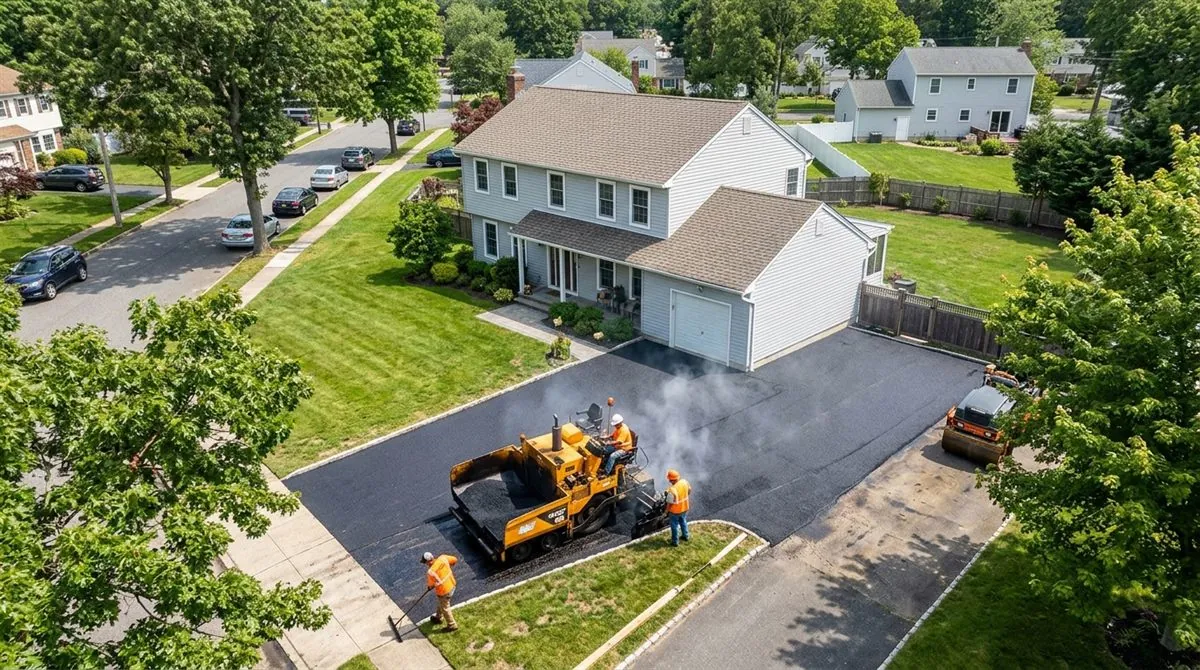
It's one of the most common questions Long Island homeowners ask before a driveway project: should I go with asphalt (blacktop) or concrete? Both are solid choices, but they perform differently in our climate and come with very different price tags. Here's an honest comparison to help you decide.
Cost Comparison: Asphalt Wins Upfront
On Long Island, asphalt driveways typically cost 30–50% less than concrete for the same square footage. For a standard two-car driveway, that usually means:
| Material | Avg Cost (20×20 ft) | Lifespan |
|---|---|---|
| Asphalt (blacktop) | $3,500 – $6,000 | 20–30 years with sealing |
| Concrete | $6,500 – $11,000 | 30–50 years |
Concrete costs more upfront but lasts longer with less maintenance if installed correctly. Asphalt needs sealing every 3–5 years, which adds to the lifetime cost but keeps it looking fresh and prevents water infiltration.
For most Long Island homeowners who plan to stay in their home 10–15 years, asphalt is the more economical choice. If you're doing a full renovation and plan to stay long-term, concrete's durability becomes more compelling.
Which Holds Up Better in Long Island Winters?
This is where asphalt actually has an edge over concrete in our region. Long Island winters bring repeated freeze-thaw cycles — temperatures drop below freezing, moisture gets into small cracks, freezes, expands, and creates larger cracks. Asphalt handles this better than concrete for several reasons.
Asphalt is flexible. It moves slightly with ground movement and temperature changes, which means it's less likely to crack dramatically under freeze-thaw stress. Concrete is rigid — when the ground shifts, it cracks, and concrete cracks are more difficult and expensive to repair without looking patchy.
Asphalt is easier to repair. A crack or pothole in an asphalt driveway can be patched affordably and often invisibly. Concrete crack repairs are visible, and color-matching is nearly impossible once the slab ages.
Salt and de-icers damage concrete. Many Long Island homeowners use rock salt on driveways in winter. Salt is harsh on concrete — it accelerates spalling (surface flaking) and can degrade the surface over time. Sealed asphalt handles salt exposure better.
Heat absorption. In summer, asphalt absorbs heat and can get soft in extreme temperatures, which is why you shouldn't park heavy equipment in one spot for extended periods during heat waves. Concrete stays cooler but reflects more glare. This is mostly a comfort issue rather than a structural one.
For most properties in Nassau and Suffolk County, asphalt is the practical, cost-effective choice. Concrete makes sense for decorative applications — stamped or colored concrete aprons, walkways paired with a blacktop main surface, or homes where aesthetics are the top priority and budget allows.
Related Reading
- Concrete Driveways & Walkways — our poured-concrete service page, with pricing
- Paver Driveways on Long Island — the third option, and when it pays off
- Permeable Pavers — managing impervious surface limits
Work With Alec's Construction
This guide is written by the crew that does the work. See Alec's Driveways & Blacktop service — asphalt paving, resurfacing and sealcoating. Licensed and insured on Long Island, one crew start to finish, free walkthrough and a written estimate inside 48 hours.
Booking the cold months now: we also handle Masonry & Pavers and Roofing.
Filing something yourself? Our Long Island building department directory lists the address, phone and counter hours for all 23 permit offices in Nassau and Suffolk.
Ready to Get Started?
Not Sure Which Is Right for Your Property?
Ready to pave? Call Alec's Construction at (631) 312-7441 or visit our website. We'll assess your driveway and give you an honest recommendation with a free quote.
Get a Free Consultation