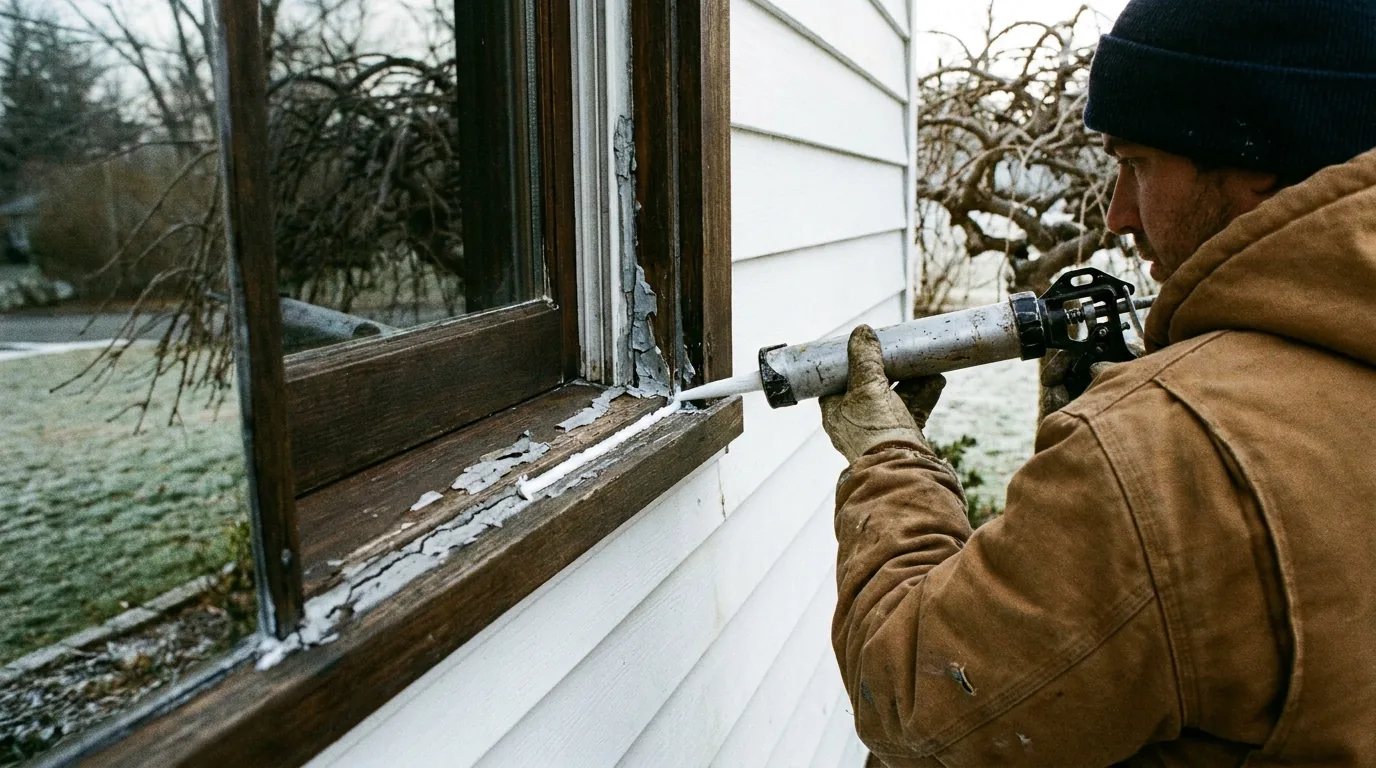
I've pulled apart more cracked clay tile flues on Long Island than I can count, and the pattern is almost always the same. A homeowner swaps an old oil burner for a gas furnace or boiler, the HVAC crew fires it up, and within a season there's a soot smell in the spare bedroom or a wet stain creeping down the chimney chase in the attic. The clay tiles that carried oil exhaust fine for thirty years quietly failed once gas condensate started working on them, and nobody noticed until the symptoms showed up somewhere else in the house.
Clay tile liners were built for a different fuel than what most of you are burning now. Oil exhaust runs hot and dry enough that hairline cracks in the tile don't matter much, the draft pushes fumes straight up and out. Gas exhaust runs cooler and wetter. That moisture finds every crack, sits there, and freezes on a January night. On Long Island we're not talking about three or four freezes a winter, we're talking somewhere around forty to fifty freeze-thaw swings between November and March, and every one of them works on a joint that's already compromised.
This is the article for you if you just converted from oil to gas, or you're about to, and a contractor mentioned relining and you want to know if that's a real requirement or an upsell before you commit to anything before the weather turns.
How Clay Tile Liners Actually Fail
Clay flue tiles are stacked in sections with mortar or refractory cement between them, not poured as one continuous piece. That joint is the weak point. Thermal shock from a furnace cycling on and off, plus decades of soot buildup from oil heat, makes the tile spall, meaning the surface flakes away in thin layers. Once a crack opens between sections, flue gas and moisture get into the brick and mortar of the chimney itself, not just the flue. Acidic condensate from gas combustion eats at that mortar from the inside, and you can't see it happening because it's behind the tile.
On a camera inspection you'll see offset joints, missing mortar, tile fragments sitting in the smoke chamber, or a liner that necks down and flares out like a bent straw. Any one of those is a hard stop, not a watch-and-see.
Why an Oil-to-Gas Conversion Forces the Issue
Gas combustion produces roughly twice the water vapor of oil combustion, and it exits the appliance at a lower temperature. That combination means gas exhaust condenses inside a flue that oil exhaust never would. A clay flue sized and seasoned for an oil burner is almost always oversized for a single gas appliance venting alone, and an oversized flue can't maintain enough draft velocity to carry the exhaust out before it cools and condenses on the tile.
There's a second issue that shows up constantly on Long Island jobs: the orphaned water heater. When the furnace or boiler goes high-efficiency and gets its own PVC vent, the water heater is often left venting alone into a flue that used to share the load with the furnace. That flue is now oversized for one small atmospheric appliance, drafts poorly, and can backdraft carbon monoxide into the house on a cold start. Code inspectors across Suffolk are flagging this at final inspection now, and it's the single most common reason a homeowner ends up needing a liner mid-project instead of budgeting for one up front.
What Stainless Steel Relining Involves
A stainless liner replaces the clay tile with a continuous run of 316Ti stainless, either smooth-wall or corrugated depending on the flue's bends, sized to the appliance's actual output using the manufacturer's venting tables rather than the old flue's dimensions. It gets wrapped in insulation on most gas jobs, which helps keep the flue gas warm enough to stay above its dew point on the way up, cutting down on the condensation that killed the tile in the first place.
This is a full-length liner from the appliance connection to the cap, not a patch or a coating poured partway down. If you've had chimney work done before, our chimney repair page covers where relining fits against crown, flashing, and masonry repairs, since they often get bundled into the same job.
Freeze-Thaw, Salt Air, and the Long Island Factor
We're surrounded by water on three sides here, and that salt air matters for liner grade, not just for siding and railings. Homes closer to the South Shore, Babylon, Islip, Bay Shore, and out toward Southampton, see faster corrosion on lower-grade 304 stainless than homes further inland. We spec 316Ti on anything within a few miles of the Sound or the bays for that reason, it costs more to source but it isn't the thing that fails again in eight years.
Nor'easters add their own angle. Wind-driven rain gets pushed sideways into a cracked or open crown and runs straight down the flue, which is a fast way to turn a slow tile crack into standing water sitting on top of your relining job before winter even starts. If your crown hasn't been checked in a few years, get it looked at in the same visit, our chimney crown repair guide walks through what that inspection actually catches.
Permits Across Nassau and Suffolk
Liner replacement alone usually falls under mechanical work, but if we're opening masonry, resizing a flue, or adding a second liner for an orphaned appliance, Brookhaven, Islip, Smithtown, and Huntington all want a permit pulled before work starts. Babylon's building department has gotten stricter about verifying combustion air and CO detector placement on any gas conversion tied to chimney work, and Southampton adds a layer of review in some of its historic districts if the exterior masonry is visible from the street. None of this is optional paperwork we're skipping to save you a week, an unpermitted liner job can hold up a home sale later when the buyer's inspector asks for it.
Signs You're Already Past the Point of Waiting
- Soot smell in rooms near the chimney chase, especially after the furnace kicks on
- White chalky staining or streaking down the exterior brick
- Tile fragments or granular debris sitting in the firebox or smoke chamber
- A carbon monoxide detector that's alarmed even once, even if it stopped
- Rust streaking below the chimney cap or spark arrestor
- A crown with visible cracking or a step-off where it meets the brick
If you're seeing more than one of these, don't wait for a fall tune-up appointment to fill up. What actually drives the cost on a job like this is liner length, number of offsets in the flue, whether we're relining one appliance or two, and whether masonry repair comes with it, our chimney repair cost guide breaks down those variables if you want to understand what you're pricing before we're on site. A full inspection first is worth it either way, and it's what we start with on our chimney inspection visits before we ever recommend relining.
What We Do
We've been doing masonry, chimney, and roofing work across Nassau and Suffolk since 2018, and clay-to-stainless relining tied to an oil-to-gas conversion is one of the jobs we run most often heading into fall. We'll scope the flue with a camera, size the liner to your actual appliance, and tell you straight if a full relining job is warranted or if you're looking at a smaller repair.
Call (631) 312-7441 or book a free walkthrough before the first cold snap hits.
Frequently Asked Questions
Do I need a new chimney liner every time I switch from oil to gas heat?
Not automatically, but it's common enough that we check every time. The flue almost always needs to be resized for the new appliance's lower exhaust temperature, and if a water heater is left venting alone into the old flue, that flue is now oversized for it and drafts poorly.
Can you just patch or seal the cracked clay tile instead of relining the whole flue?
A localized patch doesn't hold up once moisture is getting behind the tile in more than one spot, and by the time cracks are visible on camera the damage is usually already running the length of the flue. We'll tell you honestly if a section is isolated enough to repair, but most gas conversion cases need a full liner.
Why do you recommend 316Ti stainless instead of a cheaper grade near the coast?
Salt air on Long Island corrodes standard 304 stainless faster than it corrodes inland installations, especially within a few miles of the Sound or the South Shore bays. 316Ti holds up to that exposure and it's not the liner that needs replacing again in under a decade.
Will a permit be required for my town?
It depends on whether the work stays inside mechanical scope or involves opening masonry and resizing a flue. Brookhaven, Islip, Smithtown, Huntington, and Babylon all require permits for the latter, and some Southampton historic districts add review if exterior brick is affected.
How long does a chimney relining job take?
A single-appliance liner in a straight flue is usually a one-day job. Add a second liner for an orphaned water heater, masonry repair, or a crown rebuild, and it stretches to two or three days depending on what we find once the old tile is out.
Is it safe to run my furnace this winter if I haven't relined yet?
If a camera inspection has shown cracked tile, missing mortar, or an orphaned appliance venting into an oversized flue, we don't recommend waiting through a full heating season. Get a carbon monoxide detector installed near the appliance in the meantime and have the flue inspected before the first hard freeze.
Related Guides
- Chimney Inspection Guide
- Chimney Crown Repair Guide
- Chimney Repair Cost Guide
- Fall Home Maintenance Checklist
Get a Free Estimate from Alec's Construction
Licensed and insured, working across Nassau and Suffolk County since 2018. We come out, look at the actual job, and put a written number in your hand — no pressure, no obligation.
Book a Free WalkthroughOr call (631) 312-7441