Long Island gets a specific kind of winter. Not brutal cold, but repeated freeze-thaw cycles, nor'easters coming up the coast, wind-driven rain off the water, and forty or fifty crossings of the freezing line between November and March. That cycling is what does the damage here, and almost every expensive spring repair on this Island started as a small unaddressed thing in October.
Here is the list, in the order the weather lets you do it.
Do These in September and Early October
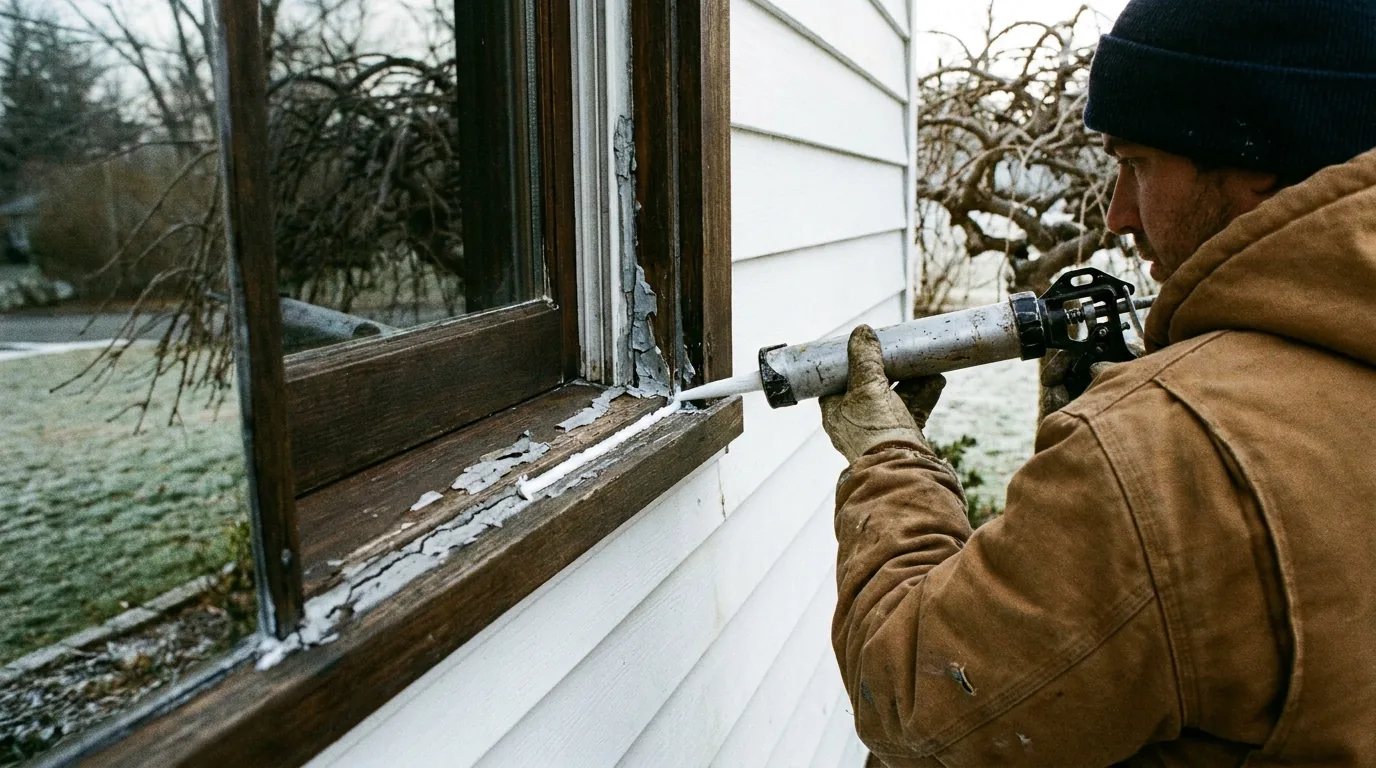
1. Exterior paint and caulk This is first on the list because it is the one with a hard deadline. Once surface temperatures drop, exterior painting is done for the year. Bare wood left unprotected through a Long Island winter absorbs water at every freeze-thaw cycle and you will be replacing trim instead of painting it. See our exterior painting guide for the actual temperature window.
Even if a full repaint is not happening, walk the house and look at the joints: window casings, door casings, corner boards, where trim meets siding. Any joint that has opened is a place water is getting in all winter.
2. Roof inspection Not a full replacement decision — an inspection. What you are looking for: lifted or missing shingles, damaged or rusted flashing at chimneys and valleys, deteriorated pipe boots, and any exposed nail heads. Nor'easter season starts in earnest in November and a marginal roof does not survive it.
3. Deck cleaning and sealing A deck that goes into a Long Island winter unsealed takes water into the end grain, freezes, and comes out in the spring with checked, splintered boards. Fall cleaning and sealing is the single cheapest thing you can do to extend a deck's life. More on fall deck work.
4. Driveway sealing Asphalt cracks let water in, water freezes, cracks become potholes. Sealing before the first freeze is the whole game. On the Island this needs to happen by mid-October in most years — the sealer needs warm surface temperatures to cure.
5. Trim trees back from the roof and gutters Overhanging limbs drop leaves directly into the gutters all fall and become an ice-loading hazard in a wet snow. Anything within about six feet of the roof plane should come back.
Do These in Late October and November
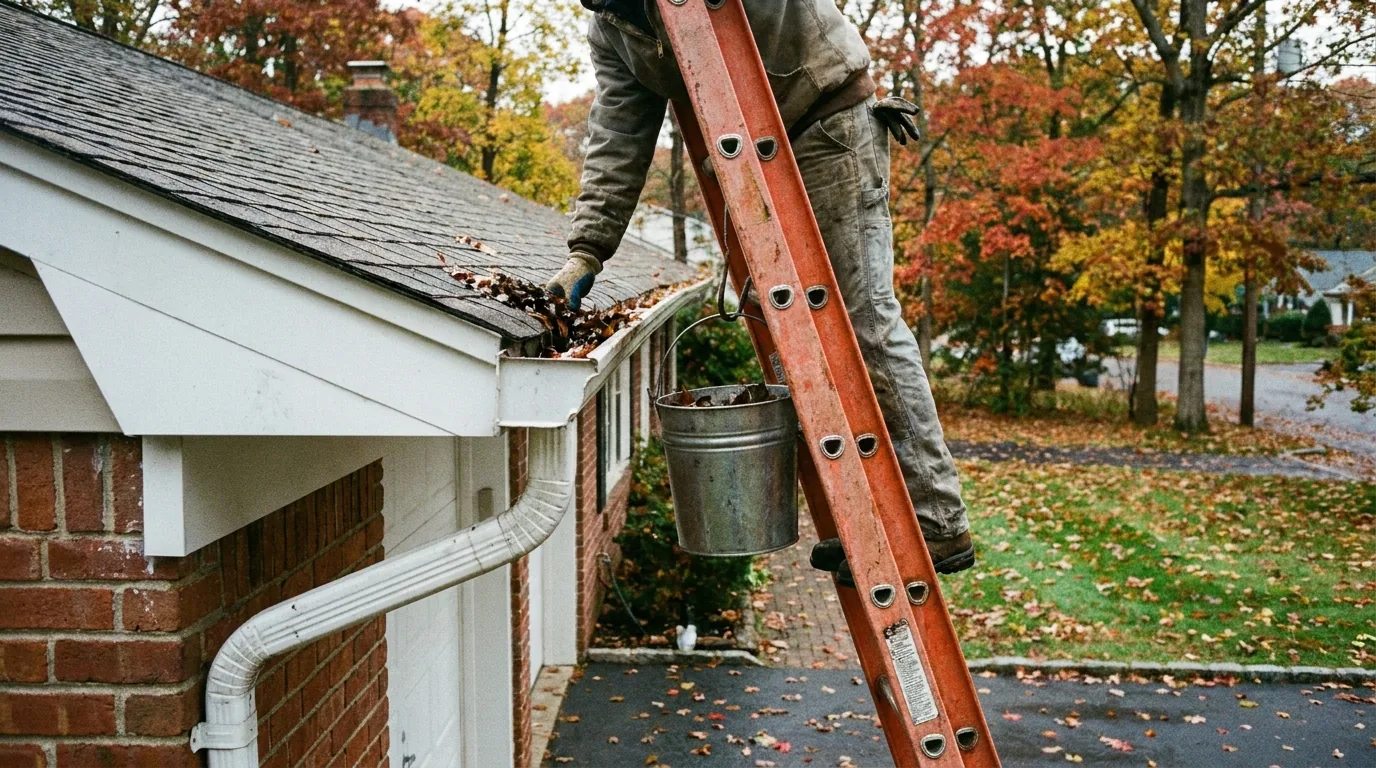
6. Gutters, twice This is the one Long Islanders most often do once and should do twice. Our leaf drop is long — oaks in particular hold their leaves into December. Clean once in late October when the maples are down, and again in late November or early December after the oaks finish. A gutter packed with wet leaves in December is how you get ice dams in January. Full detail here.
Also check that downspouts actually discharge away from the foundation. A downspout dumping at the foundation is the most common cause of a wet Long Island basement.
7. Outdoor plumbing Shut off and drain exterior hose bibbs, disconnect and store hoses, blow out irrigation lines, and drain any outdoor shower. A burst hose bibb in January is a wall repair, not a plumbing repair.
8. Chimney inspection and cleaning If you burn wood, this is not optional. Creosote buildup is the leading cause of chimney fires and Long Island's damp climate accelerates flue and crown deterioration. Check the crown, cap and flashing while you are at it — chimney flashing failure is one of the most common sources of a January ceiling stain.
9. Attic insulation and ventilation Look at this before the cold arrives, because it is the actual cure for ice dams. You want adequate insulation on the attic floor, clear soffit vents that are not blocked by insulation, and a working ridge or gable vent. The goal is a cold attic — a warm attic melts snow on the roof and refreezes it at the eave.
10. Seal the small gaps Weatherstripping on doors, sweeps at the bottom, caulk at penetrations where pipes and wires enter the house, foam at sill plate gaps in the basement. This is cheap work with an immediate heating-bill return.
Do These Any Time During Fall
11. Test the heat before you need it Run the system for an hour in October. Finding out the boiler will not fire in the first cold snap, when every HVAC company on the Island is on emergency calls, is an avoidable and expensive mistake.
12. Change smoke and CO detector batteries Heating season is carbon monoxide season.
13. Grade and drainage Walk the perimeter after a heavy rain and look for water pooling against the foundation. Regrading in the fall is straightforward. Regrading a frozen yard in February is not.
14. Photograph the exterior This takes ten minutes and it is genuinely useful. If a nor'easter takes shingles off in February, a dated set of before photographs makes an insurance claim dramatically easier. Our insurance restoration team asks for these constantly and almost nobody has them.
The Move-Inside List
Once the exterior window closes, the projects shift indoors — and this is the time of year when Long Island contractors actually have availability. Interior painting, basement finishing, kitchen and bathroom work, wall and ceiling repair. If you are listing the house in the spring, that work should be happening in January and February, not in April.
What We Do
Alec's Construction handles roofing, siding, gutters, exterior carpentry, painting, decks and masonry across Suffolk and Nassau County, and we do the interior work all winter. If you want the fall list handled by one licensed contractor rather than five, call (631) 312-7441.
Frequently Asked Questions
When should I clean my gutters on Long Island?
Twice — once in late October after the maples drop, and again in late November or early December after the oaks finish. Long Island's leaf drop runs long, and a single October cleaning leaves the gutters packed again by the first freeze.
What is the most important fall home maintenance task on Long Island?
Sealing the building envelope before freeze-thaw season. That means gutters clear, exterior caulk joints closed, bare wood protected and the roof sound. Long Island's damage comes from forty to fifty freeze-thaw cycles a winter driving water into small openings.
How late can I seal my driveway on Long Island?
Generally mid-October. Driveway sealer needs warm surface temperatures to cure properly, and applying it too late in the season produces a coating that never fully hardens.
Should I inspect my roof in the fall?
Yes. Nor'easter season starts in November and a marginal roof will not survive it. Look for lifted or missing shingles, deteriorated flashing at chimneys and valleys, failed pipe boots and exposed nails — all of which are cheap to fix in October and expensive in February.
What causes a wet basement on Long Island?
Most often a downspout discharging at the foundation, or grading that slopes toward the house. Both are fall fixes. Walk the perimeter after a heavy rain and look for standing water against the foundation wall.
Why photograph my house exterior in the fall?
Because dated before-photographs make a storm damage insurance claim dramatically easier to substantiate. It takes ten minutes and almost no homeowner does it until after they have needed it.
Related Guides
- Winterizing Your Long Island Home
- Gutter Cleaning on Long Island
- Ice Dams on Long Island Roofs
- Deck Staining and Sealing in Fall
- Finishing a Basement in Winter
Get a Free Estimate from Alec's Construction
Licensed and insured, working across Nassau and Suffolk County since 2018. We come out, look at the actual job, and put a written number in your hand — no pressure, no obligation.
Book a Free WalkthroughOr call (631) 312-7441