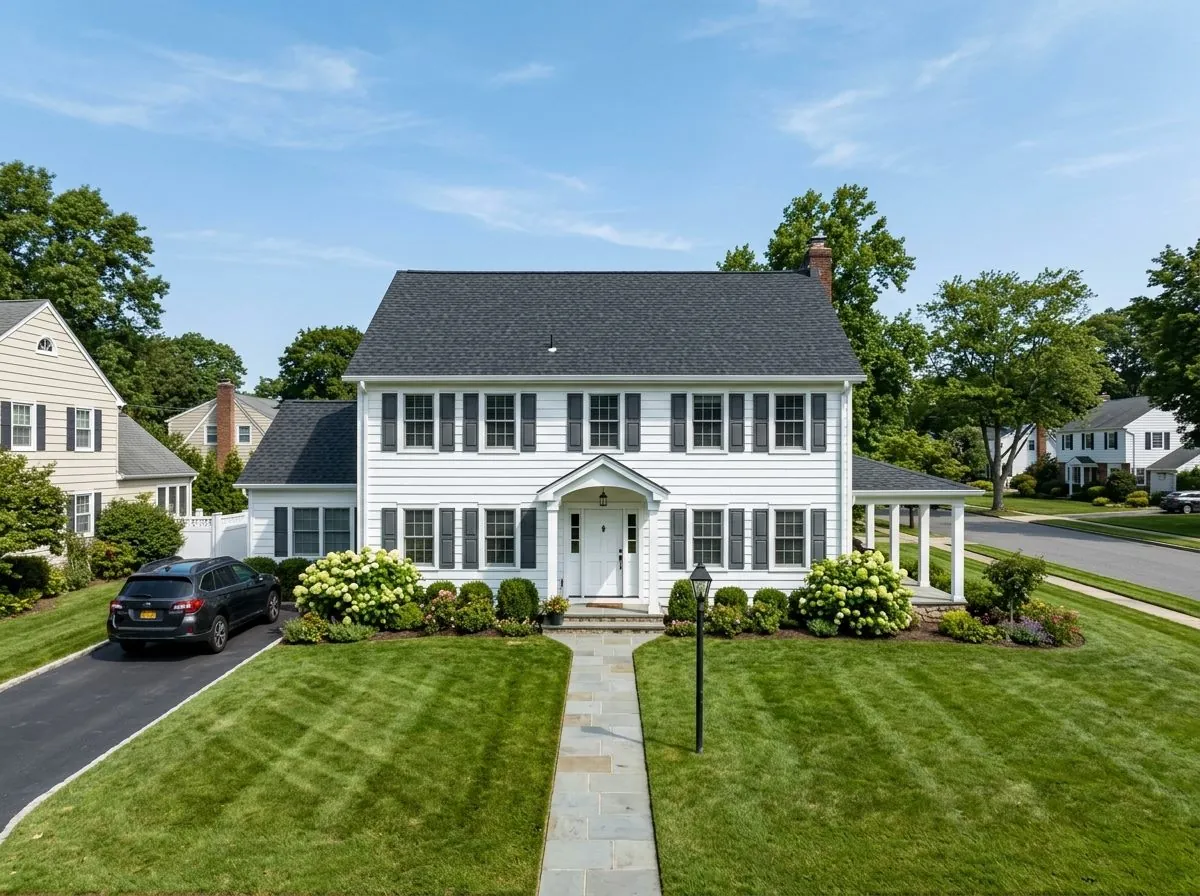
Every fall, homeowners in Smithtown and Sayville start typing the same thing: chimney sweep. About half of them actually need one — the flue has a season or two of creosote and wants a cleaning before the first fire. The other half typed "sweep" but are describing a structural problem: a leak around the chimney, mortar falling on the roof, a cracked crown, a cap that blew off in the last nor'easter. Those are two different trades, and hiring the wrong one wastes a service call. Here is how to tell which one you need — and what each one costs on Long Island.
What a sweep does — and what we do
A certified chimney sweep works the inside of the system: brushing creosote out of the flue, checking the liner with a camera, clearing blockages and bird nests, servicing dampers. It is fire-safety work, it is a licensed specialty, and it is not what a masonry contractor should be selling you.
We work the outside — the structure that keeps water out of your house and the stack standing straight: crowns, caps, flashing, repointing, partial and full rebuilds, and leak diagnosis. When a customer calls us for a sweep, we say so plainly: we don't sweep, and we'll put you with a certified sweep we trust. What we will do — free — is inspect the masonry while the question is on the table, because the two problems show up together more often than not. A flue that's due for cleaning has usually been through the same ten Long Island winters that opened the mortar joints.
The free structural inspection: what we check
- Crown — the concrete wash on top. Cracks here are the #1 source of "mystery" chimney leaks
- Cap — missing or rusted caps let rain straight down the flue; stainless is the correct spec near the shore
- Flashing — where chimney meets roof; failed flashing mimics a roof leak and gets misdiagnosed constantly
- Joints — repointing candidates: soft, sandy or missing mortar, especially on the weather side
- Plumb — a stack visibly out of plumb is structural and goes to the front of any scope
You get photos of all five and a written scope naming what is actually failing — or a clean bill and a handshake. Most repairs we find run one to three days.
Smithtown: village review and wind exposure
The Town of Smithtown wraps four incorporated villages — Nissequogue, Head of the Harbor, Village of the Branch and Poquott — and chimney work above the roofline can trigger village review in some of them. The harbor villages also add salt exposure that eats galvanized flashing and accelerates joint erosion. On the exposed moraine ridges, wind loading is the real structural question: if your sweep mentioned cracking partway up the stack, treat it as urgent. Full detail in our Smithtown chimney repair guide.
Sayville: south shore salt and older stacks
Sayville's housing stock skews older than the pine barrens towns inland, and its chimneys sit in south shore salt air off the Great South Bay. The pattern we see on Sayville chimney repair calls: eroded joints on the south face, rusted-through caps, and crowns that were patched with roofing tar instead of rebuilt. If a sweep flags "masonry issues" during a cleaning here, have the structure scoped before the heating season books us all solid.
What the repairs cost
The inspection is free. If it finds something, typical Long Island brackets: repointing $1,800–$6,000 depending on stack height and access, crown rebuild $900–$2,500, flashing $1,200–$3,000, and partial-to-full rebuilds $4,000–$12,000. Full breakdown with what drives each number in our chimney repair cost guide. Mortar work runs roughly April through November — which is exactly why a September inspection beats a December emergency.
Need the sweep too? We'll connect you
We keep working relationships with certified sweeps across Suffolk County, the same way expediters and inspectors work with us on the partners side of our business. One call gets the flue cleaned by the right trade and the structure checked by ours — no upsell in either direction, because neither of us profits from the other's scope.
Frequently Asked Questions
Do you sweep chimneys in Smithtown or Sayville?
No — sweeping and flue cleaning are a separate certified trade, and we will say so rather than take the job. We handle the structure: crowns, caps, flashing, repointing, rebuilds and leak repair. If your chimney needs a sweep, we refer you to a certified sweep we trust and inspect the masonry while we are there.
How much does a chimney inspection cost?
Ours is free. We photograph the crown, cap, flashing and joints, check the stack for plumb, and hand you a written scope that names what is actually failing — or tells you nothing is. A Level 2 flue inspection with a camera is a sweep-side service and is priced separately by the sweep.
How often should a chimney be swept and inspected?
The NFPA standard is an annual inspection, with sweeping as needed based on creosote buildup — for a fireplace burned regularly through a Long Island winter, that usually means a sweep every year or two. The masonry check matters on the same schedule: freeze-thaw works on mortar joints every winter whether you burn or not.
The sweep said my chimney needs masonry repairs. What now?
Get the structural work scoped by a masonry contractor, not priced from the sweep's note. Typical Long Island ranges: repointing $1,800–$6,000, crown rebuild $900–$2,500, flashing $1,200–$3,000, partial-to-full rebuild $4,000–$12,000. We put every line in writing after a free look.
Related Reading
- Chimney Repair Services — repointing, crowns, flashing and rebuilds
- Chimney Repair in Smithtown — villages, wind loading and access
- Chimney Repair in Sayville — crowns, caps and repointing on the south shore
- Chimney Repair Cost — bracket pricing for every repair type
- Chimney Repair on Long Island — the full homeowner guide
Work With Alec's Construction
This guide is written by the crew that does the work. See Alec's Chimney Repair service — repointing, crowns, caps and roofline flashing. Licensed and insured on Long Island, one crew start to finish, free walkthrough and a written estimate inside 48 hours.
Booking the cold months now: we also handle Roofing and Seamless Gutters.
We keep a permit office directory for Nassau and Suffolk, checked against each jurisdiction's own site, because we file in these counters constantly.
Not Sure Which One You Need?
Call and describe what you're seeing. If it's a sweep job, we'll point you to a certified sweep. If it's the structure, we'll inspect it free — photos, written scope, no obligation.