Water inside a Lindenhurst house after a storm has a clock on it. Mould can start on wet sheetrock and insulation within a day or two, and a house that sits wet while it waits for an adjuster becomes a mould job on top of a storm job. Alec's Construction gets the wet material out, the drying equipment in and the moisture metered, then rebuilds to the agreed scope, working out of the yard on Barton Avenue in East Patchogue. If there is water in the house now, call rather than fill in the form.
What a Storm Does in Lindenhurst
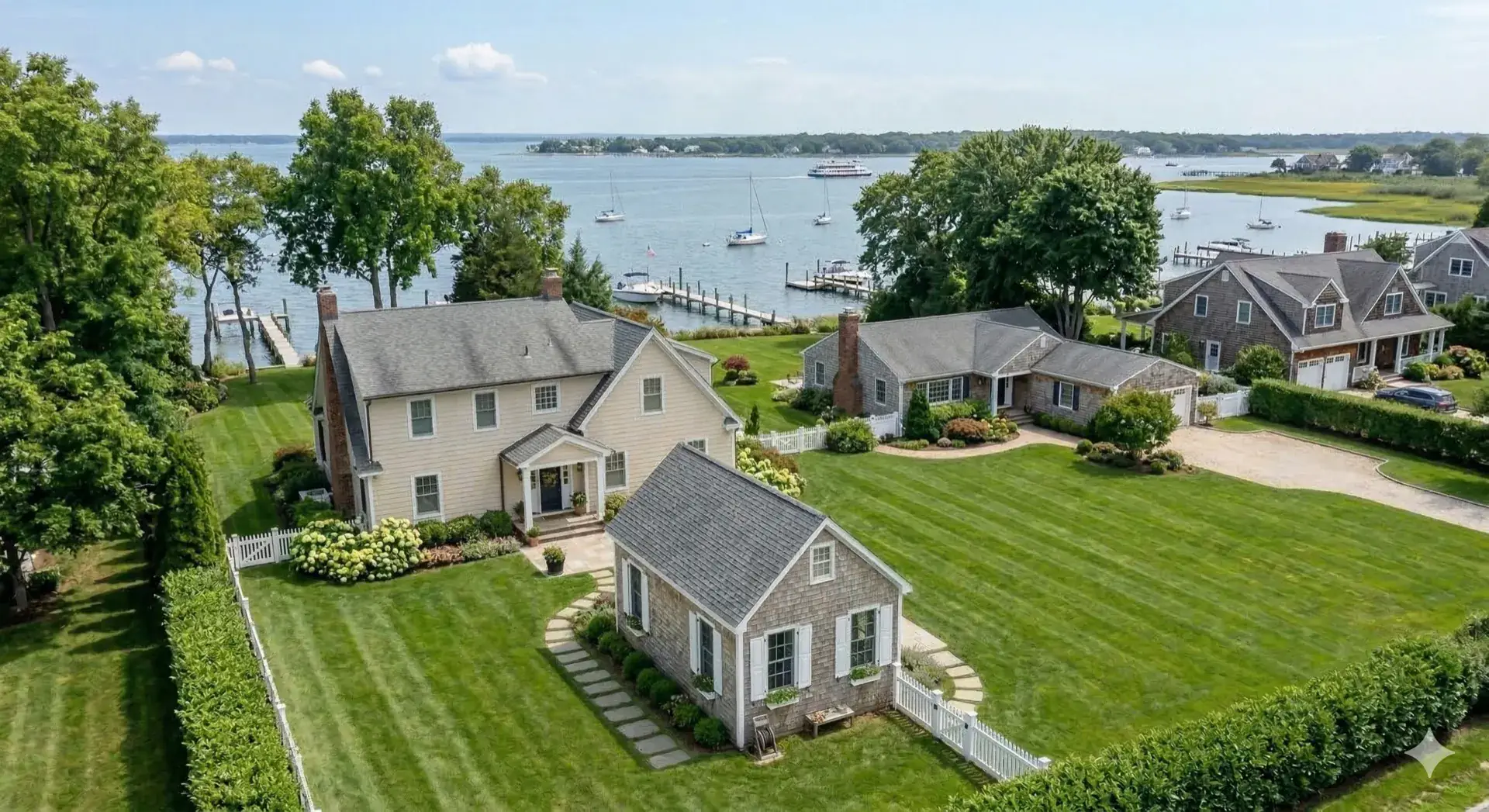
Lindenhurst south of Montauk Highway is one of the largest canal-house neighbourhoods on Long Island, block after block of 1950s and 60s capes and ranches on a grid of canals off the Great South Bay, and it took some of the worst of the 2012 surge in Suffolk. In a hurricane the canals rise together and the water is in every crawl space, every slab-on-grade den and every garage at the same time. A lot of those houses were elevated afterward and a lot were not, and the two need completely different help after a storm: the elevated houses take the wind on the exposed face and the enclosure underneath; the ones still at grade take the water all over again. The Village of Lindenhurst covers the village core; the Town of Babylon covers the rest.
Canal Houses After a Surge
A surge fills every canal and every crawl space, den and garage on the grid at the same time, and a lot of these capes and ranches were rebuilt quickly after 2012 on studs that were never dried to a number. A second wetting brings all of that back. Salt water below, wind-driven rain from above where the roof opened, and the two claims kept separate.
Two Kinds of Water, Two Claims
Water that came down — through a roof the wind opened, around a window it broke, behind siding it peeled — is wind-driven rain and a homeowners claim. Water that came up — from the bay, a canal, a creek, the ground — is flood, excluded from the homeowners policy and covered only by a separate flood policy. Most storm-damaged houses have some of both, and the two have to be documented separately from the first visit or the claims fight each other. We keep them separate on the scope.
What Comes Out
Wet carpet and pad. Insulation that took water, all of it. Sheetrock cut back above the water line to the next joint. Laminate and engineered floors that swelled. Cabinet boxes that sat in water. Soaked contents that cannot be cleaned. Everything photographed in place, photographed as it comes out, and kept where the adjuster can see it. Emergency mitigation is expected of you under the policy; it does not wait for the adjuster.
Drying Is Measured, Not Guessed
Commercial dehumidifiers and air movers, moisture readings on the framing every day, and nothing closed up until the numbers say dry. Where the water was salt — surge from the bay or a canal — the rules change: electrical that went under is replaced, not dried, and the framing gets washed down before it is dried, because salt keeps pulling moisture out of the air for years.
The Rebuild
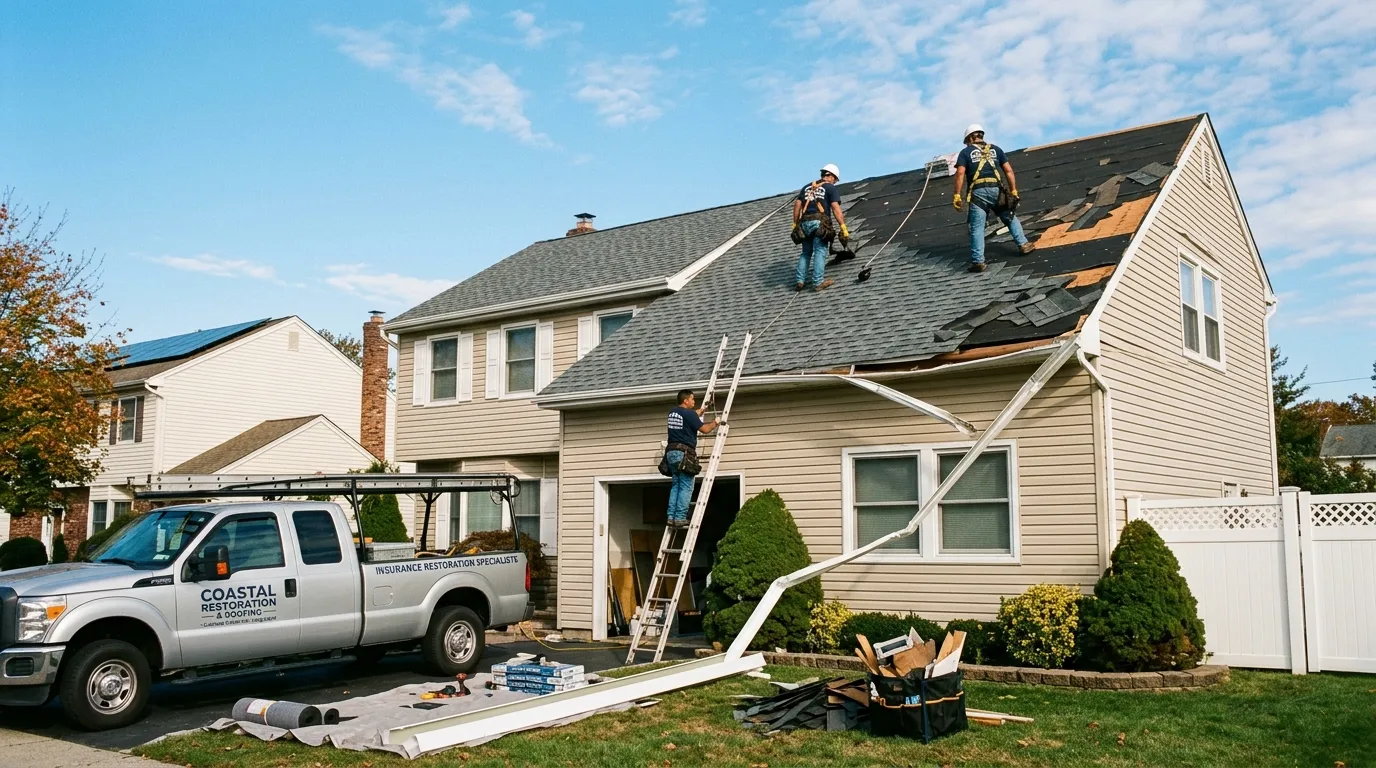
Insulation, sheetrock, trim, floors, cabinets, paint, and the electrical or mechanical that had to be replaced, on one scope with the cleanup. Where the water came in through the roof or the siding, the cause is fixed first so the new work does not get wet again.
Building Department in Lindenhurst
The Village of Lindenhurst runs its own building department, separate from the Town of Babylon. Emergency work to make the house safe and dry does not wait for a permit; the permanent repair is filed once the scope is agreed.
Free walkthrough in Lindenhurst. Call or text (631) 312-7441. Tell us whether the roof is open, whether a tree is on the structure and whether there is water inside, and we bring the right equipment on the first trip.
Frequently Asked Questions
We never elevated our Lindenhurst house. What should we know before the next storm?
That the repair scope after a flood is decided partly by the flood rules, not only by the damage. Where a house in a mapped flood zone is damaged past a certain share of its value, the town may require it to be brought into compliance — which can mean elevation — as part of the permit for the repair. That is a conversation to have with the building department early, before a scope is written, and we walk homeowners through it rather than finding out at the permit counter.
Is the flooding covered by my homeowners policy?
Water that rose from the bay, a canal, a creek or the ground is flood damage, and a standard homeowners policy excludes it; it is covered only by a separate flood policy. Rain that came in through wind damage to the roof or siding is a homeowners claim. Where a house has both, they are documented separately from the first visit.
Can you pump out my basement today?
Where we can reach you, yes, once the water outside has gone down. Pumping a basement while the ground around it is still saturated can push the walls in. After that the wet material comes out and the drying starts the same visit.
Can wet drywall be dried instead of replaced?
Sometimes, if it was clean water, it was wet briefly and it has not lost its strength. Storm water is rarely clean, the insulation behind it holds water far longer than the board, and salt water is never dried. In practice sheetrock below the water line comes out, the insulation behind it comes out, and the framing is dried and metered before the wall is closed.
Related Guides
- Fallen Tree Removal & Roof Repair in Lindenhurst, NY
- Storm Debris Removal & Cleanup in Lindenhurst, NY
- Storm Roof & Siding Repair in Lindenhurst, NY
- Flood & Water Damage Cleanup in Commack, NY
- Flood & Water Damage Cleanup in Northport, NY
- Emergency Roof Repair & Tarping in Lindenhurst
- Hurricane & Storm Damage Repair in Lindenhurst, NY
- Storm Damage & Insurance Restoration in Lindenhurst
- Hurricane & Storm Damage Repair — our service page
Also Serving Lindenhurst
- ADUs in Lindenhurst — accessory apartments and grants
- Attic Insulation in Lindenhurst — air sealing, baffles and R-49 depth
- Basement Finishing in Lindenhurst — egress, ceiling height and moisture
- Bathroom Remodeling in Lindenhurst — full gut renovations
- Chimney Repair in Lindenhurst — repointing, crowns, caps and flashing
- Emergency Roof Repair in Lindenhurst — tarping, leaks and storm response
- Fallen Tree Removal & Roof Repair in Lindenhurst — tree off the house, roof supported and repaired
- Garage Conversion in Lindenhurst — turning the garage into living space
- Gutter Installation in Lindenhurst — seamless gutters, fascia and drainage
- House Painters in Lindenhurst — exteriors while the fall window holds
- Hurricane & Storm Damage Repair in Lindenhurst — trees, flooding, cleanup and repairs
- Storm Damage & Insurance Restoration in Lindenhurst — emergency tarping and the claim
- Interior Painting in Lindenhurst — the right work for the cold months
- Kitchen Remodeling in Lindenhurst — cabinets, counters and layout
- Roofing in Lindenhurst — tear-offs, repairs and storm damage
- Siding in Lindenhurst — James Hardie, vinyl and cedar
- Storm Debris Removal & Cleanup in Lindenhurst — trees, building debris and hauling
- Storm Roof & Siding Repair in Lindenhurst — wind damage, tarped and rebuilt
- Windows & Doors in Lindenhurst — insert and full-frame replacement
Work With Alec's Construction
This guide is written by the crew that does the work. See Alec's Hurricane & Storm Damage Repair service — fallen trees, flooding, roof and siding damage, cleanup and the rebuild. Licensed and insured on Long Island, one crew start to finish, free walkthrough and a written estimate inside 48 hours.
Booking the cold months now: we also handle Roofing and Storm Damage & Insurance Restoration.
Get a Free Estimate from Alec's Construction
Licensed and insured, working across Nassau and Suffolk County since 2018. We come out, look at the actual job, and put a written number in your hand — no pressure, no obligation.
Or call (631) 312-7441