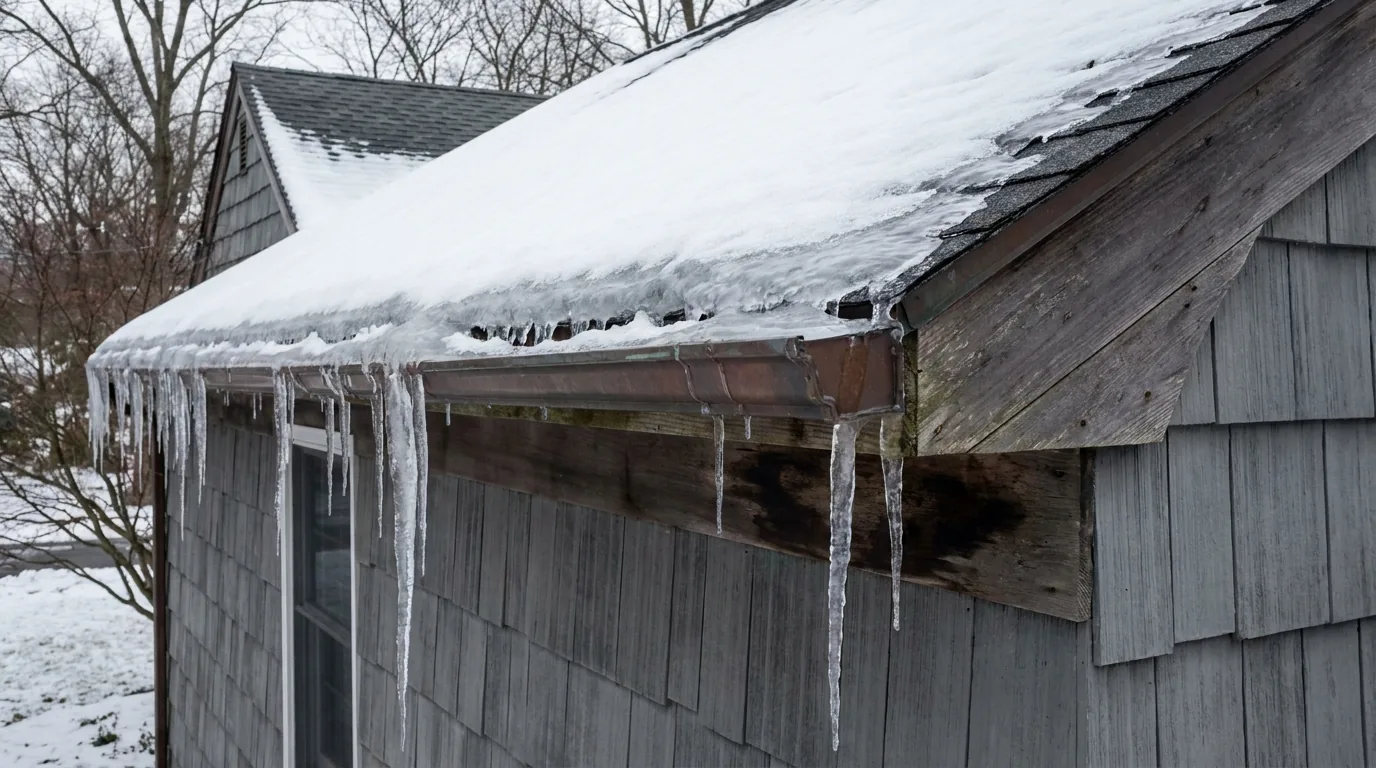
Every winter I get calls in January that start the same way. My gutters are full of ice and water is coming through my ceiling. Somewhere between a Christmas thaw and the next arctic blast, the roof built an ice dam, a ridge of ice sitting right at the eave that backs meltwater up under the shingles. By the time it's dripping onto a bedroom ceiling, the homeowner isn't interested in causes anymore. They want a fix, and heated gutter cable is usually the first thing that comes up.
I've installed plenty of it, on capes in Bellport, colonials in Smithtown, shorefront homes in Northport where wind off the Sound loads one side of a roof with drift snow every storm. It works, when it's on the right roof, wired correctly, and aimed at the right problem. It also gets sold as a cure-all to homeowners whose real issue is an attic bleeding heat into the roof deck, and cable on that house only buys you a storm or two before the dam rebuilds.
Here's the honest version: where cable earns its keep on a Long Island roof, where it's just masking a heat-loss problem you'll fight every season, and what it actually costs to run through a winter with 40 to 50 freeze-thaw cycles.
What Heat Cable Actually Does Heat cable is a self-regulating resistance wire zigzagged through the gutter and up into the first foot or two of roof, usually in a diamond or triangle pattern that keeps a channel open for meltwater to drain instead of backing up. It doesn't melt the whole roof. It melts a path. That's an important distinction, because a lot of homeowners think they're buying an ice-free roof and what they're actually buying is a drainage path through the ice that's already forming.
Good cable is self-regulating, meaning it draws more current in colder spots and less where it's warmer, and it should be on its own thermostatic controller, not just plugged into an outlet and left alone. Cheap kits from the big box store skip the controller. That's usually the first thing I replace.
Where It Earns Its Keep on a Long Island Roof Cable makes the most sense on specific trouble spots, not entire roofs. North-facing eaves that never see sun through January. Valleys where two roof planes dump snow into one channel. Sections over an unheated garage or a bump-out addition where the roof deck stays genuinely cold while the rest of the house leaks heat above it. Anywhere shaded hard by mature oak and pine, which holds snow and shade longer than open roof.
It also earns its place on the older, complicated rooflines you see a lot in Huntington, Northport, and parts of Babylon and Islip, homes with dormers, cricket flashings, and multiple valleys where a proper attic ventilation fix would mean opening up finished ceilings. On a straightforward gable roof with decent attic performance, I usually can't justify it.
When Cable Is Just Masking an Insulation Problem Here's the test I use on a walkthrough. If the whole roof is shedding snow evenly and only the eaves stay cold and icy, that's the normal, correct pattern, heat loss from the house is even, and the eave overhang has no heat source under it because it's past the exterior wall. Cable there is doing real work.
If instead you've got bare, wet roof high up and a thick ice dam low down, snow melting off the ridge while the eaves stay buried, your attic is dumping heat into the roof deck. That's not a gutter problem. That's attic insulation and air sealing around can lights, bath fan ducts, and the attic hatch, especially common in the capes and split-levels with knee walls you see all over Brookhaven and Islip townships. Cable on that roof runs constantly, all season, and you'll still get ice damming at the flashing lines and valleys the cable doesn't cover. I've pulled cable off roofs where the homeowner was running it 24 hours a day for three winters straight and still calling me about leaks. Fix the attic first. Cable becomes a smaller, cheaper add-on after that, not the whole plan.
Installing It Right, and the Mistakes I See Cable needs to be in the actual zigzag pattern, not laid flat down the gutter trough, or it won't keep a full channel open. It needs a dedicated GFCI circuit, not an extension cord run through a window. Connectors and end caps have to be rated for exterior use, because salt air off the Sound and the Atlantic corrodes cheap splices in two or three seasons, and a corroded splice is a dead cable section right where you need it most.
I also check where the downspout actually drains. On the South Shore, with sandy soil and a high water table, a lot of downspouts feed dry wells that can go sluggish or freeze solid in a deep cold snap, and melting a channel of ice straight into a frozen dry well just relocates the standing water problem to your foundation. If your gutters aren't pitched and clear to begin with, cable is fighting a losing battle before the first snow falls.
What It Costs to Run All Winter I won't quote you a number here because it depends on too much to be honest about in a range. What actually drives it: how many linear feet of cable you're running, the wattage per foot, whether it's on a smart thermostat and moisture sensor that only energizes near freezing versus a dumb switch someone has to remember to flip, and your electric rate. A short run on a controller over one bad valley costs a fraction of what a whole-eave system running 24/7 through a stretch of 40-plus freeze-thaw cycles will pull. Older Long Island panels, the 60 and 100 amp services still common in 1950s and 60s capes, sometimes need a panel evaluation before you add a dedicated heat cable circuit, which is worth knowing before you commit to a full-roof system.
Maintenance Through the Season Clean the gutters before the cable goes in. Oak and pine drop leaves late here, into November most years, and cable buried under wet leaf litter does nothing. Test the circuit and controller before the first hard freeze, not during one. After a nor'easter, walk the yard and check that clips and end fittings are still seated, salt air and wind load work fasteners loose faster than people expect. If a section stops heating mid-winter, it's almost always a corroded splice or a tripped GFCI, not a dead cable run.
What We Do We walk the roof and the attic together before recommending anything, so you're not paying to run cable on a house that actually needs air sealing and insulation. When cable is the right call, we install it on a dedicated circuit with a real controller, sized to the trouble spots instead of the whole roofline.
Call (631) 312-7441 or book a free walkthrough.
Frequently Asked Questions
Does heated gutter cable stop ice dams completely?
It keeps a drainage channel open through the ice at the eave and in valleys, which stops water from backing up under shingles there. It doesn't prevent ice from forming on the rest of the roof, so it works best as one part of a plan that includes proper attic insulation and ventilation.
How do I know if I need cable or an attic fix?
Watch the melt pattern during a thaw. Even melting across the whole roof with ice only at the cold eave overhang is normal and cable helps there. Bare roof higher up with heavy ice low down means the attic is leaking heat, and that needs insulation and air sealing, not cable.
Can I leave heat cable plugged in all winter?
You can, but a cable running constantly on a dumb outlet timer wastes power on mild days when it isn't needed. A self-regulating cable on a thermostatic and moisture-sensing controller only draws real current when conditions actually call for it.
Will salt air near the Sound or the Atlantic affect my cable?
Yes. Connectors and end caps near the shore corrode faster than inland installs, sometimes within two or three seasons on cheap hardware. Marine-rated fittings and an annual visual check after storms catch this before it fails mid-winter.
Do I need an electrician for heat cable installation?
Any run should be on its own GFCI-protected circuit, and older Long Island panels with limited amperage sometimes need evaluation before adding one. That electrical work should be done by a licensed electrician, coordinated with whoever installs the cable and gutter work.
Does cable work in a valley or only in gutters?
Cable is most useful in valleys where two roof planes funnel snowmelt into one channel, since that's often where ice dams start before they ever reach the gutter. A proper layout extends cable up into valleys and problem transitions, not just along the gutter line.
Related Guides
- Attic Air Sealing on Long Island
- Attic Insulation Rebates on Long Island
- Attic Ventilation on Long Island
- Gutter Services
Get a Free Estimate from Alec's Construction
Licensed and insured, working across Nassau and Suffolk County since 2018. We come out, look at the actual job, and put a written number in your hand — no pressure, no obligation.
Book a Free WalkthroughOr call (631) 312-7441