Alec's Construction handles hurricane and storm damage in Yaphank, Suffolk County — fallen trees, flooding and water damage, roofs and siding torn open, the cleanup and the rebuild — as one job from the first tarp to the finished repair, working out of the yard in East Patchogue. If the roof is open, a tree is on the house or there is water inside, call or text (631) 312-7441 rather than fill in the form, and tell us what you are looking at.
What a Hurricane Does in Yaphank
Yaphank is Brookhaven's rural middle — the Carmans River runs through it, the county government complex and the county farm sit on its west side, and the housing is spread along Main Street, Yaphank Avenue and the streets around the two lakes on big wooded lots under pitch pine and oak. A nor'easter here is a tree event first: the pines come over whole on saturated sandy ground and the oaks along the old Main Street stand over some of the oldest houses in the town. The river and the upper and lower lakes come up after a long rain and the low streets around them take water. The hamlet is far enough from the bay that surge is not the problem; the wind and the trees are.
Inland: Wind, Rain and Pitch Pine
There is no tidal water here, so a hurricane is what the wind and the trees do. The pitch pine that covers the sandy ground has a shallow root plate and a tall thin trunk, and after a day of rain has loosened the soil it comes over whole — roots and all — onto the low roof of the garage wing, the deck, the car and the service drop. The oaks shed heavy limbs instead. The 1960s–80s splits and hi-ranches take the wind on the low-slope roof over the lower wing, where the shingles have the least overlap, and on the gable ends, where the wall is tallest. Then the rain gets in where the shingles lifted and shows up on the ceiling below.
What We Handle After a Storm
- Fallen or damaged trees — the tree on the roof, the limb through the porch, the leaner against the wall. Structural check first, then removal in the right order, then the repair.
- Flooding and water damage — surge, rain that came in through the roof, the basement that filled. Wet material out, real drying equipment in, moisture measured before anything is closed.
- Interior and exterior storm damage — roofing, siding, windows, soffits, gutters, ceilings, walls, floors and insulation.
- Storm cleanup and debris removal — cut, haul and clear, so the repair crew can get to the house.
- Repairs to damaged areas — from a tarp on the first day to the finished rebuild, one crew, one scope, one point of contact.
The Order of Work
- Make it safe. Nobody goes under a tree on a roof or into a room with a sagging ceiling until it has been looked at. Downed lines are the utility's, and they get called first.
- Photograph everything as found. Before a limb is cut or a wet carpet is pulled. This is what both claims rest on.
- Stop the water. Tarp the roof, board the openings, pump and pull the wet material that will grow mould if it stays.
- Dry and document. Drying equipment in, moisture readings taken and kept.
- Write the scope line by line with the photographs attached, storm damage kept separate from wear, wind damage kept separate from flood damage.
- Rebuild to the agreed scope, and correct what let the storm in so it does not repeat.
Homeowners Policy, Flood Policy and the Hurricane Deductible
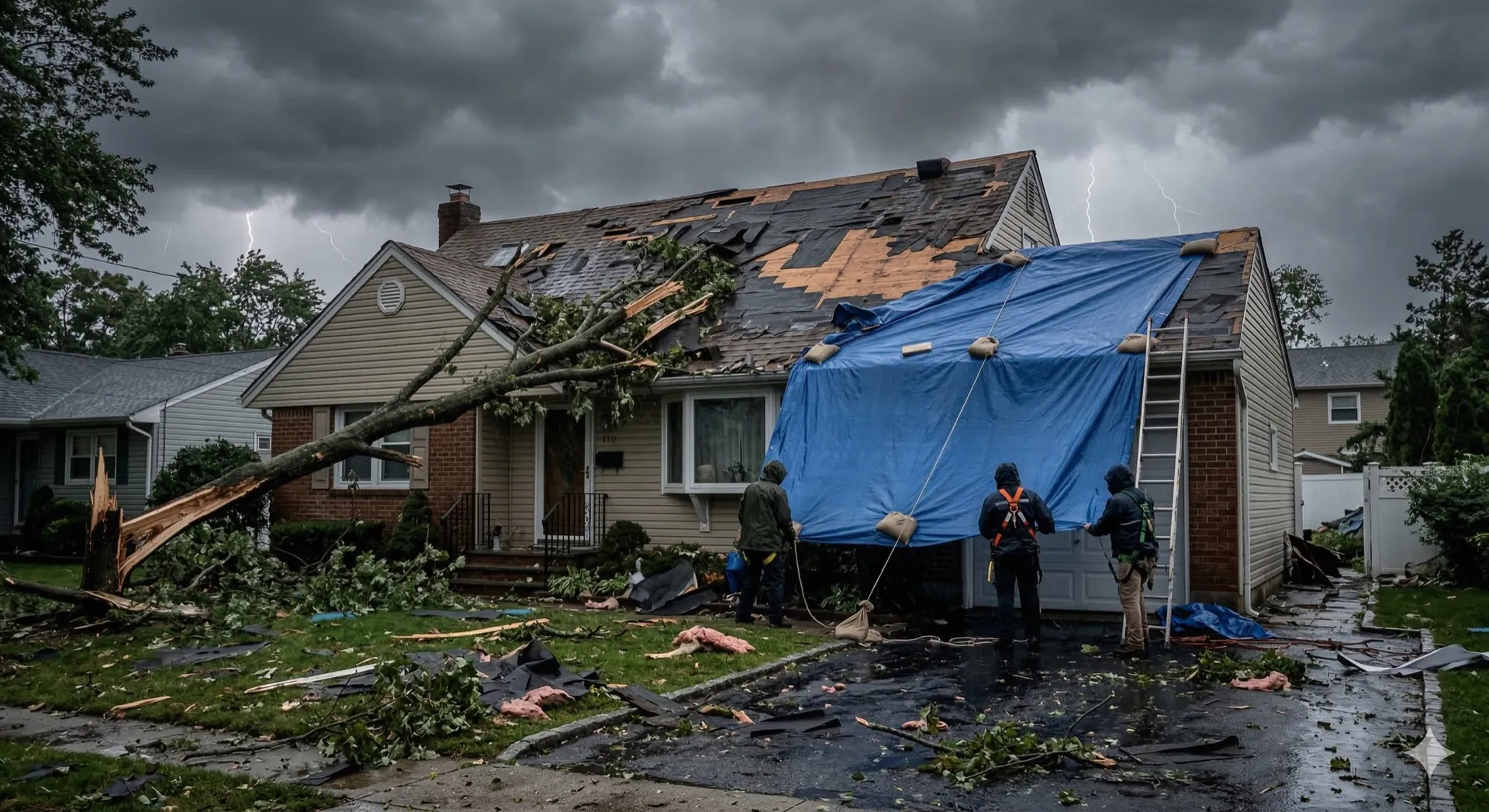
Wind damage, and the rain that came in through it, is a homeowners claim. A tree on the house is a homeowners claim, and most policies pay something toward removing that tree, up to a limit that varies by policy. Water that rose — from the bay, a canal, a creek or a river — is a flood claim under a separate flood policy, whether National Flood Insurance Program or private, and the homeowners policy generally excludes it. Many coastal New York policies also carry a hurricane deductible that is a percentage of the dwelling coverage rather than a flat figure, and it applies when a named hurricane triggers it. We do not adjust claims; we document and scope the damage so the adjuster sees what the storm did, and we tell you which of the three buckets each item belongs in before you file.
Building Department in Yaphank
Yaphank files with the Town of Brookhaven at Independence Hill in Farmingville, about ten minutes west. Emergency repairs to make the house safe and dry do not wait for a permit. The permanent repair that follows — structural work, re-roofing, electrical — is permitted work like any other, and we file it once the scope is agreed.
Free walkthrough in Yaphank. Call or text (631) 312-7441.
By the job in Yaphank: Tree Removal · Flood Cleanup · Storm Debris · Storm Roof & Siding
Frequently Asked Questions
My Yaphank house is on a big wooded lot. What can I do before the next storm?
Have the trees within striking distance of the roof looked at — the leaners, the ones with dead crowns, the pines with exposed roots on the windward side — and take down the ones that are going to come down anyway. After this storm, photograph any tree that shifted or split even if it did not fall, because the next gust finishes it. Clear the gutters and the roof valleys of pine needles so the next rain runs off instead of in.
How do I avoid storm chasers?
Ask for a local address and a local phone number, ask how long they have worked on Long Island, and do not sign anything at the door — not an assignment of benefits, not a deposit. Out-of-state crews arrive after every hurricane and leave before the roof leaks again. We are on Barton Avenue in East Patchogue and have worked Suffolk County since 2018.
Does homeowners insurance cover flooding from a hurricane?
Generally not. Water that rose from the bay, a canal, a creek or the ground is flood damage, covered by a separate flood policy — National Flood Insurance Program or private — and excluded from the homeowners policy. Rain that came in through wind damage to the roof or siding is a homeowners claim. Many bay-front houses have both after a hurricane, and we scope the two separately.
Do I need a permit for storm repairs?
Not for the emergency work. Tarping, boarding, shoring, pumping and drying make the house safe and do not wait for a permit. The permanent repair — structural work, re-roofing, electrical, anything that changes the building — is permitted work like any other job, and we file it once the scope is agreed with the carrier.
Related Guides
- Hurricane & Storm Damage Repair in Manorville, NY
- Hurricane & Storm Damage Repair in Stony Brook, NY
- Hurricane & Storm Damage Repair — our service page
- Hurricane Damage Repair on Long Island
- What to Do in the First 48 Hours After Hurricane Damage
Also Serving Yaphank
- Attic Insulation in Yaphank — air sealing, baffles and R-49 depth
- Basement Finishing in Yaphank — egress, ceiling height and moisture
- Bathroom Remodeling in Yaphank — full gut renovations
- Fallen Tree Removal & Roof Repair in Yaphank — tree off the house, roof supported and repaired
- Flood & Water Damage Cleanup in Yaphank — wet material out, drying metered
- Gutter Installation in Yaphank — seamless gutters, fascia and drainage
- Interior Painting in Yaphank — the right work for the cold months
- Kitchen Remodeling in Yaphank — cabinets, counters and layout
- Roofing in Yaphank — tear-offs, repairs and storm damage
- Storm Debris Removal & Cleanup in Yaphank — trees, building debris and hauling
- Storm Roof & Siding Repair in Yaphank — wind damage, tarped and rebuilt
Work With Alec's Construction
This guide is written by the crew that does the work. See Alec's Hurricane & Storm Damage Repair service — fallen trees, flooding, roof and siding damage, cleanup and the rebuild. Licensed and insured on Long Island, one crew start to finish, free walkthrough and a written estimate inside 48 hours.
Booking the cold months now: we also handle Roofing and Storm Damage & Insurance Restoration.
Get a Free Estimate from Alec's Construction
Licensed and insured, working across Nassau and Suffolk County since 2018. We come out, look at the actual job, and put a written number in your hand — no pressure, no obligation.
Or call (631) 312-7441