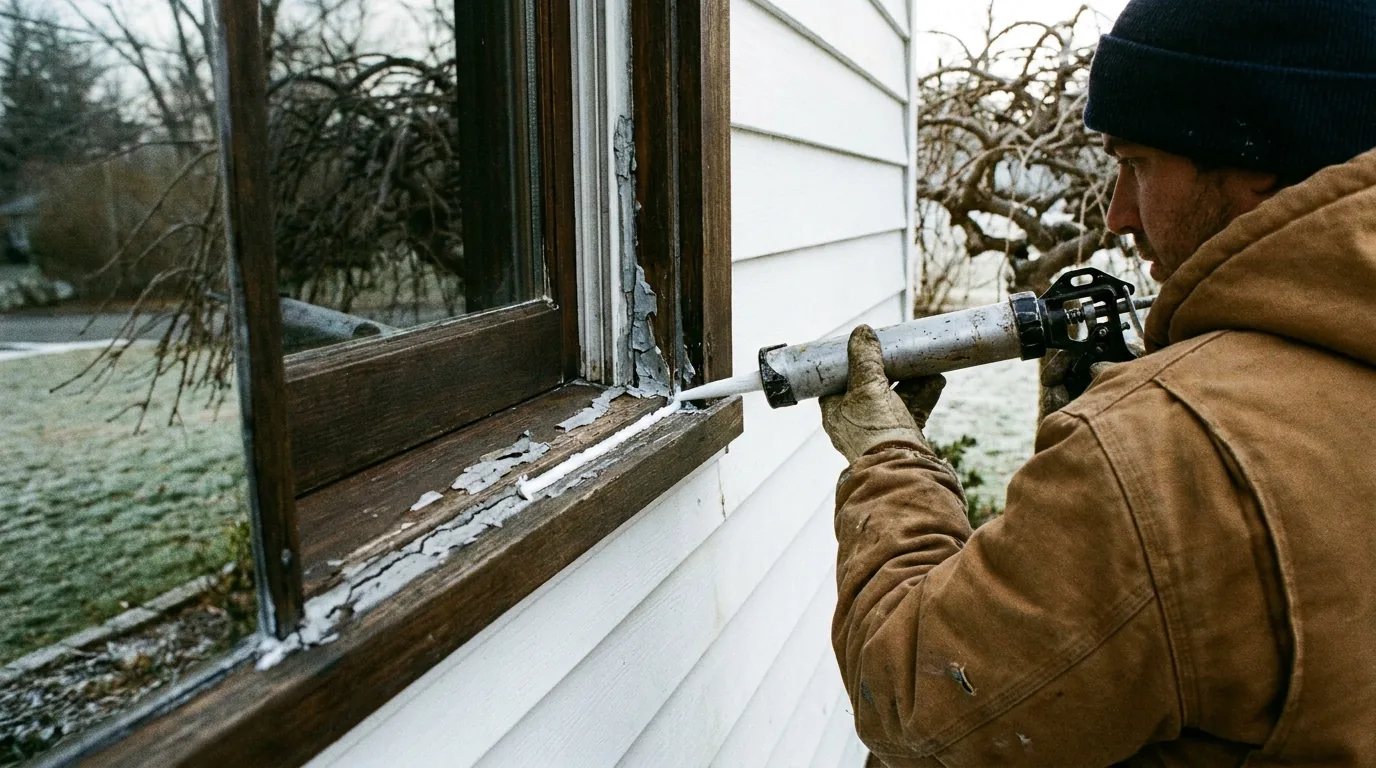
You don't need every pipe in your crawl space insulated. You need the ten feet that actually freeze, wrapped right, and you need the rim joist sealed so cold air stops finding them in the first place. Most of the frozen-pipe calls I get in January trace back to the same two things: a supply line running along an exterior band joist with a gap in the batt insulation, and a foundation vent someone forgot to close in November.
Long Island crawl spaces are their own animal. We get 40 to 50 freeze-thaw cycles most winters, not one long deep freeze like upstate, so a pipe can survive three cold snaps and split on the fourth when the ground finally locks up and stays locked. Add salt air off three sides of the Island corroding metal straps and fasteners, sandy soil that drains fast but also transmits cold fast, and a high water table on the South Shore that keeps crawl spaces damp even when they're technically vented. Wet insulation is close to useless. It's a setup for exactly the kind of freeze I see every year in Bay Shore, Babylon, and West Islip crawl spaces sitting close to the bay.
This is a job worth doing before winter, not after a burst pipe floods your crawl space and you're calling for water damage restoration instead.
Which Runs Actually Freeze
In twenty-plus years doing this work across Suffolk and Nassau, the failures cluster in the same spots every time. Any supply line running parallel to and touching an exterior rim joist or band board. Hose bib lines that penetrate the foundation wall, especially on the north side where sun never hits. PEX or copper runs that cross an open foundation vent or a gap where a vent screen fell out. Well lines and pressure tank piping in the older Southampton and East Quogue homes still on private wells, which sit exposed in a crawl space that was never meant to stay above freezing. Sump pump discharge lines, which everyone forgets because they only run seasonally, then split the first time they're needed during a February thaw.
Interior runs in the middle of the crawl space almost never freeze, even with zero insulation, because the surrounding soil and the house above hold enough heat. Don't waste money wrapping pipe that was never at risk. Spend it on the runs within two feet of an exterior wall, a vent, or a rim joist.
The Rim Joist Is the Real Culprit
If I had to pick one detail that causes more frozen pipes than anything else on Long Island, it's an uninsulated rim joist. That's the band of framing sitting on top of your foundation wall, between the sill plate and the first floor joists, and on most homes built before the 2000s it has nothing in it. It's a direct path for outside air to reach whatever pipe happens to run near it.
Batt insulation stapled between the joist bays sags or falls out within a few years, especially with the humidity swings in a Long Island crawl space. I don't use batts there anymore. Rigid foam board cut tight to each bay and sealed at the edges with canned foam holds up, and it doesn't absorb moisture the way fiberglass does when the crawl space gets damp after a nor'easter. On the harder jobs, especially where the sill plate has visible gaps from settling, closed-cell spray foam gives you air sealing and insulation in one pass. This is the same rim joist detail that matters for attic air sealing work upstairs. Same principle, opposite end of the house: stop the air leak at the framing transition and everything downstream of it gets easier to protect.
Insulation Alone Won't Save an Exposed Run
Pipe insulation, the foam sleeve you slide over the pipe, only works if the surrounding air stays above freezing for long enough between cold snaps. It slows heat loss, it doesn't create heat. On a pipe running right along an uninsulated rim joist during a hard January cold snap, foam sleeve alone buys you a few extra hours, not protection through a multi-day freeze.
Seams matter more than people think. Every insulation sleeve has a seam, and if it's not taped shut with the manufacturer's tape, or if it's just pushed together and left, that seam is where cold air gets in and where condensation collects. On a humid Long Island crawl space, an untaped seam turns your pipe insulation into a wet sponge sitting against the pipe, which is worse than no insulation at all.
Heat Tape Done Correctly
Heat tape has a bad reputation because it's usually installed wrong. Here's what actually works. Use self-regulating heat cable, not the old constant-wattage type, so it doesn't overheat where it overlaps itself. Run it in a straight line or a loose spiral per the manufacturer's spacing, never crossed over itself. Plug it into a dedicated GFCI outlet, not an extension cord, and not the same circuit as the sump pump. Use a thermostatically controlled unit so it only draws power when the pipe actually approaches freezing, not all winter.
The mistake I see constantly: someone wraps pipe insulation directly over heat tape that isn't rated for it. Standard foam pipe insulation traps heat against the cable and can be a fire risk. Only use heat tape and insulation together when the tape is explicitly listed for that combination, and check that listing before you buy, not after. Heat tape is a backup for a handful of genuinely exposed, unavoidable runs, like a well line penetration or a pipe you can't reroute away from a vent. It's not a substitute for sealing the rim joist. I've replaced plenty of heat tape systems that homeowners kept running for fifteen years because nobody ever fixed the actual air leak underneath it.
Vapor Barrier and Vent Timing
A lot of Long Island crawl spaces still have open foundation vents on a seasonal schedule, closed in winter, open in summer, which almost nobody actually does. If yours are still open right now, close them before temperatures drop. An open vent next to a supply line is close to a direct outdoor exposure.
Ground moisture off the water table matters here too. A 6-mil vapor barrier laid across the crawl space floor cuts humidity, which protects both your insulation and the framing above it. If your crawl space has standing water history or you're planning to finish the basement above it eventually, get the moisture problem handled first. Basement waterproofing before finishing work and basement finishing both depend on a dry crawl space and foundation, and pipe protection is cheap and pointless if the whole space is still wicking groundwater.
Permits and Local Reality
Insulation and heat tape work on existing pipe doesn't typically trigger a permit in Brookhaven, Islip, Smithtown, Huntington, or Babylon, since you're not altering the plumbing system itself. If the job expands into rerouting pipe out of the rim joist zone or adding new electrical for heat tape circuits, that's where inspectors get involved, and each town's electrical permit process moves at its own pace. Nassau towns generally follow the same pattern. If you're not sure whether your scope crosses that line, ask before you start rather than after an inspector flags it.
What We Do
We go through your crawl space run by run, identify the pipe that's actually at risk instead of wrapping everything, seal and insulate the rim joist properly, and install heat tape only where it's genuinely needed and rated correctly for the setup. We've been doing this across Suffolk and Nassau since 2018 and we know which crawl spaces near the bay need more attention than the listing photos let on.
Call (631) 312-7441 or book a free walkthrough.
Frequently Asked Questions
Do I need to insulate every pipe in my crawl space?
No. Interior runs away from exterior walls almost never freeze because the surrounding soil and the house above hold enough heat. Focus insulation and any heat tape on pipe within a couple feet of an exterior rim joist, a foundation vent, or a wall penetration like a hose bib or well line.
Why does my crawl space keep freezing pipes even with insulation in place?
Usually it's an uninsulated rim joist letting cold air straight into the space, or insulation with untaped seams that's absorbed moisture and stopped working. Sealing the rim joist band with rigid foam or spray foam solves more freeze problems than adding more pipe wrap.
Is heat tape safe to use in a Long Island crawl space?
Yes when it's self-regulating, thermostatically controlled, and plugged into a dedicated GFCI outlet. Never run pipe insulation over heat tape unless the tape is specifically listed for that combination, since standard foam insulation over unrated tape can trap heat and become a fire risk.
Should I close my crawl space vents for winter?
If your foundation vents are on a seasonal schedule, close them before the first hard freeze. An open vent sitting next to a supply line is close to a direct outdoor exposure and defeats most of the insulation work around it.
Does pipe insulation work in a damp crawl space near the South Shore water table?
Wet insulation loses most of its value and can make things worse by holding moisture against the pipe. If your crawl space has ongoing dampness, address the moisture source and consider a vapor barrier before or alongside the pipe insulation work.
Do I need a permit for crawl space pipe insulation or heat tape?
Insulating existing pipe or adding heat tape to it typically doesn't require a permit across Suffolk or Nassau towns since you're not modifying the plumbing itself. If the scope grows into new electrical circuits or rerouting pipe, check with your town's building department first.
Related Guides
- Basement Waterproofing Before Finishing on Long Island
- Basement Finishing for Winter on Long Island
- Attic Air Sealing on Long Island
- Frozen Pipe Insurance Claims on Long Island
Get a Free Estimate from Alec's Construction
Licensed and insured, working across Nassau and Suffolk County since 2018. We come out, look at the actual job, and put a written number in your hand — no pressure, no obligation.
Book a Free WalkthroughOr call (631) 312-7441