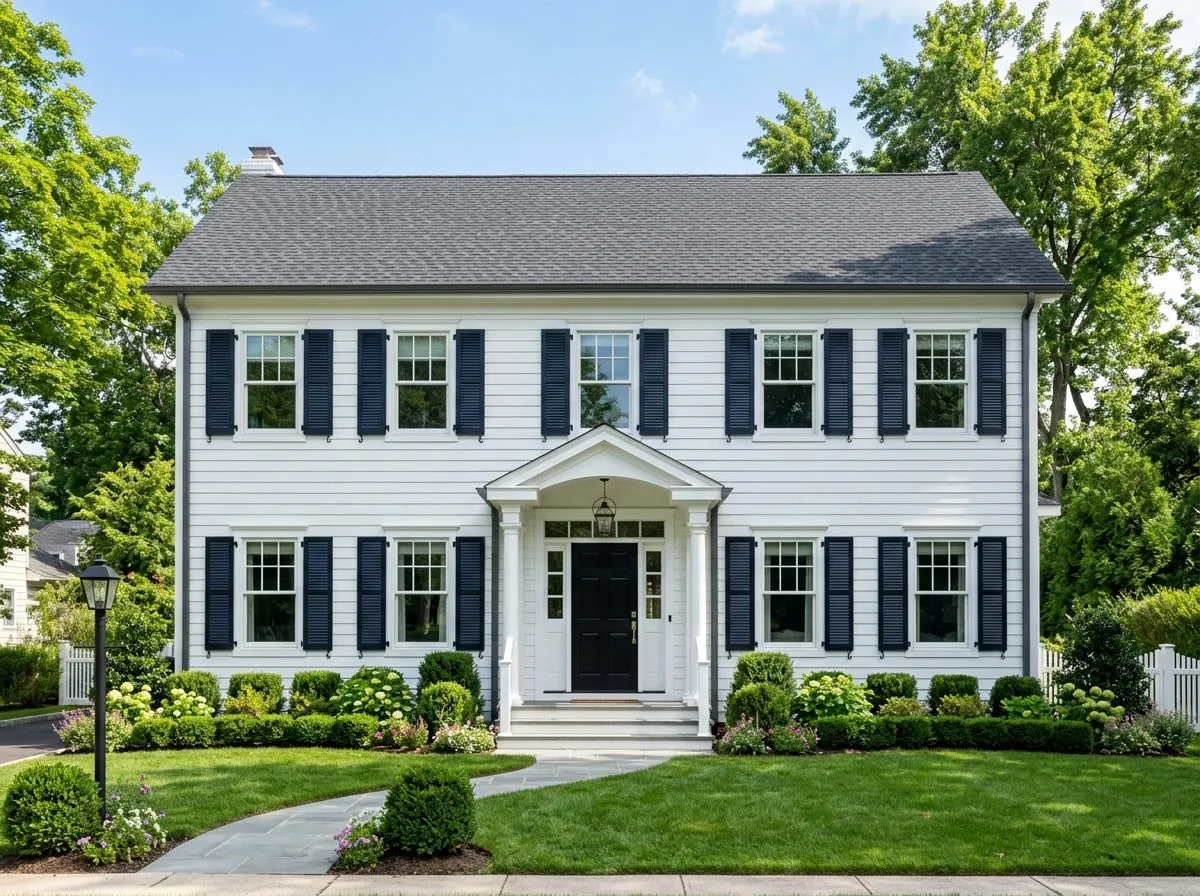
South Merrick has one of the highest concentrations of post-Sandy elevated homes on Long Island, and an elevated house presents a siding problem that an ordinary suburban re-side does not.
Elevation created new wall conditions
Lifting a house produces junctions that were never designed together: newly exposed foundation and pier structure, new stair and landing penetrations, utilities relocated upward, and a transition line where new construction meets the original wall.
- Detailing at the line where new framing meets the original wall assembly
- Flashing at every relocated utility penetration
- Skirting and breakaway wall treatment below the flood elevation
- Tighter fastener spacing on the upper walls, which are now more wind-exposed
- How the stair and landing structure meets the siding without a raw junction
That transition line is where elevated houses look either deliberate or improvised. It is worth designing rather than trimming out on the last day.
The upper walls are in more wind now
Same principle as the roof: elevating removed the ground-level shielding and put the wall higher into the wind profile. Wind-driven rain during a nor'easter gets behind anything not flashed to shed upward-driven water, and on an elevated house there is more wall exposed to it for longer.
Salt takes the fasteners, always
Canal proximity means constant salt air. The siding does not corrode; the nails, screws, trim fasteners, flashing and metal accessories all do. A corroding fastener stains the face permanently on painted fiber cement before it loses its hold. Stainless is the correct spec here and it is a small percentage of the job.
Watch the substantial improvement threshold
In a mapped flood zone, if the total cost of repair or improvement crosses a defined percentage of the structure's value, the whole structure can be required to meet current flood code. Siding alone rarely triggers it. Siding plus roof plus windows plus interior work after a storm can.
If you are planning several trades at once, the sequence genuinely matters, and it is worth understanding before the work is scheduled rather than discovering it partway through. We flag it when we see it.
North Merrick is a straightforward re-side
Above Sunrise Highway there is no flood zone, no elevation and no coastal exposure. Postwar and 1960s stock, simple elevations, standard fasteners. Vinyl performs well and the price reflects it — not every house needs fiber cement and we will say so.
Frequently Asked Questions
What is different about siding an elevated house?
Elevation created junctions that were never designed together — newly exposed pier and foundation structure, new stair and landing penetrations, relocated utilities, and a transition line where new framing meets the original wall. That line is what makes an elevated house look deliberate or improvised, and it is worth designing rather than trimming out on the last day.
Could siding work trigger flood code requirements?
Siding alone rarely does. In a mapped flood zone, if the total cost of repair or improvement crosses a defined percentage of the structure's value, the whole structure can be required to meet current flood code. Siding plus roof plus windows plus interior work after a storm can cross it, so sequence matters.
Do you have to remove the old siding?
We recommend it and quote it that way. Siding over siding hides whatever is wrong with the sheathing, adds thickness that throws off every window and door detail, and makes proper housewrap and flashing impossible.
How long does a siding job take?
Three to six days on a typical house depending on size, stories and how much trim and flashing work comes with it. Fiber cement runs longer than vinyl because the material is heavier and slower to cut and hang.
Related Reading
- James Hardie Fiber Cement — HZ5 spec, real costs, and where vinyl still wins
- Storm Damage on Long Island — wind, siding and the insurance path
- Siding Replacement Cost in Nassau County — what drives the number on a real house
- Roofing in Nassau County — roof and siding sell together for a reason
- Brick and Stone Veneer — where masonry beats siding on a facade
Also Serving Merrick
- Basement Finishing in Merrick — egress, ceiling height and moisture
- Driveway Paving in Merrick — blacktop, resurfacing and repairs
- Emergency Roof Repair in Merrick — tarping, leaks and storm response
- Gutter Installation in Merrick — seamless gutters, fascia and drainage
- House Painters in Merrick — exteriors while the fall window holds
- Storm Damage & Insurance Restoration in Merrick — emergency tarping and the claim
- Interior Painting in Merrick — the right work for the cold months
- Roofing in Merrick — tear-offs, repairs and storm damage
Work With Alec's Construction
This guide is written by the crew that does the work. See Alec's Siding service — James Hardie, vinyl and cedar with the rot behind it repaired first. Licensed and insured on Long Island, one crew start to finish, free walkthrough and a written estimate inside 48 hours.
Booking the cold months now: we also handle Roofing and Painting.
Not sure whether the town or village files your permit? That question trips up more Long Island projects than any other — the directory sorts it out.
Ready to Get Started?
Free exterior walkthrough and a written proposal listing product spec, fastener type, housewrap and every flashing detail. Nassau and Suffolk County.