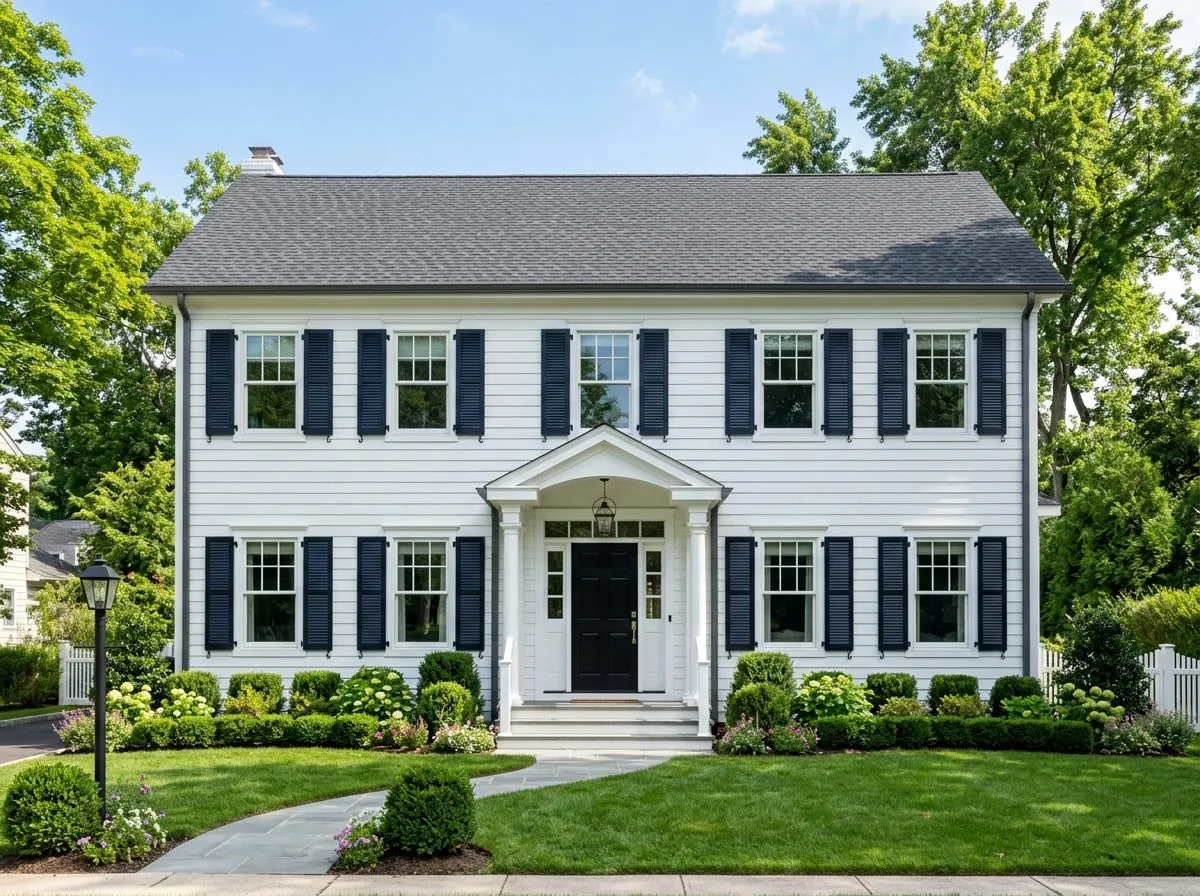
Syosset is unincorporated Town of Oyster Bay and inland, so none of the coastal conversation applies — no flood zone, no salt on the fasteners, no percentage deductible. What Syosset has is size, trim, and two specific materials from its build era.
T1-11 is structural, not decorative
A lot of 1960s and 1970s Syosset houses were sided in T1-11, the grooved plywood panel that served as both sheathing and finish siding in one product. It worked until the paint film failed.
When T1-11 delaminates at the bottom edge or swells at the panel joints, that is the wall's sheathing failing, not a cosmetic problem. And because it was doing both jobs, stripping it leaves you looking at studs and insulation — so the new assembly needs fresh sheathing, housewrap and flashing built from scratch.
That is a real cost and it surprises homeowners quoted for "siding." We write it explicitly rather than discovering it on day two.
Cedar shake on the 1960s houses
The other common Syosset material is cedar shake, frequently on the upper storey or on gable ends over brick. Where it is original and sound it is worth keeping — new cedar reads lighter and more uniform than material that has weathered sixty years.
Where it has to go, fiber cement in a shingle profile is the usual answer. It takes paint, holds a shake exposure, does not feed insects and does not carry cedar's maintenance cycle. It is not cedar and we will not pretend otherwise, but against a brick base on a 1960s colonial it reads far better than lap vinyl.
Big elevations mean the trim drives the price
- Corner boards and frieze detail, which decide whether the house reads right
- Window and door casing — capping versus replacing in the new material
- Soffit and fascia, frequently due at the same time on houses of this age
- Returns, bump-outs and bay window roofs, each with its own flashing
- Garage wing and addition transitions where planes and materials change
A quote priced on wall area alone will be wrong on a Syosset colonial. The field is the cheap part; the detail work is where the hours are.
Oak canopy and damp elevations
Heavy mature oak means north and east elevations that stay damp and grow algae on any product, plus gutters that overflow with leaf load every autumn and soak the fascia all winter. Pruning back, clearing gutters and keeping plantings eighteen inches off the wall does more for the exterior than the product choice does.
Frequently Asked Questions
My house has T1-11 plywood siding. Can it be covered over?
We advise against it. T1-11 was doing double duty as sheathing and finish siding, so when it delaminates or swells you have a failing wall rather than a cosmetic problem — and covering it traps the failure. Stripping it means the new assembly needs fresh sheathing, housewrap and flashing built from scratch, which is a real cost that belongs in the quote.
Can my original cedar shake be kept?
Where it is sound, yes, and it is worth keeping — new cedar reads lighter and more uniform than material that has weathered sixty years. Where it has to go, fiber cement in a shingle profile holds the exposure and takes paint without cedar's maintenance cycle. Against a brick base on a 1960s colonial it reads far better than lap vinyl.
Do you have to remove the old siding?
We recommend it and quote it that way. Siding over siding hides whatever is wrong with the sheathing, adds thickness that throws off every window and door detail, and makes proper housewrap and flashing impossible.
How long does a siding job take?
Three to six days on a typical house depending on size, stories and how much trim and flashing work comes with it. Fiber cement runs longer than vinyl because the material is heavier and slower to cut and hang.
Related Reading
- James Hardie Fiber Cement — HZ5 spec, real costs, and where vinyl still wins
- Siding Replacement Cost in Nassau County — what drives the number on a real house
- Brick and Stone Veneer — where masonry beats siding on a facade
- Roofing in Nassau County — roof and siding sell together for a reason
- Storm Damage on Long Island — wind, siding and the insurance path
Also Serving Syosset
- Basement Finishing in Syosset — egress, ceiling height and moisture
- Driveway Paving in Syosset — blacktop, resurfacing and repairs
- Emergency Roof Repair in Syosset — tarping, leaks and storm response
- Gutter Installation in Syosset — seamless gutters, fascia and drainage
- House Painters in Syosset — exteriors while the fall window holds
- Interior Painting in Syosset — the right work for the cold months
- Masonry & Pavers in Syosset — patios, walkways and retaining walls
- Roofing in Syosset — tear-offs, repairs and storm damage
Work With Alec's Construction
This guide is written by the crew that does the work. See Alec's Siding service — James Hardie, vinyl and cedar with the rot behind it repaired first. Licensed and insured on Long Island, one crew start to finish, free walkthrough and a written estimate inside 48 hours.
Booking the cold months now: we also handle Roofing and Painting.
We pull the permits on our own jobs — if you need the building department for your town, we keep a current directory of all 23 Long Island permit offices.
Ready to Get Started?
Free exterior walkthrough and a written proposal listing product spec, fastener type, housewrap and every flashing detail. Nassau and Suffolk County.