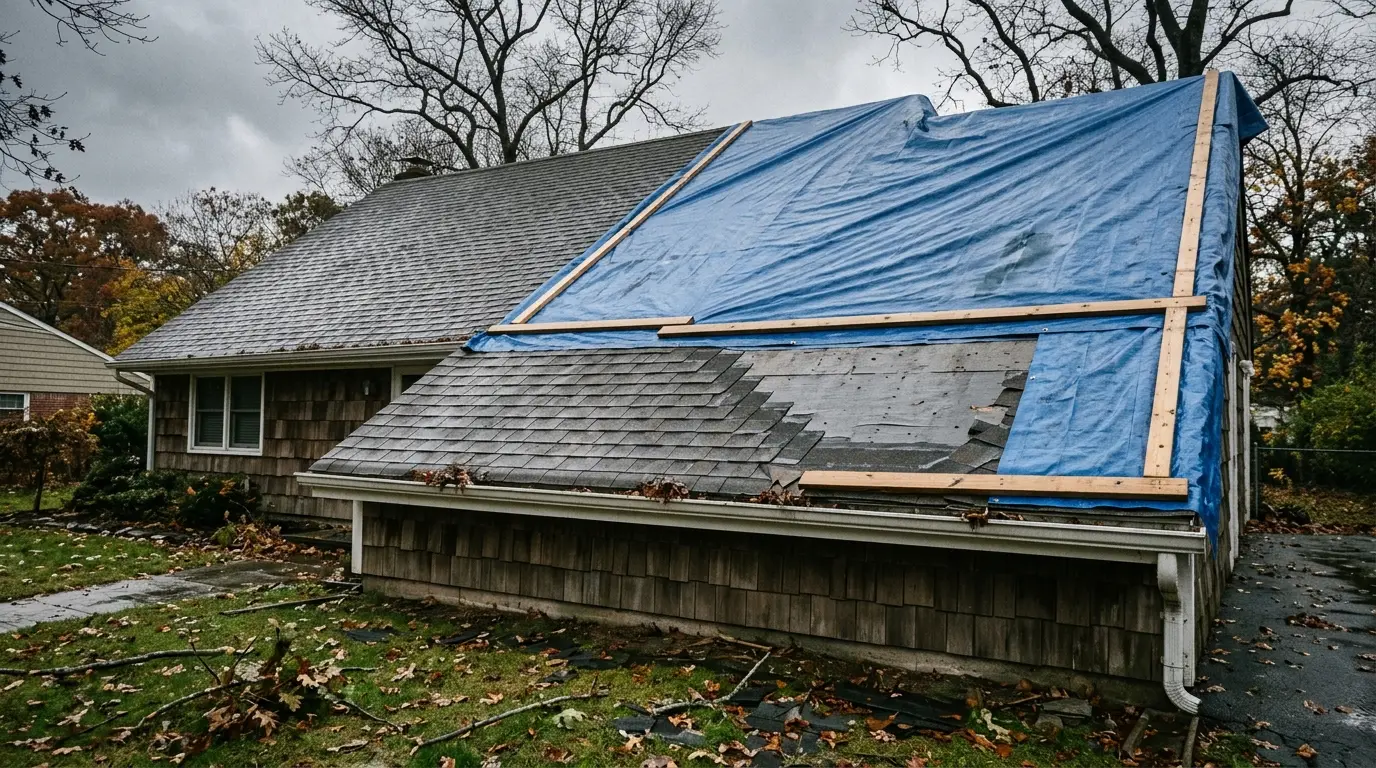
After a storm a Ronkonkoma property is covered in three kinds of debris and they go three different places: the tree, which the town may eventually take from the curb; the pieces of the house, which nobody takes; and the wet material from inside, which has a clock on it. Alec's Construction cuts, hauls and clears all three as part of the repair rather than leaving you to find a dumpster in the week every dumpster on Long Island is spoken for, working out of the yard on Barton Avenue in East Patchogue.
What a Storm Does in Ronkonkoma
Ronkonkoma is inland with Lake Ronkonkoma at its centre and no tidal water anywhere near it, so a hurricane here is wind, rain and trees. The hamlet is split among three towns — Islip, Brookhaven and Smithtown — and covered with the 1960s–80s splits, ranches and hi-ranches that central Suffolk was built with, standing under oaks and pines that have had sixty years to grow over the roofs. The ground around the lake is low and the lake rises after a big rain, so the streets nearest it see standing water and wet basements from the rain rather than from any surge. The rest of the damage is what an inland wind does to a split: the low-slope roof over the lower wing, the ridge cap, the gable-end siding, and the service drop under a fallen limb.
Pine Crowns and Root Balls
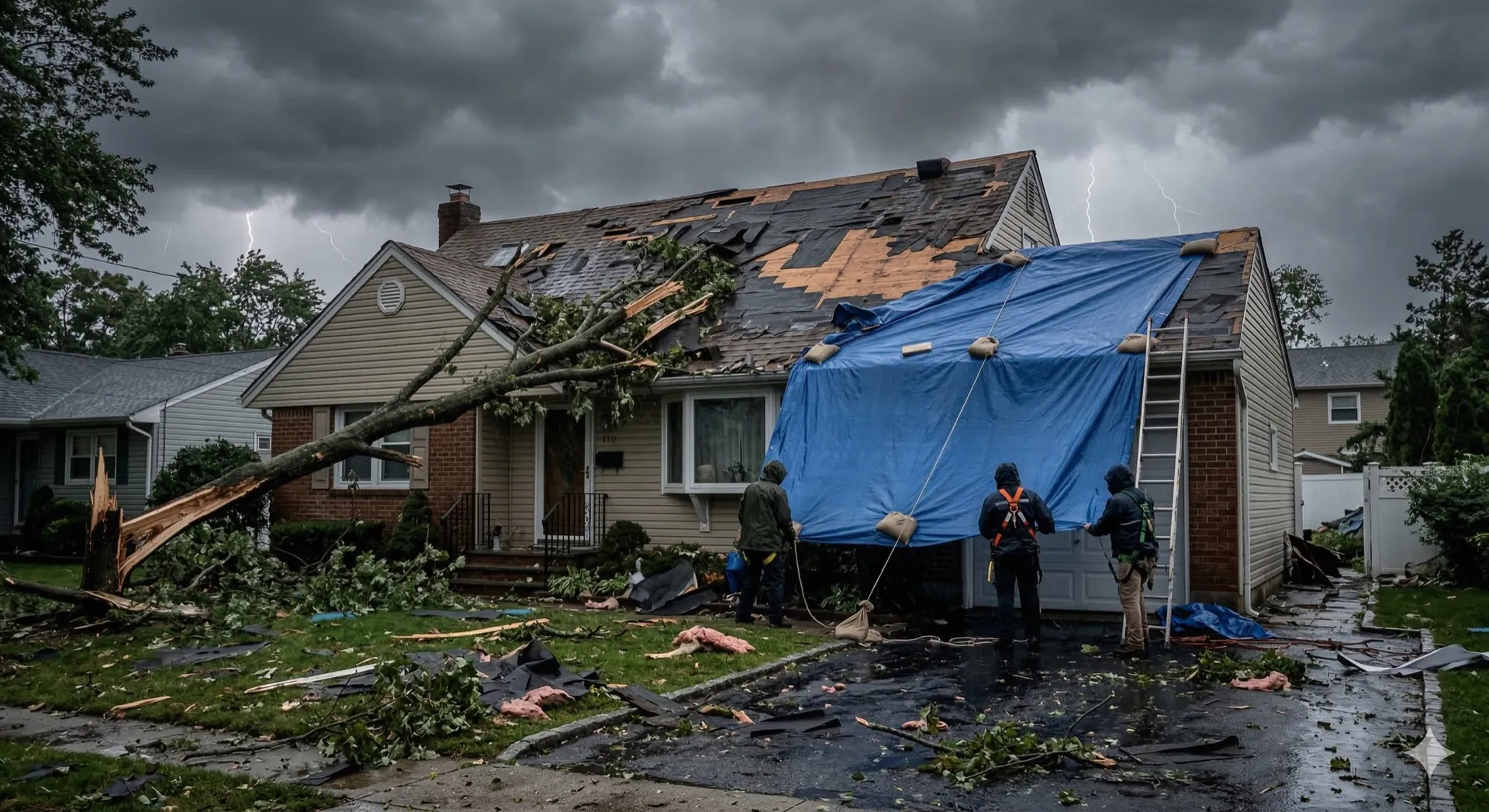
After a storm here the debris is pitch pine — whole trees with the root ball still attached, crowns across driveways and fences, limbs through sheds — on top of the shingles and siding the wind took. The town takes brush from the curb eventually; the root balls and the building debris it does not.
Trees and Limbs
A tree on the ground is a chainsaw job and a matter of time. A tree on a structure is a different job with an order to it, and it comes off before anything else on the property is touched. We cut and haul what the town will not take, and we tell you what your town is doing that week for curbside brush.
Roofing, Siding and Building Debris
Shingles, vinyl siding, aluminum gutters, fence sections, broken glass, the pieces of whatever the wind took apart. It is sharp, it has nails in it and it hides under wet leaves. Photographed where it lies before it is moved, because it is evidence of what the wind did to the house.
Wet Material From Inside
This is the debris with a clock on it: wet carpet and pad, wet insulation, sheetrock that has lost its strength, soaked furniture. Mould can begin on any of it within a day or two. It comes out, it is photographed as it comes out, and it is kept where the adjuster can see it.
Hazards We Work Around
Downed lines and anything touching them — the utility first, always. Gas. Trees under tension. Nails and glass under mud. Wet floors over electrical. Cleanup is what gets the crew to the house; the scope and the rebuild are the job that follows.
Building Department in Ronkonkoma
Ronkonkoma straddles the Islip and Brookhaven line, so the governing department is confirmed by address. Emergency work to make the house safe and dry does not wait for a permit; the permanent repair is filed once the scope is agreed.
Free walkthrough in Ronkonkoma. Call or text (631) 312-7441. Tell us whether the roof is open, whether a tree is on the structure and whether there is water inside, and we bring the right equipment on the first trip.
Frequently Asked Questions
Ronkonkoma is in three towns. How do you know where to file my storm repair?
From the tax map and the address, before anything is filed — parts of Ronkonkoma are in the Town of Islip, parts in the Town of Brookhaven and parts in the Town of Smithtown, and neighbours across a street can file with different departments. Emergency work to make the house safe does not wait for any of them. The permanent repair does get filed, with the right town, and that is one of the first things we settle on the walkthrough.
Do you haul the debris or do I need a dumpster?
We bring the hauling as part of the job. After a storm every dumpster on Long Island is committed for weeks, and leaving homeowners to find a container is how cleanup stalls.
Can I throw out the wet carpet and drywall before the adjuster comes?
Yes, and you should. Leaving it in place grows mould and makes the claim worse, and emergency mitigation is expected under the policy. Photograph it in place first, photograph it as it comes out, and keep it where the adjuster can see it if there is room.
Is storm cleanup covered by insurance?
Debris removal from a covered loss is generally covered under a standard homeowners policy up to a limit, and removal of a tree that hit a covered structure usually is too. A tree that fell in the yard and hit nothing is usually not. We separate the covered cleanup from the rest on the scope so the claim is clean.
Related Guides
- Fallen Tree Removal & Roof Repair in Ronkonkoma, NY
- Flood & Water Damage Cleanup in Ronkonkoma, NY
- Storm Roof & Siding Repair in Ronkonkoma, NY
- Storm Debris Removal & Cleanup in Smithtown, NY
- Storm Debris Removal & Cleanup in Babylon, NY
- Emergency Roof Repair & Tarping in Ronkonkoma
- Hurricane & Storm Damage Repair in Ronkonkoma, NY
- Storm Damage & Insurance Restoration in Ronkonkoma
- Hurricane & Storm Damage Repair — our service page
Also Serving Ronkonkoma
- ADUs in Ronkonkoma — accessory apartments and grants
- Attic Insulation in Ronkonkoma — air sealing, baffles and R-49 depth
- Basement Finishing in Ronkonkoma — egress, ceiling height and moisture
- Bathroom Remodeling in Ronkonkoma — full gut renovations
- Chimney Repair in Ronkonkoma — repointing, crowns, caps and flashing
- Driveway Paving in Ronkonkoma — blacktop, resurfacing and repairs
- Emergency Roof Repair in Ronkonkoma — tarping, leaks and storm response
- Fallen Tree Removal & Roof Repair in Ronkonkoma — tree off the house, roof supported and repaired
- Flood & Water Damage Cleanup in Ronkonkoma — wet material out, drying metered
- Garage Conversion in Ronkonkoma — turning the garage into living space
- Gutter Installation in Ronkonkoma — seamless gutters, fascia and drainage
- House Painters in Ronkonkoma — exteriors while the fall window holds
- Hurricane & Storm Damage Repair in Ronkonkoma — trees, flooding, cleanup and repairs
- Storm Damage & Insurance Restoration in Ronkonkoma — emergency tarping and the claim
- Interior Painting in Ronkonkoma — the right work for the cold months
- Kitchen Remodeling in Ronkonkoma — cabinets, counters and layout
- Roofing in Ronkonkoma — tear-offs, repairs and storm damage
- Siding in Ronkonkoma — James Hardie, vinyl and cedar
- Storm Roof & Siding Repair in Ronkonkoma — wind damage, tarped and rebuilt
- Windows & Doors in Ronkonkoma — insert and full-frame replacement
Work With Alec's Construction
This guide is written by the crew that does the work. See Alec's Hurricane & Storm Damage Repair service — fallen trees, flooding, roof and siding damage, cleanup and the rebuild. Licensed and insured on Long Island, one crew start to finish, free walkthrough and a written estimate inside 48 hours.
Booking the cold months now: we also handle Roofing and Storm Damage & Insurance Restoration.
Get a Free Estimate from Alec's Construction
Licensed and insured, working across Nassau and Suffolk County since 2018. We come out, look at the actual job, and put a written number in your hand — no pressure, no obligation.
Or call (631) 312-7441