Every March I get the same call. A homeowner in Bay Shore or Sayville wakes up to two inches of water in the basement, and the pump they installed a few years back either never kicked on or ran itself to death trying to keep up. The pattern repeats every year: a hard freeze through January and February, then a fast thaw with two or three inches of rain on top of it. Frozen ground can't absorb anything, so all that water runs downhill to the lowest point on the property, which on Long Island is almost always your foundation.
This isn't a rare event. Long Island runs through roughly 40 to 50 freeze-thaw cycles in a normal winter, and every one of those cycles moves water through the soil around your footings. Sandy soil drains fast when it isn't frozen and holds water like a sponge when it is, so your foundation takes more hydrostatic pressure in late winter than at any other point in the year. On the South Shore, from Babylon through Islip and out toward Southampton, the water table sits close enough to the surface that some basements fight groundwater even in a dry week in July.
A sump pump is the only thing standing between that pressure and a wet basement, and the ones I find failing weren't installed wrong exactly, they were installed cheap. Undersized pit, discharge line that dumps two feet from the foundation and freezes solid in January, no battery backup, so the one time the power goes out in a nor'easter is the one time the pump can't run at all.
The Pit Is Not a Bucket in a Hole
A lot of sump installs I see are a plastic bucket dropped into a hand-dug hole with gravel thrown around it. That works until the water table rises fast and the pump can't keep pace with inflow, because there's nowhere for water to collect between cycles. I use a solid basin, minimum 18 inches deep and wide enough to hold real reserve capacity, set on a bed of washed stone so groundwater has a clear path in through the perforations instead of pushing against solid clay or compacted fill. The lid matters too. An open pit dumps radon and basement humidity straight into your living space all winter, so I seal it and vent the discharge line separately from the sump itself.
Pump selection depends on how fast your property actually floods, not a generic model number off a shelf. A house on high ground in Smithtown with decent grading needs less pump than a Babylon property two blocks from a canal. I size the pump to the worst March scenario your lot has actually shown me, not the average week.
Discharge Routing That Won't Freeze
This is where most DIY and budget installs fall apart. The discharge line has to get water far enough from the foundation that it doesn't just re-enter the soil and flow right back to the pit, and it has to survive a hard freeze without becoming a solid ice plug that backs the pump up against a closed system. I run the line below the frost line wherever the yard allows it, with a gradual slope so standing water inside the pipe doesn't sit and freeze at a low spot. Where the line has to surface, I daylight it at least 10 feet from the foundation, ideally into a dry well or graded swale that carries water toward the street or a drainage easement, never onto a neighbor's lot.
A check valve near the pump keeps water in the discharge line from draining back into the pit between cycles, which matters twice over here: it stops the pump from short-cycling, and it stops that trapped water from freezing inside the pipe near the house. If your gutters are already dumping close to the foundation, you're fighting the same freeze problem from a second direction, and it's worth reading up on downspout drainage at the same time you're planning the sump line, because a downspout fifteen feet from a discharge outlet doing the opposite job is a losing setup.
Battery Backup Isn't Optional Here
Nor'easters knock out power on Long Island with almost mechanical reliability, and they do it during the exact weather event that's flooding your basement. A primary pump with no backup is a pump that works fine right up until the moment you actually need it. I install a battery backup system on every sump job, sized to run the pump through a multi-hour outage, because that's the realistic window for a coastal storm to knock out power on this island. Some homeowners want a water-powered backup instead, which works off municipal pressure and never needs a battery, and that's a reasonable call if your water pressure is strong and consistent. Either way, walking away from a sump pump with no backup plan is walking away from the exact scenario that causes the worst flood damage.
Sandy Soil and the High Water Table South Shore Reality
Soil composition changes block to block out here, and it changes what your sump system needs to do. Close to the bays in Islip, Babylon, and parts of Southampton, sandy soil combined with a shallow water table means some basements are pumping water nearly year-round, not just during storms. Further inland in Smithtown and Huntington, the soil holds a bit more clay and drains slower, so the flood risk shows up in sharper spikes tied to specific storms rather than a constant baseline. Salt air off three sides of the island also accelerates corrosion on cheap pump housings and fittings, which is one more reason I don't spec bargain hardware for this work. A pump that corrodes out in four years because it wasn't built for a coastal environment isn't a deal, it's a second install fee waiting to happen.
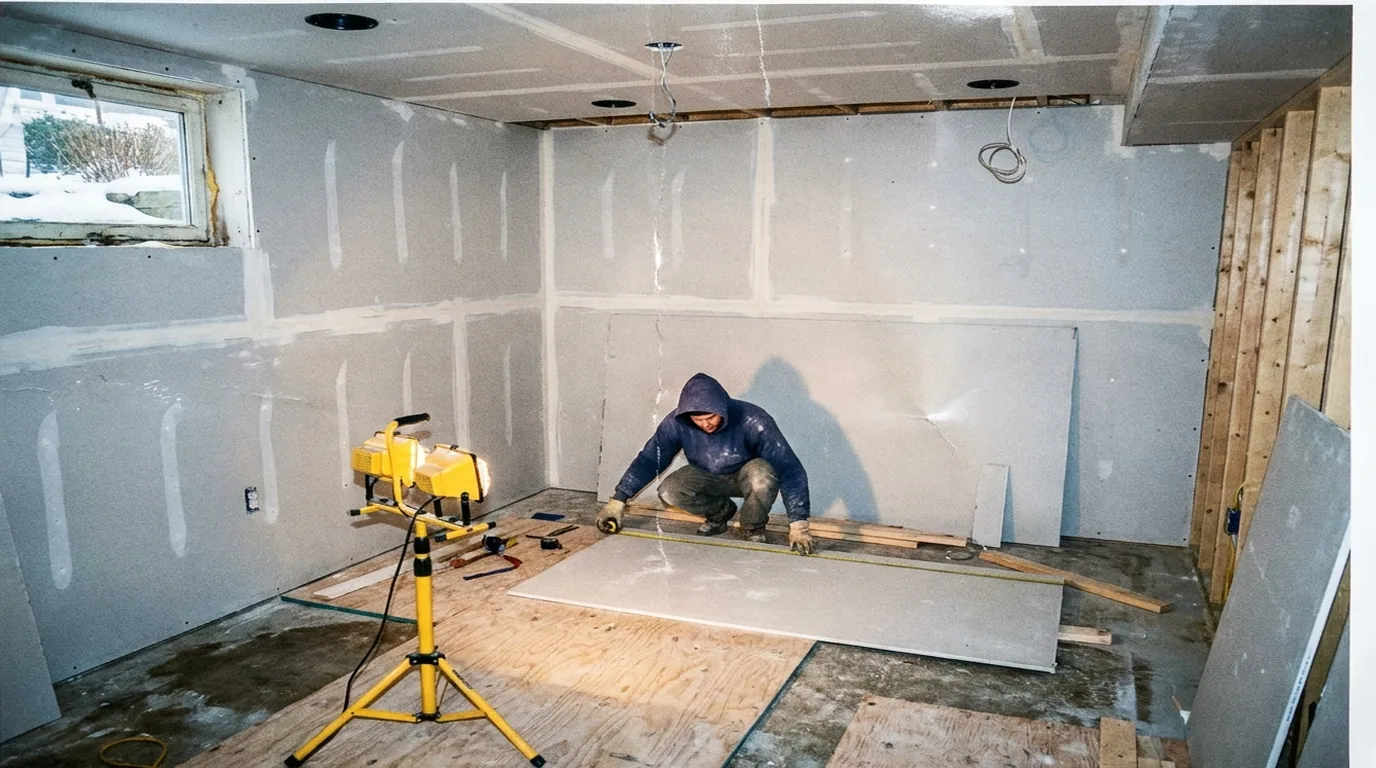
If you're planning to finish the basement at some point, get the sump and drainage right first. I've walked into too many jobs where someone finished a basement over a marginal or absent sump system, and the first real freeze-thaw season undid the drywall. Read through basement waterproofing before finishing if that's on your radar, and see basement finishing in winter for how the two projects sequence properly.
Permits: What Brookhaven, Islip, and Smithtown Actually Require
Permit requirements vary by town, and discharge location is usually the part that gets flagged, not the pump itself. Brookhaven and Islip both care where that discharge line daylights, because dumping onto a neighbor's property or into a town right-of-way without approval is a code violation that can get you a stop-work order after the fact. Smithtown and the Nassau towns generally want the plumbing portion permitted if it ties into an existing drain system, and less paperwork if the discharge stays entirely on your own lot to a dry well. I pull permits before digging, not after an inspector asks questions, because retrofitting a compliant discharge route after the pipe is already buried costs more than doing it right the first time.
What We Do
We install sized-to-the-lot sump systems on Long Island, from pit and discharge routing through battery backup, and we pull the permits your town actually requires before we dig.
Call (631) 312-7441 or book a free walkthrough.
Frequently Asked Questions
How do I know if my sump pump is undersized for my lot?
If your basement takes on water during a fast thaw or a heavy nor'easter even with the pump running, it's usually a sign the pit or pump capacity doesn't match how fast groundwater is entering. We size pumps to your property's worst-case inflow, not a generic model, so a walkthrough during or right after a storm tells us more than a dry-day inspection ever could.
Why does my discharge line freeze every winter?
It's almost always a line that's too shallow, has a low spot where water sits, or daylights too close to the foundation so it never really drains. Routing below the frost line with a consistent slope and a check valve near the pump solves this in the vast majority of cases we see.
Do I really need a battery backup if I already have a generator?
A generator helps, but most homeowners don't have it running the moment power drops during a storm, and that gap is exactly when flooding starts. A dedicated battery backup on the sump circuit kicks in instantly with no manual step, which matters most during the kind of fast-moving nor'easter that knocks out power without warning.
Can I add a sump pump to a basement that doesn't have one at all?
Yes, and it's a common request on older Long Island homes built before sump systems were standard. We evaluate the slab, existing drainage, and water table depth on your specific lot to figure out where the pit and discharge line make the most sense before opening any concrete.
Will a sump pump stop water from coming through my basement walls?
A sump pump manages groundwater and rising water table pressure from below the slab, but wall seepage is usually a separate waterproofing issue tied to exterior grading, gutters, or foundation cracks. We often address both in the same project since they're related but not the same fix.
How long does a sump pump installation take?
A standard pit, pump, and discharge routing install typically runs one to two days depending on how far the discharge line has to travel and whether we're tying into existing drainage. Permit timelines with your town can add to the calendar even though the physical work is fast.
Related Guides
- Basement Waterproofing Before Finishing Long Island
- Basement Finishing in Winter on Long Island
- Downspout Drainage Long Island
- Basement Finishing Services
Get a Free Estimate from Alec's Construction
Licensed and insured, working across Nassau and Suffolk County since 2018. We come out, look at the actual job, and put a written number in your hand — no pressure, no obligation.
Book a Free WalkthroughOr call (631) 312-7441