A pipe bursts in the wall behind your kitchen sink in January, or a nor'easter drives rain sideways into a window flashing you didn't know had failed, and by the time you notice, water has already been sitting inside a wall cavity or under a subfloor for hours. The sheetrock you can see is the least of the problem. What matters is what's happening inside the framing, the insulation, and the subfloor where you can't see it, and how fast somebody gets air moving through it.
On Long Island the stakes are higher than they'd be inland. You've got salt air working three sides of most properties, 40 to 50 freeze-thaw cycles a season stressing every joint and seam in a roof or foundation, and a water table on the South Shore that sits close enough to grade that a wet basement isn't a maybe, it's a when. Add oak and pine leaf load clogging gutters into December and a nor'easter or two, and water finds its way in through places that were fine the year before.
Deciding whether to spend money on drying and restoration before winter comes down to two variables that actually matter: how long the material has been wet, and what kind of water it was. Everything else, including how bad it looks on the surface, is a distraction from those two facts.
The 48-Hour Mold Clock
Mold spores are already in your house. They're in the dust, in the framing, in the insulation. What stops them from colonizing is moisture, and once wood, drywall paper, or insulation sits above roughly 60 percent moisture content for 48 to 72 hours at normal indoor temperature, colonization starts. That window is the basis for the IICRC S500 standard that restoration crews work from, and it's not a marketing number, it's a biology number.
Winter makes this worse here, not better. You seal the house up, run the heat, and often run a humidifier for dry skin and static, which pushes indoor relative humidity higher than most people realize. A wet stud bay in a heated, humidified house in February can cross the mold threshold faster than the same stud bay would in a drafty house in July. A leak you decide to "keep an eye on" over a long weekend has usually already crossed the line by Monday morning.
Category 1, 2, and 3 Water, and Why the Category Changes Everything
Restoration work is built around three categories, and the category decides the entire scope. Category 1 is clean water, a supply line break, a failed ice maker line, water straight from the main. Category 2 is gray water, a washing machine overflow, a dishwasher leak, water that's picked up detergent or food residue. Category 3 is black water, sewage backup, or ground water that's pushed into the house from outside.
The part homeowners miss is that category isn't fixed. Clean water sitting against organic material for more than 48 hours degrades into category 2 because bacteria start growing in it. And ground water that comes up through a foundation crack or a floor drain during a nor'easter is category 3 by definition, because it's ground water, not because it looks visibly dirty. That distinction changes what has to be removed versus what can be dried and saved, and it changes what your insurance adjuster will and won't approve.
Long Island's Climate Makes the Ground Water Problem Worse
Sandy soil on most of the Island drains fast in a normal rain, which is usually a good thing. But after a sustained nor'easter, or a fast late-winter thaw on top of frozen ground, the water table itself rises, especially on the South Shore in towns like Babylon, Islip, and parts of Brookhaven and Southampton where grade sits low to begin with. A sump pump that handled every storm for ten years can get overwhelmed when the water table is up and the pump is also fighting infiltration through a hairline foundation crack that opened up during last year's freeze-thaw cycles.
Gutters matter more here than people give them credit for. Oak and pine leaf load clogs gutters into early winter, and a clogged gutter during a freeze doesn't just overflow, it backs water up under the shingle line and into the fascia, where it freezes, expands, and forces its way into the attic or exterior wall. If your gutters haven't been cleared since October, that's worth fixing before the ground freezes. See our downspout drainage guide for how that water needs to move away from the foundation, not just off the roof.
Drying Standards: Why "It Feels Dry" Doesn't Mean Anything
A box fan and an open window for a day is not drying. Real drying is measured, not felt. A restoration crew uses a moisture meter on the framing itself, not just the drywall surface, and often a thermal camera to find water that's already migrated into a wall cavity or under a subfloor where nothing looks wet at all. The IICRC S500 standard classes the loss based on how much water absorbed and how deep, then sets air mover and dehumidifier placement and runtime around that class, logging moisture content daily until the material is back to a normal reading, not until it looks or feels dry to the hand.
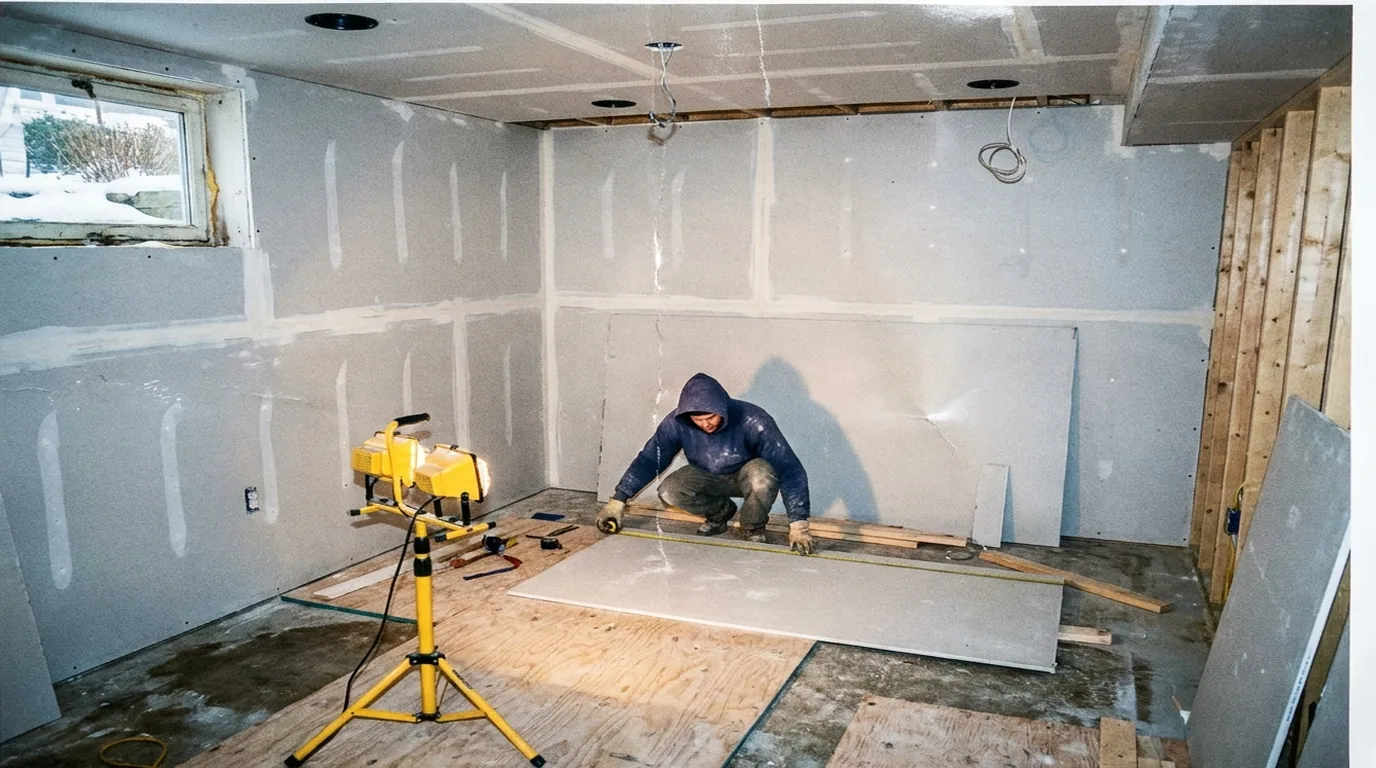
The failure mode I see most in Long Island basements is a homeowner who mops up standing water, runs a dehumidifier for a day or two, and calls it done. The slab surface reads dry. The bottom two feet of the stud wall and the underside of the sill plate do not, and by March there's a mildew smell coming from behind the drywall that nobody can pin down. If you're planning to finish that basement, get it dry and verified first. Our basement waterproofing guide and basement finishing in winter guide both walk through why sequence matters here.
What Insurance Actually Covers
Category 1 and 2 water damage from a sudden, accidental event, a burst pipe, a failed appliance hose, is generally covered under a standard homeowners policy. Category 3 sewage backup often needs a separate sewer backup rider, and if you don't have one, check your policy now, not after it happens. Ground water and flood damage are almost always excluded from a standard homeowners policy entirely and require a separate flood policy, which matters a lot on the South Shore where storm surge and high water table are real risks, not hypotheticals.
What gets claims approved or denied is documentation: moisture logs, photos from day one, and a clear timeline showing the water source was sudden and accidental rather than a slow leak that had been going on for months. That paperwork is exactly what a restoration company should be handing you alongside the drying work itself. Our insurance restoration services page covers how we document a claim from the first site visit.
Basements Are Ground Zero on the South Shore
If you're weighing whether to spend on this before winter, start with the basement. It's the lowest point in the house, it's closest to that South Shore water table, and it's where category 3 ground water shows up first during a bad storm. Every town on Long Island, whether it's Brookhaven, Islip, Smithtown, Huntington, Babylon, or the Nassau towns, requires a permit to finish a basement, and inspectors will ask about prior moisture issues before signing off on new drywall over a wall that flooded last spring. Fixing the water problem is cheaper in every sense than fighting an inspector or a mold problem behind brand new walls.
What We Do
We show up, identify the category of water and the class of the loss, pull moisture readings on the framing and subfloor before anything gets covered back up, and dry it to a verified standard instead of a guess, documenting every step for your insurance file along the way.
Call (631) 312-7441 or book a free walkthrough.
Frequently Asked Questions
How do I know if my water damage is category 1, 2, or 3?
Category 1 is clean water straight from a supply line or appliance fill, category 2 has picked up detergent, food, or other contaminants, and category 3 is sewage or ground water. A restoration tech tests and categorizes it on site rather than guessing from how it looks, since clean water left standing more than 48 hours can shift into category 2 on its own.
Can I just run fans and a dehumidifier myself?
For a very small, immediately caught clean water spill, yes, that can work. But once water has soaked into a subfloor, insulation, or a stud bay for any length of time, surface drying isn't enough, and a moisture meter reading on the framing is the only way to confirm it's actually dry rather than just dry to the touch.
Will homeowners insurance pay for water damage restoration?
Sudden, accidental category 1 and 2 losses like a burst pipe are usually covered under a standard policy. Sewage backup often needs a separate rider, and ground water or storm surge intrusion typically falls under a flood policy instead, so it's worth confirming what your policy actually includes before you need it.
How long does professional drying actually take?
It depends on the class of the loss and what materials absorbed water, but most jobs run several days of monitored air movement and dehumidification with daily moisture readings, not a single visit. Framing and subfloor that got heavily saturated take longer than a surface spill on tile.
Does a finished basement need a permit after water damage repair?
Yes, every town on Long Island requires a permit to finish or refinish a basement, and inspectors will ask whether a prior moisture or flooding issue was actually resolved before new drywall and insulation go in. Skipping that step is how mold ends up sealed behind a brand new wall.
What's the difference between water damage restoration and mold remediation?
Restoration is the drying and material removal that happens in the first days after water intrusion, aimed at stopping mold before it starts. Remediation is a separate, more involved process for removing mold that has already colonized, which is exactly why the 48-hour window matters so much.
Related Guides
- Basement Waterproofing Before Finishing
- Basement Finishing In Winter
- Downspout Drainage On Long Island
- Insurance Restoration Services
Get a Free Estimate from Alec's Construction
Licensed and insured, working across Nassau and Suffolk County since 2018. We come out, look at the actual job, and put a written number in your hand — no pressure, no obligation.
Book a Free WalkthroughOr call (631) 312-7441