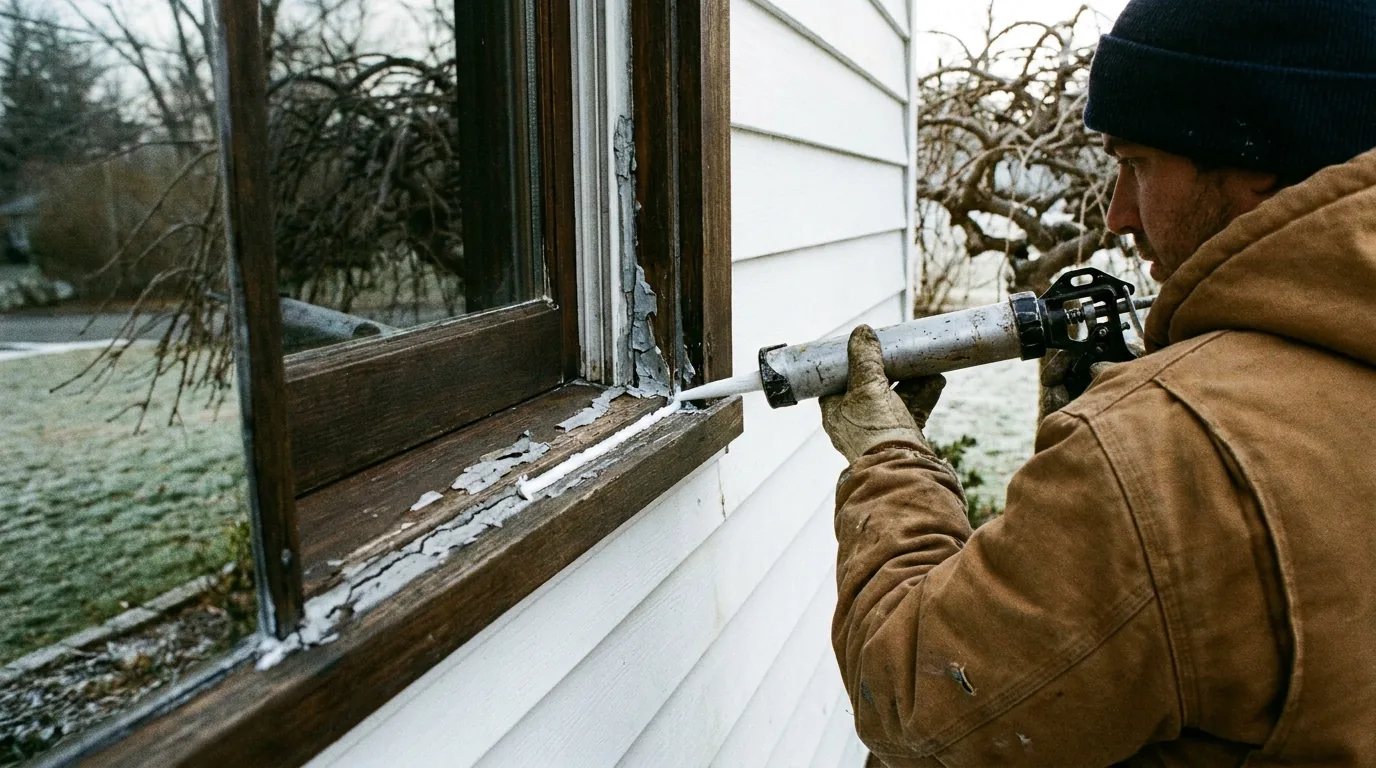
Alec's Construction insulates and air seals attics in Port Jefferson, Suffolk County, working out of the yard in East Patchogue. Alex walks the attic himself, photographs what is actually up there, and prices the work that makes the insulation perform rather than just the insulation.
What Is Above the Ceiling in Port Jefferson
Port Jefferson village housing sits on the hills above the harbour and a great deal of it is genuinely old and genuinely plastered. North-facing roof planes on those hills hold snow for days after the south side has cleared, which is exactly the condition that turns attic heat loss into an ice dam at the eave. Where the original attic was finished into living space at some point, there is usually a knee-wall and cathedral assembly behind the plaster with almost nothing in it.
That is the part a generic quote will not tell you, and it is what decides whether adding depth is worth anything.
Old Houses Need the Walls Blocked Before the Ceiling Is Covered
A lot of the older housing here is balloon-framed, which means the exterior wall studs run in one continuous length from the foundation sill up to the attic with no fire blocking between floors. Every exterior wall cavity in the house is an open shaft from the basement to the attic.
Warm air rises up those shafts all winter and dumps into the attic, and insulation laid over the ceiling does nothing about it because it is not a ceiling problem. Those cavities get blocked and sealed at the attic floor before any depth is added. It is the step that makes everything after it worth paying for.
The second old-house item is the ceiling itself. Lath-and-plaster ceilings hold up because the wet plaster squeezed through the lath and formed keys on the back, and after a century some of those keys have let go. Blown insulation is weight on that ceiling, so we look at it from above before we add depth.
Long Island Is Climate Zone 4A, and the Number Is R-49
New York's Energy Conservation Construction Code places Port Jefferson in Climate Zone 4A. The prescriptive ceiling value for that zone is R-49 — roughly fourteen inches of settled loose-fill cellulose, or eighteen to twenty inches of loose-fill fibreglass. Most houses here have between three and seven inches of original batt. Confirm the edition of the code in force with your building department; it is revised on a cycle.
Depth is the last step, not the first. Insulation slows heat conducting through a material; it does nothing about heat leaving with moving air. An unsealed ceiling with fourteen inches over it is a very expensive air filter.
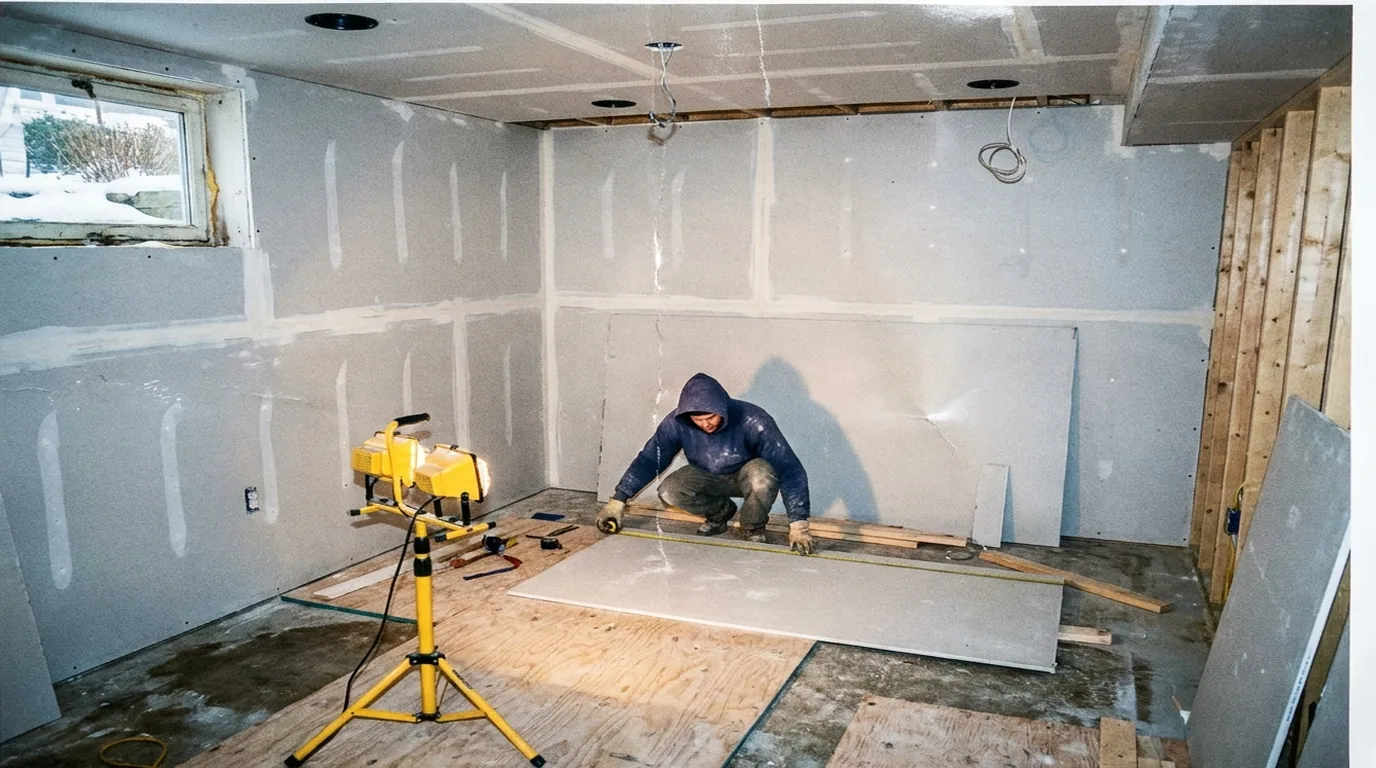
The Order We Work In
- Air seal the ceiling plane — top plates, plumbing and wire penetrations, the flue chase in sheet metal and high-temperature sealant, the bath and kitchen fan housings, dropped soffits over cabinets and tubs, and any open junction box
- Fix what would otherwise be buried — bath fans discharging into the attic get ducted out, live knob-and-tube gets handled by an electrician, anything wet gets diagnosed before it gets covered
- Baffle the eaves so the new depth cannot pack into the soffit and choke the intake ventilation
- Seal and cover the access — a pull-down stair or hatch is a hole at the highest point of the house
- Then blow the depth, across the joists rather than only between them, so the framing is not left as a grid of cold lines across your ceiling
Permits in Port Jefferson
The Incorporated Village of Port Jefferson runs its own building department; Port Jefferson Station files with the Town of Brookhaven. They are two different processes. Insulation work on its own generally does not require a permit, but anything structural, electrical or mechanical alongside it can, and that is a question we settle with the department rather than assume.
Booking Port Jefferson for the Cold Months
Attic and crawl-space work is interior work, which makes it the right thing to book from September onward. It is also when you can tell whether it was done properly, because you feel the result within days.
We are a general contractor, not an insulation-only outfit, and on an attic that matters — the work that makes insulation perform is carpentry and roofing work. Free walkthrough in Port Jefferson, photographs of what we find whether or not you hire us, and a written scope with the R-value, the settled depth and the air-sealing list on it.
Frequently Asked Questions
Why does the north side of my Port Jefferson roof ice up and the south side does not?
Because the south side gets enough sun to clear the snow before the cycle can complete, and on the harbour hills the north side does not. Ice dams form when heat escaping into the attic melts snow on the warm part of the roof, the water runs down to the cold overhang past the heated space, and refreezes there. The roof is not the cause — the heat leaking into the attic is. Air sealing and depth is the permanent fix; heat cable is a symptom manager.
Will I actually notice the difference?
In December and January, yes — the house holds temperature between heating cycles instead of dropping as soon as the burner stops, and the rooms directly under the attic stop being the cold ones. In May you will barely notice it, which is why the honest time to buy attic work is before the heating season rather than after it.
Do you remove the old insulation?
Only when it is buying you something. Dry, un-matted, rodent-free material stays and the new depth goes over it. Removal is warranted where there is water damage, heavy rodent contamination, or where the attic has to be stripped for air sealing and electrical work anyway. It is a real cost and it should not be charged automatically.
Is a blower-door test worth it?
It is genuinely useful on a house where nobody can agree where the air is going, because it finds leaks by measurement rather than by guess. On a typical attic job with obvious, visible penetrations it is usually not necessary — we can see the holes. We will tell you which situation you are in rather than selling the test as standard.
Related Guides
- Attic Insulation in Babylon, NY
- Attic Insulation in Lindenhurst, NY
- Attic Insulation on Long Island
- Blown-In vs Batt Insulation
- Cape Cod Knee Wall Insulation
Also Serving Port Jefferson
- ADUs in Port Jefferson — accessory apartments and grants
- Basement Finishing in Port Jefferson — egress, ceiling height and moisture
- Bathroom Remodeling in Port Jefferson — full gut renovations
- Chimney Repair in Port Jefferson — repointing, crowns, caps and flashing
- Emergency Roof Repair in Port Jefferson — tarping, leaks and storm response
- Front Steps & Stoops in Port Jefferson — rebuilds, treads and railings
- Gutter Installation in Port Jefferson — seamless gutters, fascia and drainage
- House Painters in Port Jefferson — exteriors while the fall window holds
- Storm Damage & Insurance Restoration in Port Jefferson — emergency tarping and the claim
- Interior Painting in Port Jefferson — the right work for the cold months
- Kitchen Remodeling in Port Jefferson — cabinets, counters and layout
- Masonry & Pavers in Port Jefferson — patios, walkways and retaining walls
- Roofing in Port Jefferson — tear-offs, repairs and storm damage
- Siding in Port Jefferson — James Hardie, vinyl and cedar
- Windows & Doors in Port Jefferson — insert and full-frame replacement
Work With Alec's Construction
This guide is written by the crew that does the work. See Alec's Attic Insulation service — air sealing, baffles and R-49 depth in the order that makes it work. One crew start to finish, free walkthrough and a written estimate inside 48 hours.
Booking the cold months now: we also handle Roofing and Windows & Doors.
Get a Free Estimate from Alec's Construction
Working across Suffolk County since 2018, one crew from start to finish. We come out, look at the actual job, and put a written number in your hand — no pressure, no obligation.
Or call (631) 312-7441