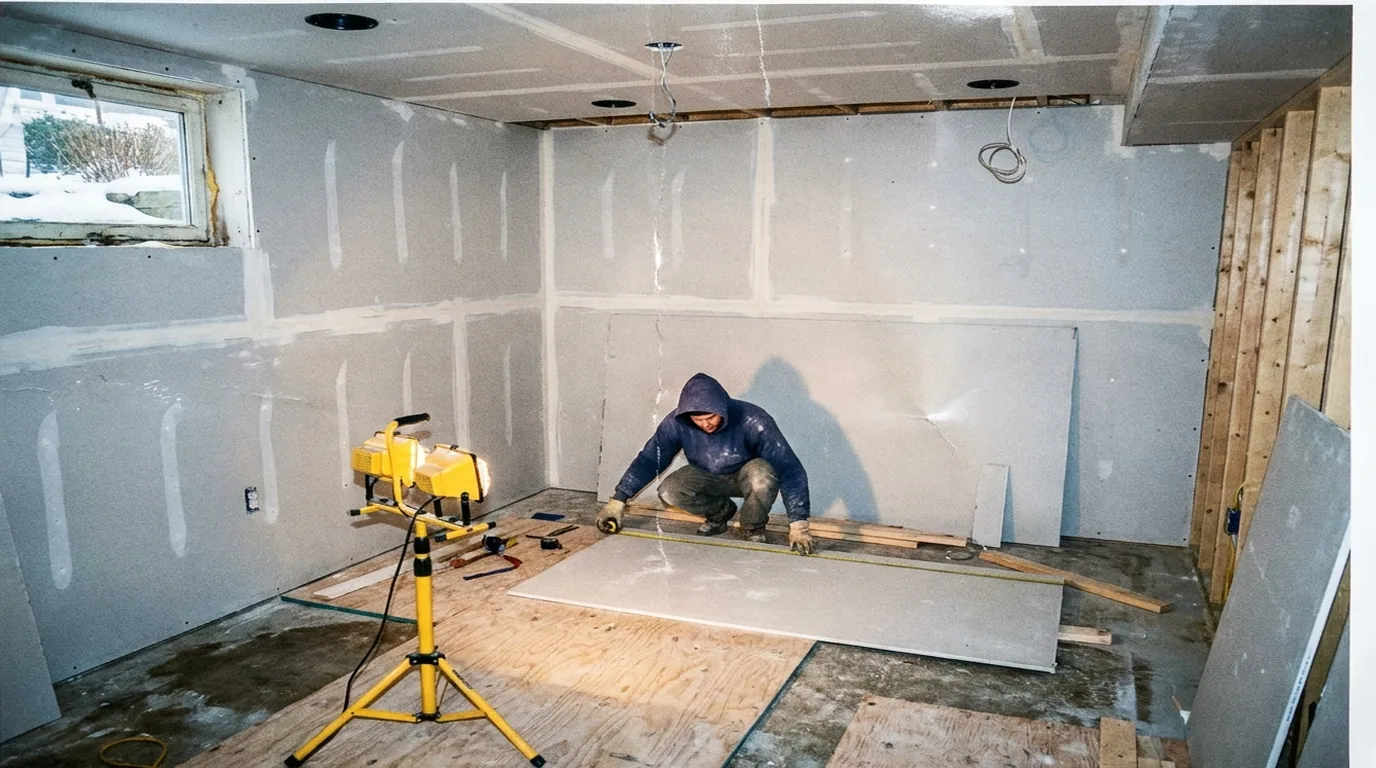
Both work. Both are sold by people who will tell you the other one is a mistake. The honest answer is that the material matters much less than the installation, and the right choice is usually decided by what your attic looks like rather than by the product.
Batt
Batt is fibreglass or mineral wool in pre-cut blankets sized to fit between framing at standard spacing. Roughly R-3.1 to R-3.4 per inch for standard fibreglass, more for high-density and mineral wool products.
Where batt is the right answer: open framing at standard spacing with nothing in the way. New construction, a gutted wall, a clean rafter bay, a rim joist. Anywhere you can see the whole cavity and lay the material in without cutting round obstacles.
How batt fails: it is only as good as its fit. A batt with a gap at the end, compressed round a wire, cut short at an angled bay, or stuffed rather than laid, loses a large share of its rated value, and the rating on the packaging assumes none of that happened. In a retrofit attic full of wiring, bracing, ducts and irregular bays, getting batt in perfectly is slow and it is usually not what happens.
The attic-specific problem: batt laid between the joists leaves the joists exposed. Wood conducts heat far better than insulation does, so an attic insulated only between the joists has a grid of cold lines running across the ceiling below. You can see them in the right conditions as faint dark stripes on the ceiling paint, where the cooler surface collects more dust.
Loose-Fill Cellulose
Recycled paper fibre treated with borates for fire and pest resistance, blown in through a hose. Roughly R-3.2 to R-3.8 per inch.
Where cellulose wins: existing attics, which is most of the work on Long Island. It flows into irregular bays, round wiring and bracing, into the awkward corners at the eaves, and over the tops of the joists in one continuous blanket. It is dense enough to resist air movement through it better than loose fibreglass does, which matters in a windy attic on the South Shore.
What to know: it settles. Manufacturers publish an installed thickness and a settled thickness, and the settled figure is the one that has to hit your target. A crew blowing to the settled depth on day one is leaving you short in two years. It is also heavier than fibreglass, which is why the condition of an old plaster ceiling gets checked before depth goes on in the Bellport, Northport and Port Jefferson village stock.
Loose-Fill Fibreglass
Blown fibreglass, roughly R-2.2 to R-2.7 per inch. It needs the most depth of the three for the same R-value, it settles less than cellulose, it is lighter, and it does not absorb water — which is a genuine advantage in an attic with an unresolved roof history.
The knock on it is air permeability: loose fibreglass at low density lets air move through it more readily than dense-packed cellulose does, so it depends more on the air sealing having been done properly. Which, to be fair, all of it does.
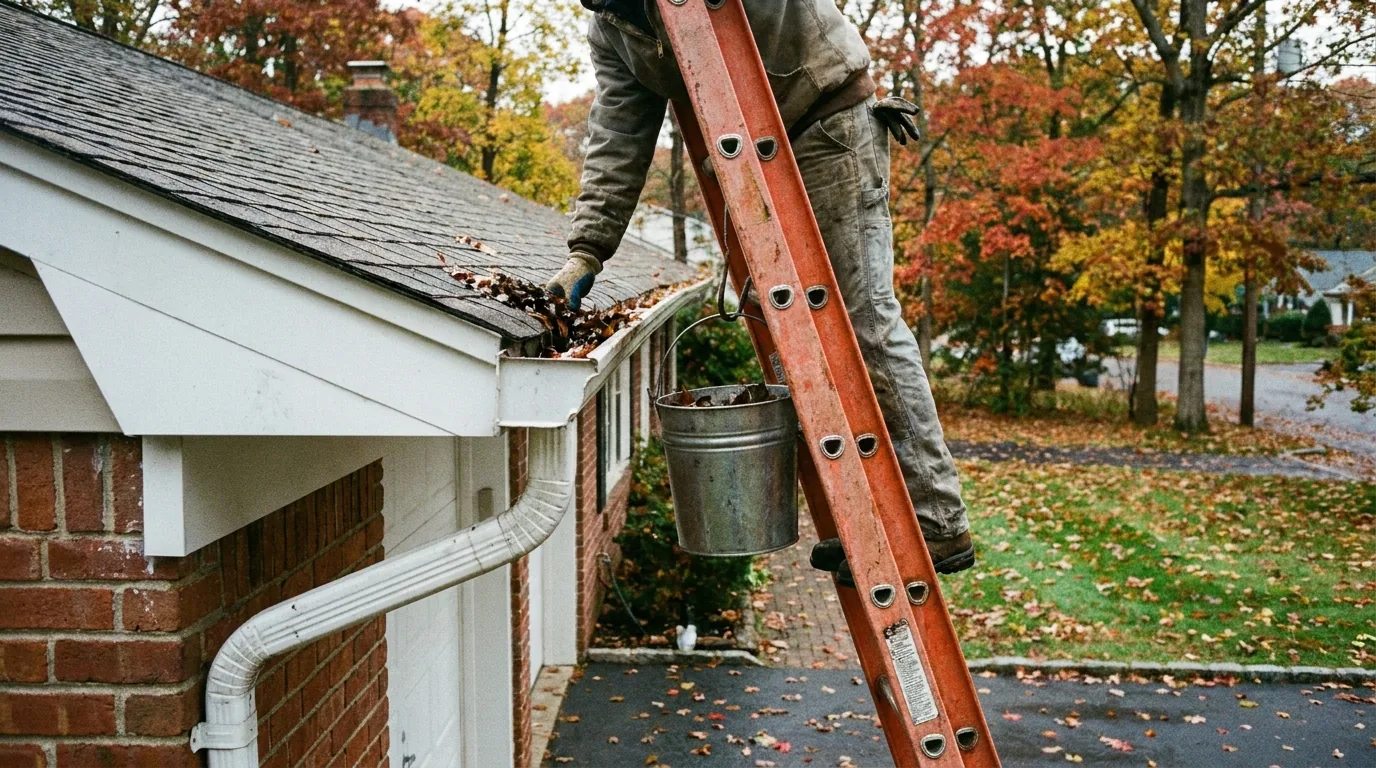
What Actually Decides It
Choose batt when the framing is open, regular and accessible, or when the assembly is a wall, a rim joist or a floor rather than an attic deck.
Choose loose fill for essentially any existing Long Island attic — the retrofit case, where the framing is cluttered and coverage over the joists is the point.
Choose closed-cell foam only where depth is the constraint and there is no room for either: a cathedral rafter bay, a shed dormer, a rim joist that has to work hard in a small space. That is a different guide.
The Questions That Separate a Real Quote From a Cheap One
- What R-value am I getting, and is that the settled value or the installed value?
- Does the price include air sealing the ceiling plane, and what specifically is being sealed?
- Are baffles going in at the eaves, and in how many rafter bays?
- Where does the bathroom fan discharge now, and where will it discharge after?
- Is the attic hatch or pull-down stair being sealed and covered?
- Are the recessed lights rated to be covered, and if not, what is being done about them?
A quote that answers those six is a quote for a job that will work. A quote with a price and an R-number is a quote for material delivered into an attic.
We are a general contractor, not an insulation-only outfit. That matters at the attic hatch more than anywhere else in the house, because the work that makes insulation perform is carpentry and roofing work — blocking, baffles, duct terminations, hatch covers and fascia. Alex and the crew walk the attic, photograph what is actually there, and put a written scope in your hand. Free walkthrough, no obligation, across Suffolk County.
Frequently Asked Questions
Is cellulose or fibreglass better for a Long Island attic?
For a retrofit attic, loose-fill cellulose usually performs better in practice because it flows round wiring and bracing, packs denser and resists air movement through it. Loose-fill fibreglass is lighter, settles less and does not hold water, which can matter in an attic with roof history. Both work when the air sealing underneath them was done properly, and neither works when it was not.
Can I put new insulation on top of old?
Yes, and it is normally the right call. If the existing material is dry, not matted and free of rodent contamination it stays in place and the new depth goes over the top and across the joists. Do not put faced batt over existing insulation with the vapour facing upward — that traps moisture between layers. In an attic the new layer should be unfaced.
How deep does insulation have to be for R-49?
It depends on the product, and the manufacturer's coverage chart is the authority. As a working figure, roughly fourteen inches of loose-fill cellulose, eighteen to twenty inches of loose-fill fibreglass, or about sixteen inches of fibreglass batt in two crossed layers. For cellulose, make sure the depth quoted is the settled depth.
Does blown insulation settle?
Cellulose does, by a published amount, and any competent installer blows to a thickness that settles down to your target rather than starting at it. Loose-fill fibreglass settles less. A depth ruler card stapled to the rafters is the cheap way to verify what actually went in, and it is worth asking for.
Related Guides
- Attic Insulation on Long Island
- Spray Foam Insulation on Long Island
- Cape Cod Knee Wall Insulation
- Crawl Space Insulation on Long Island
- Attic Air Sealing on Long Island
Work With Alec's Construction
This guide is written by the crew that does the work. See Alec's Attic Insulation service — air sealing, baffles and R-49 depth in the order that makes it work. One crew start to finish, free walkthrough and a written estimate inside 48 hours.
Booking the cold months now: we also handle Roofing and Windows & Doors.
Get a Free Estimate from Alec's Construction
Working across Suffolk County since 2018, one crew from start to finish. We come out, look at the actual job, and put a written number in your hand — no pressure, no obligation.
Or call (631) 312-7441