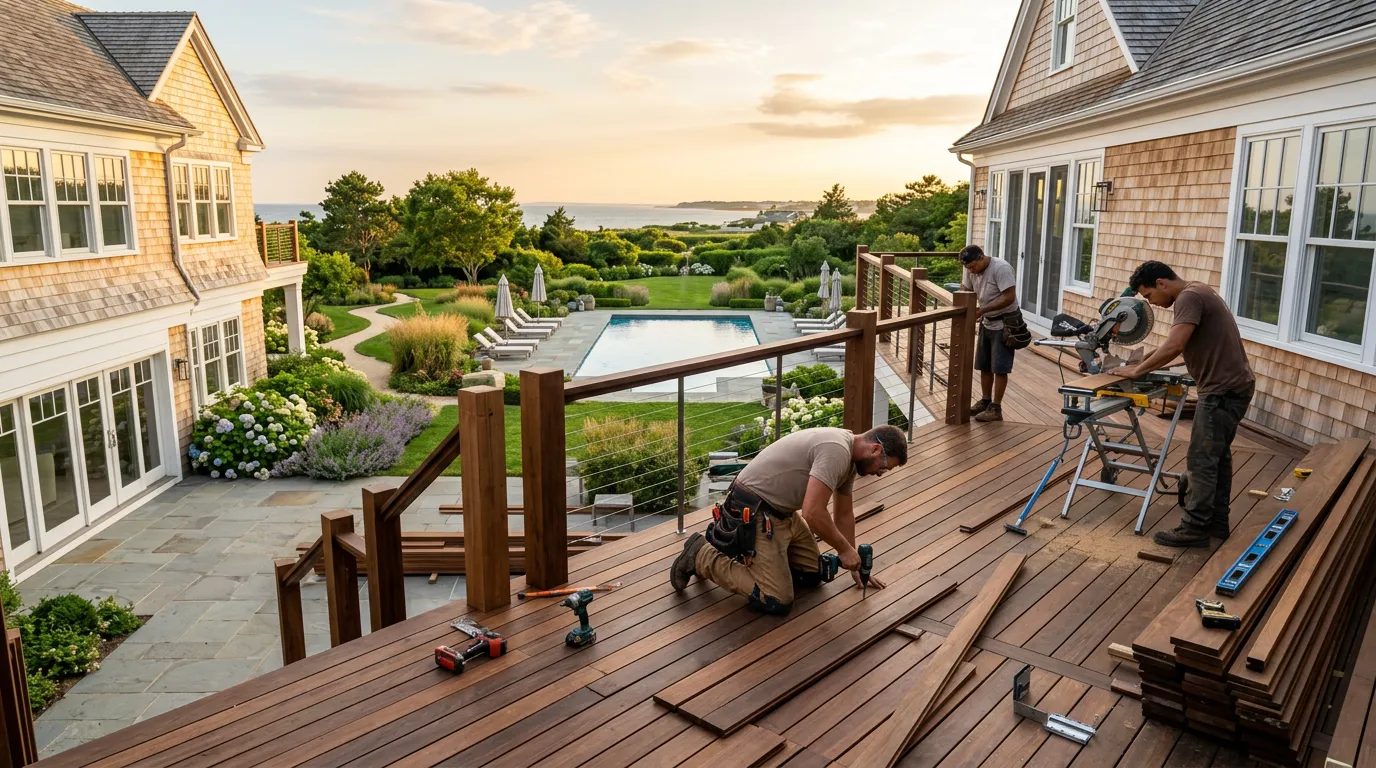
Understanding Long Island's Climate Demands
Long Island homeowners face a unique set of challenges that mainland contractors sometimes overlook. The combination of humid summers, salt air along the South Shore and North Shore coastlines, freeze-thaw cycles in winter, and UV exposure from long summer days puts serious stress on outdoor materials. What works well in a dry climate may rot, warp, or fade within a few years here.
Pressure-treated lumber is the traditional choice and still the most affordable. It handles moisture reasonably well when properly maintained — sealed every 1–2 years — and holds up to Long Island winters. The trade-off is ongoing maintenance. Unfinished pressure-treated wood grays out quickly and requires cleaning, sanding, and resealing to look its best. In coastal towns like Babylon, Freeport, or Oyster Bay where salt air accelerates weathering, maintenance intervals shrink further.
Cedar is a step up in natural appearance and has inherent rot-resistance, but it's softer than pressure-treated pine and more prone to denting and scratching. It stains beautifully but still requires regular upkeep. Many Long Island homeowners who want a natural wood look choose cedar but underestimate the maintenance commitment.
Composite and PVC: The Low-Maintenance Revolution
Composite decking from brands like Trex, TimberTech, and Fiberon has transformed what Long Island homeowners expect from their outdoor spaces. These products combine wood fiber and recycled plastic to create boards that resist moisture, insects, fading, and splintering. Most composite products carry 25–30 year warranties. On Long Island, where summer entertaining is a way of life and deck maintenance competes with busy schedules, composite has become the most popular choice for new builds.
The upfront cost is 30–60% higher than pressure-treated wood, but when you factor in zero staining, no sealing, and minimal upkeep costs over 20 years, composite typically wins on total cost of ownership for homeowners planning to stay in their home long-term.
PVC decking (no wood fiber at all) is the premium tier. Products like Azek and Wolf offer the best moisture resistance, the most consistent color retention, and the softest feel underfoot. PVC is the top choice for pools and waterfront properties on Long Island where moisture exposure is constant. It costs 20–30% more than composite but is essentially maintenance-free.
For most Long Island homeowners, composite decking hits the sweet spot of cost, appearance, and durability. If you're within a few blocks of the water, PVC is worth the premium. If budget is the primary driver, pressure-treated with a solid maintenance plan still builds a great deck.
Related Reading
- Pavers vs. Concrete Patio — if you are weighing a patio instead
- Deck repair and builders in Stony Brook — costs, permits and timelines
- Deck builder for East Hampton and the Hamptons — composite, hardwood and cedar
- Deck builders in Huntington — multi-level decks on the moraine slope
Work With Alec's Construction
This guide is written by the crew that does the work. See Alec's Decks service — framing, composite and pressure-treated builds and repairs. Licensed and insured on Long Island, one crew start to finish, free walkthrough and a written estimate inside 48 hours.
Booking the cold months now: we also handle Roofing and Painting.
We pull the permits on our own jobs — if you need the building department for your town, we keep a current directory of all 23 Long Island permit offices.
Ready to Get Started?
Ready to build your dream deck? Call Alec's Construction at (631) 312-7441 for a free on-site estimate. We serve all of Nassau and Suffolk County.
Get a Free Consultation