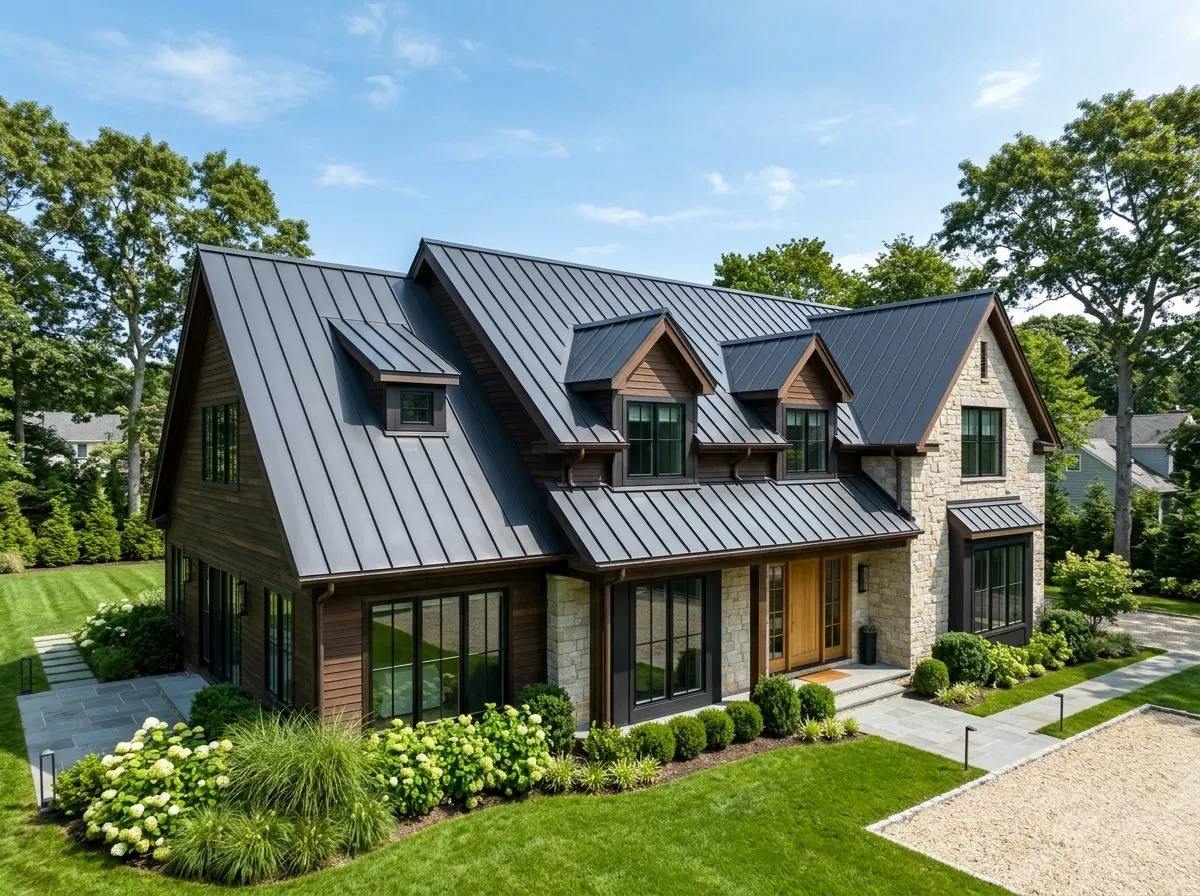
Sayville is an unincorporated hamlet in the Town of Islip. The housing near Main Street runs from the 1900s through the 1930s, and the mature street canopy that defines these blocks has a specific consequence for masonry.
A shaded chimney stays wet, and wet masonry breaks
Freeze-thaw damage is not really about cold. It is about water. Brick and mortar are porous; they absorb water, and when that water freezes it expands roughly nine percent. Do that a few dozen times a winter and the masonry fractures from inside.
A chimney in full sun dries between rains. A chimney shaded by a ninety-year-old oak does not. It goes into every freeze already saturated, which is why the shaded stacks in this hamlet deteriorate visibly faster than identical chimneys three blocks away in the open.
- Mortar joints recessed behind the brick face, or scrapeable with a screwdriver
- Sand or mortar crumbs collecting at the base of the chimney
- White efflorescence, meaning water is moving through the masonry and evaporating out
- Spalled brick faces, especially on the north side
- Moss or algae on the stack itself, which tells you it never dries
The crown is the thing homeowners never look at
The crown is the sloped concrete cap on top of the chimney, and its whole job is to shed water away from the flue and the brick. On a 1920s Sayville house it is often the original, it is frequently just a mortar wash rather than a proper reinforced crown, and after a century it is cracked.
A cracked crown lets water directly into the top of the stack, where it works down through the masonry all winter. It is also one of the cheaper repairs on this list, and doing it before the brick spalls saves the far more expensive rebuild.
Steep roofs and flashing
The steep gables on these older houses mean the chimney passes through the roof at a pitch where flashing has to be done properly to work. Step flashing woven into the shingle courses, counter flashing cut into the mortar joint rather than surface-caulked, and on a wide chimney a cricket on the up-slope side to divert water around it.
Missing crickets are common on this housing stock. Without one, the up-slope face of a wide chimney dams snow and water against the masonry every winter.
Jurisdiction
Sayville files with the Town of Islip, not Brookhaven — that catches contractors who work mostly east of here. Neighboring Bayport and Blue Point are also Islip; Bellport and Medford are Brookhaven.
Frequently Asked Questions
What is a chimney crown and why does it matter?
It is the sloped concrete cap on top of the chimney, and its job is to shed water away from the flue and the brick. On a 1920s house it is frequently just a mortar wash rather than a proper reinforced crown, and after a century it is cracked — letting water straight into the top of the stack. It is one of the cheaper repairs, and doing it before the brick spalls avoids a rebuild.
Why is the north side of my chimney worse than the south?
It stays wet. Freeze-thaw damage is about water, not cold — masonry absorbs it, and freezing water expands about nine percent. A sunny face dries between rains; a shaded face under Sayville's canopy goes into every freeze already saturated, so it fractures from the inside far faster.
Do you sweep or clean chimneys?
No. We handle the structure — repointing, crowns, caps, flashing, rebuilds and leak repair. Sweeping and flue cleaning are a separate trade with its own certification. If that is what you need we will say so rather than take the job.
When can chimney work be done?
Roughly April through November for mortar work, because masonry mortar has to cure above about 40 degrees and cannot freeze while curing or it never reaches strength. Flashing and cap work can be done colder. Emergency leak repairs we handle year-round with temporary measures until it can be done properly.
Related Reading
- Chimney Sweep Sayville? — sweep vs. inspection, and who does which
- Chimney Repair Services — repointing, crowns, flashing and rebuilds
- Freeze-Thaw and Masonry — what actually breaks brick on Long Island
- Repointing: When and Why — and why the mortar mix matters more than the mason
- Chimney Repair on Long Island — the full homeowner guide
- Hiring a Masonry Contractor — the questions that separate the bids
- Chimney repair in Smithtown — tall stacks and sound-side wind
- Chimney repair company in Bellport — bay-salt spalling and village review
Also Serving Sayville
- ADUs in Sayville — accessory apartments and grants
- Attic Insulation in Sayville — air sealing, baffles and R-49 depth
- Basement Finishing in Sayville — egress, ceiling height and moisture
- Bathroom Remodeling in Sayville — full gut renovations
- Deck Builders in Sayville — new builds, repairs and railings
- Driveway Paving in Sayville — blacktop, resurfacing and repairs
- Emergency Roof Repair in Sayville — tarping, leaks and storm response
- Fallen Tree Removal & Roof Repair in Sayville — tree off the house, roof supported and repaired
- Flood & Water Damage Cleanup in Sayville — wet material out, drying metered
- Front Steps & Stoops in Sayville — rebuilds, treads and railings
- Garage Conversion in Sayville — turning the garage into living space
- Gutter Installation in Sayville — seamless gutters, fascia and drainage
- House Painters in Sayville — exteriors while the fall window holds
- Hurricane & Storm Damage Repair in Sayville — trees, flooding, cleanup and repairs
- Storm Damage & Insurance Restoration in Sayville — emergency tarping and the claim
- Interior Painting in Sayville — the right work for the cold months
- Kitchen Remodeling in Sayville — cabinets, counters and layout
- Masonry & Pavers in Sayville — patios, walkways and retaining walls
- Roofing in Sayville — tear-offs, repairs and storm damage
- Siding in Sayville — James Hardie, vinyl and cedar
- Storm Debris Removal & Cleanup in Sayville — trees, building debris and hauling
- Storm Roof & Siding Repair in Sayville — wind damage, tarped and rebuilt
- Windows & Doors in Sayville — insert and full-frame replacement
Work With Alec's Construction
This guide is written by the crew that does the work. See Alec's Chimney Repair service — repointing, crowns, caps and roofline flashing. Licensed and insured on Long Island, one crew start to finish, free walkthrough and a written estimate inside 48 hours.
Booking the cold months now: we also handle Roofing and Seamless Gutters.
Filing something yourself? Our Long Island building department directory lists the address, phone and counter hours for all 23 permit offices in Nassau and Suffolk.
Ready to Get Started?
Free chimney inspection with photos of the crown, flashing, joints and cap — and a written scope naming which one is actually leaking. Most jobs are one to three days.