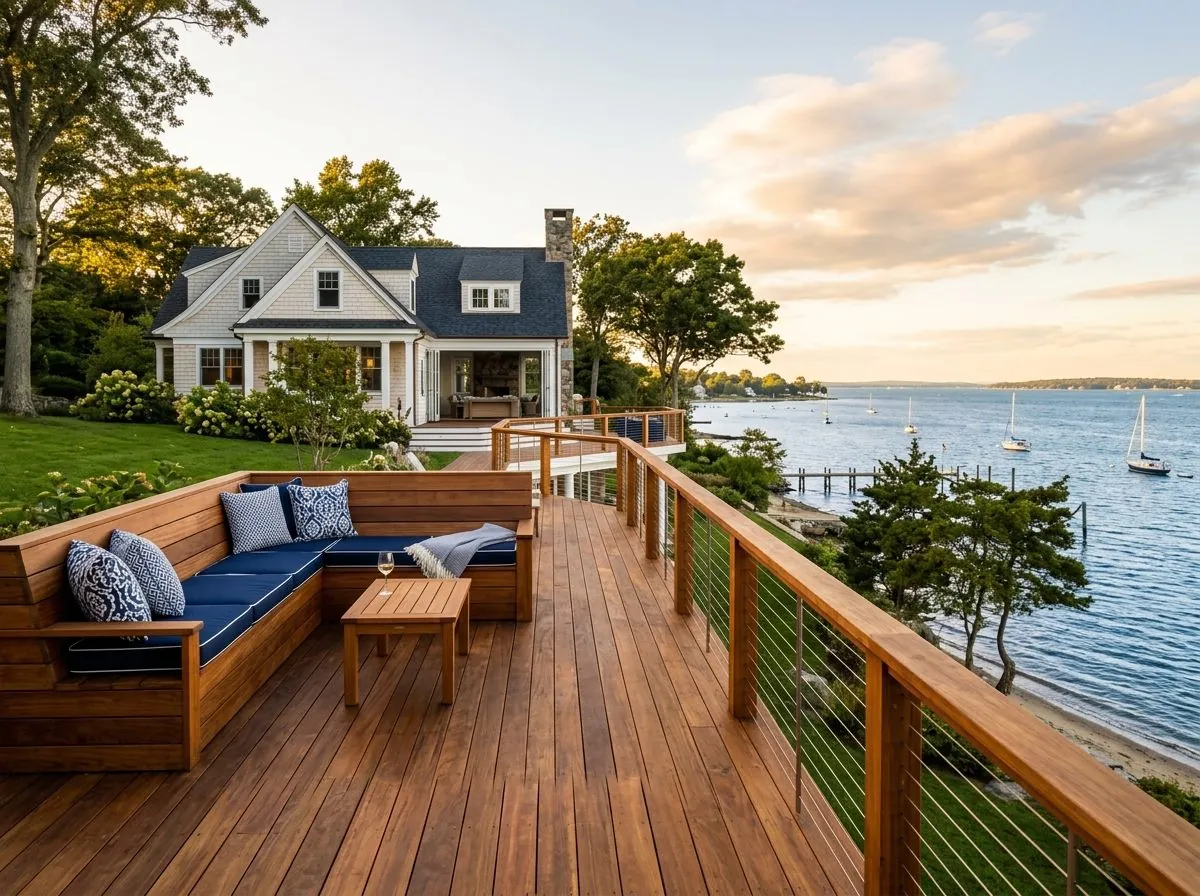
Building a deck in Nassau County without a permit is one of the most common and costly mistakes Long Island homeowners make. The consequences range from stop-work orders and fines to having to tear down a completed deck — plus the headache of disclosing an unpermitted structure when you eventually sell your home. At Alec's Construction, we handle the entire permitting process for every deck project we build. This guide covers exactly what you need to know before you start.
Does Your Deck Require a Permit in Nassau County?
In Nassau County, virtually all deck construction requires a building permit. The New York State Building Code and Nassau County's local ordinances both require permits for any structure that is attached to the home or exceeds certain size thresholds. Here is the practical breakdown:
- Attached decks (any size): Always require a permit. Any deck attached to the primary structure — even a small landing — falls under the building code and requires plan review and inspections.
- Freestanding decks over 200 square feet: Require a permit. Small freestanding platforms under 200 square feet and under 30 inches in height may qualify for an exemption in some municipalities, but this varies significantly by village or town within Nassau County.
- Elevated decks (any height over 30 inches): Always require a permit and in most cases an engineered plan signed by a licensed NY professional engineer (PE) or registered architect (RA).
- Decks with electrical, plumbing, or gas: Require separate sub-permits for each trade in addition to the structural building permit.
Nassau County is divided into municipalities — cities, towns, and incorporated villages — each with their own building department. Hempstead, North Hempstead, and Oyster Bay are the three towns that cover most unincorporated Nassau County. About 60 incorporated villages (Garden City, Rockville Centre, Great Neck, etc.) have their own building departments and their own local requirements. The permit process is different depending on exactly which jurisdiction your property is in. A deck in Great Neck Village has different requirements than a deck in the unincorporated Town of North Hempstead two streets away.
We handle permits for you.
Free walkthrough — we know Nassau and Suffolk County requirements cold.
What Documents Are Required for a Deck Permit Application
While requirements vary by municipality, most Nassau County building departments require the following for a deck permit application:
- Survey of the property. A current survey (typically within 5 to 10 years) showing property lines, existing structures, and easements. The survey must be stamped by a licensed NY land surveyor.
- Site plan. A drawing showing the proposed deck's location on the property relative to the house, property lines, and any setback distances. Most departments want this drawn to scale.
- Construction drawings. Plans showing the deck's framing layout, footing design, dimensions, materials, and connection details. For elevated decks or large structures, these often require PE or RA stamp.
- Zoning compliance form. Demonstrates the proposed deck meets setback requirements and does not exceed maximum lot coverage for your zoning district. Setbacks in Nassau County typically range from 5 to 15 feet from property lines for accessory structures.
- Contractor information. Your contractor's NY license number, insurance certificates (general liability and workers' compensation), and in many cases a home improvement contractor (HIC) registration. Hiring an unlicensed contractor eliminates your ability to pull a permit in most Nassau County municipalities.
How Long Does the Permit Process Take?
Plan review timelines in Nassau County vary widely:
- Incorporated villages with small building departments: 4 to 8 weeks is common. Some villages only have part-time plan examiners who review applications on specific days. Submitting a complete, accurate application is critical — missing documents reset the clock.
- Town of Hempstead Building Department: Currently averaging 3 to 6 weeks for residential deck applications. They have an online portal that allows status tracking.
- Town of North Hempstead: 3 to 5 weeks for straightforward residential applications.
- Town of Oyster Bay: 4 to 8 weeks depending on complexity and current volume.
Peak permit season is March through June, when every homeowner who wants a summer deck submits simultaneously. Applications submitted in January or February consistently get faster turnaround. If you want a deck ready by Memorial Day, the permit application needs to be in by February at the latest.
What Does a Deck Permit Cost in Nassau County?
Permit fees are calculated as a percentage of construction value. Typical fee structures in Nassau County municipalities run between 1% and 2% of the declared project cost, with minimums typically around $100 to $250. A $20,000 deck project would generate permit fees in the range of $200 to $400. Some villages add flat-rate filing fees on top. Certificate of occupancy (CO) fees, charged after final inspection, add another $50 to $150.
In addition to municipal fees, if your project requires an engineered plan (PE or RA stamp), expect to pay $500 to $1,500 for that service separately. Our company works with licensed engineers who specialize in residential decks and can produce stamped plans efficiently.
What Happens During Inspections
A deck permit in Nassau County typically requires two to three inspections:
- Footing inspection. The building inspector visits before concrete is poured to verify the footing holes are the correct diameter and depth (footings must go below the frost line — 36 to 42 inches in Nassau County). This is the most critical inspection. If footings are poured before inspection, they may need to be exposed again.
- Framing inspection. After the structural frame is built but before decking is installed, the inspector verifies that beams, joists, ledger connection, post-to-beam connections, and hardware all match the approved plans.
- Final inspection. After all work including railings, stairs, and any electrical or plumbing is complete. The inspector issues a Certificate of Occupancy (CO) or Certificate of Completion, which is the document you need to legally occupy the structure.
Permit Filing
We handle all paperwork
Licensed & Insured
NY licensed contractor
CO Guaranteed
We see it through to final
Risks of Building Without a Permit
The consequences of unpermitted deck construction in Nassau County are serious and long-lasting. Building inspectors routinely discover unpermitted structures during neighbor complaints, aerial imagery reviews, and real estate transfer inspections. If caught:
- You may receive a stop-work order and be required to cease construction immediately.
- The municipality can require you to obtain a retroactive permit — which is substantially more expensive and often requires exposing footings and framing for inspection, undoing completed work.
- In the worst case, the structure may need to be torn down entirely if it cannot be brought into compliance.
- An unpermitted structure must be disclosed when selling. Many buyers will refuse to purchase or will demand price reductions to cover the cost of legalization.
- Homeowners insurance may deny claims related to unpermitted structures, particularly fire or structural claims.
Working with a licensed contractor who pulls permits protects you, your investment, and the value of your home. For any deck project in Nassau or Suffolk County, call (631) 312-7441 or visit our decks and patios service page. We handle the permit, the build, and the final inspection — you just enjoy the result.
Frequently Asked Questions
Can I pull my own deck permit in Nassau County?+
What if my deck was built without a permit by a previous owner?+
Do you build decks in Nassau County as well as Suffolk?+
Related Articles
Work With Alec's Construction
This guide is written by the crew that does the work. See Alec's Decks service — framing, composite and pressure-treated builds and repairs. Licensed and insured on Long Island, one crew start to finish, free walkthrough and a written estimate inside 48 hours.
Booking the cold months now: we also handle Roofing and Painting.
Not sure whether the town or village files your permit? That question trips up more Long Island projects than any other — the directory sorts it out.
Ready to Build Your Deck?
We handle permits, inspections, and construction across Nassau and Suffolk County. Get a free, no-obligation estimate today.
Request Your Free Walkthrough