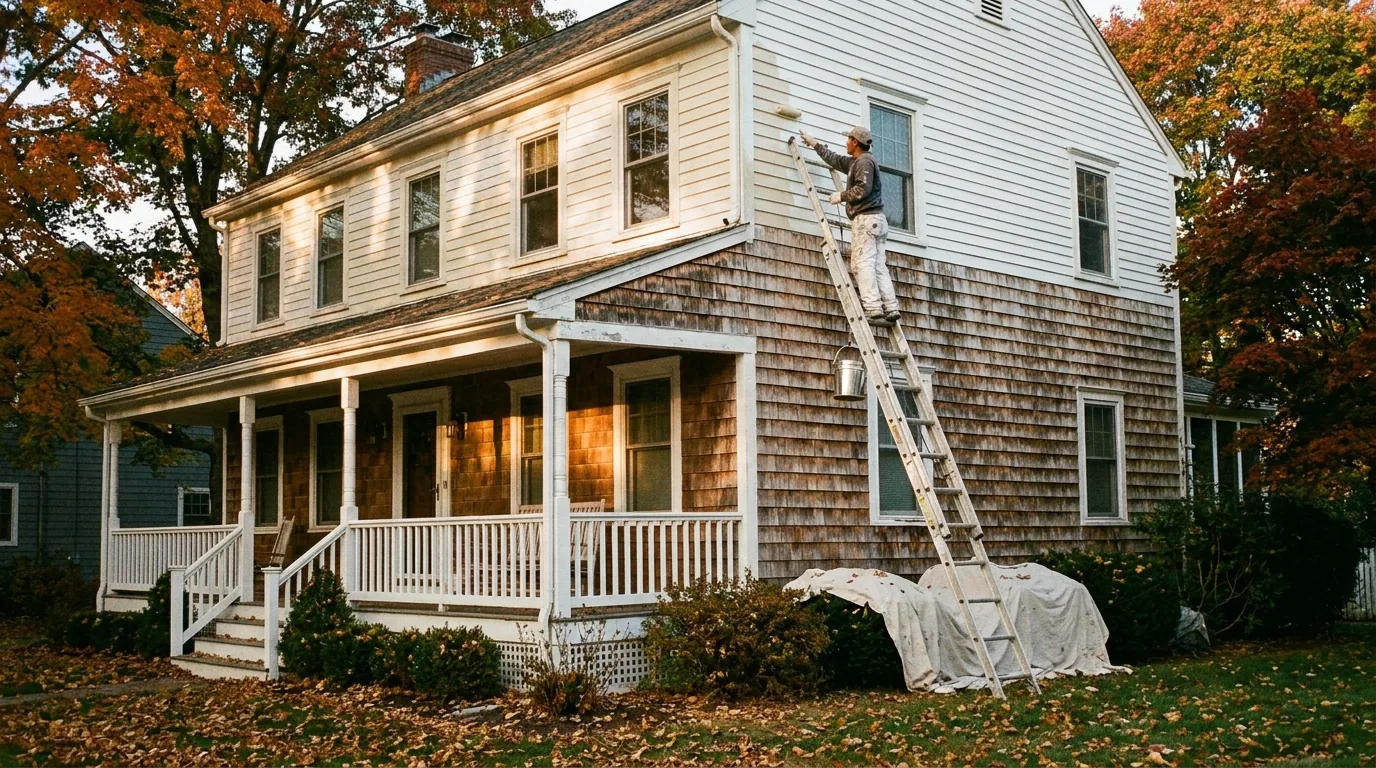
Window style is usually chosen to match the house, and that is a legitimate reason. But the operating type also changes how well the window seals, whether the room has a legal escape opening, and how it behaves in salt air. Worth knowing before you order thirty of them.
Double-Hung
Two sashes in one frame, both moving vertically. This is the window on the overwhelming majority of Long Island houses and it is what most people mean by "a window."
In its favour: it matches essentially every traditional house on the Island, from the Patchogue Victorians to the post-war capes. Modern units tilt in for cleaning from inside, which matters on a second storey. Both sashes can open, so you can vent high and low. It takes an air conditioner.
Against: it seals by brush and bulb weatherstrip at the meeting rail and in the jamb channels, which is a sliding seal. Sliding seals do not compress, so a double-hung is generally the leakiest of the common types at the same quality level, and the meeting rail is a permanent horizontal line through the view.
Casement
A single sash hinged at the side, cranked outward.
In its favour: it seals the best of any operating window by a clear margin. The sash swings into the frame and the latching hardware pulls it tight onto a compression gasket all the way round, the same way a car door seals. If air leakage is the number you care about, this is the type. It also gives the full opening as ventilation, and it is the easiest type to hit an egress net-clear-opening requirement with in a modest rough opening.
Against: it swings outward, so it wants clear space on the outside — a problem over a deck, a walkway or a narrow side yard. The screen is on the inside. The crank hardware is a moving mechanism and it is the part that eventually needs service, and in salt air on the South Shore and the harbour towns that hardware is the first thing to go. Stainless or corrosion-rated hardware is worth specifying near the water.
Awning
Hinged at the top, cranked outward from the bottom. Same compression seal and the same advantages as a casement.
Its particular use on Long Island is the basement and the bathroom: it can be left open in rain because the sash sheds water away from the opening, and it works well as a high window where privacy matters. It is a poor egress window because of the way the open sash intrudes into the opening.
Slider
Two sashes moving horizontally in a common frame.
In its favour: inexpensive, simple, nothing to break, and good for a wide opening where the height is limited — over a kitchen sink, on a basement wall, in a split-level lower room. Very common as the original window in 1960s to 1980s Medford, Farmingville and Coram stock.
Against: the same sliding-seal weakness as a double-hung, and the bottom track collects water and grit. Only half the opening ventilates.
Fixed and Picture
No operation, so the best sealing and the best glass-to-frame ratio available. Worth using deliberately: a large fixed centre flanked by two casements gives you the view of a picture window with real ventilation and a compliant escape opening, which a single huge fixed pane does not.
The Two Constraints That Are Not Aesthetic
Egress. Every sleeping room, and every finished basement, needs an emergency escape and rescue opening. The code asks for a minimum net clear opening — 5.7 square feet in most cases — along with a minimum clear height and width and a maximum sill height above the floor. "Net clear" means the hole you could actually climb through with the sash fully open, not the size of the unit. A double-hung only ever gives you half its height, which is why a modest bedroom opening often can not meet egress as a double-hung but can as a casement. Any replacement going into a bedroom or a finished basement gets checked against this before it is ordered.
Salt. From Islip and West Islip down through the canal streets of Babylon and Lindenhurst, and on the harbour side of Northport and Port Jefferson, airborne salt attacks hardware, fasteners and finishes long before it touches the glass or the frame. Crank mechanisms, locks, balances, hinges and screen frames are what fail. Specify corrosion-resistant hardware near the water and expect to rinse it.
What We Normally Recommend
On a traditional Long Island house, double-hung on the street elevations to keep the house looking right, casement where you genuinely need the seal or the egress, awning in the basement and the bath, and a fixed-plus-casement combination where somebody wants a picture window. Matching the whole house to one type because it is cheaper by the unit is how you end up with a bedroom that no longer has a legal way out.
Alec's Construction handles windows and doors as carpentry, which is what they are. The unit is a component; the job is the opening — the sill, the flashing, the shim pack, the insulation in the gap and the trim that goes back over it. Alex comes out, measures the actual openings, tells you which ones are worth doing first, and puts a written scope in your hand. Free walkthrough, no obligation, across Suffolk County.
Frequently Asked Questions
Which window type seals best?
Casement, by a clear margin among operating windows, because the sash is pulled tight onto a compression gasket all the way round rather than sliding against brush weatherstrip. Awning windows use the same mechanism and seal the same way. Double-hung and slider windows both rely on sliding seals and are generally leakier at the same quality level. Fixed units beat all of them because nothing moves.
What size window does a bedroom need on Long Island?
Every sleeping room needs an emergency escape and rescue opening. The code sets a minimum net clear opening — 5.7 square feet in most cases — plus a minimum clear height and width and a maximum sill height above the floor. Net clear means the actual hole with the sash fully open. A double-hung gives you only half its height, so this is the constraint that most often forces a casement in a modest opening.
Are casement windows a bad idea near the water?
Not a bad idea, but a specification question. The crank operator, the hinges and the locking hardware are the parts salt air attacks, and on the South Shore canals and the harbour towns they will go before anything else on the window. Corrosion-resistant hardware is worth asking for by name, and rinsing the hardware when you wash the windows genuinely extends its life.
Can I put a different window type in the same opening?
Usually yes, within the existing rough opening, and it is often the right call in a bedroom where a double-hung cannot make the egress opening but a casement can. Changing the size of the opening is a different scope — it is structural, it normally requires a permit, and on the South Shore it can bring windborne-debris requirements into play.
Related Guides
- Window Replacement on Long Island
- Window U-Factor and NY Energy Code
- Full-Frame vs Insert Replacement
- Entry and Patio Doors on Long Island
- Drafty Window Repair on Long Island
Work With Alec's Construction
This guide is written by the crew that does the work. See Alec's Windows & Doors service — insert and full-frame replacement, flashed and sealed as carpentry. One crew start to finish, free walkthrough and a written estimate inside 48 hours.
Booking the cold months now: we also handle Siding and Attic Insulation.
Get a Free Estimate from Alec's Construction
Working across Suffolk County since 2018, one crew from start to finish. We come out, look at the actual job, and put a written number in your hand — no pressure, no obligation.
Or call (631) 312-7441