Window replacement is the home improvement with the widest gap between what is sold and what is needed. Some houses genuinely need every opening changed. Plenty of others need six of thirty done, two repaired properly, and the money that would have gone into the rest put into the attic instead.
Here is how we tell the difference.
The Symptoms That Actually Mean Replace
The insulated glass seal has failed. You see fog, haze or a mineral film between the panes that does not wipe off from either side. The argon is gone and the unit is now performing like single glazing with a dirty layer in the middle. The sash can sometimes be re-glazed with a new insulated unit rather than replacing the whole window — worth asking.
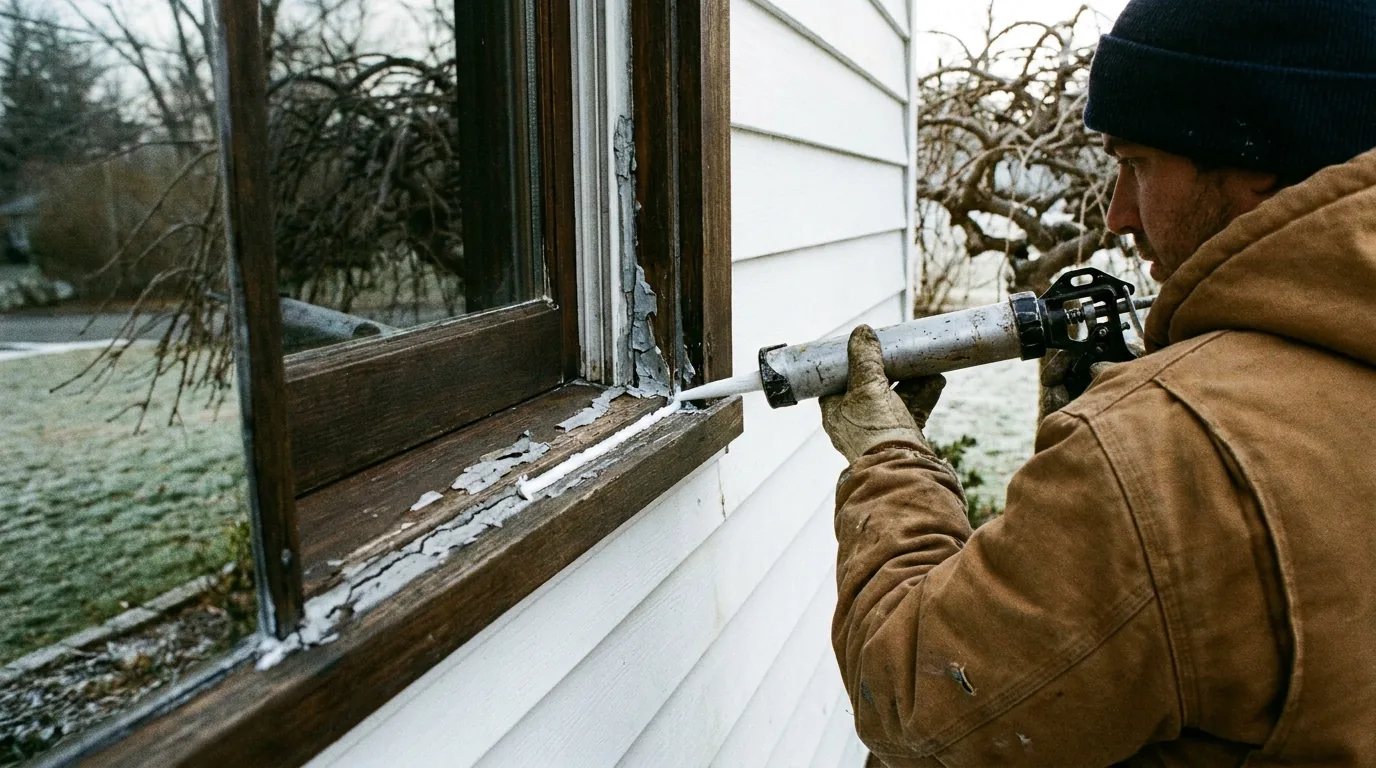
The sash or the frame is rotted. Push a small screwdriver into the bottom rail of the sash and into the sill at the corners. If it goes in, that is rot, and paint will not fix it. The sill and the lower corners of the frame are where Long Island windows go, because that is where water sits.
The frame is out of square beyond correction. Doors of the sash that no longer meet at the lock, a window that will not close without being lifted, a gap you can see daylight through along the meeting rail.
Aluminum frames with no thermal break. Common on Long Island in 1970s and 1980s replacements. Aluminum conducts heat straight through the frame, and you can see it — the frame frosts and runs with condensation on a January morning while the glass is clear. That is not repairable.
Sash that will not stay up. In an old double-hung this is usually a broken sash cord or a failed balance, which is a repair, not a replacement. In a vinyl unit with a failed constant-force balance it is often also a repair. Do not let this one alone sell you a house full of windows.
The Symptoms That Do Not Mean Replace
Draughts. Frequently the air is coming around the window, not through it — through the gap between the frame and the framing, which was stuffed with a bit of fibreglass in 1961 and never sealed. Pulling the interior casing off one window will tell you in five minutes. Sealing that gap properly is a fraction of the cost of a new unit.
Condensation on the inside of the glass. That is humidity in the house meeting a cold surface. New windows will move the condensation somewhere else rather than remove it, because the underlying issue is indoor humidity with nowhere to go. Bath and kitchen exhaust that actually works outside is the first fix.
A single cold room. Look at the knee walls, the floor over an unconditioned space, and the ductwork before you look at the windows.
Old wood sash in good condition. Particularly in Northport, Bellport, Port Jefferson, Sayville and Patchogue village. The sash in these houses is old-growth wood, tighter grained and more rot-resistant than anything milled today. What has failed is normally the glazing putty, the weatherstrip and the parting bead — all replaceable. Re-glazed and re-weatherstripped with a well-fitted storm, an original sash performs respectably and keeps the house looking like itself.
Insert or Full-Frame
This is the real decision and most quotes skip past it.
Insert (pocket) replacement leaves the existing frame in the wall and fits a new, slightly smaller complete window inside it. Fast, no exterior disturbance, no siding or trim work. You lose some glass area at every opening, and whatever condition the old frame and sill are in stays in the wall behind the new unit.
Full-frame replacement takes everything out down to the rough opening. It costs more and it disturbs the exterior, and in exchange you get to see and correct the sill, the flashing and any rot, you keep the original glass area, and the new unit is flashed into the water-resistive barrier correctly.
Rule of thumb: insert where the existing frames are sound and square and you are chasing performance. Full-frame where there is any rot, any water history, any sign the original flashing was not right, or where the exterior is coming off anyway for siding. There is a separate guide on this — it is the decision that most affects whether the job lasts.
The Part Nobody Sells You: Flashing
A window does not keep water out on its own. The assembly does — sill pan, flashing tape lapped shingle-fashion over the water-resistive barrier, head flashing above. Water that gets past the exterior trim has to be led back out.
Almost every "the new windows leak" call we take is not a leaking window. It is a window installed into an opening that was never flashed, or flashed in the wrong order so the tape directs water into the wall instead of out of it. On an insert replacement nobody even looks at it, which is another reason full-frame is worth the money on a house with water history.
Permits, Codes and the Address-Level Questions
Three things are decided by your address, not by the product:
Permits. Whether a like-for-like replacement inside an existing rough opening needs a permit varies between the Town of Brookhaven, the Town of Islip, the Town of Huntington, the Town of Smithtown and the incorporated villages, and it is a different answer again if the opening is being enlarged or a window is becoming a door. In the Town of Huntington, alterations over ten thousand dollars require plans sealed by a licensed architect or professional engineer, which a whole-house window job will normally clear.
Egress. Any window serving as the emergency escape opening for a bedroom or a finished basement has to meet minimum net clear opening requirements — the code figure is 5.7 square feet of net clear opening for most cases, with minimum clear height and width and a maximum sill height above the floor. A replacement unit sits inside the old frame and is therefore smaller than what it replaced, which is exactly how a compliant bedroom window becomes a non-compliant one. This gets checked before ordering, not after.
Windborne debris. Parts of the South Shore fall inside the windborne-debris provisions of the state residential code, which can require impact-rated glazing or approved protection on openings. It is address-specific and the building department settles it.
The Order of Work on the House
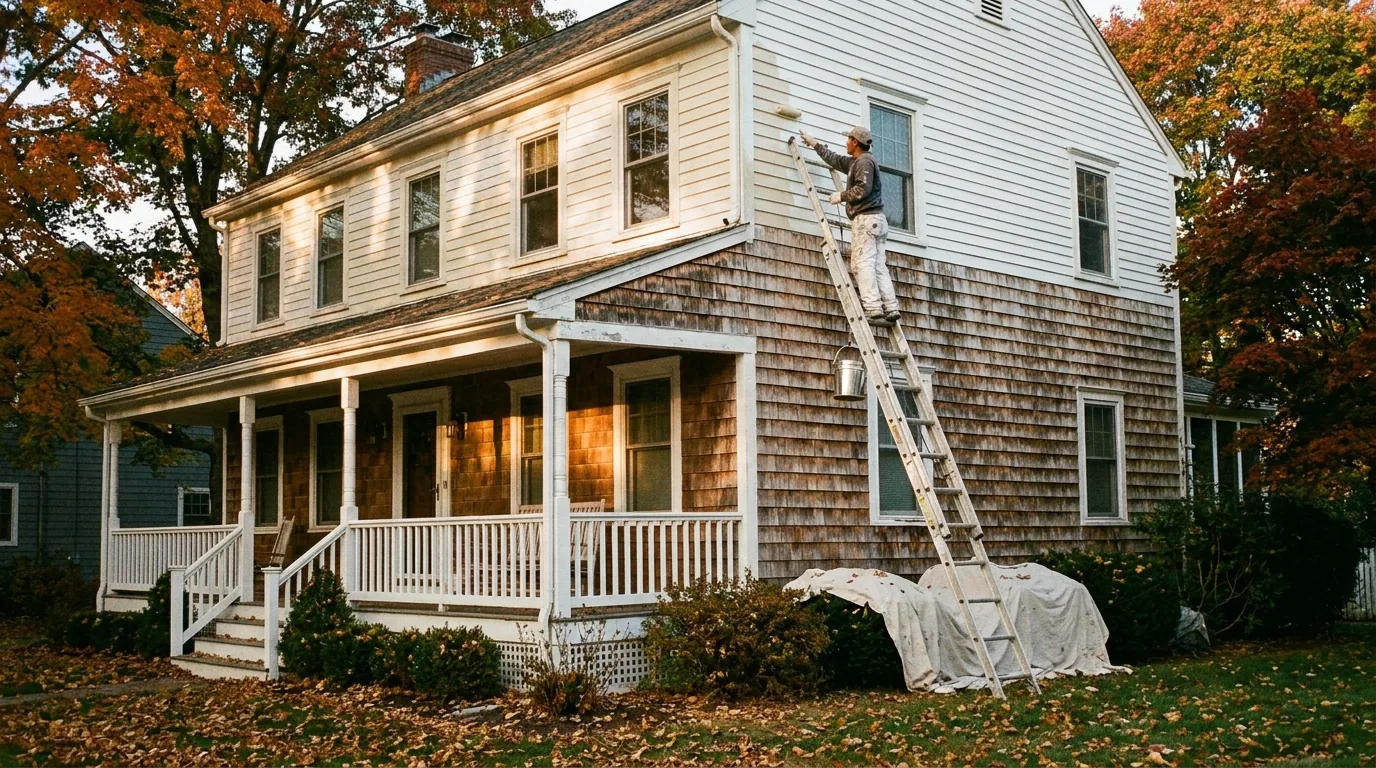
If siding, roofing and windows are all on the list, the order matters. Windows go in before siding, because the flashing has to be integrated with the water-resistive barrier and then the siding goes over it. Doing it the other way round means cutting and patching the siding round each opening and a flashing detail that is fundamentally a repair.
If the attic is also on the list, do the attic first. It is cheaper, it usually delivers more comfort per dollar on a Long Island house, and it does not make the window job any harder.
Alec's Construction handles windows and doors as carpentry, which is what they are. The unit is a component; the job is the opening — the sill, the flashing, the shim pack, the insulation in the gap and the trim that goes back over it. Alex comes out, measures the actual openings, tells you which ones are worth doing first, and puts a written scope in your hand. Free walkthrough, no obligation, across Suffolk County.
Frequently Asked Questions
How do I know if my windows need replacing?
Fog or haze between the panes that will not wipe off means the insulated glass seal has failed. A screwdriver that pushes into the sash bottom rail or the sill corners means rot. An aluminum frame with no thermal break that frosts and runs on a cold morning cannot be repaired. Draughts, condensation on the inside of the glass and a sash that will not stay up are all usually repairs, not replacements.
Do I need a permit to replace windows on Long Island?
It depends on the town and on whether the opening changes. Like-for-like replacement inside an existing rough opening is treated differently from enlarging an opening or converting a window into a door, and the answer is different again in a flood or windborne-debris area. The Town of Huntington additionally requires sealed architect or engineer plans for alterations over ten thousand dollars. We confirm against the actual address before quoting a schedule.
Should I replace windows before or after siding?
Windows first. The window has to be flashed into the water-resistive barrier and the siding then goes over that flashing. Installing windows after the siding is on means cutting and patching round every opening and a flashing detail that is a repair from day one. If both are on your list, sequencing them together saves money as well as working better.
Will new windows fix condensation on the inside of my glass?
Usually not, because that condensation is indoor humidity meeting the coldest surface in the room. New windows raise that surface temperature, so the moisture often just finds the next coldest spot instead — an exterior corner, a closet wall. The real fix is getting the humidity out: bath and kitchen exhaust that actually terminates outside, and a look at the basement or crawl space.
Is it worth repairing old wood windows?
In the village housing of Northport, Bellport, Port Jefferson, Sayville and Patchogue it frequently is. Original sash is old-growth wood, denser and more rot-resistant than current stock, and what has usually failed is the glazing putty, the weatherstrip and the parting bead. Re-glazed, re-weatherstripped and paired with a well-fitted storm, it performs respectably. Replacement wins where the sash itself is rotted or the frames are out of square beyond correction.
Can windows be replaced in winter on Long Island?
Yes. Openings are done one at a time and closed the same day, so the house is never open to the weather for long. Cold does affect sealants and foams, so the products have to be rated for the temperature they are installed at, and a crew that keeps the material in the van overnight in January is not doing you a favour.
Related Guides
- Double-Hung vs Casement vs Slider
- Window U-Factor and NY Energy Code
- Full-Frame vs Insert Replacement
- Entry and Patio Doors on Long Island
- Drafty Window Repair on Long Island
Work With Alec's Construction
This guide is written by the crew that does the work. See Alec's Windows & Doors service — insert and full-frame replacement, flashed and sealed as carpentry. One crew start to finish, free walkthrough and a written estimate inside 48 hours.
Booking the cold months now: we also handle Siding and Attic Insulation.
Get a Free Estimate from Alec's Construction
Working across Suffolk County since 2018, one crew from start to finish. We come out, look at the actual job, and put a written number in your hand — no pressure, no obligation.
Or call (631) 312-7441