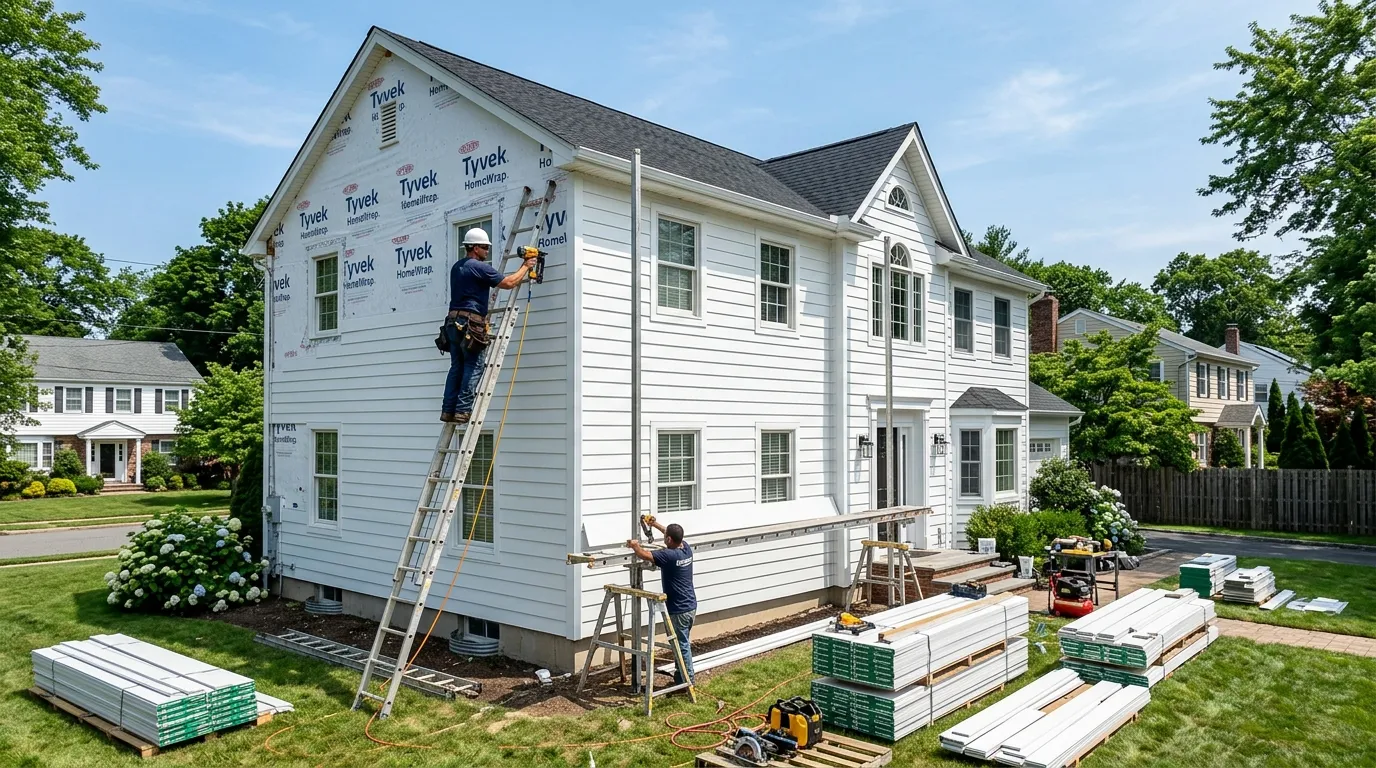
Two quotes for the same house can differ by a large factor and both be honest, because they are quoting two different jobs. This is the one to understand before you compare numbers.
Insert Replacement
Also called a pocket or retrofit replacement. The old sashes, the balance system and the parting stops come out. The existing frame, the exterior trim and the siding all stay. A complete new window — frame and sashes together — is set into the cavity inside the old frame, shimmed, fastened and sealed, and the interior stop goes back.
What you get: a fast job, often several openings a day, with no exterior disturbance and no repainting of trim. On a house with sound frames it is a genuinely good piece of work and it is what most of the industry sells.
What you give up:
- Glass area. The new frame sits inside the old one, so every opening gets smaller. On a small window the loss is visually obvious, and on a bedroom or basement window it can take the escape opening below the required net clear size.
- Everything behind the old frame stays in the wall. Whatever condition the sill, the jamb and the original flashing are in, they are still there, now hidden behind a new window.
- You do not get to flash the opening. The water management of that opening remains exactly as good, or as bad, as whoever built the house made it.
Full-Frame Replacement
Everything comes out to the rough opening — sashes, frame, sill, interior casing and usually the exterior trim. The opening is inspected, any rot repaired, a sill pan installed, the new window set and flashed into the water-resistive barrier in the correct shingle-lapped order, the gap insulated and sealed, and new interior and exterior trim installed.
What you get: the original glass area, a sill and a flashing detail you have actually seen, rot repaired rather than concealed, and the chance to change the window type in that opening.
What it costs: more money, more time per opening, exterior trim and paint work, and interior casing that has to be replaced and finished.
How We Decide
Insert is the right call when: - the existing frames are sound, dry and square - there is no history of leaks or staining at that opening - the exterior is staying as it is - the openings are generously sized, so losing a little glass does not matter - nothing in the scope is a bedroom or basement egress window that is already close to the minimum
Full-frame is the right call when: - a screwdriver goes into the sill or the lower jamb corners at any opening - there is staining on the interior casing, the wall below the window or the ceiling below it - the frames are out of square, or the house has settled visibly - the siding is coming off anyway — this is the big one, because the incremental cost of full-frame during a re-side is small and the result is a properly integrated flashing detail - the house is old enough that there is probably no flashing at all - the window type is changing, or an egress opening has to be made compliant
Why Long Island Pushes Toward Full-Frame More Than Most Places
Three reasons.
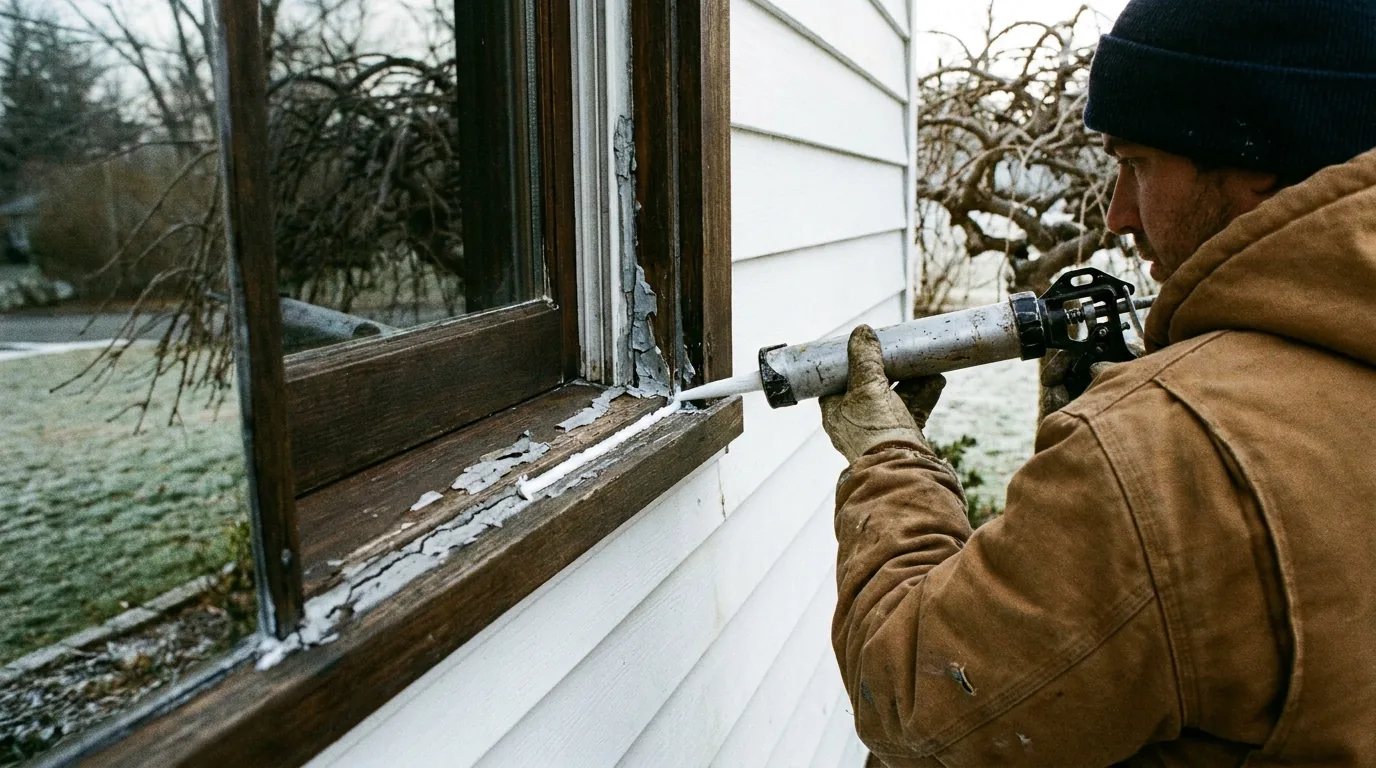
The housing stock. A large share of what we work on is post-war, and sill flashing was not a routine detail on a 1950s cape. There is often nothing behind the trim but a bed of putty.
Wind-driven rain. The South Shore takes rain horizontally in a nor'easter. Horizontal rain finds the head and the jambs, not just the sill, and it exploits any opening that was detailed for water falling downward.
Water history. Between Sandy, several nor'easters and the ordinary business of thirty-year-old windows, an enormous number of openings on this Island have been wet at some point. Covering that up with an insert is how a small repair becomes framing work later.
The Middle Path
On most houses the honest answer is a mix, and a contractor who has walked the house should be able to tell you which openings are which. Full-frame on the weather elevation, the ones with staining and the bedroom egress windows; insert on the sound, sheltered, generously sized openings. That is a harder quote to write than "thirty windows, one price," and it is usually the cheaper job.
Alec's Construction handles windows and doors as carpentry, which is what they are. The unit is a component; the job is the opening — the sill, the flashing, the shim pack, the insulation in the gap and the trim that goes back over it. Alex comes out, measures the actual openings, tells you which ones are worth doing first, and puts a written scope in your hand. Free walkthrough, no obligation, across Suffolk County.
Frequently Asked Questions
What is the difference between insert and full-frame window replacement?
An insert replacement leaves the existing window frame in the wall and fits a new complete window inside it, so the exterior trim and siding are never disturbed. A full-frame replacement removes everything down to the rough opening, which lets the sill and the flashing be inspected and corrected and keeps the original glass area. Insert is faster and cheaper; full-frame is the one that fixes what is behind the trim.
Do insert windows make the opening smaller?
Yes, at every opening, because the new frame sits inside the old one. Usually it is an inch or so in each direction. That is cosmetic on a large window and it matters a great deal on a bedroom or finished-basement window that is already close to the minimum net clear escape opening, because a compliant window can become a non-compliant one. It gets measured before anything is ordered.
Should I do full-frame windows if I am also re-siding?
Almost always, yes. With the siding off, the incremental cost of full-frame is much smaller than it would be on its own, and you get the one thing an insert can never give you — the window flashed and lapped into the water-resistive barrier in the correct order, with the siding then installed over it. Doing an insert now and re-siding later means paying twice and still not getting the flashing right.
How can I tell if my window frames are rotten?
Push a small screwdriver or an awl into the bottom rail of the sash and into the lower corners of the sill, at an angle, with moderate pressure. Sound wood resists. Rotted wood takes the point with no effort and the wood around it will feel spongy. Do this at the openings on the weather side of the house and at any opening with staining on the interior casing below it.
Related Guides
- Window Replacement on Long Island
- Double-Hung vs Casement vs Slider
- Window U-Factor and NY Energy Code
- Entry and Patio Doors on Long Island
- Drafty Window Repair on Long Island
Work With Alec's Construction
This guide is written by the crew that does the work. See Alec's Windows & Doors service — insert and full-frame replacement, flashed and sealed as carpentry. One crew start to finish, free walkthrough and a written estimate inside 48 hours.
Booking the cold months now: we also handle Siding and Attic Insulation.
Get a Free Estimate from Alec's Construction
Working across Suffolk County since 2018, one crew from start to finish. We come out, look at the actual job, and put a written number in your hand — no pressure, no obligation.
Or call (631) 312-7441