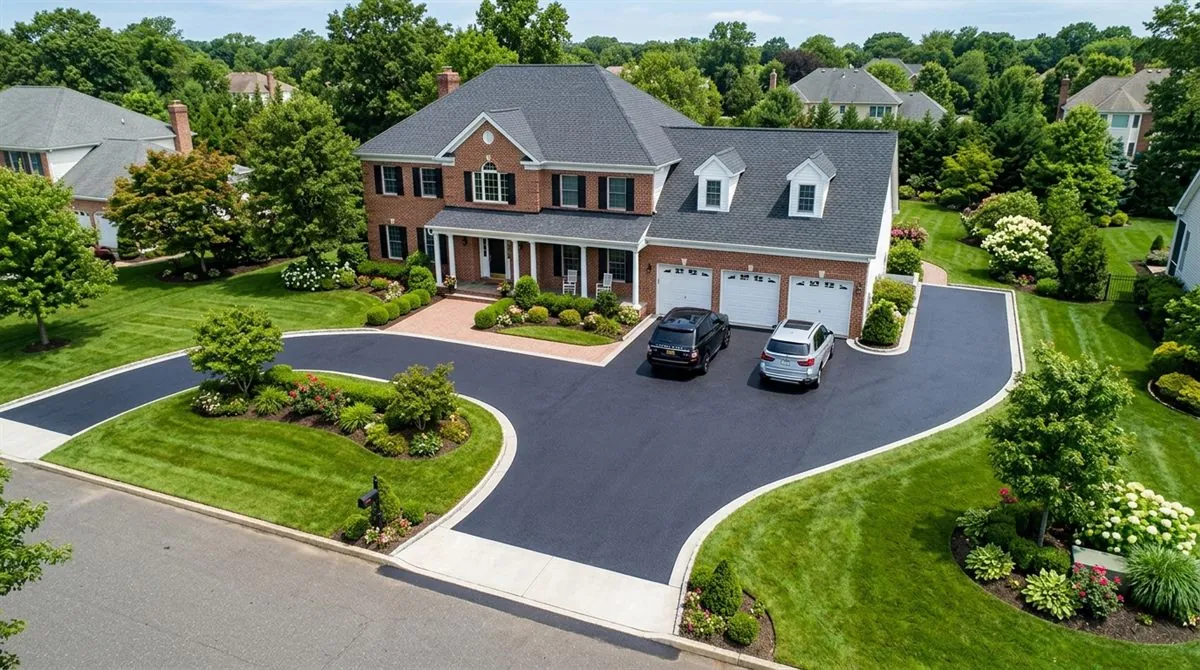
Hiring a paving contractor for the first time can feel like a black box. You get a quote, sign a contract, and then a crew shows up with heavy equipment. Understanding the process helps you know whether the job is being done right — and gives you confidence when comparing bids across Nassau and Suffolk County.
Here's exactly what a professional driveway paving job looks like from start to finish on Long Island.
Step 1: Demo, Grading, and Base Prep
If you have an existing driveway, the first step is removal. Old asphalt is broken up with a jackhammer or skid steer and hauled away. If there's concrete, expect more time and a higher removal cost — concrete is denser and more labor-intensive to demolish. Some contractors will mill down old asphalt and pave over it if the base is solid, which saves on removal cost but only makes sense in the right conditions.
Once the old surface is gone, the crew grades the subbase. This is critical and often where cheap contractors cut corners. On Long Island, the soil varies — sandy near the South Shore bays, clay-heavy in parts of Nassau County. The gravel base (usually 4–6 inches of compacted stone) provides the structural foundation. Without proper base prep, even quality asphalt will crack and sink within a few years.
The crew will also address drainage during grading. A properly sloped driveway sheds water away from your house and to the edges — typically a 1–2% grade. If water pools near your foundation, this is the stage where it gets corrected.
Step 2: Asphalt Installation and Compaction
Hot-mix asphalt arrives from the plant at around 280–320°F and must be laid and compacted before it cools. The crew uses a paver machine to lay the asphalt evenly across the prepared base. For residential driveways, the standard is 2–3 inches of finished asphalt. Some homeowners with heavy vehicles (trucks, boats, RVs) opt for 3 inches for added durability.
Immediately after laying, a steel drum roller compacts the surface. Edge work is done by hand with lutes and tampers, particularly around the perimeter and any curves. This is where experience shows — hand work along the edges determines how clean the finished job looks.
The surface is typically ready for foot traffic within a few hours and vehicle traffic within 24–48 hours, though it continues to cure and harden over the following weeks. Avoid parking heavy vehicles or making sharp turns during the first few weeks of summer heat, when fresh asphalt softens slightly.
Red flags to watch for: A crew that rushes through base prep, lays asphalt too thin, or skips final compaction rolling. Always ask your contractor how thick the finished layer will be and what base preparation is included in the quote. A quality paving job on Long Island should last 15–20 years with periodic sealing. A rushed job on a poor base might crack within 3–5 years.
Related Reading
- Paver Driveways — cost and lifespan against asphalt
- Permeable Pavers — when coverage limits are the constraint
- Brick Driveway Pavers — brick driveway paving cost and base depth
Work With Alec's Construction
This guide is written by the crew that does the work. See Alec's Driveways & Blacktop service — asphalt paving, resurfacing and sealcoating. Licensed and insured on Long Island, one crew start to finish, free walkthrough and a written estimate inside 48 hours.
Booking the cold months now: we also handle Masonry & Pavers and Roofing.
Every town here has villages inside it running their own building department. Our directory sorts out which counter your address actually files at.
Ready to Get Started?
Ready to pave? Call Alec's Construction at (631) 312-7441 for a free estimate. We serve Nassau and Suffolk County with honest work and proper preparation every time.
Get a Free Consultation