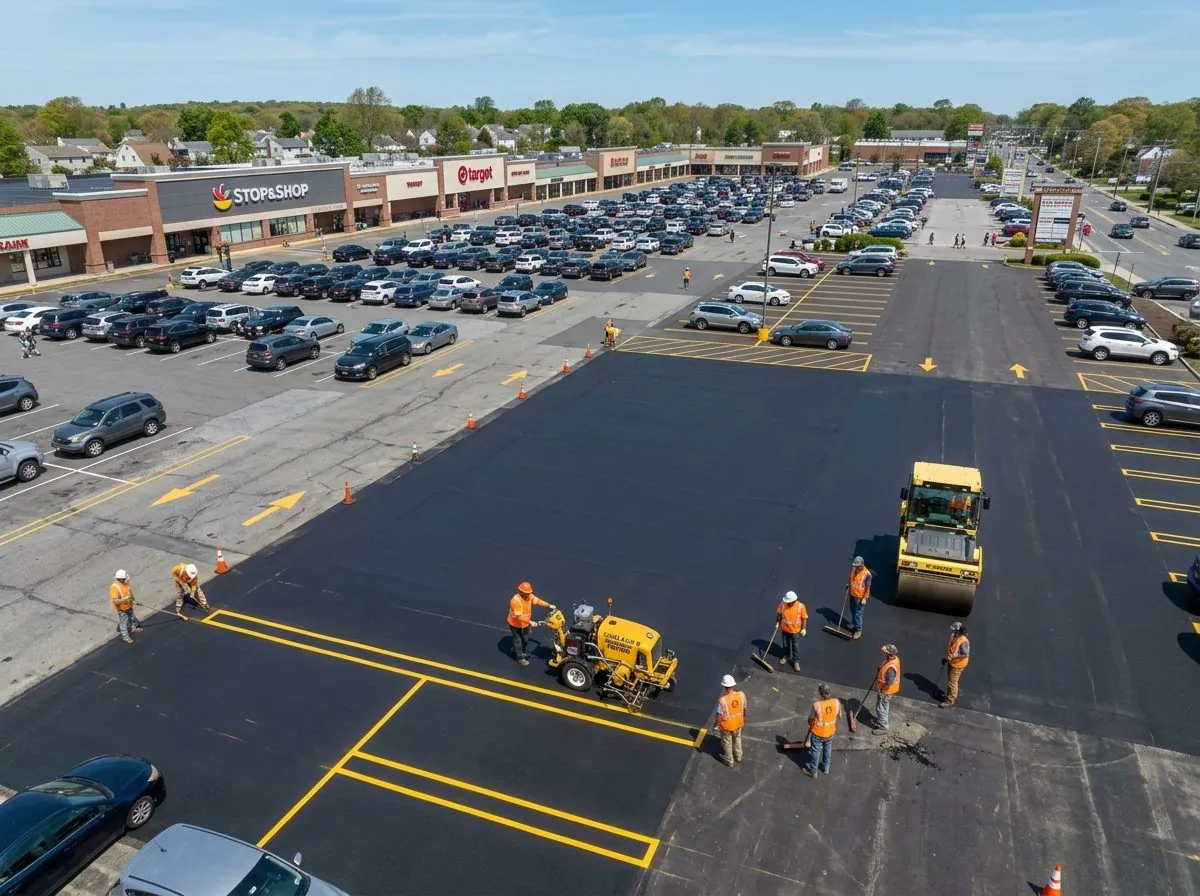
Selden is unincorporated Town of Brookhaven, sitting on the Ronkonkoma moraine north of the expressway. It built out through the 1960s and 1970s as subdivisions, and the soil under it is the defining fact for a driveway.
Moraine soil is not the sandy south shore
The south-shore hamlets sit on outwash — clean sand and gravel that drains fast. Selden sits on moraine, the mixed debris the glacier pushed up, which carries more silt, clay and till. It drains slowly.
Water that gets into the sub-base sits there. In January it freezes, expands, and lifts the mat. That is why a four-inch base that is genuinely correct in East Patchogue is not automatically correct here.
- Deeper compacted base than an equivalent south-shore driveway
- Geotextile separation where the subsoil is silty, so stone does not migrate down
- Compaction in lifts of three to four inches, never one deep layer rolled once
- Drainage worked out before the surface is designed
- We probe the subgrade rather than assuming it matches the neighbor
Frost heave looks like a bad installation
The classic Selden complaint is a driveway that develops cracking or an uneven surface within a few years, and the homeowner assumes the contractor used bad asphalt. Usually the asphalt was fine. Water sat under a base that was too thin for this soil and froze.
You cannot fix that from the top. Sealcoating a frost-heaved driveway hides the diagnosis for one season while water keeps getting in underneath.
Subdivision streets age together
Selden streets were built in one push, with the same builder-minimum spec. Fifty years later they reach end of life together, which is why several neighbors replace in the same couple of years.
That also makes multi-property scheduling worthwhile — one mobilization, one delivery, one roller across two or three adjacent driveways. Everyone pays less and the street matches.
Frequently Asked Questions
Why does Selden need a deeper base than towns to the south?
The soil. Selden sits on the Ronkonkoma moraine, where the material carries more silt, clay and mixed till than the sandy outwash plain along the south shore. It drains slowly, so water sits in the sub-base and heaves it when it freezes. We build deeper here and often add a geotextile separation layer.
My driveway cracked after three years. Was it bad asphalt?
Usually not. On moraine soil the far more common cause is a base that was too thin for the ground it sat on — water collected under it and froze. You cannot fix that from the top, and sealcoating it hides the diagnosis for a season while water keeps getting in underneath.
How long does a driveway take?
One day for a resurface on a typical residential driveway, one to two days for a full rip-out and repave. You can walk on it the same evening and park on it in 48 to 72 hours. Full cure takes about 30 days, which is why we ask you not to turn your wheels while stationary during the first month.
What time of year can you pave?
Roughly April through mid-November on Long Island. Hot-mix asphalt must be laid and compacted while hot, and once ground and air temperatures drop the mat cools before the roller can seat it. A driveway paved in December looks fine in December and ravels the following spring.
Related Reading
- How Thick a Driveway Should Be — the spec that decides how long it lasts
- Driveway Drainage Done Right — where the water goes before it goes into your garage
- Driveway Sealing — when it helps and when it hides the problem
- Repair or Replace Your Driveway — how to tell which you actually need
- Driveway Paving on Long Island — the full homeowner guide
Also Serving Selden
- Attic Insulation in Selden — air sealing, baffles and R-49 depth
- Basement Finishing in Selden — egress, ceiling height and moisture
- Bathroom Remodeling in Selden — full gut renovations
- Fallen Tree Removal & Roof Repair in Selden — tree off the house, roof supported and repaired
- Flood & Water Damage Cleanup in Selden — wet material out, drying metered
- Gutter Installation in Selden — seamless gutters, fascia and drainage
- Hurricane & Storm Damage Repair in Selden — trees, flooding, cleanup and repairs
- Interior Painting in Selden — the right work for the cold months
- Kitchen Remodeling in Selden — cabinets, counters and layout
- Roofing in Selden — tear-offs, repairs and storm damage
- Storm Debris Removal & Cleanup in Selden — trees, building debris and hauling
- Storm Roof & Siding Repair in Selden — wind damage, tarped and rebuilt
Work With Alec's Construction
This guide is written by the crew that does the work. See Alec's Driveways & Blacktop service — asphalt paving, resurfacing and sealcoating. Licensed and insured on Long Island, one crew start to finish, free walkthrough and a written estimate inside 48 hours.
Booking the cold months now: we also handle Masonry & Pavers and Roofing.
We keep a permit office directory for Nassau and Suffolk, checked against each jurisdiction's own site, because we file in these counters constantly.
Ready to Get Started?
Free on-site measure and a written price that lists base depth, asphalt thickness and compaction lifts. Most residential driveways are a one-day install.