Water inside a Miller Place house after a storm has a clock on it. Mould can start on wet sheetrock and insulation within a day or two, and a house that sits wet while it waits for an adjuster becomes a mould job on top of a storm job. Alec's Construction gets the wet material out, the drying equipment in and the moisture metered, then rebuilds to the agreed scope, working out of the yard on Barton Avenue in East Patchogue. If there is water in the house now, call rather than fill in the form.
What a Storm Does in Miller Place
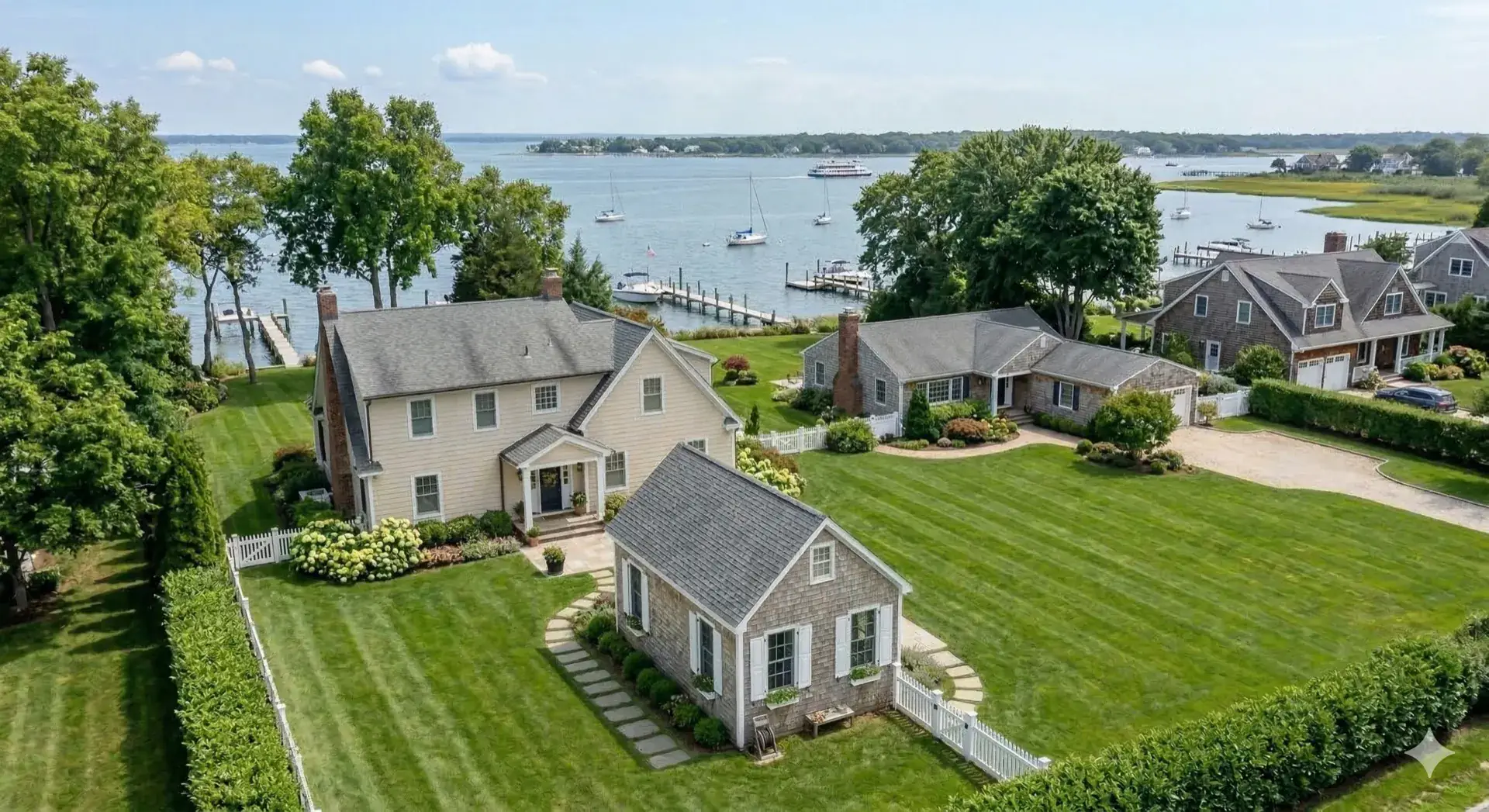
Miller Place is bluff country — the hamlet sits on the high ground along the Sound between Mount Sinai and Rocky Point, and there is no harbour to flood, so a nor'easter here is the wind off the Sound and the bluff. The streets north of Route 25A are 1960s to 80s colonials, splits and ranches on wooded lots under oak and tulip trees, and the north-facing roofs and gable ends take the wind first. The bluff-top houses along the Sound get the full northeast fetch and the erosion after; a high tide on a northeast wind eats the toe of the bluff and the top follows. South of 25A the hamlet is inland and the damage is trees on roofs and rain through the hole they made.
Harbour Water Downtown, Rain on the Hill
At the foot of the hill the harbour comes up on a northeast wind and a high tide into the buildings around the waterfront, and that is salt water and a flood claim. Up the hill the water is rain that came through a roof the wind opened, and that is a homeowners claim. Same storm, two kinds of water, two scopes.
Two Kinds of Water, Two Claims
Water that came down — through a roof the wind opened, around a window it broke, behind siding it peeled — is wind-driven rain and a homeowners claim. Water that came up — from the bay, a canal, a creek, the ground — is flood, excluded from the homeowners policy and covered only by a separate flood policy. Most storm-damaged houses have some of both, and the two have to be documented separately from the first visit or the claims fight each other. We keep them separate on the scope.
What Comes Out
Wet carpet and pad. Insulation that took water, all of it. Sheetrock cut back above the water line to the next joint. Laminate and engineered floors that swelled. Cabinet boxes that sat in water. Soaked contents that cannot be cleaned. Everything photographed in place, photographed as it comes out, and kept where the adjuster can see it. Emergency mitigation is expected of you under the policy; it does not wait for the adjuster.
Drying Is Measured, Not Guessed
Commercial dehumidifiers and air movers, moisture readings on the framing every day, and nothing closed up until the numbers say dry. Where the water was salt — surge from the bay or a canal — the rules change: electrical that went under is replaced, not dried, and the framing gets washed down before it is dried, because salt keeps pulling moisture out of the air for years.
The Rebuild
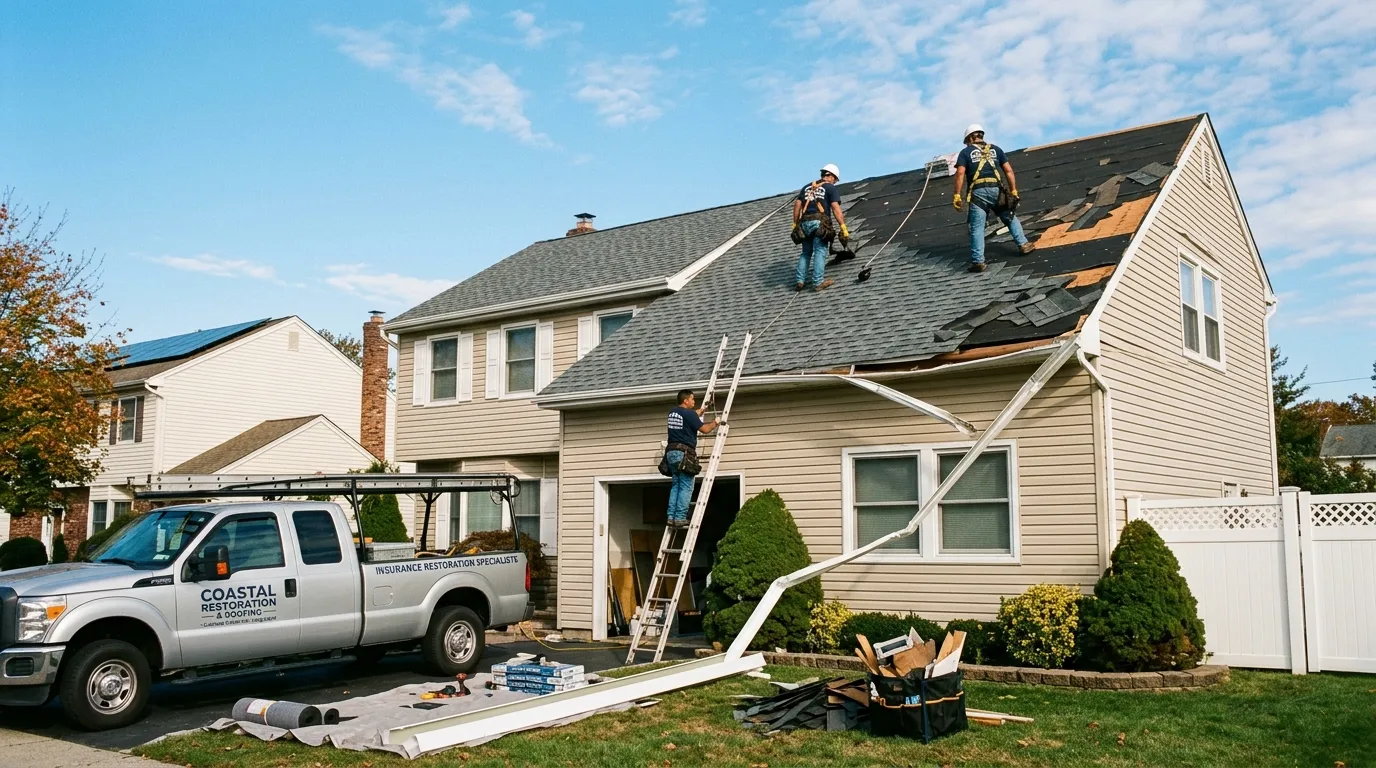
Insulation, sheetrock, trim, floors, cabinets, paint, and the electrical or mechanical that had to be replaced, on one scope with the cleanup. Where the water came in through the roof or the siding, the cause is fixed first so the new work does not get wet again.
Building Department in Miller Place
Miller Place files with the Town of Brookhaven at Independence Hill in Farmingville. Emergency work to make the house safe and dry does not wait for a permit; the permanent repair is filed once the scope is agreed.
Free walkthrough in Miller Place. Call or text (631) 312-7441. Tell us whether the roof is open, whether a tree is on the structure and whether there is water inside, and we bring the right equipment on the first trip.
Frequently Asked Questions
Does Miller Place flood in a nor'easter?
Not from the water — there is no harbour or bay here and the houses are high on the bluff or inland. The damage is wind and trees, and water in a house came through a roof or wall the wind or a tree opened, which is a homeowners claim. The bluff itself is the other problem: a northeast storm with a high tide takes the toe and the top follows over weeks.
Is the flooding covered by my homeowners policy?
Water that rose from the bay, a canal, a creek or the ground is flood damage, and a standard homeowners policy excludes it; it is covered only by a separate flood policy. Rain that came in through wind damage to the roof or siding is a homeowners claim. Where a house has both, they are documented separately from the first visit.
Can you pump out my basement today?
Where we can reach you, yes, once the water outside has gone down. Pumping a basement while the ground around it is still saturated can push the walls in. After that the wet material comes out and the drying starts the same visit.
Can wet drywall be dried instead of replaced?
Sometimes, if it was clean water, it was wet briefly and it has not lost its strength. Storm water is rarely clean, the insulation behind it holds water far longer than the board, and salt water is never dried. In practice sheetrock below the water line comes out, the insulation behind it comes out, and the framing is dried and metered before the wall is closed.
Related Guides
- Fallen Tree Removal & Roof Repair in Miller Place, NY
- Storm Debris Removal & Cleanup in Miller Place, NY
- Storm Roof & Siding Repair in Miller Place, NY
- Flood & Water Damage Cleanup in Rocky Point, NY
- Flood & Water Damage Cleanup in St. James, NY
- Hurricane & Storm Damage Repair in Miller Place, NY
- Hurricane & Storm Damage Repair — our service page
Also Serving Miller Place
- Attic Insulation in Miller Place — air sealing, baffles and R-49 depth
- Basement Finishing in Miller Place — egress, ceiling height and moisture
- Bathroom Remodeling in Miller Place — full gut renovations
- Fallen Tree Removal & Roof Repair in Miller Place — tree off the house, roof supported and repaired
- Gutter Installation in Miller Place — seamless gutters, fascia and drainage
- Hurricane & Storm Damage Repair in Miller Place — trees, flooding, cleanup and repairs
- Interior Painting in Miller Place — the right work for the cold months
- Kitchen Remodeling in Miller Place — cabinets, counters and layout
- Masonry & Pavers in Miller Place — patios, walkways and retaining walls
- Roofing in Miller Place — tear-offs, repairs and storm damage
- Storm Debris Removal & Cleanup in Miller Place — trees, building debris and hauling
- Storm Roof & Siding Repair in Miller Place — wind damage, tarped and rebuilt
Work With Alec's Construction
This guide is written by the crew that does the work. See Alec's Hurricane & Storm Damage Repair service — fallen trees, flooding, roof and siding damage, cleanup and the rebuild. Licensed and insured on Long Island, one crew start to finish, free walkthrough and a written estimate inside 48 hours.
Booking the cold months now: we also handle Roofing and Storm Damage & Insurance Restoration.
Get a Free Estimate from Alec's Construction
Licensed and insured, working across Nassau and Suffolk County since 2018. We come out, look at the actual job, and put a written number in your hand — no pressure, no obligation.
Or call (631) 312-7441