Alec's Construction air-seals and insulates attics in Miller Place (11764), working out of the yard in East Patchogue. Attic work is indoor work, so it runs straight through the winter — and the order matters more than the material: seal the leaks, open the vents, then bring the insulation up to depth.
Attic Insulation in Miller Place
Miller Place is bluff country, high ground along the Sound between Mount Sinai and Rocky Point with no harbour to flood, and its streets north of Route 25A are 1960s to 80s colonials, splits and ranches on wooded lots under oak and tulip trees. The bluff-top houses take the full northeast fetch off the Sound, and that wind finds the attic at the eaves and gables. Soffits on the windward side pull cold air straight over the top of the insulation at the edge of the ceiling, and the bedrooms along that wall are the cold ones. Farther from the bluff the wooded lots shade the roofs, and the attics there see more ice dams than wind. The splits have the usual hard-to-reach compartment over the lower wing; the colonials have big bedroom ceilings with pull-down stairs. South of 25A the hamlet is inland and the attics are ordinary ones under the trees.
What We Look at First in Miller Place
For a bluff-top house in Miller Place, we work from the Sound side inward. The north eaves get baffles with solid wind dams that run up from the top plate, so the air from the soffit goes over the insulation and not through it. The top plates along that wall get sealed and the north gable vent gets a baffle. Then the rest of the attic is sealed and filled. Inland, the order starts with the access and the fans instead.
Older North Shore Houses: Knee Walls and Hidden Bypasses
The harbour hamlets have older houses than most of Suffolk, and older framing leaks air in ways a modern house does not. Balloon-framed walls run open from the basement to the attic, so warm air rises straight up inside the wall cavities and out the top. Capes and story-and-a-half houses have knee walls with insulation stapled to the back that has long since sagged away. Plank sheathing and old chimneys add their own gaps.
That makes air sealing the main event on these houses, not the insulation depth. The tops of the wall cavities get blocked and sealed, the knee-wall floors get closed off at the joists, the chimney chase gets a fire-rated seal, and the attic hatch gets weatherstripped and insulated.
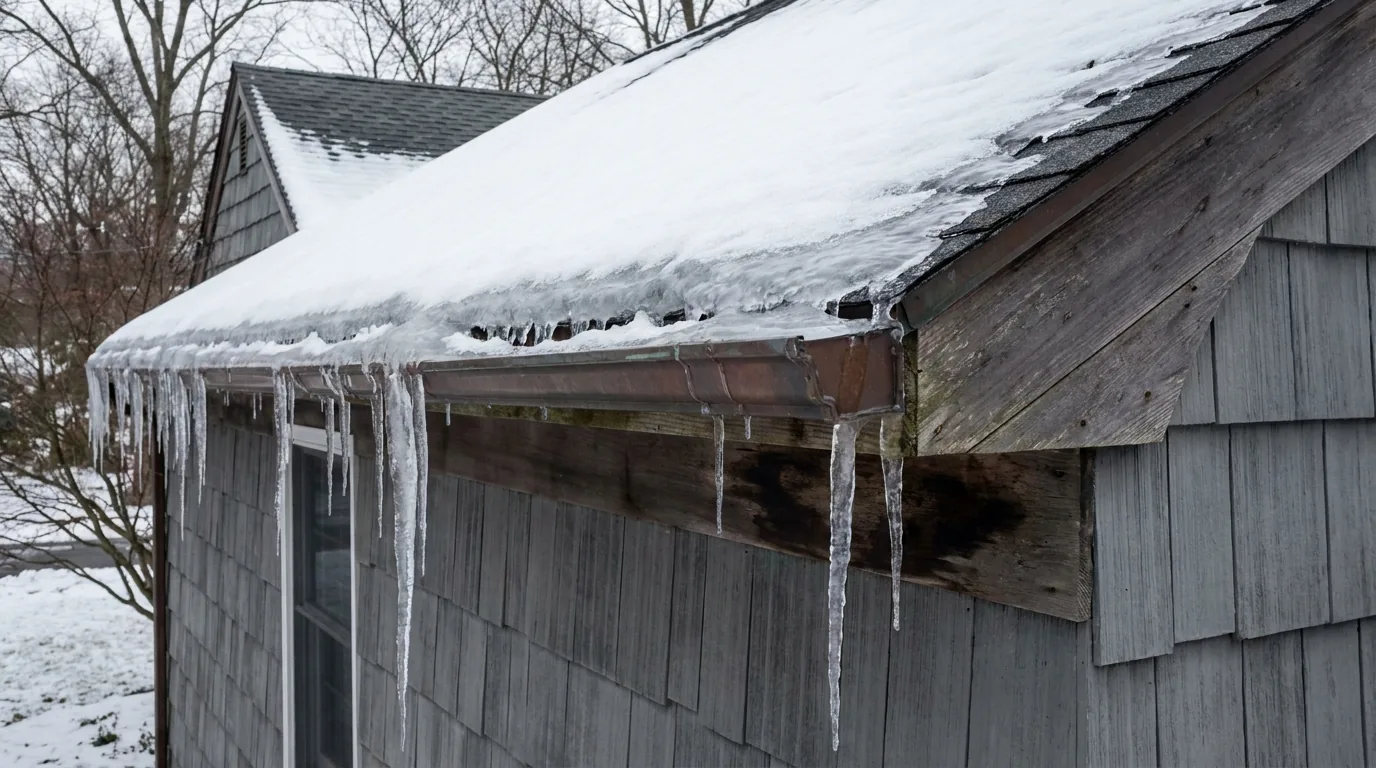
The north-facing slopes on these hills see little winter sun and take the wind off the Sound. When the attic leaks heat, the snow on those slopes melts and refreezes at the eave — the classic ice dam. Fixing the attic is the fix for the ice.
Seal, Vent, Then Insulate
Adding insulation over an attic that leaks air is the most common mistake in this trade. Warm, moist air keeps moving through the new layer, condenses on the cold roof deck in winter, and the attic ends up wetter than it was. So the sequence never changes: seal the bypasses, open the ventilation, then bring the insulation up to depth.
On a walkthrough Alex checks the depth and condition of what is there, the soffit intake, the ridge or gable exhaust, where the bath fans go, the attic hatch, and the underside of the roof deck for frost stains or mould. That tells us whether the attic needs topping up or a proper reset, and you get the photographs either way.
Permits in Miller Place
Miller Place files with the Town of Brookhaven at Independence Hill in Farmingville. Insulation and air sealing inside an existing attic are generally not permitted work; anything that changes the roof, the framing or the ventilation openings can be, and we check with the department where it applies.
Alex walks the house in Miller Place, photographs what he finds and gives you a written scope in the order the work has to happen — whether or not you hire us. Call (631) 312-7441 to set up a time.
Frequently Asked Questions
Why are the bedrooms on the Sound side of my Miller Place house always colder?
Wind washing. On the bluff, the northeast wind hits the north eaves and drives cold air in through the soffit vents and across the first stretch of attic insulation, right over the top plate of the bedroom wall. The insulation there is doing very little because air is moving through it. Wind dams at those eaves, sealing the top plates and rebuilding the depth to the edge stops it. The bedrooms on the sheltered side never see the same effect.
Why is my Miller Place attic damp in winter?
Almost always because warm, moist air from the house is leaking into it — through light fixtures, the hatch, wall tops and bath fans that vent into the attic — and condensing on the cold roof deck. Sealing the leaks and venting the fans outside is the fix, not more insulation.
Will new insulation stop ice dams on my Miller Place roof?
Insulation alone often does not. Ice dams come from warm air leaking into the attic and heating the roof deck, so the fix is air sealing the ceiling, opening the soffit vents with baffles, and then adding depth. Done in that order, it is the real cure.
Who issues the permit for attic insulation work in Miller Place?
Miller Place files with the Town of Brookhaven at Independence Hill in Farmingville. Insulation and air sealing inside an existing attic are generally not permitted work; anything that changes the roof, the framing or the ventilation openings can be, and we check with the department where it applies.
Related Guides
- Attic Insulation in Rocky Point, NY
- Attic Insulation in Kings Park, NY
- Attic Insulation on Long Island
- Attic Ventilation on Long Island
- Knee-Wall Insulation on Long Island
Work With Alec's Construction
This page is written by the crew that does the work. See Alec's Attic Insulation service — air sealing, baffles and insulation depth in the order that makes it work. One crew from the first walkthrough to the last inspection.
Also in Miller Place through the cold months: Roofing and Windows & Doors.
Also Serving Miller Place
- Basement Finishing in Miller Place — egress, ceiling height and moisture
- Bathroom Remodeling in Miller Place — full gut renovations
- Fallen Tree Removal & Roof Repair in Miller Place — tree off the house, roof supported and repaired
- Flood & Water Damage Cleanup in Miller Place — wet material out, drying metered
- Gutter Installation in Miller Place — seamless gutters, fascia and drainage
- Hurricane & Storm Damage Repair in Miller Place — trees, flooding, cleanup and repairs
- Interior Painting in Miller Place — the right work for the cold months
- Kitchen Remodeling in Miller Place — cabinets, counters and layout
- Masonry & Pavers in Miller Place — patios, walkways and retaining walls
- Roofing in Miller Place — tear-offs, repairs and storm damage
- Storm Debris Removal & Cleanup in Miller Place — trees, building debris and hauling
- Storm Roof & Siding Repair in Miller Place — wind damage, tarped and rebuilt
Talk to Alec's Construction About Attic Insulation in Miller Place
We come out, look at the house, photograph what we find and put a written scope in your hand. No pressure, no obligation. Working across Suffolk County since 2018.
Or call (631) 312-7441