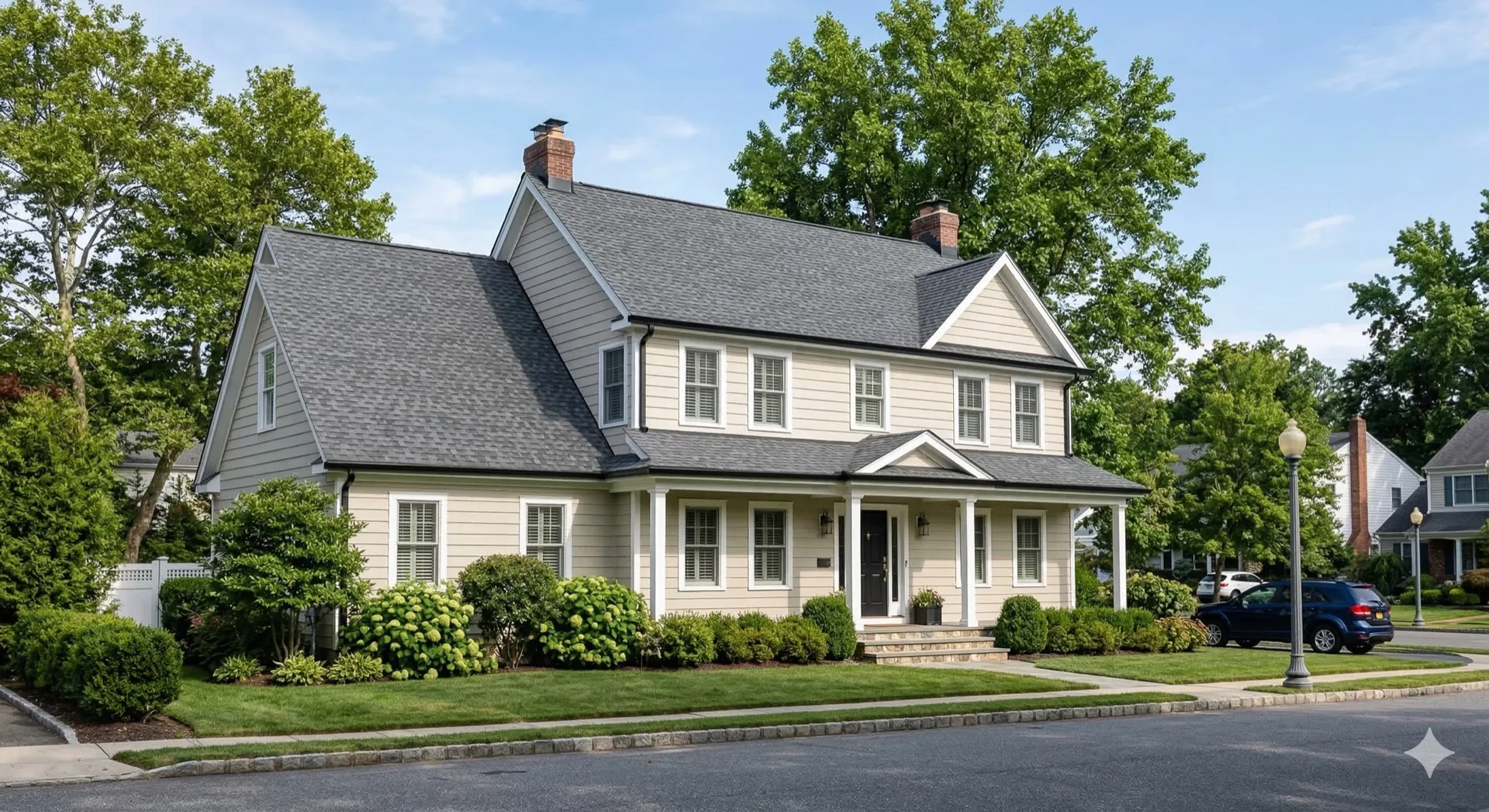
Alec's Construction repairs and replaces roofs in Miller Place (11764) — leaks traced to the cause, flashings and valleys, wind and ice-dam damage, and full tear-off replacements — working out of the yard in East Patchogue. Repairs and sheet-metal work run straight through the winter; replacements go on with the warm days.
Roofs in Miller Place
Miller Place sits on the high ground along the Sound between Mount Sinai and Rocky Point. There is no harbour here, so a roof in Miller Place deals with wind, not water. North of Route 25A the streets are 1960s to 80s colonials, splits and ranches on wooded lots under oak and tulip trees, and their north-facing roofs and gable ends catch the wind off the Sound before anything else does. The bluff-top houses along the water take the full northeast fetch, the most exposed roofs in the hamlet. South of 25A the hamlet is inland and the damage turns into trees on roofs and rain through the holes they leave. On the bluff the question is how a roof is built to stay on; inland, it is what stands over it.
What We Look at First in Miller Place
On a Miller Place bluff house we start on the side facing the Sound, checking the rake edges, the ridge cap and the first courses at the eave for lifted or unsealed shingles. Gable-end siding and soffits get checked too, since wind that gets in there pressurizes the attic. Inland, south of 25A, we start with the trees over the roof. Everything files with the Town of Brookhaven at Independence Hill in Farmingville.
North Shore Roofs: Steep, Old and Facing the Sound
The harbour hamlets have some of the oldest and most complicated roofs in Suffolk — steep pitches, several valleys, dormers and chimneys — and a northeast wind off the Sound and the harbour that finds every weak flashing on the north side first. On a roof like that, the shingles are the easy part. The roof is mostly its flashings and valleys.
A leak on an older North Shore house is traced, not guessed at. Water often enters at a chimney, a dormer cheek or a valley and runs along the sheathing before it shows on a ceiling several feet away. The repair is at the entry point: step flashing woven with the courses, counterflashing let into the mortar joint, a proper valley rather than a bead of roof cement.
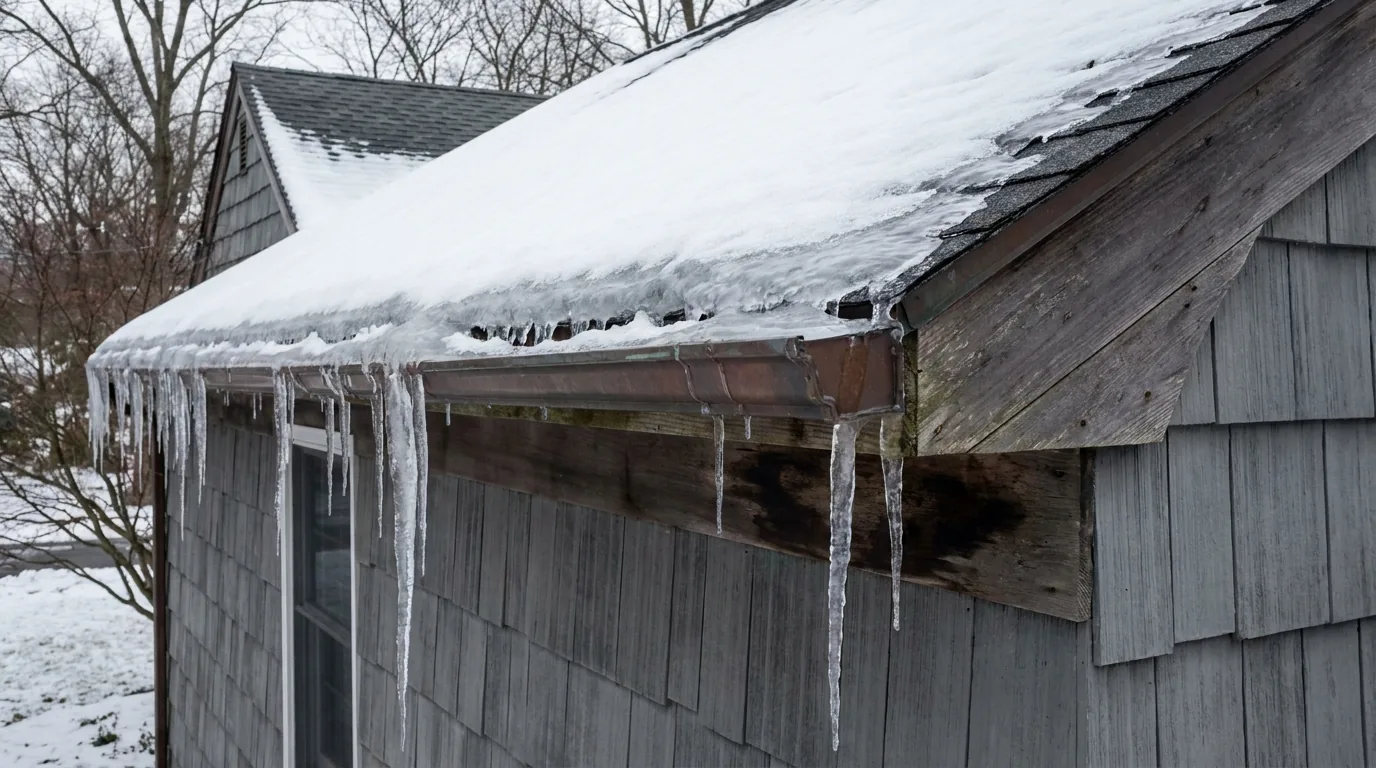
The north-facing slopes on these hills hold snow longest and see the least winter sun, which is where ice dams form. A roof that ice-dams every winter has an attic problem underneath it, and the roof repair includes saying so.
Leaks Are Flashing Problems Until Proven Otherwise
The open field of a roof almost never leaks. Water gets in where the roof meets something else — a chimney, a wall, a dormer, a valley, a vent pipe, a skylight — and on a great many Long Island roofs that flashing was done once, failed, and has been covered in roof cement ever since. Roof cement goes brittle within a few winters and hides the failure while the water keeps getting in.
So a repair starts by finding where the water actually enters, which is often several feet from where the stain shows, and fixing the flashing there. Repairs, flashing and sheet-metal work run all winter. Full asphalt replacements go on the warmer days, and shingles laid in the cold are hand-sealed so they hold in the first wind.
Permits in Miller Place
Miller Place files with the Town of Brookhaven at Independence Hill in Farmingville. Roof replacement is permitted work in most of Suffolk, and the limit on shingle layers decides whether the old roof has to come off — on our jobs it comes off regardless. We file the permit.
Alex walks the house in Miller Place, photographs what he finds and gives you a written scope in the order the work has to happen — whether or not you hire us. Call (631) 312-7441 to set up a time.
Frequently Asked Questions
My Miller Place house sits on the bluff facing the Sound. What should go into its roof?
Detail for wind. That means shingles rated for high wind installed with the high-wind nailing pattern, sealed starter strips along every eave and rake, a ridge cap and ridge vent made for exposed sites, ice and water membrane at the eaves and in the valleys, and drip edge fastened tightly. Gable-end vents should keep out wind-driven rain. On the bluff, how carefully the roof is put on matters more than which brand goes on.
Can a roof in Miller Place be replaced in winter?
Repairs, flashing and sheet-metal work run all winter. A full asphalt replacement is a warmer-day job, because the seal strip on the shingles needs warmth to bond; when a replacement has to go on in the cold, every course is hand-sealed so it holds in the first wind. We schedule around the forecast.
Should I repair or replace my roof in Miller Place?
If the roof is sound and the leak is a flashing or a valley, repair it. If the shingles are curling, losing granules and on a second layer, a repair buys a season and replacement is the honest answer. Alex photographs the whole roof and tells you which it is.
Who issues the permit for roofing work in Miller Place?
Miller Place files with the Town of Brookhaven at Independence Hill in Farmingville. Roof replacement is permitted work in most of Suffolk, and the limit on shingle layers decides whether the old roof has to come off — on our jobs it comes off regardless. We file the permit.
Related Guides
- Roofing Contractors in Rocky Point, NY
- Roofing Contractors in Kings Park, NY
- Roofing on Long Island
- Roof Leak Repair on Long Island
- Nor'easter Roof Damage on Long Island
Work With Alec's Construction
This page is written by the crew that does the work. See Alec's Roofing service — tear-offs, repairs, flashing and storm damage across Suffolk County. One crew from the first walkthrough to the last inspection.
Also in Miller Place through the cold months: Seamless Gutters and Attic Insulation.
Also Serving Miller Place
- Attic Insulation in Miller Place — air sealing, baffles and R-49 depth
- Basement Finishing in Miller Place — egress, ceiling height and moisture
- Bathroom Remodeling in Miller Place — full gut renovations
- Fallen Tree Removal & Roof Repair in Miller Place — tree off the house, roof supported and repaired
- Flood & Water Damage Cleanup in Miller Place — wet material out, drying metered
- Gutter Installation in Miller Place — seamless gutters, fascia and drainage
- Hurricane & Storm Damage Repair in Miller Place — trees, flooding, cleanup and repairs
- Interior Painting in Miller Place — the right work for the cold months
- Kitchen Remodeling in Miller Place — cabinets, counters and layout
- Masonry & Pavers in Miller Place — patios, walkways and retaining walls
- Storm Debris Removal & Cleanup in Miller Place — trees, building debris and hauling
- Storm Roof & Siding Repair in Miller Place — wind damage, tarped and rebuilt
Talk to Alec's Construction About Roofing in Miller Place
We come out, look at the house, photograph what we find and put a written scope in your hand. No pressure, no obligation. Working across Suffolk County since 2018.
Or call (631) 312-7441