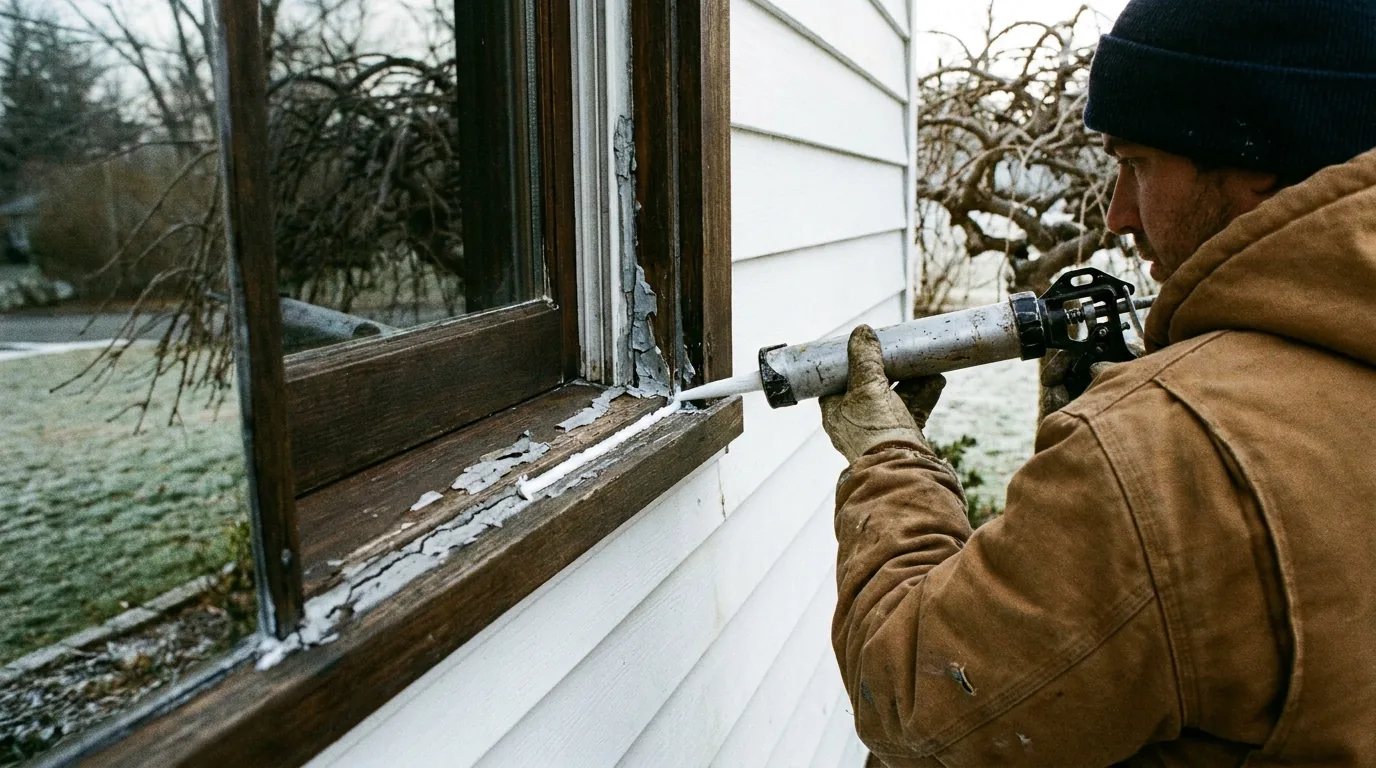
Alec's Construction converts garages into living space in Islip, Suffolk County — bedrooms, offices, family rooms and accessory apartments — working out of the yard in East Patchogue. The garage is the cheapest square footage on the property to turn into a room, because the roof, the slab and at least one wall are already there. What makes it a good room or a cold one is the order the rest is done in.
Garages in Islip
The older colonials and capes in the hamlet of Islip have attached garages that were added or extended over the decades, and the join between the original house and the later garage is where the surprises live — a foundation wall that stops short, a slab poured against the house without a joint, a roof valley that has been leaking quietly into the garage ceiling. South of Montauk Highway the flood-zone question applies just as it does in Bay Shore.
South Shore Garages and the Flood Elevation
Near the bay the first question about a garage conversion is not design, it is elevation. A garage slab is the lowest floor on the property, and where the property sits in a mapped flood zone, habitable space below the base flood elevation is generally not permitted and would change how the house is rated for flood insurance. That rules out the conversion on some lots and is irrelevant on others a few streets north.
Where the elevation works, the conversion is the standard attached-garage job — slab, walls, ceiling, opening, heat — with one extra item: flood-resistant materials and details below the design flood elevation where the department asks for them. We pull the elevation before we draw, so nobody designs a room that cannot be permitted.
What Changes When a Garage Becomes a Room
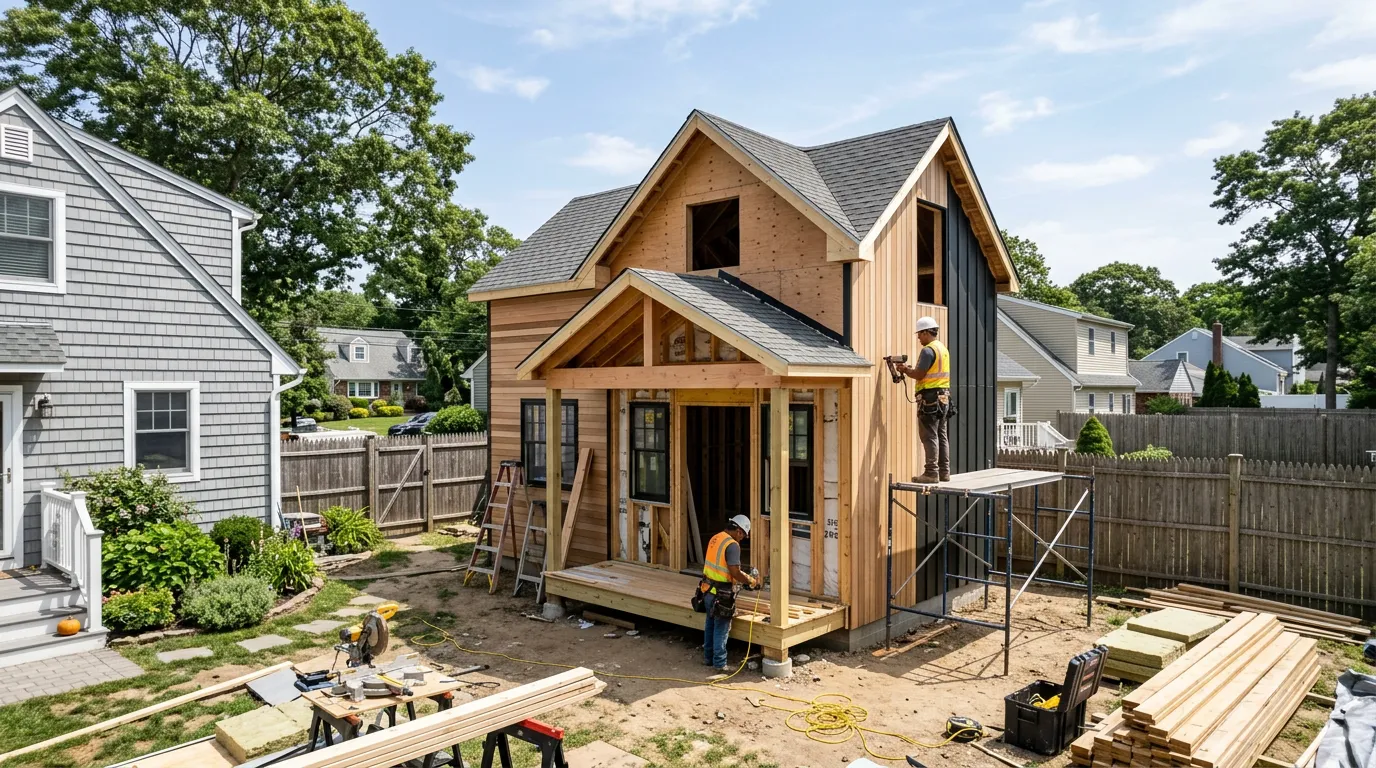
- The opening. The garage door comes out and the opening is framed as an exterior wall — sill, studs, sheathing, housewrap, insulation, siding — with windows sized for daylight and, if the room will be a bedroom, for egress.
- The floor. A slab is cold and usually a step or more below the house. A framed, insulated floor over it brings the room level with the house and takes the cold out of the floor.
- The walls and ceiling. Full-depth insulation, a vapour retarder on the warm side, sheetrock. A garage ceiling was often left empty because a garage did not need it.
- Fire separation. A garage is separated from the house by rated construction. Once it is no longer a garage that wall changes; if half stays a garage, the new wall between them becomes the rated one.
- The utilities. Panels, water heaters and boilers living in the garage get relocated or enclosed with the right clearances and ventilation.
- Heat. Sized last, after the insulation, and usually a ductless mini-split.
Permits in Islip
Islip files with the Town of Islip, whose published permit guidance treats finish work differently from anything touching water, gas or electric. A garage conversion is a change of use and it is a permitted alteration everywhere in Suffolk. Where the room will be a bedroom, the egress window is inspected. Where it will be an accessory apartment, the town's accessory apartment process applies on top of the building permit, and that is a separate conversation we are happy to have.
Why This Is a Winter Job
Once the opening is closed in — a day or two of exterior work — everything else is indoors, and none of it cares what the weather is doing. That is why garage conversions run through our winter calendar from November to March, and why the lead time is shortest then.
Free walkthrough in Islip. Alex looks at the slab, the framing, the panel and the heat, and you get a written scope and the photographs whether or not you hire us.
Frequently Asked Questions
What is the first thing you check in an Islip garage conversion?
Where the garage meets the house. A lot of Islip garages were added after the house was built, and the connection is where the moisture, the settlement and the roof problems concentrate. We look at the slab-to-foundation joint, the framing at the shared wall, and the roof valley above it before anything else. If those are sound, the rest of the conversion is straightforward carpentry.
Will the room look like a garage from the street?
Not if the door opening is done properly. The opening gets framed as a real wall with a window or two, sheathed, wrapped, insulated and sided to match the house — and where the existing siding cannot be matched, the whole front of that section gets re-sided so there is no visible patch. The driveway is the giveaway on some houses, and landscaping or a new walk fixes that.
Does a garage conversion need a permit on Long Island?
Yes. Turning a garage into habitable space is a change of use, and every Suffolk town and village treats it as a permitted alteration — framing, insulation, electrical, heat and egress all get inspected. Doing it without a permit creates a problem at sale time and, if the room ever becomes a bedroom or an apartment, a safety problem. We file first and build second.
Can a garage conversion be done in winter?
It is one of the best winter projects there is. Once the door opening is framed and closed in — which is a day or two — the entire job is indoors: insulation, electrical, sheetrock, flooring, trim, paint. Cold weather does not slow any of it. It is why we schedule garage conversions from November through March and keep the outdoor work for the warm months.
Related Guides
- Garage Conversion in West Islip, NY
- Garage Conversion in Ronkonkoma, NY
- Garage Conversion to ADU on Long Island
- Garage Conversions in Winter
- ADU Construction on Long Island
Also Serving Islip
- ADUs in Islip — accessory apartments and grants
- Attic Insulation in Islip — air sealing, baffles and R-49 depth
- Basement Finishing in Islip — egress, ceiling height and moisture
- Bathroom Remodeling in Islip — full gut renovations
- Chimney Repair in Islip — repointing, crowns, caps and flashing
- Driveway Paving in Islip — blacktop, resurfacing and repairs
- Emergency Roof Repair in Islip — tarping, leaks and storm response
- Gutter Installation in Islip — seamless gutters, fascia and drainage
- House Painters in Islip — exteriors while the fall window holds
- Storm Damage & Insurance Restoration in Islip — emergency tarping and the claim
- Interior Painting in Islip — the right work for the cold months
- Kitchen Remodeling in Islip — cabinets, counters and layout
- Masonry & Pavers in Islip — patios, walkways and retaining walls
- Roofing in Islip — tear-offs, repairs and storm damage
- Siding in Islip — James Hardie, vinyl and cedar
- Windows & Doors in Islip — insert and full-frame replacement
Work With Alec's Construction
This guide is written by the crew that does the work. See Alec's ADUs service — accessory apartments, garage conversions and grant paperwork. Licensed and insured on Long Island, one crew start to finish, free walkthrough and a written estimate inside 48 hours.
Booking the cold months now: we also handle Additions & New Construction and Bathroom Remodeling.
Get a Free Estimate from Alec's Construction
Working across Suffolk County since 2018, one crew from start to finish. We come out, look at the actual job, and put a written number in your hand — no pressure, no obligation.
Or call (631) 312-7441