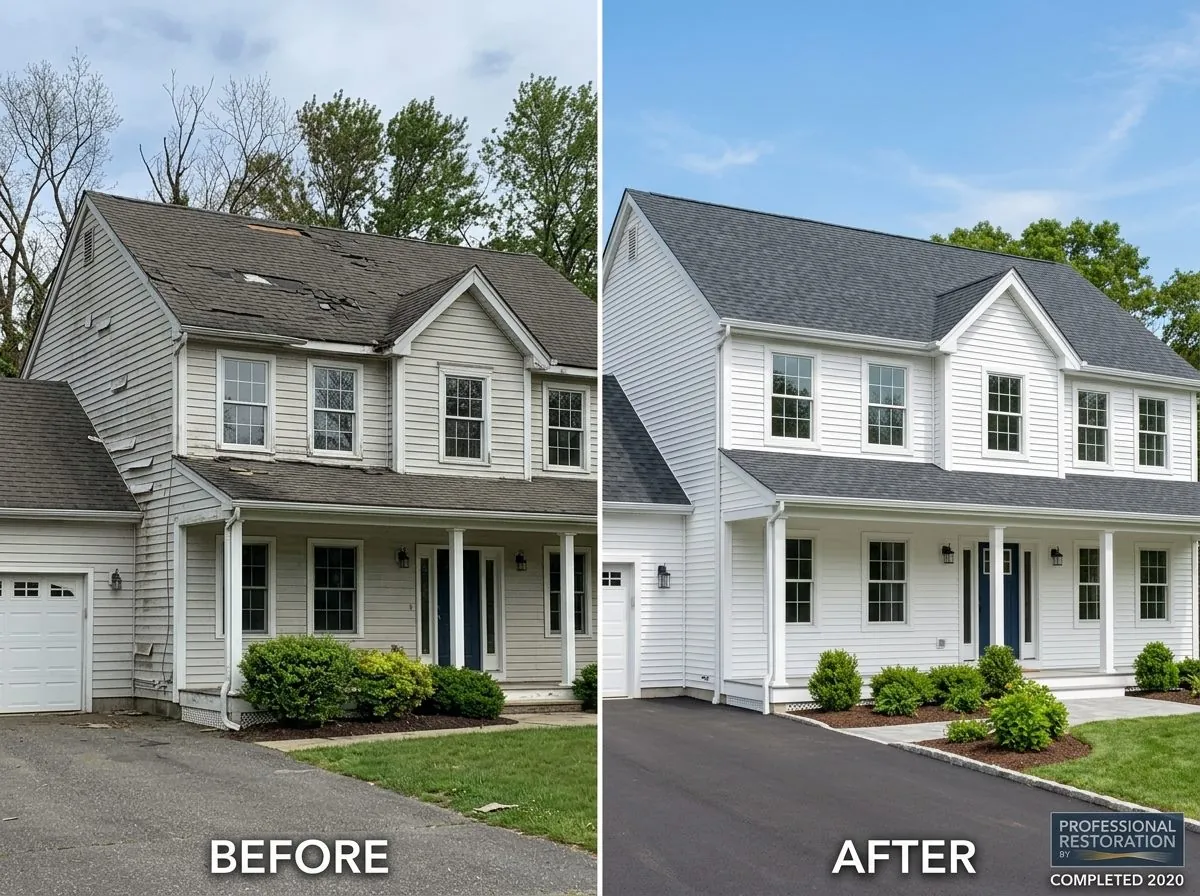
When a storm opens up a 19th-century Northport house, the repair does not rebuild what was there — it rebuilds to current code, on a structure that predates every code there is. The gap between those two numbers is the defining cost of storm claims on this housing stock, and the coverage that pays it is the one endorsement almost nobody has read: ordinance and law.
How the code gap eats a claim
- The carrier owes for direct damage — the wind-stripped roof section, the crushed wall. But once repairs are opened, code applies: modern fastening, sheathing over plank decking, egress and electrical brought current where the work touches them
- Standard policies pay to repair the damage, not to upgrade the undamaged — and the "undamaged code upgrade" cost on a balloon-framed 1870s house is real money
- Ordinance & Law coverage (Coverage A/B/C in the endorsement, confusingly named) is what pays for required upgrades, demolition of undamaged portions the code condemns, and the increased cost of code-compliant construction
- Many policies include a token 10 percent; on a period house the honest number is higher, and it is an endorsement conversation to have before the season
The village review runs in parallel
On contributing houses in the historic district, storm repairs are reviewed like planned work: material and profile in kind, which on this stock means cedar, slate profiles, matched lime mortar on the masonry — the arguments the Bellport storm page makes, at Northport prices. That requirement belongs in the claim in writing from the first submission; it is far harder to add after the adjustment settles on architectural asphalt.
What wind actually does to the old stock
The failure pattern differs from subdivision housing: heavy slate and cedar roofs shed individual units rather than sheets — repairable, if matched — while the tall unbraced chimneys and the harbor-side trees do the dramatic damage. The chimney-out-of-plumb check from our Northport chimney page is a post-storm reflex here, and the brownstone entries deserve a look wherever anything struck near them.
Harbor access, familiar tax
The steep village streets slow storm response the same way they slow every trade — staging, cranes and debris hauling all take longer, and the claim timeline should be built on that reality rather than surprised by it.
Frequently Asked Questions
What is ordinance and law coverage and why does my old house need it?
It is the endorsement that pays the code gap: when storm repairs on an 1870s house are opened, current code applies — modern fastening, sheathing over plank decking, systems brought current where the work touches them — and standard policies pay to repair damage, not to fund upgrades. Many policies include a token 10 percent; on a period house the honest number is higher, and the conversation happens before the season.
Will insurance pay for cedar or slate on my historic Northport house?
It has to be argued, early and in writing. On a contributing house the village reviews storm repairs like planned work — material and profile in kind — and that requirement belongs in the first claim submission with documentation. After the adjustment settles on architectural asphalt, reopening it is a much harder fight.
Should I file a claim before or after getting an inspection?
Inspection first. You want to know whether the damage exceeds your deductible before a claim goes on your record — a filed claim that pays nothing still counts at renewal. We inspect and document at no charge and tell you honestly whether filing is worth it.
Related Reading
- Roof Insurance Claims — how the process really runs
- Storm Damage Roofs on Long Island — what wind actually does
- Nor'easter Season Prep — the pre-season checklist
- Documenting Roof Damage — what the adjuster needs to see
- Stone Stoops in Northport — the entries the same storms work on
Also Serving Northport
- ADUs in Northport — accessory apartments and grants
- Attic Insulation in Northport — air sealing, baffles and R-49 depth
- Basement Finishing in Northport — egress, ceiling height and moisture
- Bathroom Remodeling in Northport — full gut renovations
- Chimney Repair in Northport — repointing, crowns, caps and flashing
- Emergency Roof Repair in Northport — tarping, leaks and storm response
- Fallen Tree Removal & Roof Repair in Northport — tree off the house, roof supported and repaired
- Flood & Water Damage Cleanup in Northport — wet material out, drying metered
- Front Steps & Stoops in Northport — rebuilds, treads and railings
- Garage Conversion in Northport — turning the garage into living space
- Gutter Installation in Northport — seamless gutters, fascia and drainage
- House Painters in Northport — exteriors while the fall window holds
- Hurricane & Storm Damage Repair in Northport — trees, flooding, cleanup and repairs
- Interior Painting in Northport — the right work for the cold months
- Kitchen Remodeling in Northport — cabinets, counters and layout
- Roofing in Northport — tear-offs, repairs and storm damage
- Siding in Northport — James Hardie, vinyl and cedar
- Storm Debris Removal & Cleanup in Northport — trees, building debris and hauling
- Storm Roof & Siding Repair in Northport — wind damage, tarped and rebuilt
- Windows & Doors in Northport — insert and full-frame replacement
Work With Alec's Construction
This guide is written by the crew that does the work. See Alec's Storm Damage & Insurance Restoration service — emergency tarping, documentation and the claim itself. Licensed and insured on Long Island, one crew start to finish, free walkthrough and a written estimate inside 48 hours.
Booking the cold months now: we also handle Roofing and Siding.
Every town here has villages inside it running their own building department. Our directory sorts out which counter your address actually files at.
Ready to Get Started?
Storm damage moves fast and so do we. Free inspection with full photo documentation for your carrier, and emergency tarping across Nassau and Suffolk County.