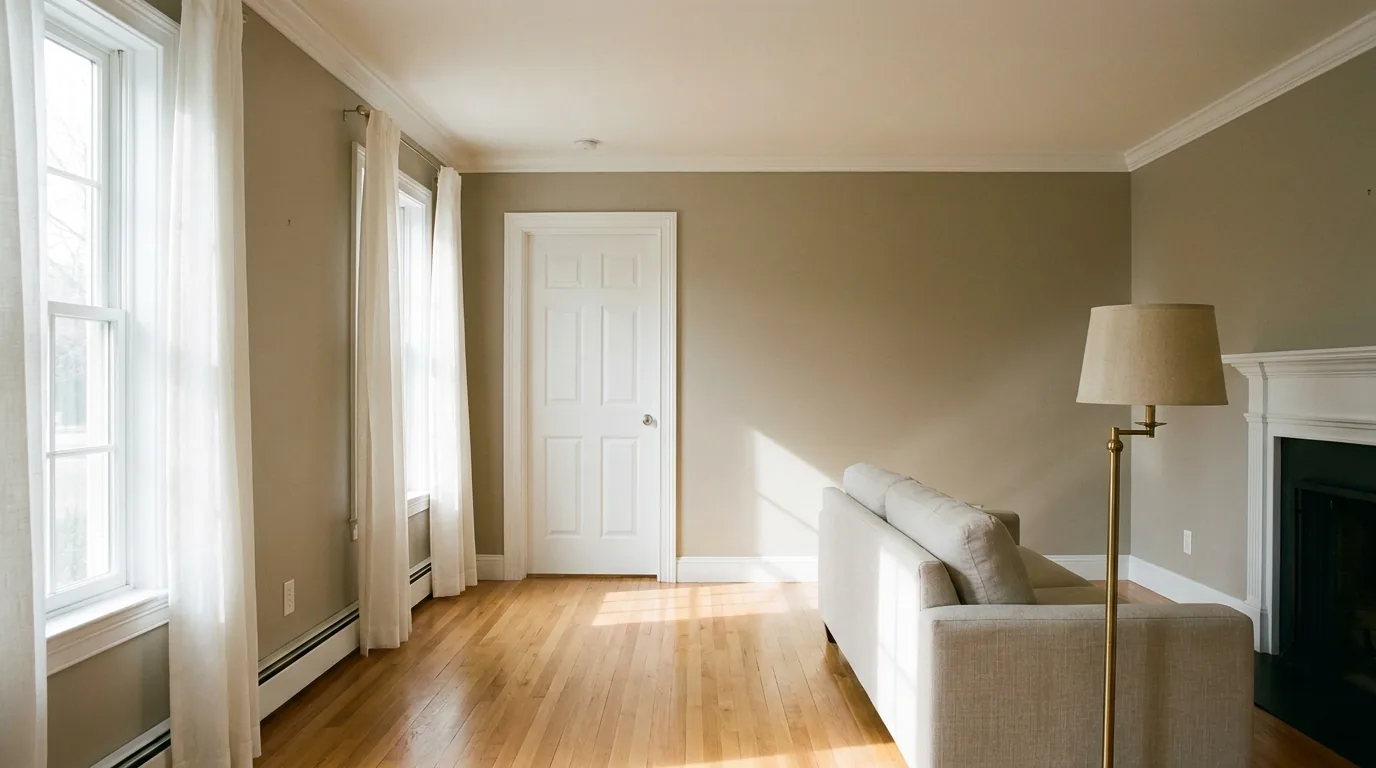
Alec's Construction paints house interiors in Central Islip (11722), working out of the yard in East Patchogue. An interior job here is mostly preparation — cracks, nail pops, water stains, old glossy trim and, in older houses, old paint layers — because the finish coat only looks as good as the surface under it.
Interior Painting in Central Islip
Central Islip has two very different housing stocks. The older streets are 1950s and 60s capes and ranches, while the former state hospital grounds around the courthouse now hold newer townhouses and condos. In the newer units, the walls are usually builder-grade drywall finished in a flat paint that scuffs at hand height and shows every touch-up as a slightly different sheen. Repainting those rooms in a washable matte or eggshell, with the patches primed first, gives a wall that can be wiped clean instead of touched up again. Townhouses also share walls and air with neighbors, so low-odor, low-VOC paint makes winter work practical with the windows shut. On the older streets, the capes need attention upstairs at the sloped ceilings, and the ranches need the usual nail pops and worn trim. Both stocks paint best in the slow winter months.
What We Look at First in Central Islip
In a townhouse or condo we start with the walls at hand height in the hall, stairs and kitchen, where scuffs and old touch-ups show, and we ask whether the association has rules about work hours or common areas. In an older cape or ranch we start with the ceilings and upstairs slopes, looking for nail pops, cracks and water stains. In both, we check what sheen is on the walls now.
Painting Inside Ranches and Capes
Inland, the common houses are 1950s-to-70s ranches, capes and hi-ranches, and their interiors share a few familiar problems: nail pops in the drywall, cracks over door frames, old oil-based paint on the trim, and wood paneling in the den or the basement.
Nail pops are reset with screws and patched rather than just filled. Old oil-based trim gets cleaned, sanded and primed with a bonding primer before latex goes over it; without that step the new paint peels off in sheets.
Paneling can be painted, and it changes a dark room completely, but it needs to be cleaned, scuffed and primed first. Many families here paint before selling or after buying, and winter is the slow season when the job fits in easily and the rooms can be done one at a time with the furniture moved and protected.
Preparation Comes First
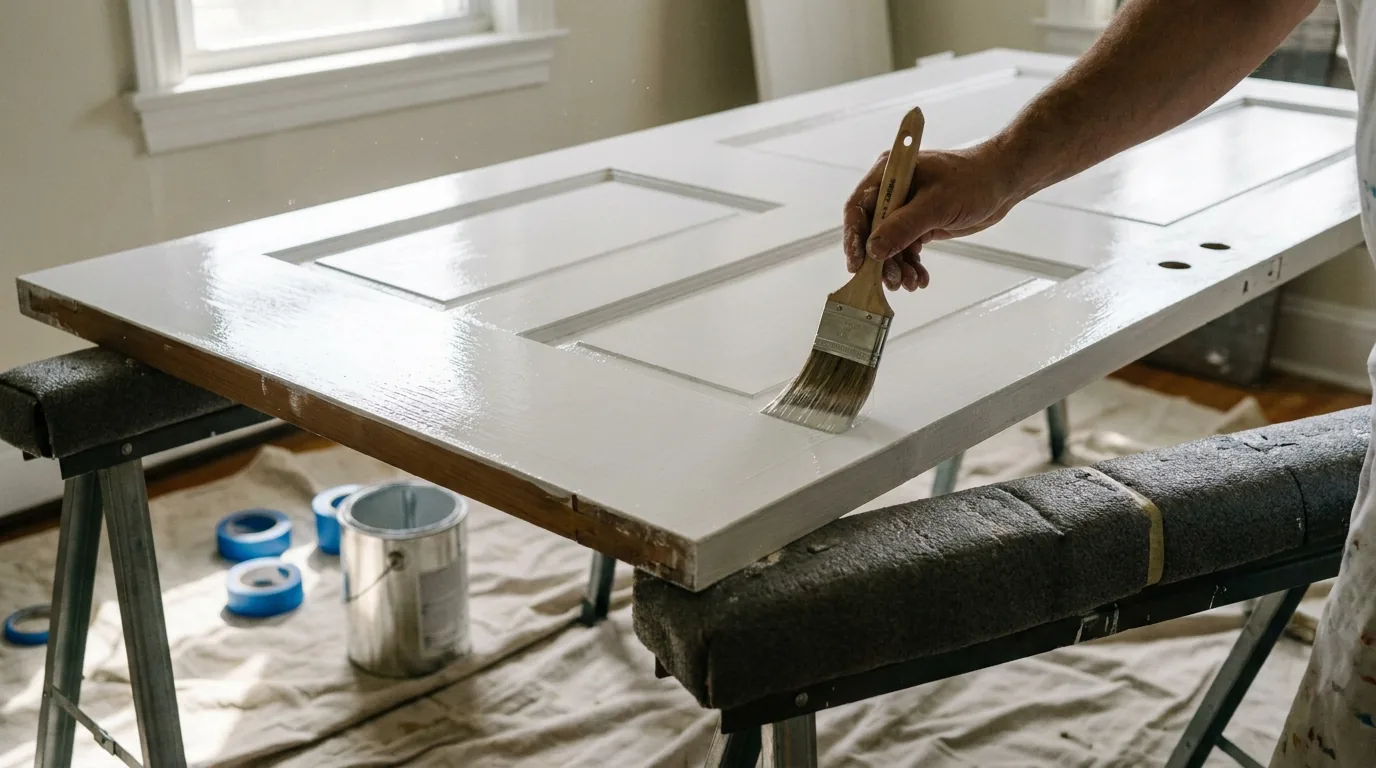
Most of the time on a good interior job is spent before the paint can is opened. Rooms are cleared and covered, then every wall and ceiling is checked in raking light for cracks, dents, nail pops and old patches. Those get repaired and primed so they do not flash through the finish.
Water stains are sealed with a stain-blocking primer, or they come back through any amount of paint. Old oil-based trim is sanded and bonded before latex goes on. Then the finish: ceilings, walls, trim and doors, in that order, with clean lines at every edge and a walkthrough with you at the end.
Permits in Central Islip
Central Islip files with the Town of Islip on Main Street in Islip hamlet. Interior painting itself is not permitted work; where repairs open walls or touch plumbing or electrical, that part follows the department's rules, and we tell you if it applies.
Alex walks the house in Central Islip, photographs what he finds and gives you a written scope in the order the work has to happen — whether or not you hire us. Call (631) 312-7441 to set up a time.
Frequently Asked Questions
Our Central Islip townhouse has flat paint that marks every time someone brushes the wall. What should we use instead?
A washable matte or eggshell finish holds up far better in halls, stairs and kitchens. Flat builder paint is easy to touch up but marks easily and does not clean well. Before repainting, any patched spots are primed so the new finish looks uniform, since unprimed patches show as dull spots in a higher sheen. Low-odor paint is a good choice in an attached home, where smells can travel into shared spaces.
Is winter a good time for interior painting in Central Islip?
Yes, it is the best time. Interior painting does not depend on the weather, crews have more room in the schedule, and low-odor paints make it comfortable with the windows closed. The house heat also helps the paint dry and cure evenly.
Do you fix cracks and holes before painting in Central Islip?
Yes, that is most of the job. Cracks are opened and re-taped where needed, nail pops are reset with screws, holes are patched and sanded, and water stains are sealed with a stain-blocking primer. Paint over unrepaired damage shows every flaw in the first good light.
Who issues the permit for interior painting work in Central Islip?
Central Islip files with the Town of Islip on Main Street in Islip hamlet. Interior painting itself is not permitted work; where repairs open walls or touch plumbing or electrical, that part follows the department's rules, and we tell you if it applies.
Related Guides
- Interior Painting in Bohemia, NY
- Interior Painting in Hauppauge, NY
- Painting on Long Island
- Paint Colors That Work in Long Island Homes
- Interior Painting on Long Island
Work With Alec's Construction
This page is written by the crew that does the work. See Alec's Painting service — walls, ceilings, trim and cabinets prepped properly before a drop of paint. One crew from the first walkthrough to the last inspection.
Also in Central Islip through the cold months: Kitchen Remodeling and Bathroom Remodeling.
Also Serving Central Islip
- Attic Insulation in Central Islip — air sealing, baffles and R-49 depth
- Basement Finishing in Central Islip — egress, ceiling height and moisture
- Bathroom Remodeling in Central Islip — full gut renovations
- Fallen Tree Removal & Roof Repair in Central Islip — tree off the house, roof supported and repaired
- Flood & Water Damage Cleanup in Central Islip — wet material out, drying metered
- Gutter Installation in Central Islip — seamless gutters, fascia and drainage
- Hurricane & Storm Damage Repair in Central Islip — trees, flooding, cleanup and repairs
- Kitchen Remodeling in Central Islip — cabinets, counters and layout
- Roofing in Central Islip — tear-offs, repairs and storm damage
- Storm Debris Removal & Cleanup in Central Islip — trees, building debris and hauling
- Storm Roof & Siding Repair in Central Islip — wind damage, tarped and rebuilt
Talk to Alec's Construction About Interior Painting in Central Islip
We come out, look at the house, photograph what we find and put a written scope in your hand. No pressure, no obligation. Working across Suffolk County since 2018.
Or call (631) 312-7441