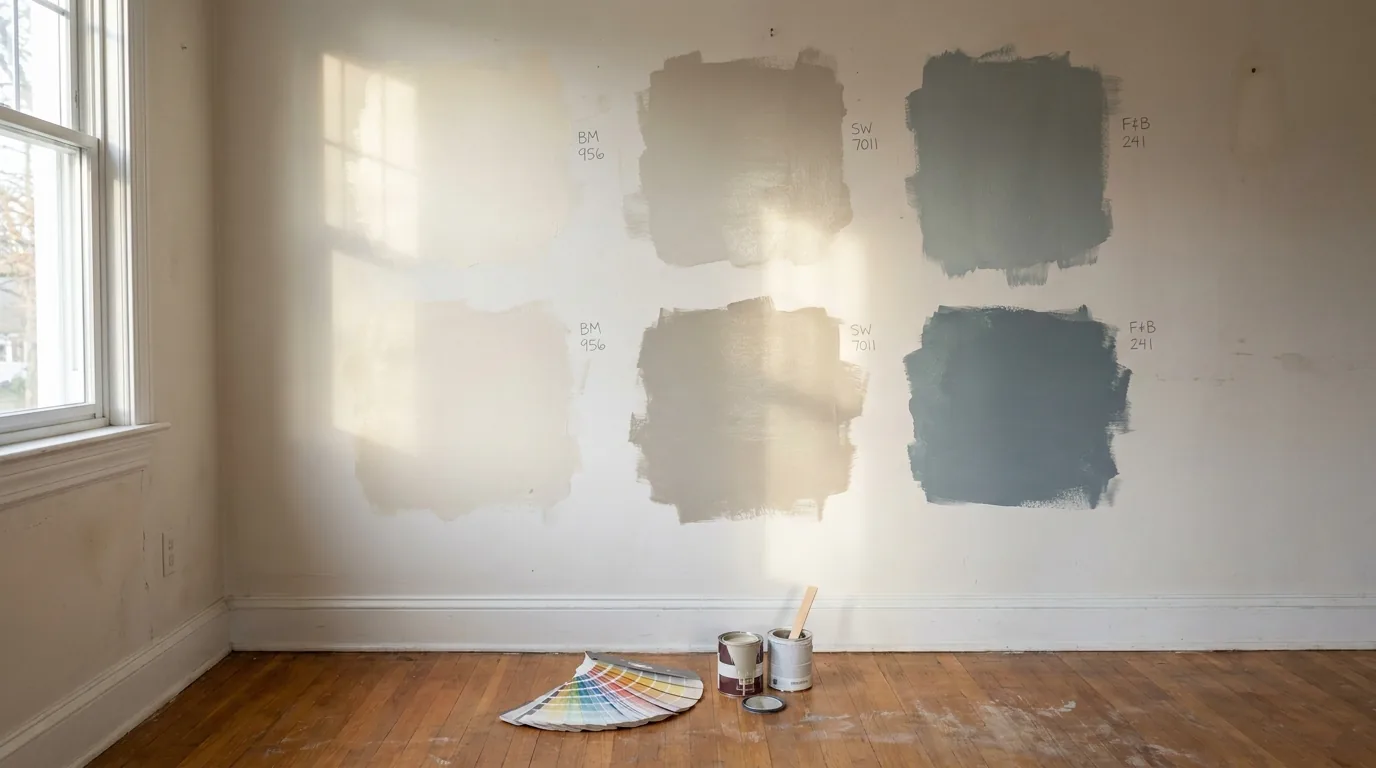
Color advice is usually written for nowhere in particular. Long Island is somewhere in particular, and two things about it change which colors work: the light, and the housing stock.
Long Island Light Is Cooler Than You Think
We are surrounded by water on three sides. That produces a particular quality of daylight — high, cool, slightly blue, and very bright on clear days, especially on the South Shore and the East End. It is the reason coastal color palettes exist and it is the reason a color that looked warm and inviting on a chip in a Manhattan showroom can read grey and clinical once it is on your wall in Sayville.
Two practical consequences:
Undertones get amplified. A white with a blue undertone will read distinctly blue in a north-facing Long Island room. A white with a yellow or green undertone will read cream. In flat inland light these differences are subtle; here they are not.
North-facing rooms need warmth. A north-facing room on Long Island gets almost no direct sun and takes cool ambient light all day. Cool paint in that room compounds the problem. Warm the color up one step further than you think you need to.
South and west rooms can take cooler colors. They get warm afternoon light that will neutralize a cool paint back to balance.
Interior: What Works Here
Warm whites are the most useful category on the Island. They work with the oak floors that are in the majority of Long Island houses, they sit correctly with white trim, and they do not fight the light. Look for whites described as warm, soft, or with a hint of greige rather than pure or bright.
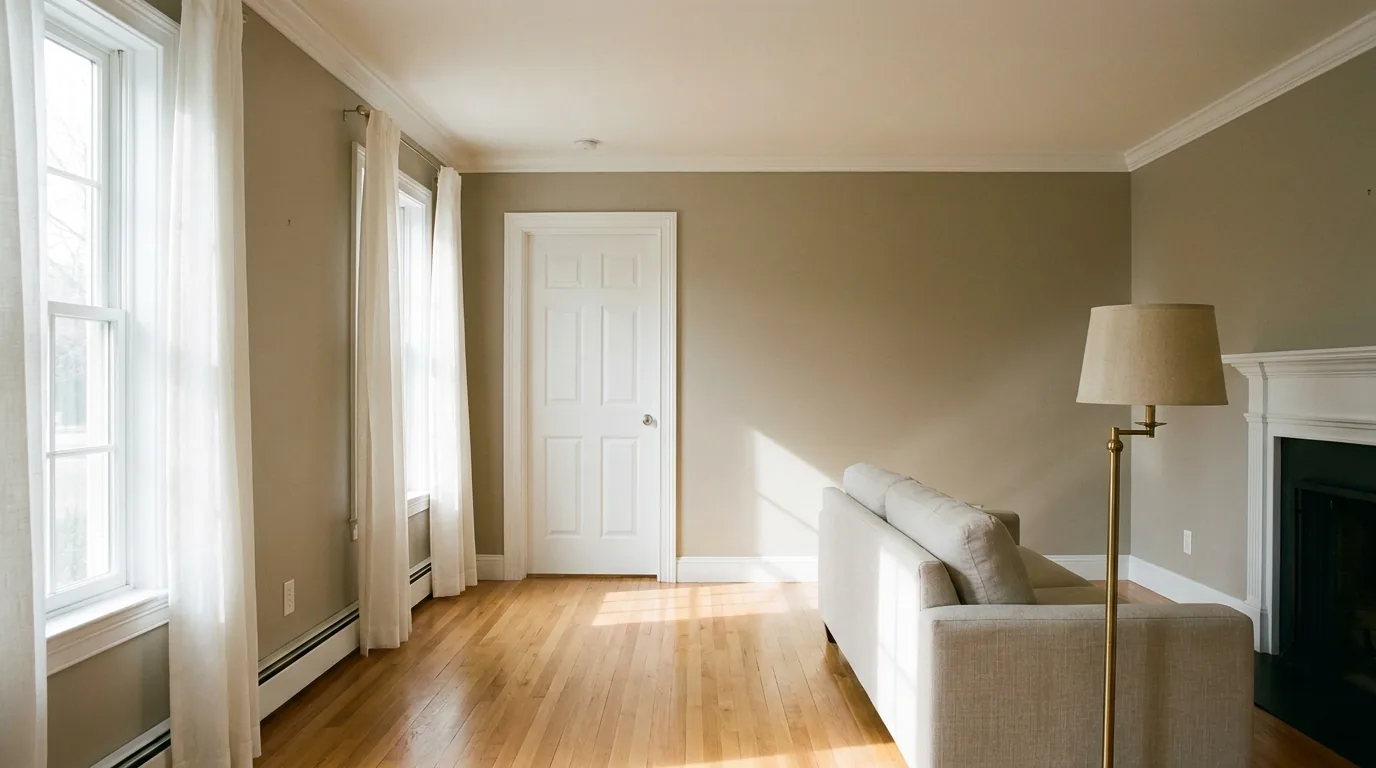
Greige — the grey-beige family — has been the reliable default on Long Island for a decade and has not aged badly, because it bridges the warm floors most houses have with the cooler light most houses get. A soft greige on the walls with a crisp warm white trim is close to a guaranteed good outcome.
Soft blue-greys and sages in bedrooms and bathrooms, where the coastal read is a feature rather than a problem.
Deep, saturated colors in small rooms. Powder rooms, offices, dining rooms. A deep navy, forest or charcoal in a small room with good trim reads intentional and expensive. The same color across a whole open first floor generally does not.
Avoid the beige-with-pink-undertone that went into thousands of Island houses between 1998 and 2008. It is the color that instantly dates an interior in a listing photo. If your house has it, that is the single highest-return repaint you can do.
Ceilings and Trim
Ceilings: flat white, almost always. Sheen on a ceiling shows every imperfection, and you view ceilings at a low raking angle where imperfections are most visible. A ceiling white with a slight warm cast reads better than a cool blue-white in most Long Island rooms.
Trim: a warm white in satin or semi-gloss. The classic move — and it holds up — is trim one or two shades lighter and warmer than the wall, in a waterborne alkyd enamel that levels smooth and takes hand traffic.
Doors: either matching the trim, or, increasingly, a deep charcoal or black on interior doors against light walls. It is a strong look and it wears very well in a house with kids because it hides marks.
Exterior: The Long Island Vernacular
The Island has a real architectural vocabulary and the colors that work here reference it.
Cedar shingle, natural or stained. The North Shore and East End default. Left to weather to silver-grey, or held with a semi-transparent stain. If you have cedar and you like it, do not paint it — once painted, going back means stripping.
Warm white body, black or dark green shutters, white trim. The colonial standard, and the safest high-value exterior on the Island. It photographs well, it sells, and it never looks like a trend.
Soft grey body with white trim and a black door. The most current-looking choice that is not going to read dated in five years.
Navy or charcoal body with white trim. Strong on capes and smaller colonials. Note the heat caution: on vinyl siding you generally cannot go significantly darker than the original color without risking warping, so this is a wood, fiber cement or aluminum option.
Front door color. This is where to take a risk. Deep charcoal, true black, a proper navy, or a deep red on a colonial. It is a one-day job and it is the highest-impact color decision on the entire house.
Avoid on exteriors: very bright saturated colors that will fade unevenly on the south and west walls, and any color you chose because it was on a mood board rather than because you stood in front of the actual house at three in the afternoon.
How to Test a Color Properly
Chips lie. Not because the color is wrong but because a two-inch square surrounded by white paper reads completely differently from an entire wall.
Buy sample pots. Two of each finalist.
Paint big patches, at least two feet square, directly on the wall. Do two coats so you are seeing the real color, not the old wall showing through.
Put them on more than one wall. A north wall and a south wall in the same room will show you two different versions of the same paint.
Leave them up for three days and look at them in morning light, in mid-afternoon, and at night under your actual light bulbs. The bulb temperature in your fixtures matters as much as the paint.
Do not put a sample next to a bright white wall if the room is going to be all one color — the contrast will make the sample look darker and warmer than it will look once it surrounds you.
For exteriors, paint a two foot square on the actual siding on the north side and the south side, and look at it from the street rather than from three feet away.
What We Do
Alec's Construction paints interiors and exteriors across Suffolk and Nassau County. We will bring samples, put them on your walls, and tell you honestly when a color is going to fight the light in that particular room — we would rather spend an extra day on samples than repaint a house.
Call (631) 312-7441.
Frequently Asked Questions
What paint colors are best for a Long Island home?
Warm whites and greige work most reliably, because they bridge the oak floors most Island houses have with the cool, water-reflected daylight the region gets. Soft blue-greys and sages work well in bedrooms and bathrooms where the coastal read is a feature.
Why does my paint look different on the wall than on the chip?
Scale and surroundings. A small chip against white paper reads completely differently from an entire wall, and Long Island's cool coastal light amplifies undertones. Always test with a two foot square sample painted in two coats, on more than one wall in the room.
What color should I paint a north-facing room?
Warmer than you think. A north-facing Long Island room takes cool ambient light all day and no direct sun, which pushes any cool undertone further toward blue or grey. Move one step warmer than the color you liked on the chip.
What is the best exterior color for a Long Island colonial?
A warm white body with black or dark green shutters and white trim is the safest high-value choice and never reads dated. Soft grey with white trim and a black door is the most current-looking option that will still look right in five years.
Can I paint my vinyl siding a dark color?
Generally no. Dark colors absorb more heat than a vinyl panel was designed for, which causes warping and buckling. You must use vinyl-safe paint and stay at or lighter than the original color unless the manufacturer specifically approves otherwise.
Should ceilings be flat or have a sheen?
Flat, almost always. You look at ceilings at a low raking angle where any sheen highlights every imperfection in the plane. A ceiling white with a slightly warm cast generally reads better in Long Island homes than a cool blue-white.
Related Guides
- Interior Painting on Long Island
- Exterior House Painting on Long Island
- What House Painting Costs on Long Island
- Kitchen Cabinet Painting on Long Island
- Drywall Repair on Long Island
Get a Free Estimate from Alec's Construction
Licensed and insured, working across Nassau and Suffolk County since 2018. We come out, look at the actual job, and put a written number in your hand — no pressure, no obligation.
Book a Free WalkthroughOr call (631) 312-7441