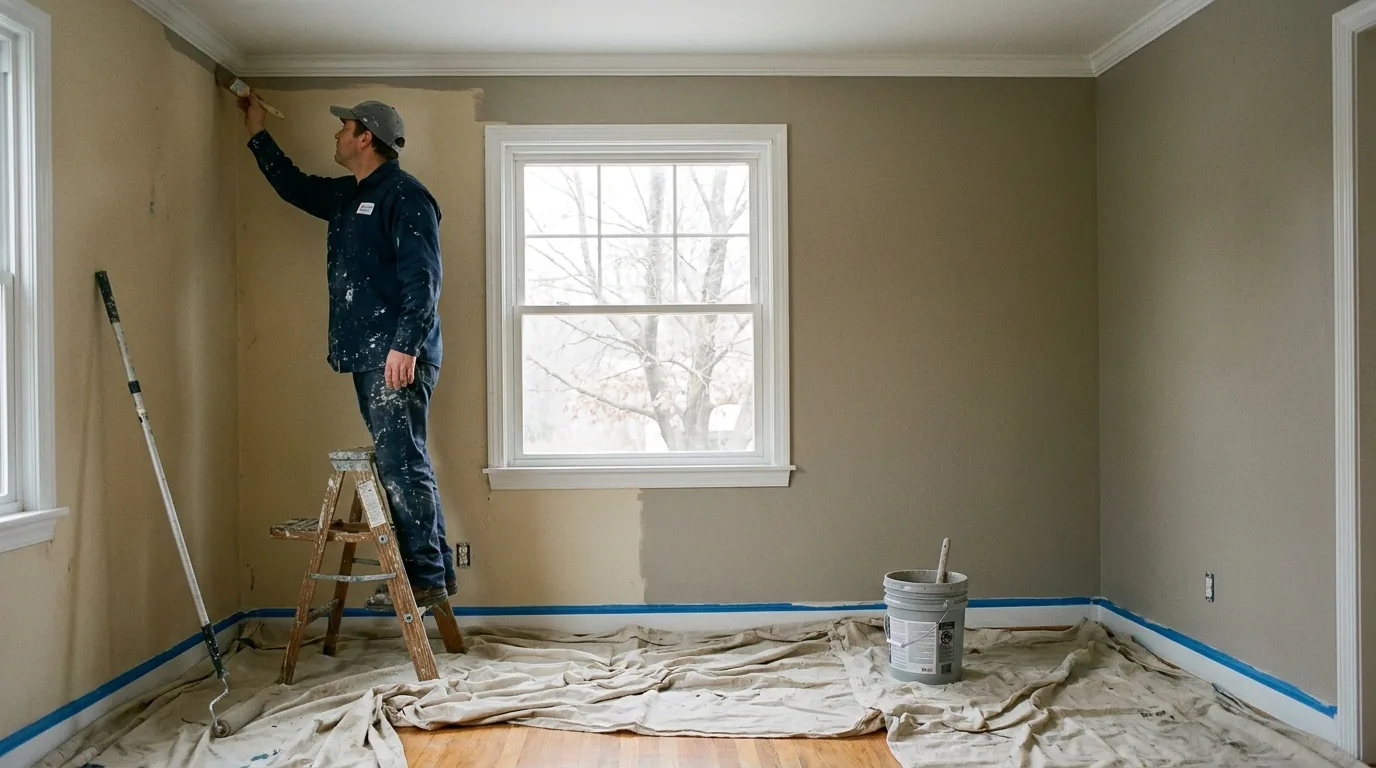
Most Long Island homeowners think about painting in May. That is exactly why May is the worst month to book it — every painter on the Island is stacked, lead times stretch, and the crews that can get to you next week are usually the ones nobody else wanted.
Interior painting has no weather dependency. It is the one trade that does not care that it is 28 degrees and sleeting outside. From December through March our interior schedule is the calmest it gets, the work is done by the same crew that does our summer exteriors, and the house is warm and dry the entire time. If you want a repaint done properly with attention paid to it, the off-season is when you get that.
Why Winter Actually Produces a Better Interior Paint Job
This is not just a scheduling argument. There are physical reasons winter interiors come out well on Long Island.
Indoor humidity is low. Heating season dries the air inside a house dramatically — often down into the 25 to 35 percent range. Latex paint cures by evaporation, and low humidity means faster, more even drying between coats. In August, with the windows open and the air at 70 percent relative humidity, the same wall can stay tacky for hours and is far more likely to show lap marks and roller stipple.
Nobody is tracking the yard through the house. No mud, no grass clippings, no pollen drifting through open windows and settling into a wet finish. Late-spring pollen on Long Island is genuinely a paint-quality problem, and it is one of the reasons trim work in April so often has a gritty feel.
Modern low-VOC paint changed the ventilation math. The old objection to winter interior work was fumes with the windows shut. Today's low- and zero-VOC acrylics, which are what we use in occupied homes, make that a non-issue for the vast majority of jobs. We still cross-ventilate and run air movers, but you are not evacuating the house.
You are already inside. Rooms that feel dim and tired in January are the ones that most need doing, and you get the benefit of the change for the entire rest of the winter instead of noticing it for two weeks before you go outside for the summer.
What Actually Separates a Good Interior Paint Job From a Cheap One
Paint is the last ten percent of an interior paint job. The other ninety percent is preparation, and it is where price differences between contractors come from. Here is what a real interior scope includes:
- Furniture moved to the center of the room and covered, floors protected with canvas drop cloths, not plastic sheeting that slides underfoot
- All hardware, switch plates, outlet covers and vent registers removed rather than taped around
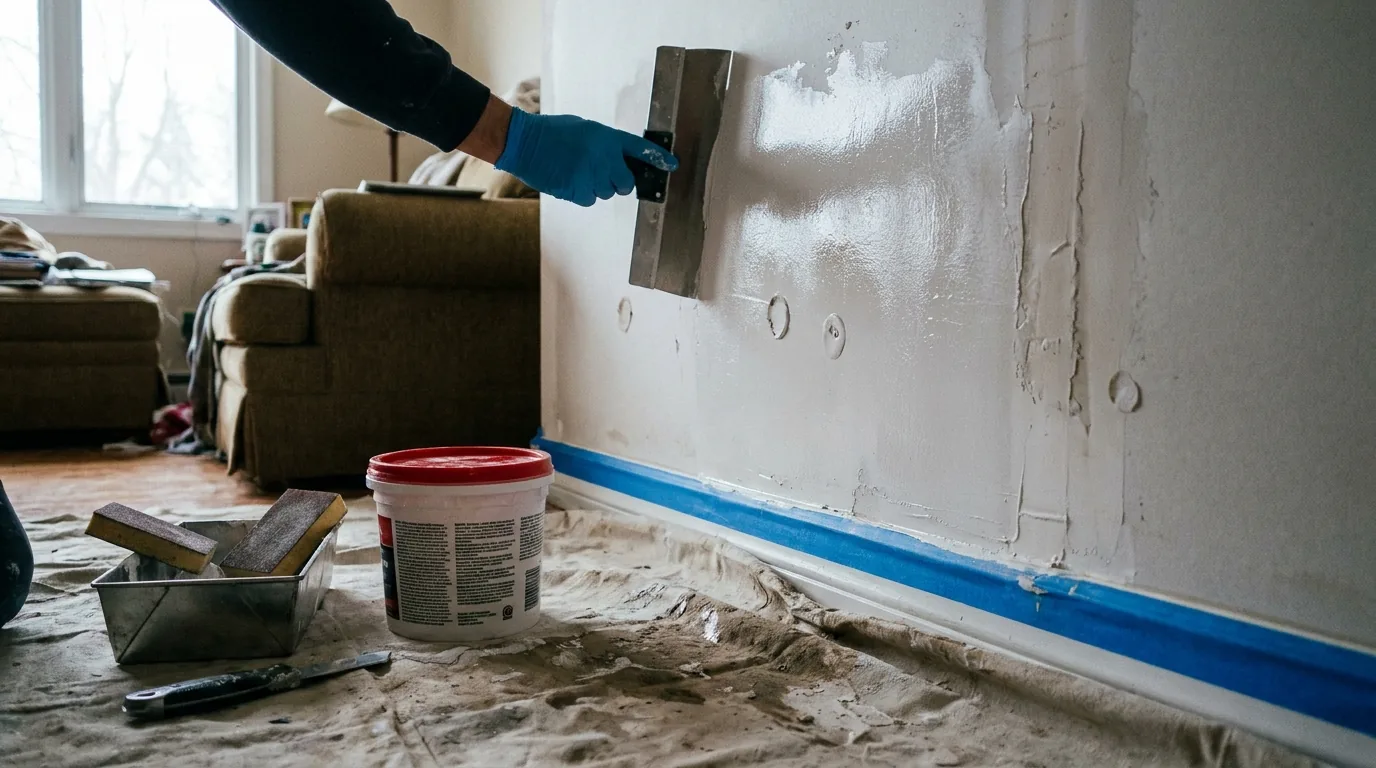
- Nail pops reset and spackled, cracked corner bead repaired, seams re-taped where the drywall has moved
- Old wallpaper adhesive properly removed rather than sealed over, which is the single most common cause of a repaint failing within a year
- Glossy trim scuff-sanded so the new enamel has something to bite into
- Every patch spot-primed before topcoat, so it does not flash a different sheen when the light hits it
- Caulk lines at trim-to-wall joints cut and re-run where they have opened up
- Two full coats, not one coat over a tinted primer being called two
If a written estimate does not describe the prep, you are not comparing quotes, you are comparing guesses.
Long Island Housing Stock and What It Means for Your Walls
The Island's building eras each bring their own interior painting problem, and knowing which one you have changes the scope.
Post-war Levitt-era capes and ranches (1947–1960). Original plaster or early rock lath, and often five or six layers of paint on the trim. Trim built up that thick loses its detail and chips at every corner. These houses frequently want the trim stripped or at least heavily sanded rather than another coat added on top.
1960s–1980s splits and colonials. Standard drywall, generally the easiest to repaint. Their common issue is nail pops along the studs from decades of seasonal movement, plus popcorn ceilings that need to be scraped, skim-coated and primed before they will take a clean finish.
Older village housing in Patchogue, Bay Shore, Northport, Sayville and Babylon. Real plaster over wood lath. Beautiful, and it needs a plaster-literate approach — cracks get cut out, bridged and feathered, not just filled with lightweight spackle that will telegraph through by spring.
Anything within a mile of the water. Bellport, Blue Point, Mastic Beach, the South Shore canals. Higher ambient moisture means we watch bathroom and north-facing exterior-wall interiors for mildew staining, and we prime those with a stain-blocking primer instead of painting straight over.
Rooms Long Islanders Repaint Most in Winter
Kitchens and bathrooms lead, because those are the rooms where a repaint reads as a remodel for a fraction of the cost. Then whole-house interiors ahead of a spring listing, then children's bedrooms, then basements finished the previous year that never got their final coat.
If you are painting to sell, do it in February, not in April. Photos and showings both go better when the work is finished, cured and aired out well before the listing goes live, and you are not trying to book a painter in the same six weeks as everyone else on your block.
Ceilings, Trim and the Order of Operations
The correct sequence is ceilings first, then walls, then trim last. Painters who do trim first are protecting themselves from having to cut a clean line, and it shows in the finished corners.
Ceilings almost always want flat white — anything with sheen shows every imperfection in a plane you look at from a low angle. Walls in Long Island homes generally do best in a matte or eggshell; eggshell in hallways, kids' rooms and anywhere that gets wiped. Trim and doors want a satin or semi-gloss waterborne alkyd enamel, which levels out brush marks and holds up to hands and vacuum cleaners far better than a standard wall paint.
How Long an Interior Job Actually Takes
A single average bedroom, walls and ceiling with the trim already sound, is a one-day job. A whole first floor of a colonial with trim and doors is typically four to six working days. A full-house interior in an occupied home runs one to two weeks depending on how much of it can be worked at once without making the house unlivable.
We stage occupied homes so you always have a bedroom and a bathroom out of the work zone. That matters more in January than it does in July.
What We Do
Alec's Construction has been painting Long Island interiors since 2018 as part of a full general contracting business — which means when we open a wall and find water damage behind the plaster, or the reason the corner keeps cracking is a framing issue, we can actually fix it instead of painting over it and hoping.
We work across Suffolk and Nassau County. Same crew, licensed and insured, written scope before we start.
Frequently Asked Questions
Can you paint the inside of a house in winter on Long Island?
Yes, and it is generally the best time of year to do it. Heating season drops indoor humidity, which helps paint cure evenly, and there is no pollen or yard debris to contaminate a wet finish. Modern low-VOC paints make ventilation a non-issue for most occupied homes.
How long does interior paint take to dry in winter?
Usually faster than in summer, not slower, because indoor humidity is low during heating season. Most acrylic wall paints are dry to the touch in about an hour and ready to recoat in two to four. Waterborne trim enamels want longer between coats and a few days before you hang anything on them.
Do I need to leave my house while it is being painted?
No. We stage occupied homes so a bedroom and a bathroom are always outside the work zone, and we use low-VOC products indoors. Most homeowners stay put for the entire job.
Should I paint before or after new flooring?
Paint first, floors second, then a small touch-up at the base after the floor crew leaves. Painting after new floors go in means either heavy protection or the risk of drips on a brand-new surface.
How many coats of paint do I need?
Two, over a properly prepared and spot-primed surface. A single coat over an old color, or one coat over a tinted primer being counted as the second, will look uneven in raking light within a few months.
Do you repair walls before painting?
Yes. Nail pops, cracked corners, failed seams, plaster cracks and old wallpaper adhesive all get dealt with before any finish goes on. We are a general contractor, so if the cause is structural we can fix that too.
Related Guides
- Exterior House Painting on Long Island
- What House Painting Costs on Long Island
- The Best Time to Paint a House Exterior on Long Island
- Kitchen Cabinet Painting on Long Island
- How to Choose a Painting Contractor on Long Island
Get a Free Estimate from Alec's Construction
Licensed and insured, working across Nassau and Suffolk County since 2018. We come out, look at the actual job, and put a written number in your hand — no pressure, no obligation.
Book a Free WalkthroughOr call (631) 312-7441