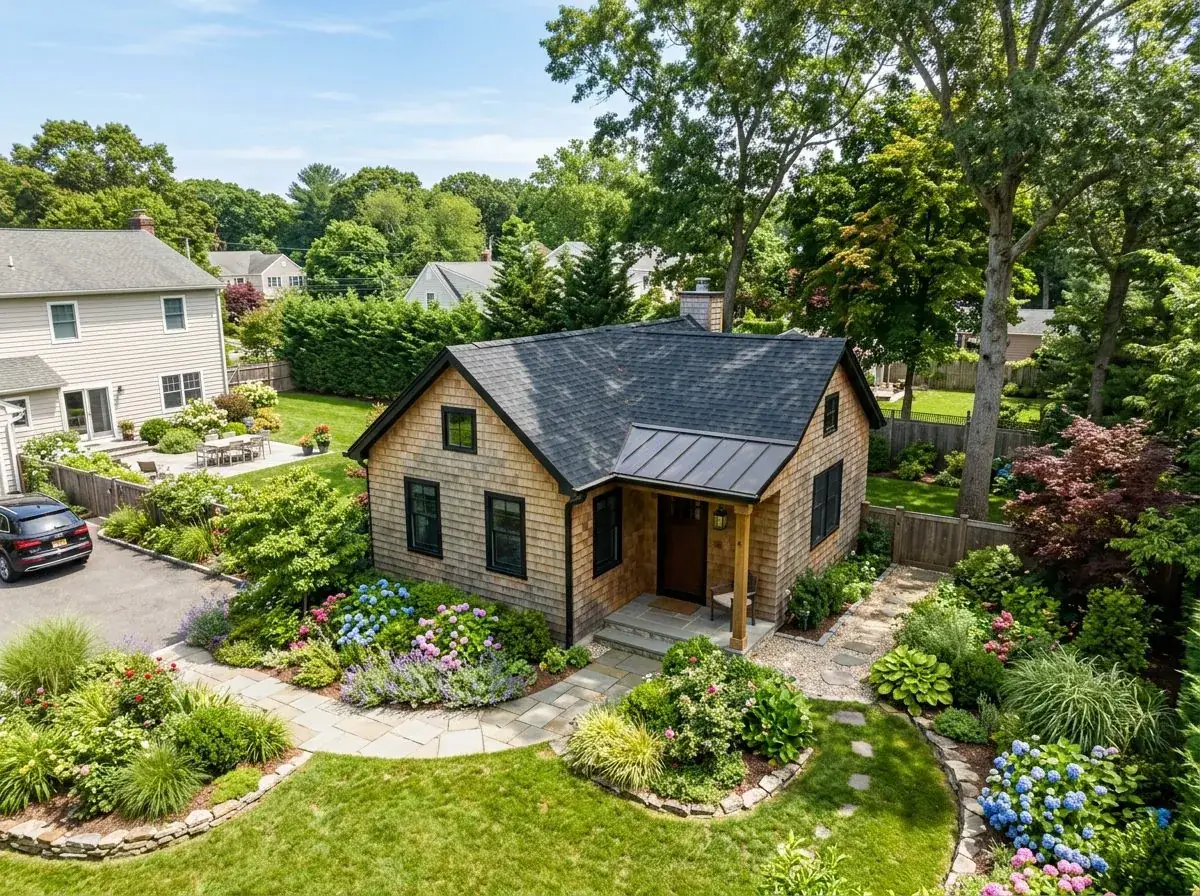
The Town of Babylon holds a distinction that few Long Island municipalities can claim: it was one of the earliest communities in the entire country to adopt an accessory apartment ordinance, passing its landmark legislation back for decades. Nearly five decades later, Babylon remains one of the most ADU-friendly towns on Long Island, offering homeowners a clear regulatory path and financial incentives to build secondary dwelling units on their properties.
Whether you own a home in Lindenhurst, West Babylon, Copiague, Deer Park, or Babylon Village itself, this guide breaks down exactly what you need to know about building an ADU in the Town of Babylon. From the town's pioneering history to today's Plus One ADU Program grants, we cover the zoning rules, permit process, costs, and practical considerations that matter.
Program status — verified September 2026
Babylon runs its Plus One ADU program through Community Development Long Island, not the Long Island Housing Partnership, so its intake calendar is its own. As of September 2026 the LIHP-administered towns stand as follows: Huntington and Riverhead open; Brookhaven, Islip and Southold closed. Confirm the current round with Community Development Long Island before you budget around a grant.
The $125,000 is a cap, not an amount every applicant receives, and it is awarded as a grant. Huntington's published guidelines cap household income at 100% of Nassau/Suffolk area median income (2023 HUD limits: $109,400 for a one-person household, $156,300 for four) and require that you have owned and lived in the home for at least one year. Applications go on a first-come waitlist and are then re-ranked on priority points, including whether the unit will be affordable at or below 80% AMI and whether it can be permitted without a zoning variance. Municipal code always overrides the program guidelines. Verify your town's status before you budget around a grant: LIHP (631) 435-4710. We also check it for you on the walkthrough — see our Plus One ADU grant page for the eligibility checklist and what the build costs if your town's round is closed.
Why Babylon Is Easier Than Most Long Island Towns
When the Town of Babylon passed its accessory apartment ordinance for decades, most communities across New York and the nation were still decades away from even considering such policies. Babylon's town board recognized early on that allowing homeowners to create secondary living spaces within or adjacent to their primary residences could address multiple challenges at once: providing affordable housing options, helping homeowners with mortgage costs, and keeping families together across generations.
Over the decades, Babylon has refined its ordinance several times to reflect changing building codes, evolving community needs, and shifting state regulations. The town's willingness to update its rules rather than abandon them has kept Babylon at the forefront of Long Island's ADU movement. Today, with New York State actively encouraging ADU development through programs like the Plus One ADU Program, Babylon's decades of experience give homeowners in the town a significant advantage: the building department staff are familiar with ADU applications, the review process is well-established, and there are fewer surprises during permitting.
Current Zoning Requirements for ADUs in Babylon
The Town of Babylon permits accessory apartments in residential zones, subject to specific requirements designed to preserve neighborhood character while allowing additional housing. Key zoning requirements include:
Babylon: the code, exactly — verified September 2026
- Governed by the Zoning Code, Chapter 213, Article XXIIA, and administered by an Accessory Apartment Review Board.
- Accessory Apartment Division: (631) 957-7468 — applications are reviewed by appointment.
- The dwelling must be owner-occupied.
- Each dwelling unit must contain a minimum of 350 habitable square feet.
- Adequate on-site parking per dwelling unit, paved with asphalt, concrete or another permanent material approved by the Board.
- A Building Inspector inspects both apartments in the residence. A Town-licensed engineer's report is sometimes required to certify code compliance.
- No permit will be issued if the same owner or co-owner already holds an accessory apartment permit on another dwelling in the Town of Babylon.
- Babylon runs its Plus One ADU allocation through Community Development Long Island, not the Long Island Housing Partnership.
- Owner-occupancy. The property owner must reside in either the primary dwelling or the accessory apartment. This is a standard requirement across most Long Island towns and ensures that the property is owner-managed.
- Lot size minimums. Your lot must meet the minimum size requirements for your specific zoning district. Most residential zones in Babylon have lot size minimums ranging from 6,000 to 10,000 square feet, depending on the district.
- Parking. An additional off-street parking space is typically required for the accessory apartment, beyond what is already required for the primary residence.
- Appearance. The exterior of the home must maintain a single-family appearance. Separate exterior entrances are permitted but should not be prominent from the street. The goal is that the ADU does not visually alter the character of the neighborhood.
- Unit size. Accessory apartments are generally limited in square footage relative to the primary dwelling. The unit must meet minimum habitable space requirements under New York State building code while staying within the town's maximum size allowance.
- Setbacks. Any new construction or additions must comply with the setback requirements for the applicable zoning district, including front, side, and rear yard minimums.
Because Babylon encompasses a wide range of neighborhoods, from the waterfront communities along the Great South Bay to more inland areas like Deer Park and North Babylon, specific requirements can vary. A property in Amityville may have different zoning constraints than one in Wyandanch. We always verify the exact zoning district and applicable rules for your specific property before beginning any design work.
Thinking about building an ADU in Babylon?
Free walkthrough — we check your property and zoning for you.
The Plus One ADU Program in Babylon
The Town of Babylon is one of the participating municipalities in New York's Plus One ADU Program, which offers grants of up to $125,000 to eligible homeowners who build accessory dwelling units. This program is designed to increase housing supply on Long Island by making ADU construction financially accessible to more homeowners.
To qualify for the Plus One grant in Babylon, homeowners generally need to meet these criteria:
- Income limits. The grant targets moderate-income homeowners. Specific income thresholds are set by the program and may be adjusted annually.
- Rent restrictions. The ADU must be rented at or below fair market rent levels for a specified period, ensuring the unit contributes to affordable housing goals.
- Compliance with local codes. The ADU must be fully permitted and built in compliance with all Town of Babylon zoning and building codes.
- Owner-occupancy. The homeowner must continue to live on the property.
A $125,000 grant can cover a significant portion of the construction cost for a garage conversion or basement ADU, and it substantially offsets the cost of a detached new-build unit. If you are considering an ADU in Babylon, checking your eligibility for the Plus One Program should be one of your first steps. We can help you understand whether your property and financial situation qualify.
Types of ADUs That Work in Babylon
The Town of Babylon includes a wide range of lot sizes and home styles, from compact post-war Cape Cods in Copiague to larger Colonial and Ranch homes in West Babylon and Deer Park. The best type of ADU for your property depends on your existing home, lot dimensions, and goals.
- Basement conversions are popular in Babylon because many homes in the town were built with full basements that have adequate ceiling height. A basement ADU requires a separate entrance, egress windows, proper waterproofing, and independent utility connections. This is often the most cost-effective route.
- Garage conversions work well on properties with detached or oversized attached garages. The structure already exists, so costs are primarily for insulation, interior buildout, plumbing, and electrical.
- Above-garage apartments are viable on properties with detached garages that can support a second story, which is more common in areas like North Babylon and Deer Park where lots tend to be slightly larger.
- Detached new construction is an option on lots that have enough space to meet setback requirements after accounting for the existing home. This provides the most privacy and design flexibility but carries the highest cost.
Licensed & Insured
Full coverage on every project
36+ Cities Served
Suffolk County & Long Island
Free Walkthrough
No obligation, no pressure
Get a Free Estimate
Tell us about your project — we respond within 24 hours.
No spam. No obligation.
Permit Process in Babylon
The Town of Babylon's Building Division handles ADU permits. The process for getting an accessory apartment approved generally follows these steps:
- Pre-application research. Confirm your property's zoning district and verify that accessory apartments are permitted. We handle this step during your free walkthrough.
- Architectural plans. Prepare drawings showing the proposed ADU layout, dimensions, egress, parking, and compliance with setback requirements. Plans must be prepared or reviewed by a licensed architect or engineer.
- Building permit application. Submit plans and application to the Town of Babylon Building Division. The review typically takes 4 to 8 weeks depending on complexity and current volume.
- Health Department approval. If your property uses a septic system rather than municipal sewer, you will need Suffolk County Health Department approval confirming the system can handle the additional load. Areas of Babylon served by the Southwest Sewer District have an easier path here.
- Construction and inspections. Once the permit is issued, construction proceeds with scheduled inspections at key milestones: foundation, framing, rough plumbing, rough electrical, insulation, and final inspection.
- Certificate of occupancy. After passing final inspection, the town issues a certificate of occupancy for the accessory apartment, making it a legal dwelling unit.
Babylon's familiarity with ADU applications means the process tends to be more straightforward here than in towns that are newer to ADU regulation. That said, having experienced representation helps avoid common delays. Alec's Construction handles the entire permit process on behalf of our clients.
Need help with Babylon permits?
We handle the entire application and inspection process.
Sewer vs. Septic in Babylon
One factor that significantly affects ADU feasibility in Babylon is whether your property connects to the Southwest Sewer District or relies on a private septic system. Communities in the southern part of the town, including Babylon Village, Lindenhurst, Copiague, and parts of West Babylon, are generally served by the sewer district. Northern areas like Deer Park, North Babylon, and Wyandanch are more commonly on septic.
Properties on municipal sewer have a simpler path because there is no need for Suffolk County Health Department septic approval. For properties on septic, the existing system must demonstrate adequate capacity for the additional dwelling unit. In some cases, a septic system upgrade is required, which adds cost but is entirely manageable with proper planning.
ADU Construction Costs in Babylon
Construction costs for ADUs in the Town of Babylon generally fall within these ranges for 2026:
- Basement conversion: $55,000 to $110,000. Many Babylon homes have full basements with sufficient ceiling height, making this a cost-effective starting point.
- Garage conversion: $50,000 to $100,000. The existing structure saves on framing and roofing costs.
- Above-garage apartment: $85,000 to $150,000. Structural reinforcement and stair access add to the cost.
- Detached new construction: $150,000 to $280,000+. A ground-up build with foundation, full framing, utilities, and finishes.
If you qualify for the Plus One ADU Program's $125,000 grant, these costs become significantly more manageable. A basement or garage conversion could be partially or fully covered by the grant, making the ADU essentially free to build from a cash-out-of-pocket perspective.
Why Babylon Homeowners Are Building ADUs
We see Babylon homeowners pursuing ADU construction for a range of practical reasons:
- Rental income. A one-bedroom accessory apartment in Babylon can generate $1,400 to $2,200 per month in rental income, depending on location, finishes, and proximity to the LIRR. That is $16,800 to $26,400 per year in additional revenue.
- Housing adult children. With Long Island's high cost of living, many young adults struggle to afford their own apartments. An ADU lets them live independently on the family property while saving for their own home.
- Aging parents. Bringing a parent close without losing privacy is one of the most common motivations. An ADU provides independent living with family nearby, a safer and more affordable alternative to assisted living facilities.
- Property value. A legally permitted ADU with a certificate of occupancy adds significant value to a Babylon home. Buyers recognize the income potential and flexibility that comes with a property that already has a legal accessory apartment.
Babylon's long history with ADUs means that accessory apartments are well-accepted in the community, and neighbors are generally accustomed to seeing them. This makes the process less contentious than in towns where ADUs are a newer concept. For a broader overview of ADU construction across the region, see our complete guide to ADU construction on Long Island and our breakdown of Suffolk County ADU laws.
Frequently Asked Questions
Does the Town of Babylon allow ADUs?+
Can I get a $125,000 grant to build an ADU in Babylon?+
Do I need septic approval for an ADU in Babylon?+
How much does it cost to build an ADU in Babylon, NY?+
Work With Alec's Construction
This guide is written by the crew that does the work. See Alec's ADUs service — accessory apartments, garage conversions and grant paperwork. Licensed and insured on Long Island, one crew start to finish, free walkthrough and a written estimate inside 48 hours.
Booking the cold months now: we also handle Additions & New Construction and Bathroom Remodeling.
We pull the permits on our own jobs — if you need the building department for your town, we keep a current directory of all 23 Long Island permit offices.
Also Serving Babylon
- Attic Insulation in Babylon — air sealing, baffles and R-49 depth
- Basement Finishing in Babylon — egress, ceiling height and moisture
- Bathroom Remodeling in Babylon — full gut renovations
- Chimney Repair in Babylon — repointing, crowns, caps and flashing
- Emergency Roof Repair in Babylon — tarping, leaks and storm response
- Fallen Tree Removal & Roof Repair in Babylon — tree off the house, roof supported and repaired
- Flood & Water Damage Cleanup in Babylon — wet material out, drying metered
- Front Steps & Stoops in Babylon — rebuilds, treads and railings
- Garage Conversion in Babylon — turning the garage into living space
- Gutter Installation in Babylon — seamless gutters, fascia and drainage
- House Painters in Babylon — exteriors while the fall window holds
- Hurricane & Storm Damage Repair in Babylon — trees, flooding, cleanup and repairs
- Storm Damage & Insurance Restoration in Babylon — emergency tarping and the claim
- Interior Painting in Babylon — the right work for the cold months
- Kitchen Remodeling in Babylon — cabinets, counters and layout
- Masonry & Pavers in Babylon — patios, walkways and retaining walls
- Roofing in Babylon — tear-offs, repairs and storm damage
- Siding in Babylon — James Hardie, vinyl and cedar
- Storm Debris Removal & Cleanup in Babylon — trees, building debris and hauling
- Storm Roof & Siding Repair in Babylon — wind damage, tarped and rebuilt
- Windows & Doors in Babylon — insert and full-frame replacement
Ready to Build Your ADU in Babylon?
Contact Alec's Construction for a free consultation. We will assess your property, verify your zoning, check your Plus One grant eligibility, and provide a detailed estimate.
Get a Free Consultation