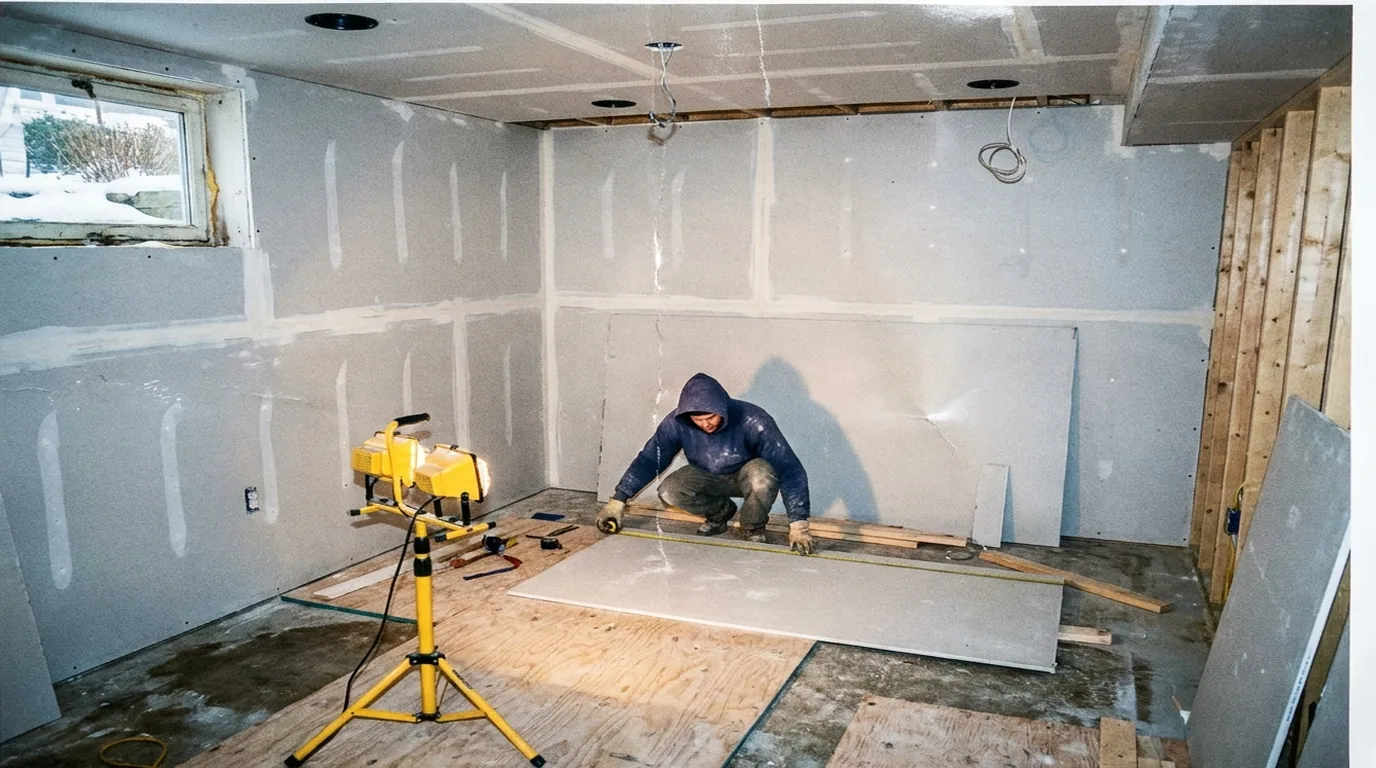
Finished square footage in a basement costs a fraction of what the same square footage costs as an addition, because the expensive parts already exist. No excavation, no foundation, no framing a roof, no matching siding. You are buying a floor, walls, a ceiling, wiring and heat inside a box you already own.
That is the whole reason the math works. It is also why the quotes you get vary so wildly — the box each contractor is looking at is different, and most of the spread has nothing to do with the flooring you pick.
The Four Things That Actually Move the Number
Before finishes, before fixtures, before anything you would see in a showroom, four conditions decide your budget.
1. Does it make seven feet?
New York's Residential Code wants seven feet of clear height in habitable space, measured to the finished ceiling. If the basement measures 7'4" or better to the underside of the joists, you have room for a drop ceiling and a subfloor and you are fine. At 7'0" to the joists you can still get there, but only with drywall tight to the joists and the mechanicals boxed individually, and that is more labour.
Below roughly 6'10", the honest answer is that the space cannot become a legal habitable room without lowering the slab — underpinning or benching the footings — and that costs more than the entire finish. On most Long Island houses it is not worth it, and a contractor who quotes a finish on a 6'6" basement without saying so is selling you a room you cannot legally call a room.
2. Is it dry, and how do you know?
A dry basement finishes cheaply. A wet one needs the water solved first, and that is a separate project that happens before any of this.
The range here is enormous. On the high, dry sand of Holbrook, Medford or Coram, most basements need nothing but a dehumidifier and gutters that discharge away from the house. On the south shore — Lindenhurst, Massapequa, Bay Shore, Shirley — a seasonally high water table can mean a full interior perimeter drain to a sump with a battery backup before anything gets closed in.
The cheapest version of this decision is patience: watch the basement through one wet spring before committing. The most expensive version is finding out in year two, behind new drywall.
3. Egress
Habitable basement space needs an emergency escape and rescue opening. If the house has a walkout or a lower level partly above grade — common in Smithtown, Farmingville, Port Jefferson, Northport — you may already have it. If it is a full below-grade foundation, someone has to cut the concrete wall, set a header, install the window and build a drained well.
That is a real line item and it is not optional, and it is one of the biggest single swings between two quotes on the same basement.
4. Bathroom, and where you live
Any basement bathroom needs a sewage ejector pump, because the fixtures sit below the sewer line. That part is the same everywhere.
What is not the same is the paperwork. In the sewered parts of the Island — most of Nassau, the Islip Southwest district, village Patchogue — that is the end of it. In unsewered Suffolk, Suffolk County Health Services reviews a new sanitary fixture against what your cesspool was sized to carry, and counts a below-grade bedroom as additional flow. On an old undersized system the answer can be that the system gets upgraded first. That is a five-figure prerequisite, and it belongs in the conversation on day one.
Where the Money Actually Goes
On a typical Long Island basement finish, the split looks roughly like this:
- Mechanical and code work — electrical, any HVAC rerouting, egress, insulation, sealing. This is the half nobody photographs and it is where the quality difference lives.
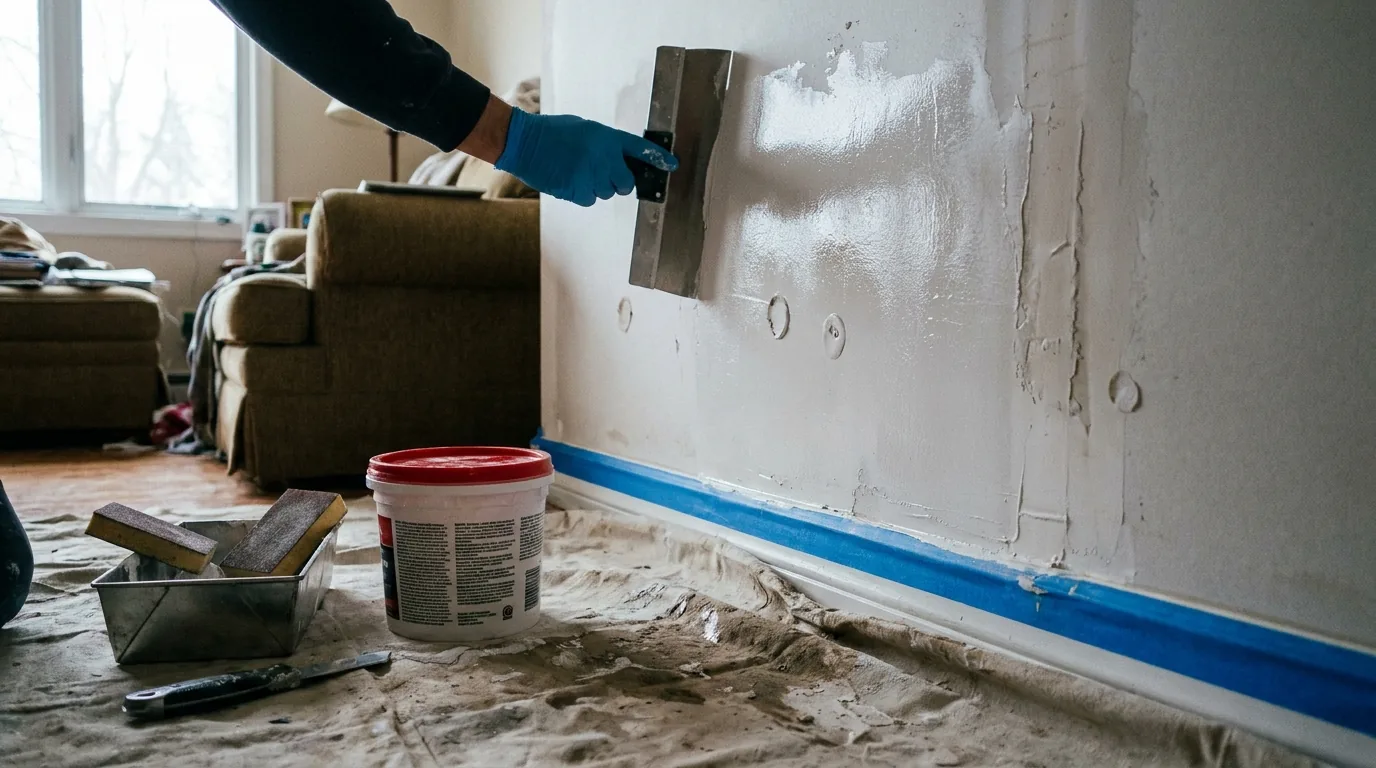
- Framing, drywall, taping and paint — the bulk of the visible labour.
- Flooring, doors, trim and lighting — where your taste starts to matter.
- Bathroom, if any — the single most expensive room per square foot in the house, basement or not.
A useful rule: if two quotes on the same basement are far apart, the difference is almost never in the flooring. It is in whether one of them priced the drainage, the egress and the panel upgrade and the other one did not.
The Things That Blow Budgets
The electrical panel. Older Long Island houses run 100-amp service, and a finished basement with its own circuits, lighting, heat and maybe a bathroom can be the thing that pushes it over. A service upgrade is a real cost and it is far cheaper to find out at the walkthrough.
Ductwork in the wrong place. A trunk duct running across the middle of the basement at 6'8" is a headroom problem and rerouting it is real sheet metal work. Sometimes it is the difference between a legal room and a storage area.
Mould behind old work. If the basement was finished before with fibreglass batts against the foundation wall — extremely common on Long Island — that has to come out, and what is behind it decides the rest.
Oil tanks and abandoned equipment. Older houses in Huntington, Northport, Garden City and the pre-war village stock often have a decommissioned or still-live basement oil tank in the way.
Why Booking It in Winter Costs You Less
Basement finishing is entirely interior work. Weather has no vote.
Everything else a general contractor does — roofs, siding, decks, driveways, masonry, exterior paint — compresses into the warm half of the year. That means December through March is when the good crews have room in the schedule, and a crew with room is a crew you are not paying a premium to jump.
It also means the space is finished, inspected and usable by spring instead of competing with everyone else's spring project.
Get a Real Number
The only honest way to price a basement is to stand in it. We measure the height to the joists, look at the walls for the staining that says what happens in March, check the panel, find the ducts and ask what the sanitary system is. Then you get a written, itemised number within 48 hours.
Free walkthrough across Nassau and Suffolk. Call (631) 312-7441.
Frequently Asked Questions
Is finishing a basement cheaper than building an addition on Long Island?
Substantially — usually less than half the cost per square foot. An addition means excavation, a foundation, framing, a roof, siding and matching the existing house. A basement finish means a floor, walls, a ceiling and mechanicals inside a structure that already exists. That is the entire reason the numbers work.
What makes one basement finishing quote so much higher than another?
Almost never the flooring. The spread is in whether the quote includes drainage work, cutting an egress window through the foundation wall, rerouting ductwork that kills headroom, and an electrical service upgrade. A low quote that skipped those is not cheaper, it is incomplete.
Does a finished basement add value to a Long Island home?
Permitted finished space with legal ceiling height and proper egress does. Unpermitted finished space is a liability — the buyer's attorney asks for the certificate of occupancy, there is not one, and the seller ends up negotiating against their own improvement or tearing it out.
How long does it take to finish a basement?
A straightforward open rec room in a dry basement typically runs a few weeks. Add egress cutting, drainage, a bathroom, or a Health Department review and it stretches. Winter scheduling is usually faster in practice because the crew is not splitting time with exterior work.
Do I need to waterproof before finishing?
You need to know. Watch the basement through a wet spring first. If it stays dry, air sealing and a properly sized dehumidifier are usually enough. If there is seepage at the cold joint or damp coming through the slab, that gets solved before anything is closed in — finishing over an active water problem is how you get mould behind new drywall in eighteen months.
Related Guides
- Basement Ceiling Height and the 7-Foot Rule
- Egress Windows for Long Island Basements
- Dry It Before You Finish It
- Adding a Bathroom to a Long Island Basement
- Insulating a Basement to Code on Long Island
- Legalize a Basement Apartment on Long Island
Work With Alec's Construction
This guide is written by the crew that does the work. See Alec's Basement Finishing service — height, water and egress answered before a dollar is spent. Licensed and insured on Long Island, one crew start to finish, free walkthrough and a written estimate inside 48 hours.
Booking the cold months now: we also handle ADUs and Bathroom Remodeling.
Also Serving Cost Long Island
- ADUs in Cost Long Island — accessory apartments and grants
- Bathroom Remodeling in Cost Long Island — full gut renovations
- Chimney Repair in Cost Long Island — repointing, crowns, caps and flashing
- Gutter Installation in Cost Long Island — seamless gutters, fascia and drainage
Get a Free Estimate from Alec's Construction
Licensed and insured, working across Nassau and Suffolk County since 2018. We come out, look at the actual job, and put a written number in your hand — no pressure, no obligation.
Book a Free WalkthroughOr call (631) 312-7441