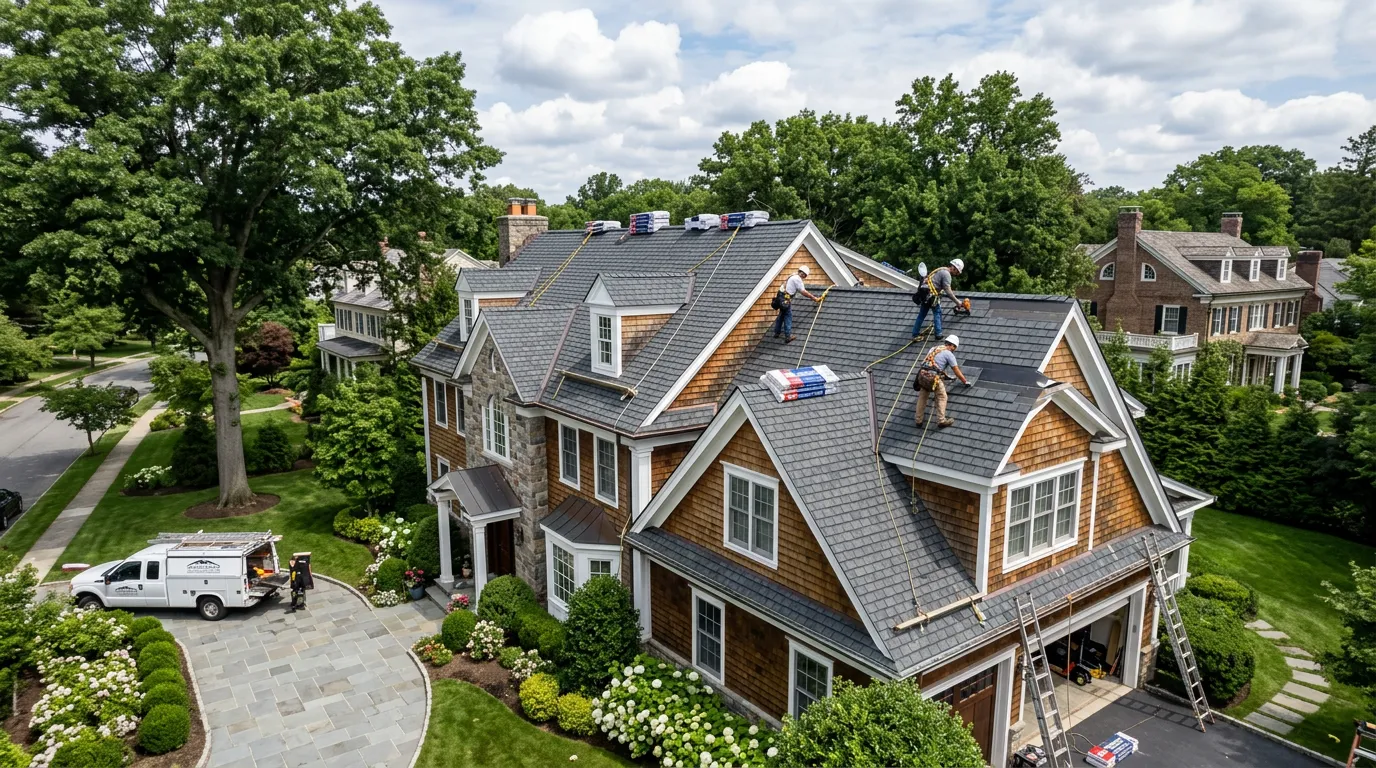
If your roof is 15 to 20 years old or showing clear signs of wear — curling shingles, granule loss, persistent leaks — you already know a replacement is coming. The real question most Long Island homeowners ask is when to schedule it. The answer matters more than most people realize. Choosing the wrong season can affect shingle adhesion, material availability, contractor scheduling, and in some cases, your insurance claim timeline. At Alec's Construction, we have replaced hundreds of roofs across Suffolk County, and here is exactly what we tell every homeowner who asks this question.
The Best Seasons for Roof Replacement on Long Island
Late spring (May–June) is the best overall window. Temperatures are moderate — typically 50°F to 75°F — which is ideal for asphalt shingle installation. Shingles contain a thermally activated adhesive strip on the underside. In warm temperatures, this strip seals quickly to the shingle below, bonding the roof against wind uplift. In cold temperatures below 40°F, the adhesive does not activate, and shingles remain loose until the following warm season. Late spring gives you the best combination of comfortable working conditions, active adhesive sealing, and a long runway before the next winter.
Early fall (September–October) is a close second. The summer heat has broken, temperatures are back in the sweet spot, and most homeowners who planned a spring replacement have already completed their projects — which means contractor availability is better than in peak spring season. Getting your roof done in September or October also means your home is fully protected before the nor'easters and ice storms that hit Long Island from November through March.
Summer (July–August) is acceptable but less comfortable. Long Island summers can push temperatures into the 90s. Roofing in extreme heat is hard on crews and on shingles, which become pliable and can be marked or damaged by foot traffic when overheated. It is also high season for severe thunderstorms, which can interrupt work mid-project and create temporary vulnerability if underlayment is exposed.
Winter (December–March) is a last resort. We do complete emergency replacements in winter — storm damage and active leaks do not wait for spring. However, installing asphalt shingles below 40°F requires hand-sealing each shingle with roofing cement to compensate for the inactive adhesive strip. This adds labor cost and time. Ice dam conditions also make roofing dangerous. If your roof can make it to spring with temporary tarping and patching, that is the better outcome.
Ready to book your roof replacement?
Free walkthrough — 48-hour written estimate.
Storm Damage: When the Clock Starts Immediately
If your roof was damaged by a hailstorm, hurricane, or nor'easter, the timing calculus changes entirely. You are no longer choosing the optimal installation window — you are working within an insurance claim deadline.
Most homeowners insurance policies in New York require you to file a claim within one to two years of the damage event, but that window varies by policy. More importantly, the longer you wait after storm damage, the harder it becomes to prove the damage was caused by the specific storm rather than pre-existing wear. Insurance adjusters are trained to spot "old" damage versus "new" storm damage. Acting within 30 to 60 days of a significant storm is strongly advisable.
At Alec's Construction, we work directly with your insurance company from the first call. We document the damage with photos, meet with your adjuster on-site, and advocate for a full replacement scope when the damage warrants it. If the adjuster approves only partial repairs, we can challenge the decision with our own damage assessment. For a detailed overview of the insurance claim process, see our insurance restoration service page.
Signs Your Roof Cannot Wait Until the Optimal Season
Sometimes the condition of the roof makes seasonal timing irrelevant. These are the warning signs that mean you need to act now, regardless of the calendar:
- Active water intrusion inside the home. Leaks that are reaching the ceiling or interior walls are damaging insulation, framing, and drywall. Every rainstorm that gets through multiplies your interior repair costs.
- Missing shingles exposing underlayment or decking. A few missing shingles can be temporarily tarped, but large sections of exposed decking are vulnerable to rotting within weeks in wet conditions.
- Sagging decking or rafters visible from the attic. This indicates structural damage that goes beyond the shingles. Replacement — and likely structural repairs — cannot be deferred.
- Moss or algae growth penetrating the shingle surface. Thick biological growth holds moisture against the shingles and accelerates deterioration. A roof at this stage typically has less than two to three years of effective life remaining.
How to Plan Your Roof Replacement for Optimal Timing
If your roof is aging but not yet in emergency condition, here is the planning process that gets you the best outcome:
- Get an inspection in late winter (February–March). Have a licensed contractor inspect the roof before peak season starts. This gives you accurate information and time to compare estimates without being rushed.
- Schedule in March or April for a May or June installation date. The best contractors book out 4 to 8 weeks during peak spring season. Scheduling early locks in your preferred crew and material choice.
- Choose materials during winter lead time. GAF, CertainTeed, and Owens Corning shingle lines have different availability depending on demand. Selecting and ordering your shingles in advance prevents delays from supply chain issues.
- Plan around any insurance work first. If there is any chance storm damage is present, have that inspection before scheduling a replacement. Once you commit to a replacement and pay your deductible, recovering insurance proceeds becomes more complicated.
125+ Roofs Done
Suffolk County since 2018
Insurance Experts
We work with your adjuster
48-Hour Estimates
Fast, no-obligation quotes
What a Roof Replacement Costs on Long Island in 2026
A full asphalt shingle roof replacement in Suffolk County currently runs between $8,000 and $18,000 for a typical residential home, depending on roof size (measured in squares — one square equals 100 square feet), pitch complexity, number of penetrations (chimneys, skylights, vents), decking condition, and material grade. GAF Timberline HDZ shingles — the most commonly specified product in our market — carry a lifetime warranty and represent solid mid-range value. Premium architectural shingles with impact resistance ratings can add $1,500 to $3,000 to the project cost but may earn you an insurance discount.
If storm damage is involved and your claim is approved, your out-of-pocket cost is typically your deductible (usually $500 to $2,500) plus any upgrades above the insurance settlement amount. Call us at (631) 312-7441 to schedule a free inspection and estimate. We serve all of Suffolk County including Bay Shore, Patchogue, Huntington, and the Hamptons.
Frequently Asked Questions
Can you install a roof in winter on Long Island?+
How long does a roof replacement take?+
Do I need to be home during the installation?+
Related Articles
Work With Alec's Construction
This guide is written by the crew that does the work. See Alec's Roofing service — tear-offs, repairs, flashing and storm damage across Suffolk and Nassau. Licensed and insured on Long Island, one crew start to finish, free walkthrough and a written estimate inside 48 hours.
Booking the cold months now: we also handle Seamless Gutters and Storm Damage & Insurance Restoration.
Every town here has villages inside it running their own building department. Our directory sorts out which counter your address actually files at.
Get a Free Roof Inspection
Licensed roofing contractor serving all of Suffolk County. Free walkthroughs, 48-hour estimates, and direct insurance claim support.
Request Your Free Walkthrough