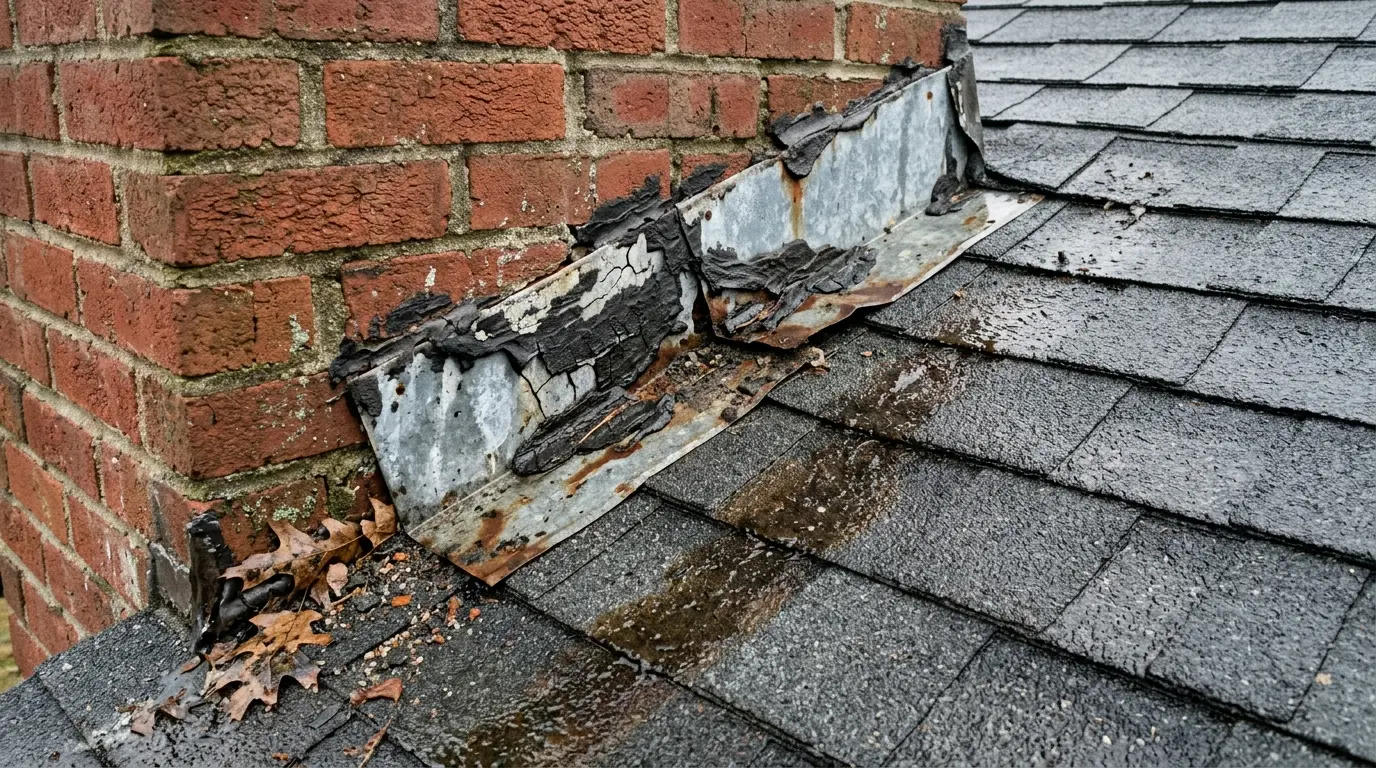
Stand in your yard and look at the top of your chimney. If you can see straight down an open hole, water has been going into it every time it has rained since the house was built.
A chimney cap is the least expensive piece of work on a chimney and it prevents several of the most expensive ones. It is also the item most often missing on Long Island houses, because it is the one thing up there that was never structurally required.
What an Open Flue Actually Lets In
Rain and snow, straight down. A flue is a vertical shaft with an opening at the top, and every inch of rain that falls on that opening goes inside. It lands in the smoke chamber, on the damper, in the firebox, or on the base of an appliance flue. Water plus creosote makes an acid that eats mortar; water plus a cast-iron damper makes a damper that rusts solid open or solid shut; water sitting on a clay tile through a freeze-thaw cycle cracks the tile.
Animals. Birds, squirrels and raccoons nest in flues, and this is not a rare event on this island. A nest in a flue is a blockage, and a blockage on a gas or oil appliance flue puts combustion products back into the house. That is a carbon monoxide problem rather than a masonry one.
Debris. Under oak canopy in Bellport or Patchogue village, and under pine in Shirley, Holbrook and East Patchogue, the flue collects what the gutters collect. Needles are worse than leaves because they pack.
Downdraft. An open flue on an exterior chimney, especially a tall one on a gable end in Commack or Smithtown, is subject to wind blowing down it. A cap with an overhanging lid breaks that up, which is why an uncapped fireplace often smokes on a windy day and a capped one does not.
What a Proper Cap Is
A cap is a lid on legs: a cover held above the flue opening by a frame, with mesh between the frame and the lid.
Material. Stainless steel. Galvanised steel caps are sold everywhere because they are cheap, and on Long Island they rust — faster near the water, but everywhere eventually. The rust stains the masonry below, the legs fail and the cap ends up in the yard. Copper is the other legitimate option, used on village housing where the chimney is visible and the house deserves it. Stainless caps are commonly sold with a lifetime warranty; galvanised ones are not, and that tells you what the manufacturers think.
Mesh. Keeps animals out and acts as a spark arrestor for a wood-burning flue. Mesh has to be cleaned, because it is where creosote and debris collect. A cap that cannot be opened for cleaning is a cap that will eventually block.
Overhang. The lid has to extend past the flue opening far enough to shed rain clear of it, and sit high enough above it not to restrict draft.
Fit. Single-flue caps clamp inside or around the flue tile. A multi-flue cap is a single larger cover spanning the whole chimney top, anchored to the masonry — the right answer where there are two or three flues, and it protects the crown as well.
The Crown Is a Separate Thing, and It Matters More
People mix these up. The crown is the sloped concrete or mortar surface on the very top of the chimney, covering the brickwork around the flue tiles. The cap sits above it, over the flue opening.
The crown is what keeps water out of the masonry; the cap is what keeps it out of the flue. A chimney needs both, and a cracked crown is the more serious of the two failures because water entering the brickwork spalls it from the inside during freeze-thaw.
On a lot of Long Island houses the "crown" is a thin skim of mortar troweled over the brick, which was never the right material and cracks within a decade. A proper crown is cast concrete, reinforced, sloped away from the flue, with an overhang and a drip edge, and separated from the flue tile by a bond break so the two can move independently. If both need doing, they are done together and the cap goes on last.
A Note on Top-Sealing Dampers
If your problem is a fireplace you rarely use that is losing heat all winter, a throat damper is a poor seal — it is a cast iron plate resting on a cast iron frame, usually warped. A top-sealing damper replaces the cap with a lid that closes against a rubber gasket at the top of the flue and is operated by a cable down to the firebox. It seals far better than a throat damper and it functions as a cap when closed. On an open fireplace that is used a few times a season, it is one of the better pieces of work available.
Fall Is the Season
Book chimney work before the first fire, not after. The cap is a short job on a good day, and it is the difference between a winter of water going down the flue and none.
Alec's Construction works on chimneys from the roof down — flashing, crown, cap, repointing and the masonry itself — across Suffolk County from the yard in East Patchogue. Alex comes out, looks at the actual chimney, photographs what he finds and puts a written scope in your hand. Free walkthrough, no obligation.
Frequently Asked Questions
Do I need a chimney cap?
If the flue is open at the top, yes. An uncapped flue takes rain and snow straight down into the smoke chamber, the damper and the firebox, where water and creosote make an acid that attacks mortar, and it is an open invitation to nesting birds and squirrels. A blocked flue on a gas or oil appliance is a carbon monoxide risk, which makes the cap a safety item and not only a maintenance one.
What is the difference between a chimney cap and a chimney crown?
The crown is the sloped concrete surface on top of the chimney covering the brickwork around the flue tiles — it keeps water out of the masonry. The cap is the lidded, screened cover above the flue opening — it keeps water, animals and debris out of the flue itself. A chimney needs both. A cracked crown is the more serious failure because water in the brickwork spalls it in freeze-thaw.
Stainless or galvanised chimney cap?
Stainless, every time on Long Island. Galvanised caps are cheaper and they rust — quickly near the water in Islip, West Islip, Lindenhurst and Shirley, and eventually everywhere else. Rust streaks the masonry below and the legs fail. Stainless caps are commonly warranted for life; galvanised ones are not. Copper is the other legitimate choice on a village house where the chimney is visible.
Will a cap stop my fireplace smoking?
Often, if the problem is downdraft. A cap with a properly overhanging lid breaks up wind blowing down an open flue, which is the common cause of a fireplace that smokes only on windy days and behaves the rest of the time. If it smokes on every fire regardless of weather, the cause is more likely flue sizing, chimney height, a blockage or a house that is too tight to supply the fire with air.
Related Guides
- Chimney Waterproofing on Long Island
- Chimney Chase Covers on Long Island
- Chimney Crown Repair on Long Island
- Chimney Flashing Leaks on Long Island
- Chimney Repointing on Long Island
Work With Alec's Construction
This guide is written by the crew that does the work. See Alec's Chimney Repair service — repointing, crowns, caps and roofline flashing. One crew start to finish, free walkthrough and a written estimate inside 48 hours.
Booking the cold months now: we also handle Roofing and Seamless Gutters.
Get a Free Estimate from Alec's Construction
Working across Suffolk County since 2018, one crew from start to finish. We come out, look at the actual job, and put a written number in your hand — no pressure, no obligation.
Or call (631) 312-7441