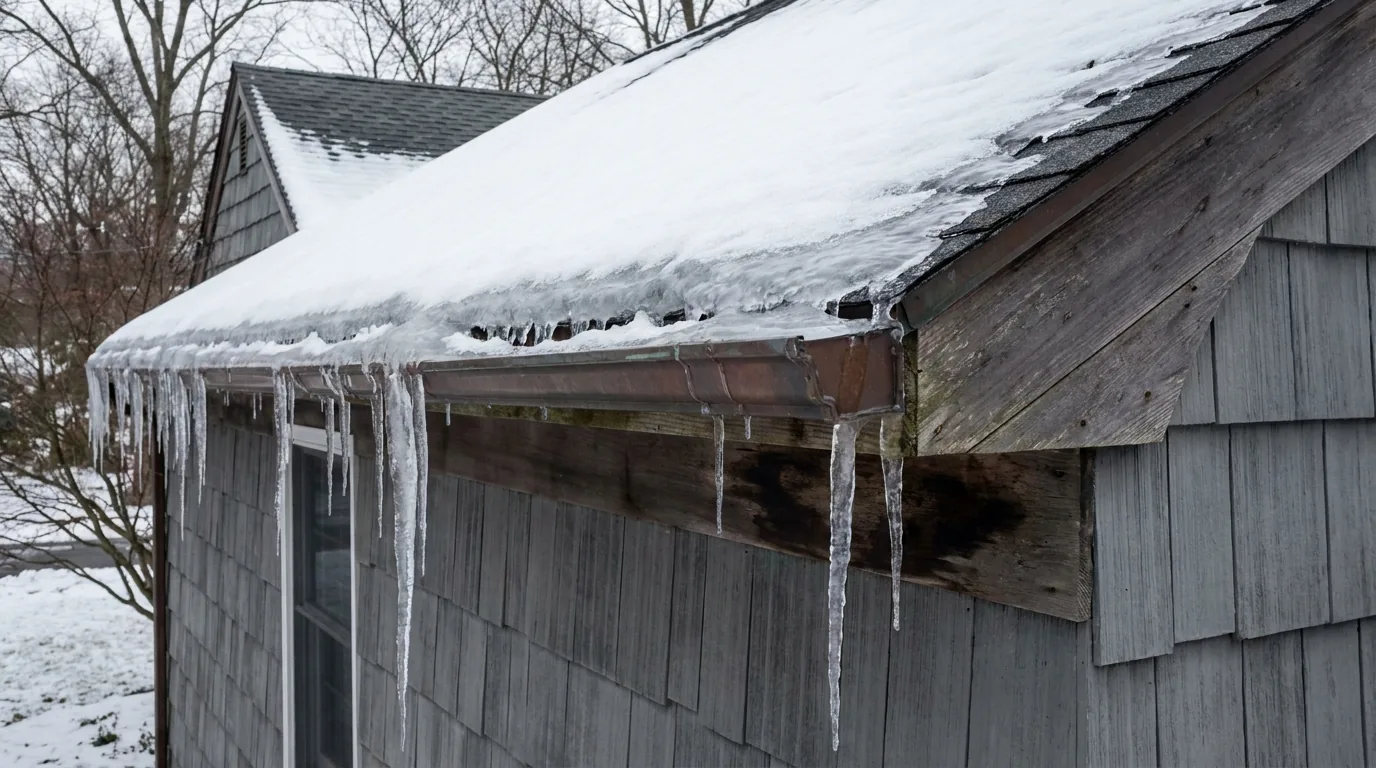
A chimney is the only masonry on the house exposed on all four sides, top to bottom, with no roof over it and no heated space behind most of it. It gets more weather per square foot than any other part of the building, and on Long Island it gets that weather with salt in it.
Waterproofing it is worth doing. Waterproofing it with the wrong product is worse than doing nothing, and the wrong product is what most hardware stores sell.
Why Brick Spalls
Brick and mortar are porous by design. They absorb some water and release it again. That works fine until the water in the pores freezes, expands, and pushes the face of the brick off. That is spalling — the flaking, crumbling brick faces you see on old chimneys, always worst on the weather side and near the top.
Long Island goes through a lot of freeze-thaw cycles in a winter, because the temperature here spends months crossing back and forth over freezing rather than staying below it. Every crossing is another cycle. That is why chimneys here fail faster than the same chimney would in a colder, drier climate.
The Product Distinction That Decides Everything
Vapour-permeable water repellents — the silane and siloxane family — penetrate into the masonry and line the pores so liquid water cannot be absorbed, while leaving the pores open so water vapour can still escape. Masonry that gets wet from the inside, from the flue, from rain driven behind it, can still dry outward. This is the correct product for a chimney.
Film-forming sealers — acrylics, silicone rubber coatings, and anything that leaves a visible glossy or wet-look layer — put a membrane on the surface. Water that is already in the masonry, or that gets in behind the film through a crack, cannot get out. It sits behind the film, freezes, and takes the brick face off along with the coating. Then you have spalled brick and a coating to strip.
The label language to look for is breathable and vapour permeable, with a stated permeability. The language to be suspicious of is seal, waterproof coating, or anything that changes the appearance of the brick.
And do not paint a chimney. Paint is the worst film there is, it hides the condition of the masonry, and removing it from brick is brutal.
What Has to Be Fixed Before Any Repellent Goes On
A repellent stops absorption through sound masonry. It does nothing about a hole. Applied over a chimney with real defects it just locks the moisture inside. In order:
1. The crown. Cracked, thin or missing crowns let water straight into the top of the brickwork. Repair or recast first. 2. The mortar joints. Failed, recessed or missing joints get cut out and repointed with a mortar compatible with the existing masonry. On older chimneys a mortar that is too hard for the brick is its own problem — it will not let the wall move and the brick takes the damage instead. 3. The flashing. Step flashing and counterflashing at the roofline, properly let into a reglet in the mortar joint, not roof cement smeared over the top. Roof cement is a temporary fix that has been applied to a great many Long Island chimneys and it is brittle within a few winters. If there is a stain on a ceiling near a chimney, the flashing is the first suspect, well ahead of the masonry. 4. The cap. Water going down the flue is not a problem a repellent on the outside can touch. 5. Anything spalled. Spalled brick gets replaced, not coated.
Then, with the masonry sound and fully dry, the repellent goes on — flooded on from the bottom up so it runs down the face, usually two passes wet-on-wet, per the manufacturer's instructions.
How Long It Lasts
Manufacturers publish a service life, commonly measured in years rather than decades, and the exposure on your particular chimney is what decides where in that range you land. A tall exterior chimney on the windward gable of a Commack colonial, or anything within sight of the water in Islip or Lindenhurst, works harder than a short sheltered stack in the middle of a Coram roof.
It is a maintenance item, not a permanent fix. What it buys is time on the mortar joints and the brick faces — and repointing a chimney costs a great deal more than repelling one.
The Salt Factor
Near the water, airborne salt gets into masonry along with the moisture and crystallises in the pores as it dries, which does mechanically what freezing does. It also attacks metal — the cap, the flashing, the damper and any steel lintel. On the South Shore and the harbour towns the metal usually needs attention before the brick does, so anyone looking at your chimney for water should be looking at the flashing and the cap first.
Alec's Construction works on chimneys from the roof down — flashing, crown, cap, repointing and the masonry itself — across Suffolk County from the yard in East Patchogue. Alex comes out, looks at the actual chimney, photographs what he finds and puts a written scope in your hand. Free walkthrough, no obligation.
Frequently Asked Questions
Should I waterproof my chimney?
Yes, with the right product and in the right order. A chimney is the most weather-exposed masonry on the house and Long Island's freeze-thaw cycling is what breaks brick faces off. But a repellent is applied to sound masonry — the crown, the mortar joints, the flashing and the cap all get fixed first, because sealing water inside a defective chimney makes the damage faster, not slower.
What kind of sealer should be used on a chimney?
A vapour-permeable masonry water repellent — the silane and siloxane family. It penetrates and lines the pores so liquid water cannot be absorbed while still letting water vapour escape, so the masonry can dry outward. Avoid film-forming sealers and anything that leaves a glossy or wet look: they trap moisture behind a membrane, and the next freeze takes the brick face off with the coating. Never paint a chimney.
Why is my chimney brick flaking?
That is spalling, and it is freeze-thaw damage. The brick absorbs water, the water freezes, it expands, and it pushes the face of the brick off. Long Island gets a lot of these cycles because the winter temperature crosses freezing repeatedly rather than staying below it. The usual source of the water is a cracked crown, failed mortar joints or an uncapped flue — fix those and the spalling stops progressing.
How often does chimney waterproofing need redoing?
Manufacturers publish a service life in years rather than decades, and exposure decides where your chimney lands in that range. A tall exterior stack on the windward side of the house, or anything near the water, works harder and comes due sooner. Treat it as maintenance that buys time on the mortar joints, because repointing costs far more than reapplying a repellent.
Related Guides
- Chimney Caps on Long Island
- Chimney Chase Covers on Long Island
- Chimney Crown Repair on Long Island
- Chimney Flashing Leaks on Long Island
- Chimney Repointing on Long Island
Work With Alec's Construction
This guide is written by the crew that does the work. See Alec's Chimney Repair service — repointing, crowns, caps and roofline flashing. One crew start to finish, free walkthrough and a written estimate inside 48 hours.
Booking the cold months now: we also handle Roofing and Seamless Gutters.
Get a Free Estimate from Alec's Construction
Working across Suffolk County since 2018, one crew from start to finish. We come out, look at the actual job, and put a written number in your hand — no pressure, no obligation.
Or call (631) 312-7441