Not every chimney on Long Island is masonry. A great many houses built from the 1970s onward — Coram, Farmingville, Medford, the townhouse and development stock generally — have a factory-built metal fireplace with a metal flue, running up inside a framed and sided box called a chase.
From the street a chase often looks like a chimney, sometimes with a brick or stone veneer over the lower part. It is not one. It is a wood-framed shaft with a sheet-metal lid on top, and that lid is where the leaks come from.
What a Chase Cover Is
The chase cover is the sheet-metal pan that closes the top of the chase, with a hole in it for the flue pipe to pass through. Its job is to shed all the water that falls on the top of the chase away from the framing below.
Done properly it has four things:
- Stainless steel, not galvanised
- A cross-break — a slight diagonal crease pressed into the flat area so it drains rather than ponds
- A turned-down edge with a drip all round, so water leaves the edge instead of running back underneath
- A storm collar and sealant at the flue penetration, so water cannot run down the outside of the pipe and in through the hole
What Is Actually On Most Long Island Houses
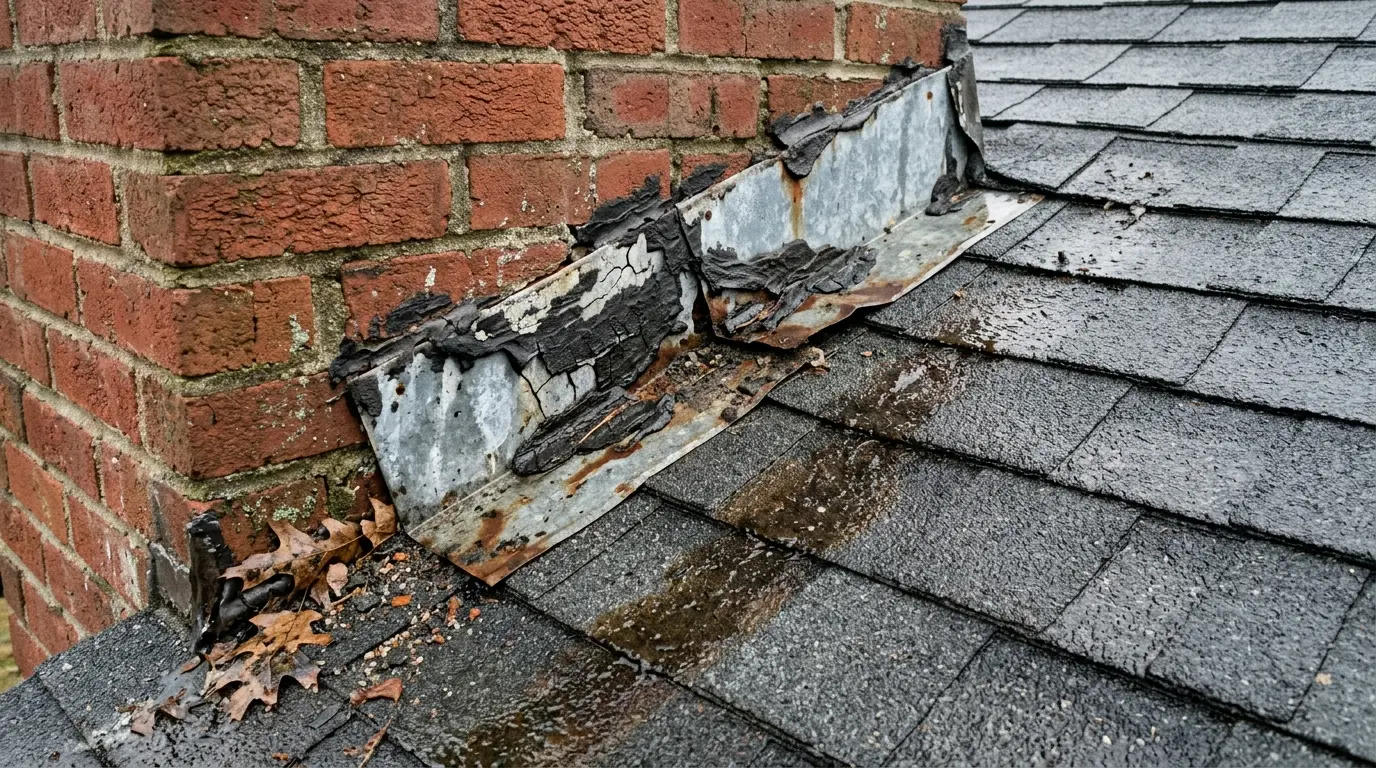
A flat galvanised pan, no cross-break, no drip edge, with a bead of silicone round the flue that gave up years ago.
The sequence is predictable. The flat pan holds water in the middle instead of shedding it. Standing water on galvanised steel takes the zinc coating off. Once the zinc is gone the steel rusts, and it rusts from the top face down. The first visible sign from the ground is a rust streak down the side of the chase. By the time that streak appears there are usually pinholes in the pan.
Then the water goes into the chase. Inside a chase is framing, sheathing, sometimes insulation, and the firebox — none of which can be seen from anywhere. It can rot for years. The interior signs are a stain on the ceiling near the fireplace, a damp or musty smell when the fireplace is not in use, rust on the firebox itself, or the black steel of the flue pipe showing rust where it passes through the cover.
Why It Is Worse on Long Island
Salt air accelerates everything on the coastal side, but the bigger factor across the whole island is freeze-thaw. A pan that ponds water is a pan holding a block of ice all winter, which flexes the metal at the seams and works the sealant loose faster than weather alone would.
Pine and oak litter matters too. Debris on a flat pan holds moisture against the metal permanently instead of letting it dry between rains. Under the pine in Shirley or Holbrook, a flat galvanised pan does not get many years.
What Gets Done
The cover is measured and fabricated to the actual chase, because they are not standard sizes, and it is made in stainless with the cross-break and the drip edge formed in. The flue penetration is cut to the pipe, and a storm collar goes over it with the correct sealant.
While it is off, the top of the chase gets looked at — framing, sheathing and any rot that has already happened — because replacing the cover over rotted framing is treating the symptom. On a chase that has been leaking for a while there is usually some carpentry.
The other item worth checking at the same time is the chase flashing where it meets the roof, and the siding or veneer on the chase itself, which has the same water-management requirements as any other wall and frequently was not detailed as one.
How to Check Yours From the Ground
Look for a rust streak down the outside of the chase below the top. Look at the top edge with binoculars — a pan with standing water marks, debris sitting in the middle, or visible rust colour is a pan at the end of its life. If the house was built between the mid-1970s and the 1990s and the cover has never been changed, assume it is galvanised and assume it is due.
It is a small job compared with the framing repair it prevents, and it is worth doing before the winter rather than after.
Alec's Construction works on chimneys from the roof down — flashing, crown, cap, repointing and the masonry itself — across Suffolk County from the yard in East Patchogue. Alex comes out, looks at the actual chimney, photographs what he finds and puts a written scope in your hand. Free walkthrough, no obligation.
Frequently Asked Questions
What is a chimney chase cover?
It is the sheet-metal pan that closes the top of a framed chimney chase, with a hole in it for the flue pipe. Houses with a factory-built metal fireplace — very common in Long Island construction from the 1970s onward — have a chase rather than a masonry chimney, and the cover is the only thing keeping water out of the wood framing inside it.
How do I know if my chase cover is leaking?
Look for a rust streak running down the outside of the chase below the top — that is the first visible sign and it usually means the pan already has pinholes. Inside, watch for a stain on the ceiling near the fireplace, a musty smell when the fireplace is not in use, rust on the firebox, or rust on the flue pipe where it passes through the cover.
Why do galvanised chase covers fail?
Because they are usually made flat, with no cross-break to make them drain. Water ponds in the middle instead of running off, standing water strips the zinc coating, and once the zinc is gone the steel rusts through from the top down. Freeze-thaw cycling and leaf or needle litter sitting on the pan both accelerate it. A stainless cover with a cross-break and a turned-down drip edge does not have the failure mode.
Is a chase the same as a chimney?
No, and the difference matters. A masonry chimney is brick or block with a clay or steel liner. A chase is a wood-framed shaft, often sided or veneered to look like a chimney, containing a factory-built metal fireplace and its metal flue. The repairs are completely different: a chase leak is a sheet-metal and carpentry job, not a masonry one.
Related Guides
- Chimney Caps on Long Island
- Chimney Waterproofing on Long Island
- Chimney Crown Repair on Long Island
- Chimney Flashing Leaks on Long Island
- Chimney Repointing on Long Island
Work With Alec's Construction
This guide is written by the crew that does the work. See Alec's Chimney Repair service — repointing, crowns, caps and roofline flashing. One crew start to finish, free walkthrough and a written estimate inside 48 hours.
Booking the cold months now: we also handle Roofing and Seamless Gutters.
Get a Free Estimate from Alec's Construction
Working across Suffolk County since 2018, one crew from start to finish. We come out, look at the actual job, and put a written number in your hand — no pressure, no obligation.
Or call (631) 312-7441