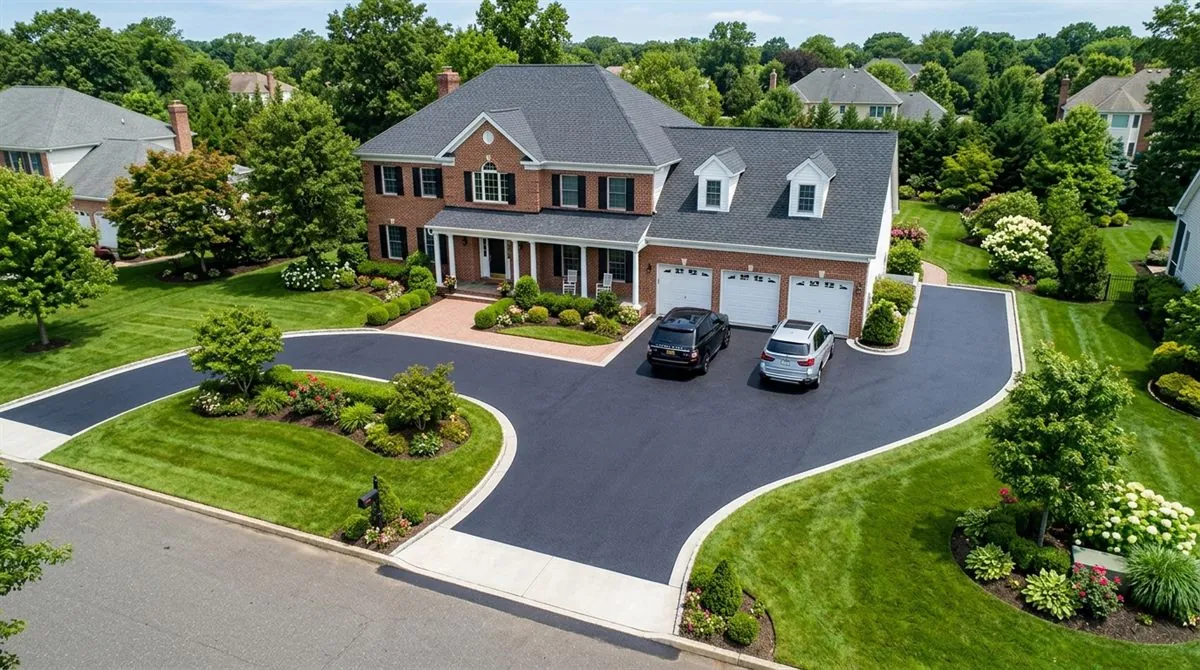
Mastic and Mastic Beach began as summer colonies, and the lanes that served the cottages were gravel and dirt — and a remarkable number still are. The defining local job is not repaving: it is first-time paving, converting a drive that has been gravel for eighty years into asphalt, and the owners who treat it as "paving over what's there" get the driveways that fail in two winters.
Why you cannot just pave the gravel
- Eighty years of gravel is not a base — it is a thin, contaminated mix of stone, soil, organics and ruts, compacted only where tires ran
- The wheel paths are dense and the center and edges are not: pave over that and the mat reflects the difference as cracking within seasons
- Colony lanes were never graded for drainage — they drained by soaking, which asphalt ends; the water that used to disappear now needs a plan
- The honest conversion excavates, grades for pitch, builds a real compacted base in lifts, and only then paves — construction, with paving at the end
Or keep it gravel — properly
Not every Mastic drive wants asphalt, and we say so. A rebuilt gravel drive — excavated, geotextile-separated, base and wearing course of the right stone, crowned and edged — is a legitimate, cheaper surface that suits the colony lanes and drains where asphalt sheds. It wants regrading every few years, and it costs a fraction. Asphalt wins on plowing, maintenance and resale; rebuilt gravel wins on cost and character. We price both.
The colony-lot surprises
First-time excavation on parcels this old finds things: cesspools where no record says, buried debris from generations of fill, property lines that wander from where the fence says. We locate utilities and check the survey before the machine arrives — the standard old-colony discipline from our Rocky Point pages, applied to the south shore.
Flood-zone lanes
On the southern blocks in mapped flood zones, sealed coverage rules apply to a new asphalt surface that never existed before — the conversion can change the lot's stormwater math. Where that binds, the rebuilt-gravel option or a permeable section is frequently what makes the project approvable, and we sort that at design.
Frequently Asked Questions
Can you pave right over my gravel driveway?
Not honestly. Eighty years of gravel is a thin contaminated layer compacted only in the wheel paths — pave over it and the mat reflects the soft center and edges as cracking within seasons. A real conversion excavates, grades for drainage the soak-in lane never needed, builds a compacted base in lifts, and paves last. It is construction with paving at the end, and it is priced as such.
Is asphalt worth it, or should I keep the gravel?
Both are legitimate on a Mastic lane and we price both. Asphalt wins on plowing, annual maintenance and resale. A properly rebuilt gravel drive — excavated, geotextile, correct stone, crowned — costs a fraction, drains where asphalt sheds, and suits the colony character; it asks for regrading every few years in return. In flood-zone blocks, gravel or permeable is sometimes what makes the project approvable at all.
How long does a driveway take?
One day for a resurface on a typical residential driveway, one to two days for a full rip-out and repave. Park on it in 48 to 72 hours; full cure takes about 30 days.
Related Reading
- Blacktop Driveway Cost on Long Island — real per-square-foot numbers
- Driveway Drainage Done Right — where the water goes first
- How Thick a Driveway Should Be — the spec that decides lifespan
- When to Pave on Long Island — the thermometer that runs the calendar
- Driveway Paving on Long Island — the full homeowner guide
Also Serving Mastic
- Attic Insulation in Mastic — air sealing, baffles and R-49 depth
- Basement Finishing in Mastic — egress, ceiling height and moisture
- Bathroom Remodeling in Mastic — full gut renovations
- Fallen Tree Removal & Roof Repair in Mastic — tree off the house, roof supported and repaired
- Flood & Water Damage Cleanup in Mastic — wet material out, drying metered
- Gutter Installation in Mastic — seamless gutters, fascia and drainage
- Hurricane & Storm Damage Repair in Mastic — trees, flooding, cleanup and repairs
- Storm Damage & Insurance Restoration in Mastic — emergency tarping and the claim
- Interior Painting in Mastic — the right work for the cold months
- Kitchen Remodeling in Mastic — cabinets, counters and layout
- Roofing in Mastic — tear-offs, repairs and storm damage
- Storm Debris Removal & Cleanup in Mastic — trees, building debris and hauling
- Storm Roof & Siding Repair in Mastic — wind damage, tarped and rebuilt
Work With Alec's Construction
This guide is written by the crew that does the work. See Alec's Driveways & Blacktop service — asphalt paving, resurfacing and sealcoating. Licensed and insured on Long Island, one crew start to finish, free walkthrough and a written estimate inside 48 hours.
Booking the cold months now: we also handle Masonry & Pavers and Roofing.
Filing something yourself? Our Long Island building department directory lists the address, phone and counter hours for all 23 permit offices in Nassau and Suffolk.
Ready to Get Started?
Free on-site measure and a written price that lists base depth, asphalt thickness and compaction lifts. Most residential driveways are a one-day install.