Every spring the same thing happens on Long Island. The weather turns, everyone looks at their driveway at the same time, and the good paving and masonry crews fill their schedules for weeks. Homeowners who start calling in April often wait into summer.
Winter is when you can get ahead of that. Nothing gets paved in January, but almost every decision that goes into a good driveway can be made now, and a walkthrough can happen any day the ground is not buried in snow. Here is what to settle before spring.
Decide What the Driveway Has to Do
Before material, think about use.
- How many cars, and how big? A driveway that fits two sedans can be tight for a truck and an SUV.
- Do you need a turnaround? On a busy road, backing out is a real safety issue.
- Is the driveway too narrow? If doors are hitting the lawn or cars are parking on the grass, widening is worth discussing now. See driveway widening on Long Island.
- Where does water go today? Watch it during winter storms and thaws. Where it puddles and freezes now is where it will cause problems later.
Pick the Surface
The three common choices on Long Island each make sense in different situations.
- Blacktop is the most common. It handles freeze-thaw well because it flexes, it is quick to install, and it is easy to repair. It needs periodic sealcoating. See how long blacktop lasts on Long Island.
- Concrete has a long life and needs no sealcoating schedule, but it is more sensitive to rock salt and cracks are harder to repair invisibly. Our asphalt vs. concrete comparison goes through the tradeoffs.
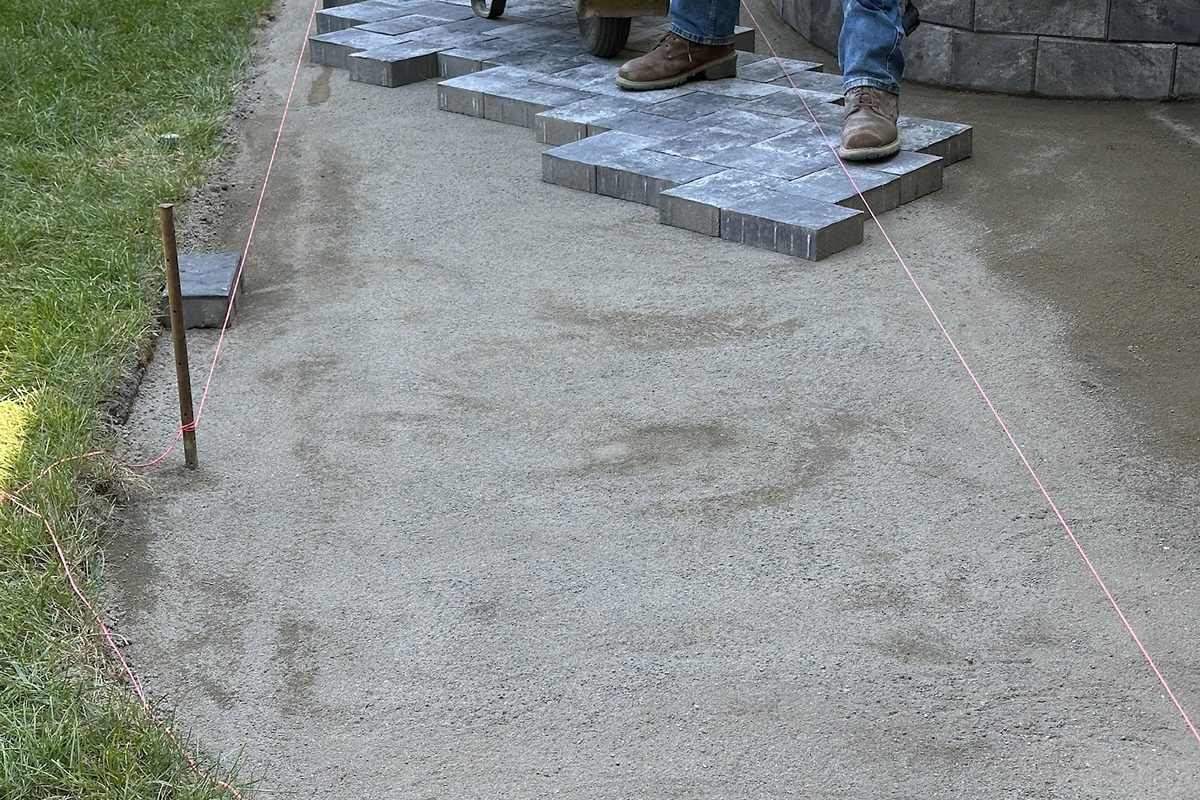
- Pavers look the most finished and individual pieces can be lifted and reset if the ground moves, which is a real advantage with freeze-thaw. They take the most labor to install. See paver driveways on Long Island.
A common middle path is a blacktop driveway with a Belgian block or paver border, or a paver apron at the street.
Decide on Edging
Edging is what makes a driveway look finished and it also protects the edges of blacktop from crumbling. Belgian block is the classic Long Island choice. It is a granite block set in concrete along the edge of the driveway. It can be laid flat, or set upright like a curb, which also helps guide water. Pavers in a contrasting color are another option. Decide this now, because it changes the layout and the quote. Our Belgian block edging guide covers the styles.
The Apron and the Street
The apron is the section where your driveway meets the road. Part of it may sit in the town or village right-of-way, not on your property. Depending on where you live, work there, a new curb cut, or a wider entrance can require a permit from the town highway department or the village. Requirements vary, so this is a good winter question to answer early. We can check it for your address, or you can start with your local building department listing.
What a Real Quote Should Spell Out
When you compare quotes, compare the work, not just the total. A quote you can trust should say:
- Removal. Is the old driveway being removed and hauled away, or is it a resurface over the existing surface?
- Base. How deep the crushed stone base will be, and whether it will be compacted in layers. The base is what keeps a driveway from sinking. See how thick a blacktop driveway should be.
- Thickness. The finished depth of the asphalt or concrete, after compaction.
- Pitch and drainage. How water will be directed away from the house and garage, and whether any drains are included.
- Edging. Belgian block, pavers, or none, and how it is set.
- The apron and any permits. Who is handling them.
- Cleanup and restoration of lawn edges.
- Timeline and what happens if weather pushes the start date.
If one quote is far below the others, it is almost always missing base depth, removal, or edging. Ask.
What Drives the Cost
Every driveway is priced after someone sees it, because the same square footage can be a very different job on two different lots. The things that move the number most are:
- Size and shape, including any turnaround or widening.
- What comes out. Removing an old concrete driveway is more work than removing thin blacktop.
- Base work. Soft spots, roots, or a base that was never built right add excavation and stone.
- Material. Blacktop, concrete and pavers each have different material and labor needs.
- Edging and borders. Belgian block or paver borders add labor and material along every edge.
- Drainage. Regrading or adding a drain is extra, and often worth it.
- Access. Tight side yards and long runs from the street affect equipment and time.
Knowing which of these apply to your driveway before the walkthrough makes the conversation faster and the estimate more accurate.
Get the Walkthrough Done Now
A good walkthrough means someone measures the driveway, looks at the pitch, checks where water goes, and talks through the options with you on site. That can be done in winter as easily as in spring, and it is the step that gets you a written estimate and a place on the schedule.
Paving itself waits for the weather. Hot-mix asphalt plants slow down or close in the coldest months, and both asphalt and concrete do better in mild, dry conditions. The best time to pave on Long Island explains the season month by month.
What We Do
Alec's Construction builds blacktop, concrete and paver driveways with Belgian block and paver borders across Long Island. We do winter walkthroughs, give you a written estimate that spells out base, thickness, drainage and edging, and hold your spot for spring.
Call (631) 312-7441 or book a free walkthrough.
Frequently Asked Questions
When should I get a quote for a spring driveway?
Winter is ideal. A walkthrough can be done any day the driveway is not buried in snow, and booking early gets you on the schedule before the spring rush, when many crews are booked for weeks.
Is blacktop or concrete better for a Long Island driveway?
Both work. Blacktop flexes with freeze-thaw, installs quickly and is easy to repair but needs sealcoating. Concrete lasts a long time with less upkeep but is more sensitive to rock salt. Pavers are the most repairable. The right choice depends on your budget, look and how you use the driveway.
What is Belgian block edging?
Belgian block is a granite block set in concrete along the edge of a driveway. It can be laid flat or set upright like a curb. It gives the driveway a finished look and protects blacktop edges from crumbling.
Do I need a permit for a new driveway apron or curb cut?
Often, work in the town or village right-of-way at the street, or a new or wider curb cut, requires a permit. Rules vary by town and village, so confirm with your local highway or building department or ask your contractor to check.
Why are driveway quotes so different from each other?
Most of the difference is in what is included: removal of the old driveway, base depth and compaction, finished thickness, drainage, edging and the apron. Compare those line by line, not just the total.
Can a driveway be paved in winter?
Generally not on Long Island. Asphalt plants slow down or close in the coldest months and both asphalt and concrete need mild, dry weather. Winter is for planning, walkthroughs and scheduling.
Related Guides
- Best Time to Pave a Driveway on Long Island
- Belgian Block Driveway Edging
- Blacktop Driveway Thickness
- Driveway Repair vs. Replace
- Blacktop and Driveway Services
Get a Free Estimate from Alec's Construction
Serving homeowners across Long Island. We come out, look at the actual job, and put a written number in your hand — no pressure, no obligation.
Or call (631) 312-7441