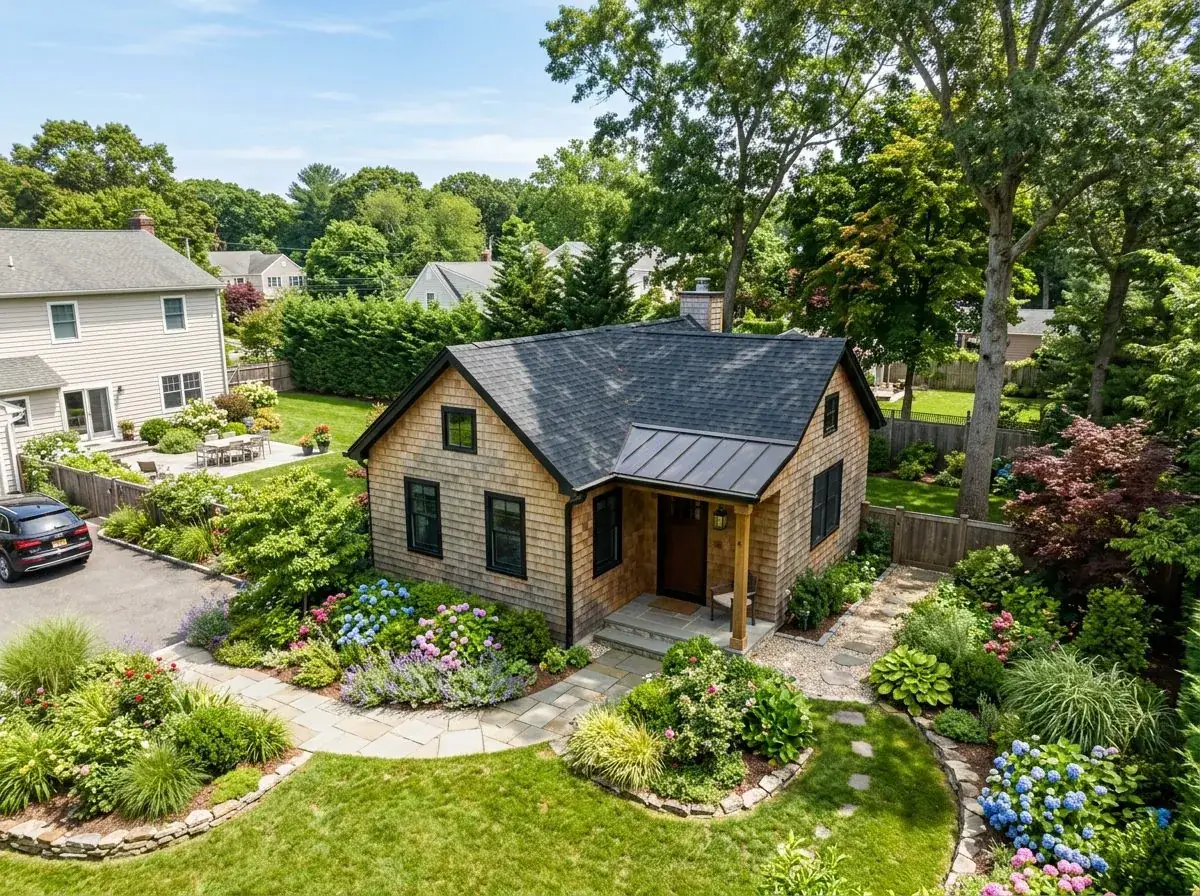
There's a conversation happening at kitchen tables all over Suffolk County. Mom or Dad is managing, but the big house upstate or the walk-up in Queens isn't working anymore. The family tours an assisted living community, sees the price sheet, and goes quiet: $6,000 to $10,000 a month. Every month. Indefinitely.
Then somebody looks at the garage.
We build in-law suites across Long Island, and this is the single most common story behind them. Here's the honest math between the two paths — because for a lot of families (not all), the numbers aren't close.
The Numbers, Side by Side
| Assisted Living | In-Law Suite (Garage/Basement Conversion) | |
|---|---|---|
| Cost | $72,000–$120,000 per year | $50,000–$100,000 one time |
| After 5 years | $360,000–$600,000 spent | Same one-time cost — and the space is still yours |
| Grant help | None (private pay until assets deplete) | Up to $125,000 forgivable via Plus One in participating towns |
| What's left afterward | Nothing | A legal apartment worth $1,400–$2,400/mo in rent, +15–35% home value |
| Distance to family | A drive | Twenty feet |
One year of assisted living at the Long Island average costs more than most garage conversions. That's the whole argument in one sentence.
Thinking about bringing a parent closer?
Free walkthrough — we'll tell you what your space allows and what it really costs.
When the In-Law Suite Is the Right Call
- Your parent is largely independent. An in-law suite is housing, not care. It fits parents who can handle daily life but shouldn't be alone, an hour away, or climbing three flights of stairs.
- You have the space. An attached garage, a hi-ranch lower level, or an unfinished basement is 80 percent of the way there structurally. Basement conversions and garage conversions are the two fastest paths.
- Ground-floor living matters. A converted garage is naturally step-free: no stairs, wider doorways if we plan them, a walk-in shower instead of a tub. We build these details in from day one — grab-bar blocking behind the tile costs almost nothing during construction and everything to retrofit.
- Selling a parent's home frees the budget. Many families fund the conversion from a fraction of the sale proceeds of the parent's previous home — and the parent keeps their independence without the overhead.
When Assisted Living Is the Right Call
We're contractors, not care providers, and we'll be straight with you: an in-law suite is the wrong answer when a parent needs daily medical care, has advancing memory loss that makes unsupervised time unsafe, or when the family simply can't take on the caregiver role. Assisted living and memory care exist for real reasons. Some families do a few good years in the suite first, then transition — and the suite becomes rental income that helps pay for that next chapter.
The Grant Twist Most Families Miss
New York's Plus One ADU Program offers forgivable grants up to $125,000 for creating a new legal accessory unit in participating towns — on Long Island that includes Babylon, Islip, Huntington, East Hampton, Riverhead, Shelter Island, and Southampton. The catch: the grant requires renting to an income-qualified tenant at affordable rates for the forgiveness period, so it doesn't fit housing Mom directly.
Program status — verified September 2026
Plus One ADU is a New York State program (an $85 million allocation through the Housing Trust Fund Corporation) but it is run town by town, and each town's intake opens and closes on its own schedule. As of September 2026 on Long Island: Huntington and Riverhead are accepting applications; Brookhaven, Islip and Southold are closed. Babylon, East Hampton, Shelter Island and Southampton run their programs through Community Development Long Island rather than the Long Island Housing Partnership.
The $125,000 is a cap, not an amount every applicant receives, and it is awarded as a grant. Huntington's published guidelines cap household income at 100% of Nassau/Suffolk area median income (2023 HUD limits: $109,400 for a one-person household, $156,300 for four) and require that you have owned and lived in the home for at least one year. Applications go on a first-come waitlist and are then re-ranked on priority points, including whether the unit will be affordable at or below 80% AMI and whether it can be permitted without a zoning variance. Municipal code always overrides the program guidelines. Verify your town's status before you budget around a grant: LIHP (631) 435-4710. We also check it for you on the walkthrough — see our Plus One ADU grant page for the eligibility checklist and what the build costs if your town's round is closed.
But families use it in sequence: parents live in the suite now (self-funded build), or the grant-funded unit rents affordably for the term and becomes the in-law suite later. Either way, the property gains a legal second unit. We'll map which path fits your town and timeline in one conversation.
Get a Free Estimate
Tell us about your project — we respond within 24 hours.
No spam. No obligation.
What a Parent-Ready Suite Includes
- Private entrance — independence for them, privacy for you.
- Step-free layout — zero-threshold entry, 36" doorways, no interior steps.
- Full bath with walk-in shower — bench seat, anti-scald valve, blocking for future grab bars.
- Kitchenette — counter-height appliances, lever handles.
- Its own heating and cooling — mini-splits let them set their own temperature (this ends more family arguments than you'd think).
- A legal permit and certificate of occupancy — protects your insurance today and your rental income tomorrow. Permit guide here.
The Bottom Line
For an independent parent, the comparison usually isn't close: one year of assisted living costs more than building a suite they can live in for a decade — and when that chapter ends, your family owns a legal apartment generating $17,000 to $29,000 a year instead of a stack of receipts. The families who feel best about this decision are the ones who ran the numbers early, before a health event forced a rushed one.
Start with a free walkthrough — we'll check your zoning, your town's permit path, and give you a real number. Read more in our complete in-law suite guide or ADU cost breakdown.
Frequently Asked Questions
How much does assisted living cost on Long Island in 2026?+
How much does an in-law suite cost to build on Long Island?+
Does an in-law suite need a permit in Suffolk County?+
What happens to the in-law suite later?+
Related Articles
Work With Alec's Construction
This guide is written by the crew that does the work. See Alec's ADUs service — accessory apartments, garage conversions and grant paperwork. Licensed and insured on Long Island, one crew start to finish, free walkthrough and a written estimate inside 48 hours.
Booking the cold months now: we also handle Additions & New Construction and Bathroom Remodeling.
We keep a permit office directory for Nassau and Suffolk, checked against each jurisdiction's own site, because we file in these counters constantly.
Run the Numbers for Your Family
Free walkthrough, zoning check, and a real construction number — so you can make this decision on facts, not pressure.
Get a Free Consultation