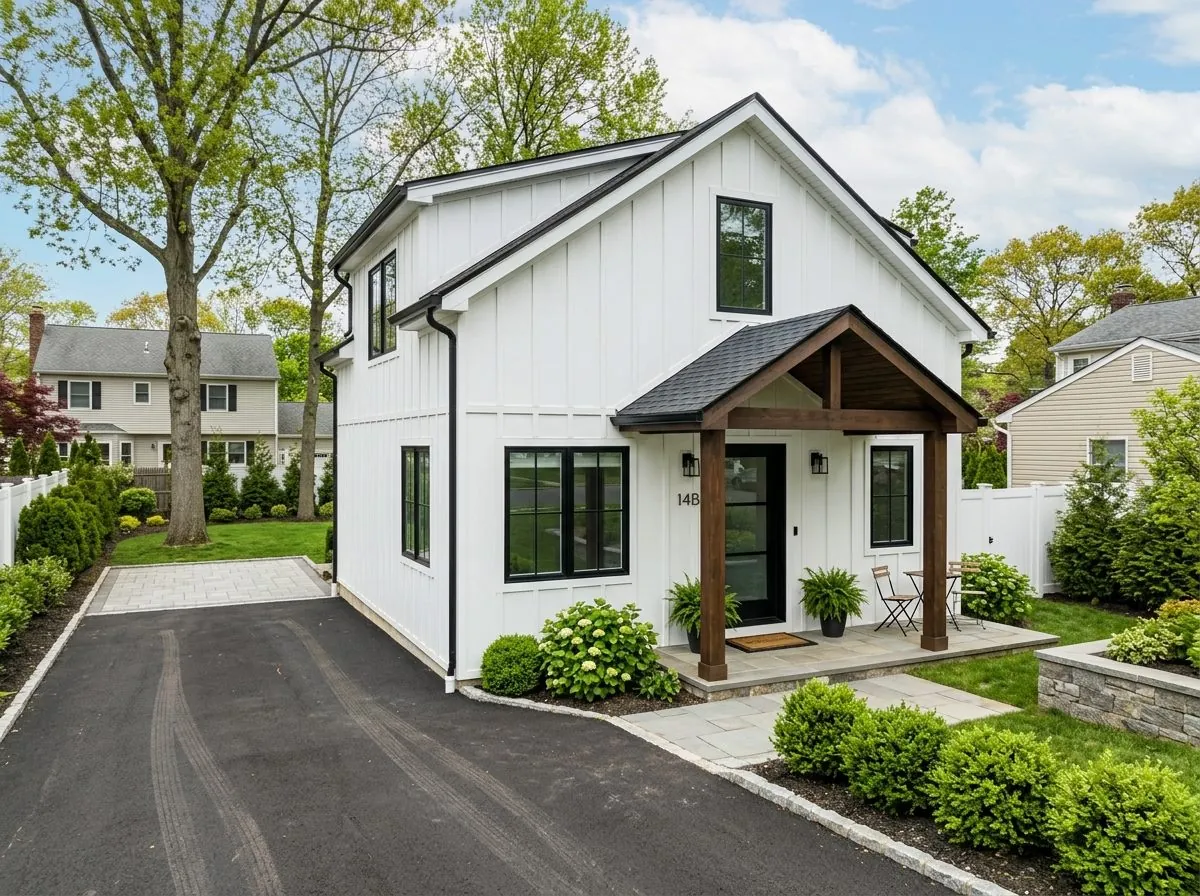
Accessory dwelling units are transforming Long Island's housing landscape. What was once a niche concept — building a small, independent living space on your existing property — has become one of the most popular home improvement projects across Suffolk County. Aging parents who need nearby housing. Adult children priced out of the Long Island real estate market. Homeowners looking to generate rental income. All of them are looking at ADUs.
But before you break ground, you need permits. And the ADU permitting process on Long Island involves navigating a web of state legislation, county health department regulations, and local town or village zoning codes that can be confusing even for experienced builders. This guide breaks it all down so you know exactly what to expect.
New York State ADU Legislation: What Changed
New York State has taken significant steps to encourage ADU construction as a response to the state's housing shortage. The key legislative changes that affect Long Island homeowners include:
- State level — there is no statewide ADU law, and that is the important part. New York has not passed legislation requiring or authorizing municipalities to permit ADUs. The Governor's statewide ADU mandate was pulled from the executive budget in February 2022, the Housing Compact was scrapped in April 2023 budget negotiations, and construction mandates for localities were abandoned in November 2023. The bill that would change this — the Accessory Homes Enabling Act, A4854 / S4547 — was reintroduced for the 2025–26 session and remains in committee as of September 2026. A second bill, A7569, would create a Suffolk-County-only property tax exemption for ADUs rented to households at or below 80% AMI; introduced April 1, 2025, it is also still in committee. What the state does provide is funding, through the Plus One ADU Program. Your town or village zoning code is what actually decides whether you can build.
- Local adoption requirements. While the state has set the framework, individual towns and villages on Long Island must adopt local laws or amend their zoning codes to comply. This means the rules vary from one municipality to the next — what is allowed in Brookhaven may not be allowed in Smithtown, and vice versa.
- Owner-occupancy requirements. Most Long Island municipalities that allow ADUs require the property owner to live in either the primary residence or the ADU. This prevents investors from building ADUs on rental properties they do not occupy.
- Parking requirements. Some towns require one additional off-street parking space for the ADU. Others have reduced or eliminated parking requirements, particularly in areas near transit.
- Short-term rental restrictions. Many municipalities prohibit using ADUs as short-term rentals (Airbnb, VRBO). ADUs are intended for long-term housing, and towns want to prevent them from becoming vacation rentals.
The regulatory landscape is still evolving. Towns across Long Island are in various stages of adopting ADU-friendly policies. Working with a contractor who stays current on these changes — and who has relationships with local building departments — is essential.
Licensed & Insured
Full coverage on every project
ADU Specialists
Long Island's ADU experts
Free Consultation
We assess your property's eligibility
Types of ADUs Allowed on Long Island
Understanding the different ADU types helps you determine which option fits your property and your goals:
Interior ADUs (Basement and Attic Conversions)
Converting an existing basement or attic into an independent living space is often the most affordable ADU option because the exterior structure already exists. On Long Island, basement ADUs are particularly popular because many Suffolk County homes were built with full basements that have the ceiling height and square footage to create a comfortable apartment. Key requirements include separate entrance, egress windows or doors, independent HVAC, kitchen and bathroom facilities, and compliance with fire separation codes.
Attached ADUs (Additions to the Primary Home)
An attached ADU is a new addition built onto the primary home with its own entrance, kitchen, bathroom, and living space. This works well on properties where the lot has room for an addition but the existing basement or attic is not suitable for conversion. Attached ADUs share a wall with the primary home but function as fully independent units.
Detached ADUs (Standalone Structures)
A detached ADU is a separate building on the property — sometimes called a backyard cottage, granny flat, or guest house. These offer the most privacy and independence but also involve the most complex permitting because they require site plan review, setback compliance, and often Suffolk County Health Department approval for septic (in unsewered areas). Detached ADUs are subject to lot coverage limits, which cap the total building footprint on the property.
Garage Conversions
Converting a detached or attached garage into an ADU is a hybrid approach — you use the existing structure but create an entirely new living space within it. Garage conversions often require adding insulation, upgrading electrical service, installing plumbing, adding windows for egress, and bringing the structure up to residential code. For a detailed look at this option, read our guide on garage conversion ADUs on Long Island.
Wondering if your property qualifies for an ADU?
We assess eligibility for free — call or fill out the form.
The ADU Permit Application Process on Long Island
The ADU permit process on Long Island involves multiple agencies and approvals. Here is the typical sequence:
Step 1: Zoning Verification
Before spending money on plans, verify that your property's zoning allows an ADU. This involves contacting your town or village building department (or having your contractor do so) to confirm:
- Whether your zoning district permits ADUs by right, by special permit, or not at all
- Maximum ADU size allowed
- Setback requirements (distance from property lines)
- Lot coverage limits (maximum percentage of the lot that can be covered by buildings)
- Height restrictions
- Parking requirements
- Owner-occupancy requirements
If your zoning does not currently allow ADUs, you may need a variance from the Zoning Board of Appeals, which adds significant time and cost to the process. Some homeowners are eligible under newer state provisions that override local restrictions — this is an area where an experienced ADU builder can guide you.
Step 2: Architectural Plans and Engineering
You will need architectural plans drawn by a licensed architect or engineer. These plans must include:
- Site plan showing the ADU location on the property, setbacks, and lot coverage calculations
- Floor plans with dimensions, room labels, and door/window locations
- Elevations (exterior views from each side)
- Structural details (foundation, framing, connections)
- Plumbing layout
- Electrical layout
- HVAC system design
- Energy code compliance documentation (New York Energy Conservation Code)
Architectural plans for a Long Island ADU typically cost $5,000-$15,000 depending on the complexity. An experienced ADU contractor often has architects they work with regularly who are familiar with local code requirements, which streamlines the process.
Step 3: Suffolk County Health Department Approval (If Applicable)
This is the step that trips up many Long Island ADU projects. Large portions of Suffolk County are not connected to public sewers and rely on individual septic systems. Adding an ADU increases the wastewater load on your property, and the Suffolk County Department of Health Services must approve the septic system's capacity to handle it.
The health department will evaluate:
- Existing septic system capacity. Can your current system handle the additional bedrooms and fixtures?
- Lot size and soil conditions. Is there adequate area for an expanded or upgraded septic system?
- Nitrogen loading. Suffolk County has strict nitrogen limits to protect groundwater. In some areas, you may need to install an innovative/alternative (I/A) nitrogen-reducing septic system.
- Well setbacks. If your property has a private well, the septic system must maintain minimum distances from the well.
Health department review can take 4-12 weeks. If your property is in a sewered area, this step is much simpler — you just need to connect to the existing sewer main, which requires a sewer connection permit. For a deep dive into septic considerations, read our guide on ADU septic requirements in Suffolk County.
Step 4: Building Permit Application
With your plans, health department approval (if needed), and site plan, you submit a building permit application to your local building department. The application typically requires:
- Completed application form
- Three to five sets of architectural plans
- Site plan or survey
- Health department approval letter (if applicable)
- Proof of property ownership
- Contractor license information
- Application fee (typically $1,000-$5,000 depending on project value)
The building department reviews the plans for code compliance, which typically takes 2-6 weeks. They may issue the plans with comments or corrections that need to be addressed before the permit is issued.
Get a Free ADU Consultation
Tell us about your property — we assess eligibility and provide a realistic estimate.
No spam. No obligation.
Nassau County ADU Permit Requirements
The process above covers Suffolk County, where septic review usually drives the timeline. Nassau County works differently. ADU permitting there is handled at the village or town level, and the Nassau County Department of Health only gets involved for septic and well water — which is rare, since Nassau is served by public water and sewers in most areas. That removes one of the slowest steps in the Suffolk process for most Nassau projects.
What Nassau adds instead: it has over 60 incorporated villages, each with its own building department and its own application process. Some, like Garden City and Great Neck, have well-established accessory apartment pathways of their own. Others have never created one, and a village with no pathway is a hard stop rather than a slow process. An ADU builder who has already pulled permits in your specific village is worth more than a lower bid from someone who hasn't.
Nassau homeowners applying for the Plus One ADU grant should note the income limit is slightly higher than Suffolk's — about $93,000 for a family of four in Nassau versus $87,000 in Suffolk, reflecting the county's higher Area Median Income.
Program status — verified September 2026
Plus One ADU is a New York State program (an $85 million allocation through the Housing Trust Fund Corporation) but it is run town by town, and each town's intake opens and closes on its own schedule. As of September 2026 on Long Island: Huntington and Riverhead are accepting applications; Brookhaven, Islip and Southold are closed. Babylon, East Hampton, Shelter Island and Southampton run their programs through Community Development Long Island rather than the Long Island Housing Partnership.
The $125,000 is a cap, not an amount every applicant receives, and it is awarded as a grant. Huntington's published guidelines cap household income at 100% of Nassau/Suffolk area median income (2023 HUD limits: $109,400 for a one-person household, $156,300 for four) and require that you have owned and lived in the home for at least one year. Applications go on a first-come waitlist and are then re-ranked on priority points, including whether the unit will be affordable at or below 80% AMI and whether it can be permitted without a zoning variance. Municipal code always overrides the program guidelines. Verify your town's status before you budget around a grant: LIHP (631) 435-4710. We also check it for you on the walkthrough — see our Plus One ADU grant page for the eligibility checklist and what the build costs if your town's round is closed.
ADU Permit Costs on Long Island: Full Breakdown
The permits themselves are only part of the pre-construction cost. Here is a realistic breakdown of what Long Island homeowners pay before construction begins:
- Architectural plans: $5,000 - $15,000
- Structural engineering (if required): $1,500 - $4,000
- Survey/site plan: $1,500 - $3,500
- Building permit fees: $1,000 - $5,000
- Health department application (septic areas): $500 - $2,000
- Septic system upgrade (if required): $15,000 - $40,000
- Zoning Board variance (if required): $1,000 - $3,000 in fees, plus attorney costs
- Environmental review (if required): $2,000 - $5,000
Total pre-construction soft costs for a Long Island ADU typically range from $8,000 to $20,000 when no septic upgrade is needed, and $25,000 to $60,000 when a septic upgrade or replacement is required. These costs are on top of the construction cost itself. For a complete cost breakdown, see our ADU cost guide for Long Island.
ADU Permit Timeline: Realistic Expectations
Here is a realistic timeline for the ADU permitting process on Long Island in 2026:
- Zoning verification: 1-2 weeks
- Architectural plans: 4-8 weeks
- Health department review (if applicable): 4-12 weeks
- Building permit review: 2-6 weeks
- Plan corrections and re-submission (if needed): 2-4 weeks
Many of these steps can overlap. For example, you can submit to the health department and the building department simultaneously if your architect prepares the required documents in parallel. An experienced ADU contractor knows how to sequence these submissions to minimize total wait time.
Best case: 2-3 months from initial consultation to permit in hand.
Typical case: 3-5 months.
Complex case (variance needed, septic upgrade, environmental review): 6-12 months.
Ready to get started?
Free walkthrough — no obligation, no pressure.
Common ADU Permit Mistakes on Long Island
These are the errors that cause the most delays, denials, and cost overruns in Long Island ADU projects:
- Starting construction without a permit. This seems obvious, but it happens. Unpermitted construction can result in stop-work orders, fines, required demolition, and significant problems when you sell the property. It also voids insurance coverage for the ADU.
- Ignoring septic capacity. In unsewered areas of Suffolk County, septic is often the biggest hurdle. Homeowners who assume their existing system can handle an ADU without verification waste months when the health department requires an upgrade.
- Not checking zoning before hiring an architect. If your zoning does not allow ADUs — or requires a variance — you need to know that before spending $10,000 on architectural plans. Check zoning first.
- Using plans from the internet. Generic ADU plans downloaded from a website will not pass plan review at a Long Island building department. Plans must be prepared by a licensed New York architect or engineer, stamped and signed, and designed to meet local codes.
- Underestimating timeline. Homeowners who assume they can go from idea to construction in a month are setting themselves up for frustration. The permitting process alone takes 2-6 months on most Long Island ADU projects.
- Not accounting for fire separation requirements. ADUs attached to or within the primary home must meet fire separation codes — fire-rated walls, self-closing doors, interconnected smoke alarms. These requirements affect the design and must be incorporated into the plans from the start.
Financial Incentives for ADU Construction on Long Island
Several financial incentives are available to Long Island homeowners building ADUs:
- NY Plus One ADU Grant Program. New York State has established grant programs to help homeowners with ADU construction costs. Eligibility and funding amounts vary. For details, read our guide on the Plus One ADU grant for Long Island homeowners.
- Property tax benefits. While an ADU will increase your assessed property value, the rental income it generates typically far exceeds the additional property tax. Some municipalities offer tax abatements or exemptions for ADUs that provide affordable housing.
- Rental income. A well-built ADU on Long Island can generate $1,500-$3,000+ per month in rental income, depending on location, size, and finishes. This income stream can cover the mortgage payment for the ADU construction loan and then some. See our detailed analysis of ADU rental income on Long Island.
- Increased property value. A permitted, well-built ADU adds significant value to your property. Studies show ADUs can increase property values by 20-30%. Our guide on how ADUs increase Long Island home values covers this in detail.
Why Work with Alec's Construction on Your ADU Project
The permitting process is where most ADU projects succeed or stall. At Alec's Construction, we handle the entire process:
- Free property assessment. We visit your property, evaluate the site conditions, check zoning eligibility, and give you an honest assessment of what is possible — before you spend a dollar.
- Architect coordination. We work with licensed architects who specialize in Long Island ADUs. They know the local codes, and their plans pass review the first time.
- Health department navigation. We have experience with Suffolk County Health Department approvals and know how to address septic requirements efficiently.
- Permit application management. We prepare and submit all permit applications, track their status, respond to plan review comments, and schedule inspections.
- Full construction. From foundation to finish, we build your ADU with the same quality we bring to every project. We are a licensed general contractor, not just a permit expediter.
- Certificate of Occupancy. We see the project through to final inspection and C of O issuance, so your ADU is fully legal and ready for use.
We have built ADUs across Suffolk County — from Patchogue to Huntington to Southampton. Call Alex Fuentes at (631) 312-7441 or email sales@alecsconstruction.com to start your project.
Need it legalized, not just built?
Most calls we get on this are not really construction questions — they are permit questions. An unpermitted apartment, an expired C of O, a stop-work order, a rental you cannot legally advertise. We are a licensed general contractor, and we work alongside permit expediters, architects, and engineers who file this work on Long Island every week. Talk to us first: we tell you which of the two problems you actually have, and who needs to touch it in what order.
Frequently Asked Questions
Do I need a permit to build an ADU on Long Island?+
How long does it take to get an ADU permit on Long Island?+
How much does an ADU permit cost on Long Island?+
Can I build a detached ADU on Long Island?+
Are there size limits for ADUs on Long Island?+
Is the ADU permit process different in Nassau County?+
Related Articles
Work With Alec's Construction
This guide is written by the crew that does the work. See Alec's ADUs service — accessory apartments, garage conversions and grant paperwork. Licensed and insured on Long Island, one crew start to finish, free walkthrough and a written estimate inside 48 hours.
Booking the cold months now: we also handle Additions & New Construction and Bathroom Remodeling.
Not sure whether the town or village files your permit? That question trips up more Long Island projects than any other — the directory sorts it out.
Ready to Build Your ADU?
Alec's Construction handles the entire ADU process — from permit applications to final inspection. Free property assessments for Long Island homeowners.
Get a Free ADU Assessment